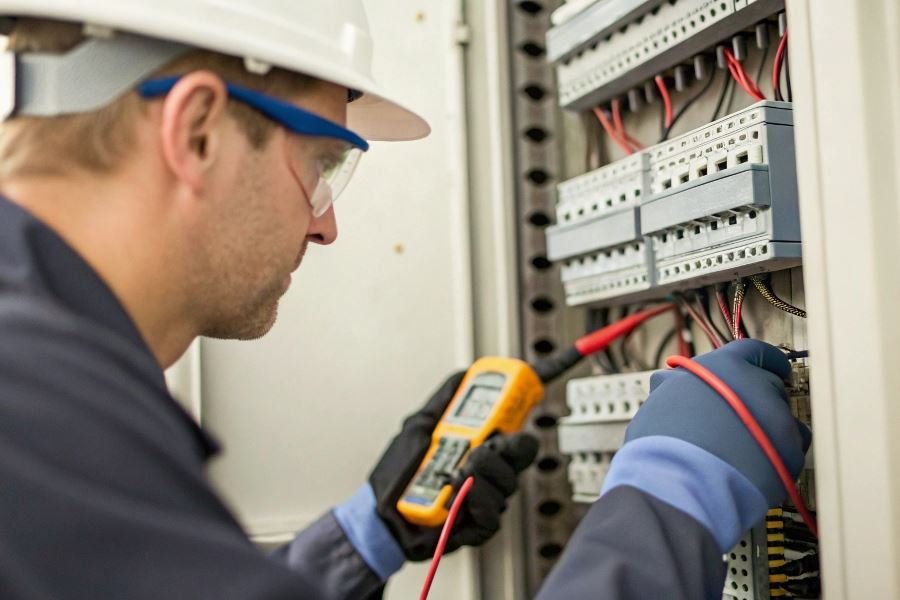
Ever stood in front of a circuit panel wondering if that wire was truly dead? Your life might have literally depended on the answer.
Voltage indicators have long served as the first line of defense against electrical hazards, providing that critical “go/no-go” information that keeps professionals safe. But today’s enhanced indicators do far more than simply detect the presence of voltage—they’ve evolved into sophisticated multi-tools that transform how we approach electrical work.
When selecting a voltage indicator with additional functions, you’re essentially choosing between a basic safety tool and a comprehensive diagnostic assistant. Modern indicators now incorporate features like built-in flashlights, continuity testing, GFCI outlet testing, and even non-contact detection that works through insulation. The difference is like comparing a basic pocket knife to a Swiss Army knife with specialized tools for every situation.
Safety remains the paramount consideration, but efficiency follows closely behind. The best voltage indicators combine reliability with versatility, allowing professionals to troubleshoot complex electrical issues without switching between multiple devices. This integration not only streamlines workflows but also reduces the equipment burden in already-crowded toolboxes.
“The right voltage indicator doesn’t just tell you if power is present—it tells you the story of what’s happening in your electrical system.”
When evaluating these advanced indicators, three factors should guide your decision: accuracy across voltage ranges, durability in your specific working environment, and which additional functions truly complement your daily tasks rather than simply adding to the price tag.
Smart Voltage Detection Beyond the Basics
When electrical work demands more than simple hot-wire identification, standard voltage detectors just don’t cut it. Today’s enhanced voltage indicators transform from simple tools into intelligent worksite companions, offering functionality that professionals increasingly consider essential rather than optional.
Selecting the right voltage indicators with additional functions requires understanding how these tools have evolved to meet specific application needs. The market now offers specialized devices that combine core voltage detection with supplementary capabilities that dramatically improve efficiency and safety during electrical troubleshooting and installation work.
Non-contact Detection with Sensory Alerts
Non-contact voltage indicators with integrated LED flashlights represent the entry point into enhanced functionality. These tools detect voltage presence without physical contact, typically through capacitive sensing technology that responds to electric fields.
The best models in this category offer:
- Dual-sensitivity modes for detecting standard voltage (120-240V) or low voltage (12-24V)
- Bright LED flashlights with focused beams for dark panel work
- Distinct audible alerts that vary in intensity based on voltage strength
Klein Tools NCVT-4IR exemplifies this category with its combination of non-contact detection and infrared thermometer functionality, allowing users to identify both live circuits and potential hotspots in a single tool.
Multifunctional Testing Beyond Voltage
The middle tier of enhanced voltage indicators incorporates continuity testing and resistance measurement capabilities, essentially combining a voltage tester with basic multimeter functions.
These hybrid tools typically feature:
| Function | Typical Range | Application |
|---|---|---|
| Voltage detection | 12-1000V AC/DC | Circuit verification |
| Continuity testing | 0-400Ω | Connection integrity |
| Resistance measurement | 0-20MΩ | Component testing |
| GFCI testing | N/A | Safety verification |
The Fluke T6-1000 stands out in this category with its open-fork design that measures voltage without test leads and includes resistance measurement capabilities, making it exceptionally versatile for commercial electricians.
Advanced Connectivity and Data Management
For industrial applications and complex system troubleshooting, advanced voltage indicators with data logging and wireless connectivity deliver unprecedented capabilities.
These professional-grade instruments offer:
- Real-time data transmission to smartphones or tablets
- Historical measurement logging for trend analysis
- Cloud storage integration for documentation and reporting
- Temperature compensation for environmental variables
The Megger MIT525 represents the pinnacle of this category, offering Bluetooth connectivity that allows technicians to operate the instrument remotely while viewing real-time measurements on their mobile devices—particularly valuable when working in hazardous environments.
When selecting among these options, consider your typical application environment, frequency of use, and whether documentation requirements necessitate data logging capabilities. For occasional home use, a quality non-contact detector with LED illumination provides adequate functionality, while professional electricians benefit substantially from the comprehensive capabilities of multifunctional or connected instruments.
Choosing Your Ideal Voltage Indicator
When selecting a voltage indicator with additional functions, the decision ultimately comes down to your specific needs, working environment, and how frequently you’ll use the device. After examining the various options available on the market, let’s distill what truly matters for making an informed purchase.
Match the tool to your professional demands
The right voltage indicator depends heavily on your day-to-day requirements. Electricians who frequently work in industrial settings should prioritize models with comprehensive safety features and durability. The Fluke T6-1000 offers exceptional reliability for daily professional use, while maintenance technicians who need occasional verification might find more value in versatile mid-range options like the Klein Tools NCVT-3.
The best voltage indicator isn’t necessarily the most expensive one—it’s the one that reliably performs the specific functions you need most frequently.
For those working primarily in residential settings, consider whether features like data logging or Bluetooth connectivity will actually enhance your workflow or simply add unnecessary complexity and cost.
Balance functionality against practical considerations
When evaluating additional functions, consider these key factors:
| Factor | Why It Matters | Example Consideration |
|---|---|---|
| Safety Rating | Determines environments where use is safe | CAT IV rated devices for industrial work |
| Battery Life | Affects reliability in the field | Minimum 40+ hours for professional daily use |
| Durability | Impacts long-term value | IP67 rating for harsh environments |
| Display Type | Affects usability in various conditions | Backlit displays for low-light work |
| Response Time | Critical for safety applications | <0.5 seconds for live testing scenarios |
The most valuable additional functions are those you’ll actually use. A voltage indicator with temperature measurement might seem impressive, but if you already carry a dedicated thermometer, you’re paying for redundancy.
Value proposition beyond the price tag
True value extends beyond the initial purchase price. Consider:
- Calibration requirements – Some professional-grade indicators require annual calibration, adding to lifetime costs
- Warranty coverage – Leading manufacturers like Megger often offer 3+ year warranties on premium models
- Battery type – Rechargeable models may cost more upfront but save money over time
- Replacement parts availability – Can probes and leads be replaced, or is the entire unit disposable?
For occasional users, a mid-range model with core functionality plus one or two additional features that align with your specific needs often represents the sweet spot for value.
The final verdict
The most satisfied voltage indicator owners are those who accurately assessed their actual needs before purchasing. Start by identifying your most common testing scenarios, then select a device that excels in those specific applications while offering just enough additional functionality to handle occasional edge cases.
Remember that reliability should never be compromised for extra features. A basic voltage indicator that works flawlessly every time provides far more value than a feature-packed model with questionable performance or confusing operation.
Discover how to select the perfect voltage indicator with advanced features for your electrical work. Compare models with flashlights, continuity testing, data logging, and wireless connectivity to enhance safety and efficiency on every job.
Discover how to select the perfect voltage indicator with advanced features for your electrical work. Compare models with flashlights, continuity testing, data logging, and wireless connectivity to enhance safety and efficiency on every job.