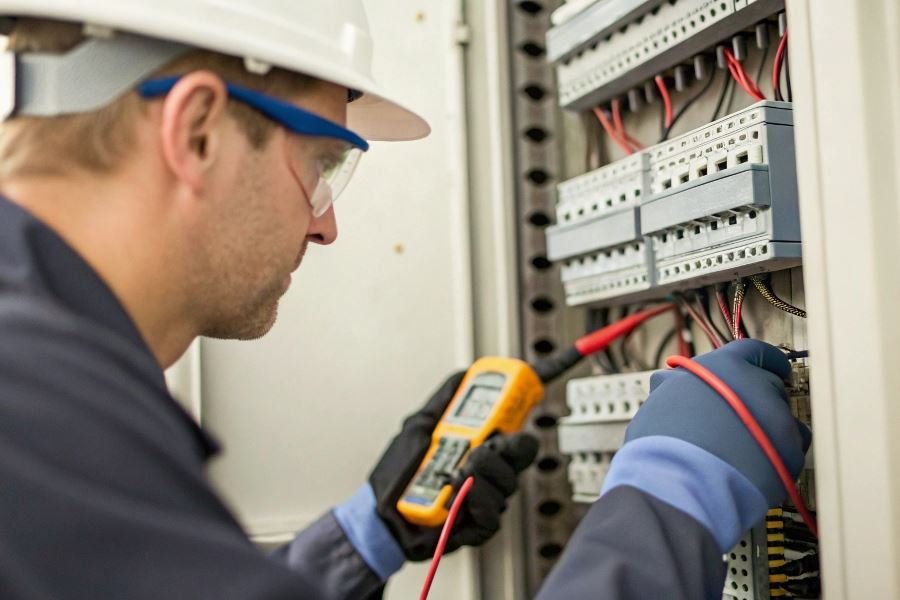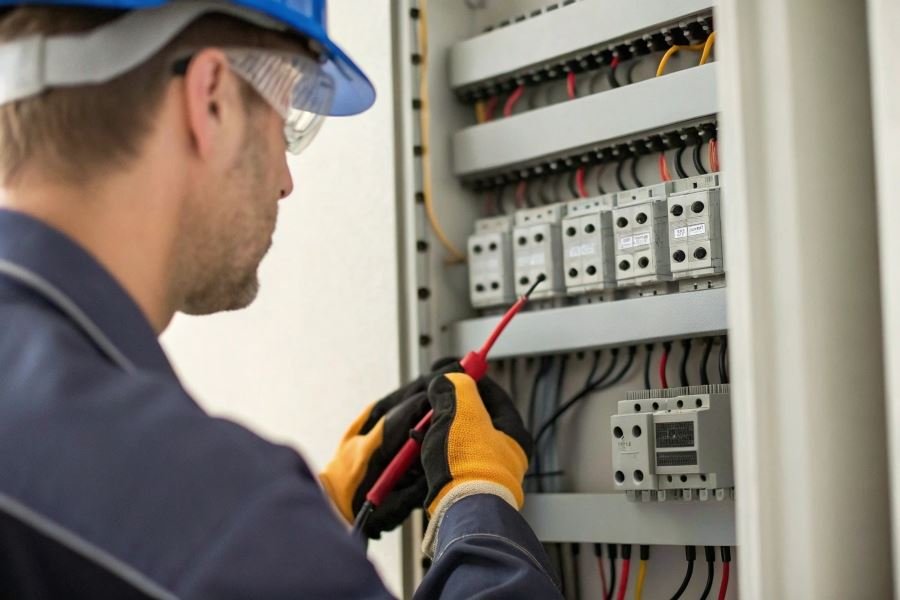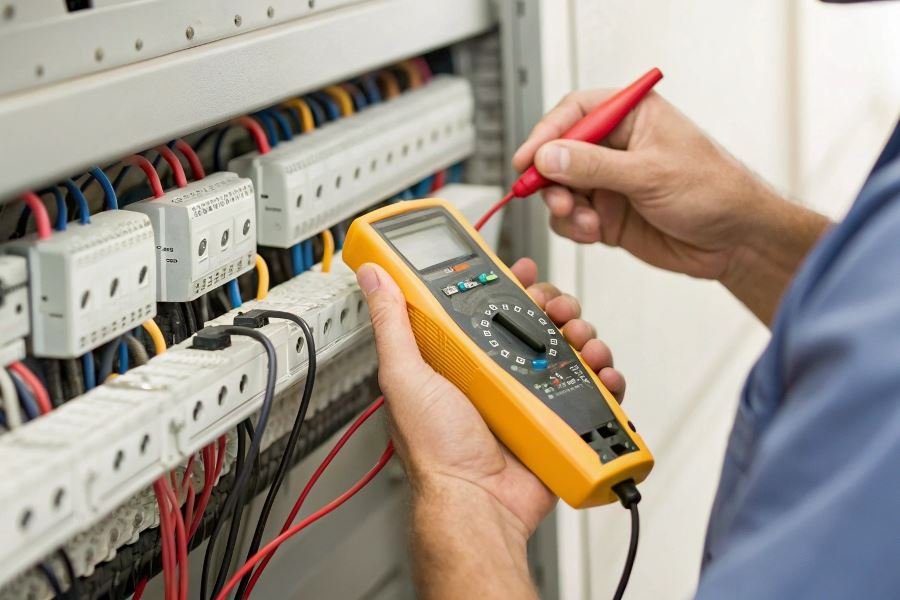
Ever wondered what stands between an electrician and a potentially fatal shock? It’s not luck or intuition—it’s a reliable voltage indicator. These pocket-sized devices save lives daily, yet many professionals overlook their critical importance until it’s too late.
Voltage indicators serve as the first line of defense for electricians working in environments where electrical hazards lurk behind every panel and junction box. These essential tools verify whether circuits are truly de-energized before work begins—a fundamental step in the “test before touch” safety protocol that experienced professionals never skip.
The market offers several distinct types of voltage indicators, each designed for specific applications. Non-contact voltage testers (NCVTs) provide quick preliminary checks without physical connection, while two-pole voltage testers deliver more definitive readings through direct contact. For industrial settings, voltage indicator panels offer continuous monitoring of system status, while specialized indicators for medium and high-voltage systems incorporate additional safety features for extreme environments.
Selecting the right voltage indicator isn’t merely about preference—it’s about survival. Professional electricians must consider factors like voltage range, measurement accuracy, safety category ratings, and environmental conditions. A residential electrician might need different capabilities than someone working on industrial control systems or utility-scale power distribution.
“The right voltage indicator isn’t the most expensive one—it’s the one that reliably detects voltage in your specific working environment, every single time.”
When electrical safety hangs in the balance, knowing what features matter most in voltage indicators becomes not just professional knowledge, but essential wisdom that protects lives and livelihoods.
Essential Features Every Professional Electrician Needs in a Voltage Indicator
When your safety depends on knowing whether a circuit is live, the quality of your voltage indicator isn’t just a preference—it’s a lifeline. Professional electricians understand that selecting the right testing equipment requires careful consideration of several critical factors.
Safety should never be compromised when working with electrical systems. Voltage indicators for professional electricians: what to pay attention to encompasses several crucial elements that separate reliable tools from dangerous imposters. The difference between a quality indicator and a subpar one could literally be life-changing.
Safety Certifications That Actually Matter
UL certification isn’t just a nice-to-have—it’s essential. Underwriters Laboratories tests voltage indicators against rigorous safety standards, ensuring they perform reliably even in extreme conditions.
Never compromise on NFPA 70E compliance, which specifically addresses electrical safety in the workplace. This standard helps protect against arc flash and other electrical hazards that can cause serious injury.
OSHA requirements add another layer of protection, mandating that testing equipment meets specific safety criteria:
| Certification | What It Ensures | Why It Matters |
|---|---|---|
| UL 61010-1 | Basic safety requirements | Fundamental protection against electrical shock |
| UL 61010-2-030 | Testing and measurement circuit requirements | Specific protection for measurement applications |
| NFPA 70E | Arc flash protection standards | Prevents catastrophic injuries |
| CAT III/IV Rating | Overvoltage protection | Safeguards against transient surges |
Voltage Range and Accuracy That Delivers
The best voltage indicators offer appropriate range capabilities for your specific applications. Commercial electricians might need indicators that can handle up to 1000V AC/DC, while industrial applications might require even higher ranges.
Measurement accuracy becomes critical when troubleshooting sensitive equipment. Look for indicators with accuracy ratings of ±1.5% or better for professional applications. Fluke voltage testers, for example, often provide accuracy within ±0.8%, making them industry standards.
Consider these voltage range factors:
- Maximum voltage capacity (typically 600-1000V for commercial work)
- Low-voltage sensitivity (especially important for electronics work)
- AC/DC capabilities (many professional applications require both)
- Resolution (the smallest change in voltage the device can detect)
Contact vs. Non-Contact: Choosing the Right Technology
The decision between contact and non-contact voltage indicators depends largely on your typical applications.
Contact voltage testers provide definitive readings through direct connection to circuits. They offer:
- Precise voltage measurements
- Ability to test for absence of voltage (essential for lockout/tagout procedures)
- Multiple measurement functions (resistance, continuity, etc.)
Non-contact voltage detectors like the Klein Tools NCVT-3 offer advantages in different scenarios:
- Quick preliminary checks without removing covers
- Reduced risk when initially approaching potentially energized equipment
- Ability to trace wires through walls without disconnection
Many professionals carry both types. A non-contact tester provides quick initial verification, while a contact tester delivers the precise measurements required for documentation and troubleshooting.
Remember that CAT ratings (Category ratings) must match your working environment—CAT III for distribution systems and CAT IV for utility connections. These ratings ensure your indicator can withstand transient voltages without creating additional hazards.
Beyond Basics: Advanced Voltage Indicator Considerations for Serious Professionals
When your safety and reputation depend on accurate voltage detection, basic functionality isn’t enough. Professional electricians understand that the difference between standard and exceptional voltage indicators often comes down to three critical factors that separate the tools that last from those that fail when you need them most.
Durability that withstands real-world punishment
The electrical professional’s environment is rarely climate-controlled or gentle. Your voltage indicator needs to match your resilience.
IP ratings tell a crucial story about your tool’s survival capabilities:
- IP65 offers dust-tight protection and resistance against water jets
- IP67 provides complete dust protection and withstands temporary immersion
- IP68 delivers the ultimate protection, allowing continuous submersion
The difference between IP65 and IP68 might seem subtle on paper, but becomes dramatic when you’re working in a flooded basement.
Drop testing specifications reveal another layer of durability. Premium indicators like the Fluke T6-1000 can withstand falls from 10 feet onto concrete, while budget alternatives might fail after a 3-foot tumble.
Environmental resistance extends beyond water and impact. Consider temperature ranges—professional-grade indicators operate reliably from -15°F to 130°F (-26°C to 54°C), accommodating everything from freezing utility vaults to scorching attics.
| Durability Factor | Standard Indicators | Professional-Grade |
|---|---|---|
| IP Rating | IP54-IP65 | IP67-IP68 |
| Drop Test | 3-6 feet | 8-10+ feet |
| Temp Range | 32°F to 104°F | -15°F to 130°F |
| UV Resistance | Minimal | High |
Functionality that communicates critical information
Modern voltage indicators have evolved far beyond simple light-up displays.
Audible alerts provide crucial feedback when visual confirmation is difficult. The best systems offer:
- Distinct tones for different voltage levels
- Volume adjustment for noisy environments
- Vibration alternatives for extremely loud settings
Visual indicators have similarly advanced, with multi-mode options including:
- Color-coded LED systems that indicate voltage ranges
- Backlit displays for dark environments
- Flashing patterns that intensify with voltage levels
The ability to detect voltage without looking directly at your tool can be invaluable when working in awkward positions or confined spaces.
Data logging capabilities represent the cutting edge, with tools like the Klein Tools NCVT-5A storing measurement histories and allowing transfer to smartphones for documentation and analysis.
Ergonomics that enhance field performance
A voltage indicator’s practical usability often determines whether it becomes a trusted companion or stays in the truck.
Grip design significantly impacts all-day comfort and control. Rubberized, contoured handles with textured surfaces prevent slippage even with sweaty or gloved hands.
Weight distribution affects precision during extended use. The best indicators balance their components to minimize wrist strain during overhead work.
Control placement should allow one-handed operation, with buttons and switches positioned for thumb access without requiring grip adjustments.
Battery life considerations extend beyond simple duration. Look for:
- Low battery indicators that provide advance warning
- Quick-change battery compartments accessible without tools
- Auto-shutoff features that preserve power during inactivity
The most sophisticated technology becomes worthless when batteries fail mid-job and replacement requires a screwdriver you left in the van.
Professional voltage indicators represent the intersection of safety, efficiency, and reliability. By evaluating these advanced considerations alongside basic functionality, you’ll select tools that enhance your capabilities rather than limiting them.
Discover the essential features professional electricians should consider when selecting voltage indicators. Learn about safety certifications, measurement accuracy, and advanced functionality to ensure reliable electrical testing and workplace safety.
Discover the essential features professional electricians should consider when selecting voltage indicators. Learn about safety certifications, measurement accuracy, and advanced functionality to ensure reliable electrical testing and workplace safety.