What if a single decision could save your construction business $15,000 this year? When it comes to specialized equipment like wall cutting machines, that choice—rent or buy—carries significant financial implications that ripple through your entire operation.
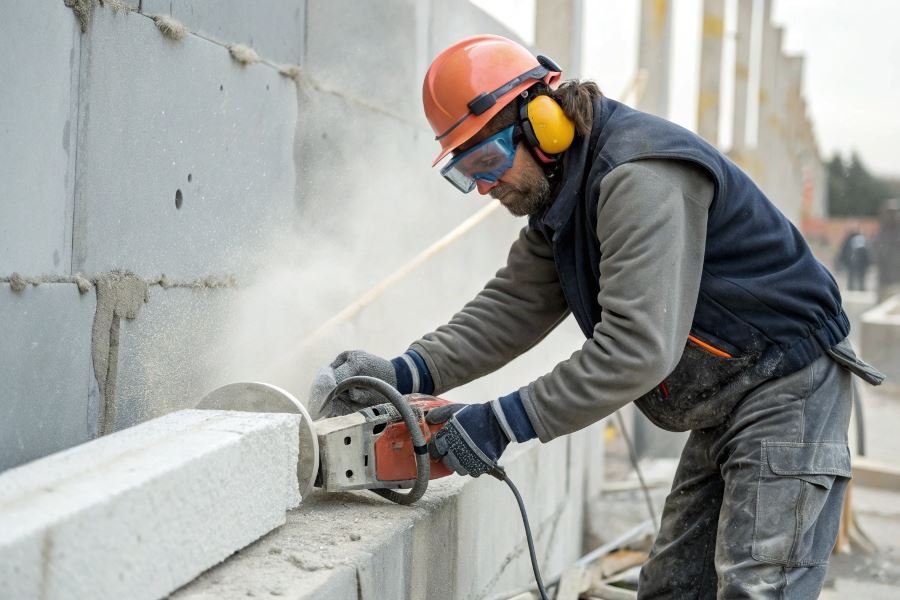
Wall cutting machines are the unsung heroes of modern construction and renovation. These powerful tools precisely cut through concrete, brick, and stone with diamond-tipped blades, creating doorways, windows, HVAC openings, and structural modifications that would be nearly impossible to achieve manually. From residential bathroom remodels to commercial building expansions, these machines transform solid barriers into new possibilities.
But here’s the challenge: a professional-grade wall cutting system can cost anywhere from $5,000 to $30,000. This substantial investment demands careful consideration against the alternative—renting the same equipment for $200-500 per day.
“The right equipment strategy isn’t universal—it’s about aligning with your specific business model and project pipeline.”
Three key factors ultimately determine which option maximizes your profitability:
- Usage frequency – Will you need this machine weekly, monthly, or just occasionally?
- Cash flow reality – Does your business have capital reserves, or is preserving liquidity critical?
- Operational control – How important is immediate availability and customization for your projects?
The most profitable choice varies dramatically based on your business context. A specialized concrete contractor handling daily cutting jobs faces a completely different equation than a general contractor who needs wall cutting capabilities just a few times annually.
The Dollars and Sense of Wall Cutting Equipment
When it comes to tackling concrete cutting projects, the decision between renting versus buying a wall cutting machine represents a critical financial crossroads for contractors and construction firms. This choice impacts not just your immediate budget, but your long-term profitability and operational flexibility. Let’s dive into the numbers that matter.
Purchase Price vs Rental Rates
The initial investment for quality wall cutting equipment is substantial. Professional-grade hydraulic wall saws from manufacturers like Husqvarna or Hilti typically range from $6,000 for basic models to upwards of $25,000 for advanced systems with greater cutting depth capabilities. When evaluating renting vs buying a wall cutting machine: which is more profitable, you must first consider your immediate capital constraints against projected usage.
Rental rates generally fall between 250−450 per day or 1, 000−1,800 per week depending on the machine’s specifications and your location. Premium equipment with specialized features commands higher rates.
| Ownership Option | Immediate Cost | 30-Day Cost Example |
|---|---|---|
| Purchase (Mid-Range) | $15,000 | $15,000 |
| Rental | $350/day | $10,500 |
The Hidden Costs of Ownership
The sticker price tells only part of the story. Ownership brings ongoing operational expenses that renters don’t face directly:
Maintenance costs average 10-15% of the purchase price annually. This includes:
- Blade replacement (300−800 depending on diameter and type)
- Hydraulic fluid changes
- Motor servicing
- Emergency repairs
Storage considerations aren’t trivial either. Climate-controlled storage space costs approximately 2−4 per square foot monthly in most markets.
Depreciation hits hardest in the first years. Most wall cutting equipment loses 15-20% of its value annually for the first three years, then 10-15% thereafter. After 5-7 years, you’re looking at significant technological obsolescence alongside physical wear.
Finding Your Break-Even Point
The magic number every contractor needs is the project volume threshold where ownership becomes more economical than renting. This calculation depends on your specific usage patterns:
Break-Even Point (in days) = Purchase Price ÷ (Daily Rental Rate – Daily Ownership Costs)
For a $15,000 machine with 2, 250annualmaintenancecosts(6.16/day) and 500annualstorage(1.37/day):
15,000 ÷ (350 – 7.53) = 43.8 days
This means if you’ll use the equipment for more than 44 days annually, purchasing likely makes more financial sense than renting.
Tax Advantages Worth Considering
Both options offer distinct tax benefits:
For buyers:
- Section 179 deduction allows for immediate expensing of qualified equipment purchases up to $1,080,000 (as of tax year 2023)
- Depreciation deductions spread the cost over the equipment’s useful life
- Interest deductions if financing the purchase
For renters:
- 100% deductible rental expenses as ordinary business costs
- No long-term asset management on balance sheets
- Greater flexibility to adjust expenses based on project flow
The tax implications shift dramatically based on your business structure and overall financial position. Smaller operations with inconsistent project volumes often benefit more from the simplicity and flexibility of rental deductions, while established companies with steady work can leverage ownership deductions to greater advantage.
When calculating total cost of ownership versus rental expenses, these tax considerations can shift your break-even point by 10-15% in either direction, making consultation with a tax professional invaluable before making your final decision.
The Decision Matrix: Renting vs Buying Wall Cutting Machines
Profitability Factors Across Business Scales
The wall cutting equipment decision ultimately hinges on your specific business profile. Let’s break down the profitability factors that should guide your choice:
Small contractors (1-3 employees) typically find renting more economical when handling fewer than 5 cutting projects monthly. The math is straightforward: with Husqvarna K970 rentals averaging $150/day versus the $2,800+ purchase price, you’d need 19+ days of usage annually to justify ownership.
Mid-sized operations (4-15 employees) enter a financial sweet spot when project frequency reaches 8-12 monthly jobs. At this volume, equipment ownership begins delivering ROI within 9-14 months, particularly with machines like the Hilti DST 20-CA wall saw.
Large construction firms almost universally benefit from ownership, especially when deploying specialized equipment across multiple job sites simultaneously. Their utilization rates typically exceed 65%, making the initial investment of 15, 000−30,000 for professional-grade systems recoverable within 12-18 months.
The tipping point isn’t just about frequency—it’s about consistency of workflow and specialization in concrete cutting services.
Strategic Decision Framework
When evaluating your optimal path, consider this framework:
| Business Factor | Rent-Favorable Conditions | Buy-Favorable Conditions |
|---|---|---|
| Project Frequency | < 8 monthly | 8 monthly |
| Job Specialization | Diverse construction services | Concrete cutting specialist |
| Cash Position | Limited capital reserves | Strong liquidity |
| Growth Trajectory | Stable or uncertain | Steady growth projected |
| Equipment Needs | Varied cutting requirements | Consistent application types |
Your decision should integrate both immediate financial impact and long-term strategic positioning. Companies experiencing rapid growth should factor in their 24-month projection, not just current volume.
Hybrid Approaches for Maximum Profitability
The rent-vs-buy decision isn’t always binary. Consider these hybrid approaches:
-
Equipment Leasing Programs offer middle-ground solutions with fixed monthly payments and potential tax advantages. Caterpillar Financial and similar providers offer terms specifically designed for construction equipment.
-
Rent-to-Own Arrangements allow testing equipment before committing while applying a portion of rental fees toward eventual purchase. This approach reduces risk while building equity.
-
Strategic Ownership Mix – many successful contractors maintain ownership of core equipment while renting specialized tools for unique projects. This balanced approach optimizes capital allocation.
-
Certified Pre-Owned Equipment from manufacturers like Weka can reduce acquisition costs by 30-45% while still providing warranty protection.
Financial leverage matters. Equipment financing at 4-6% interest rates can preserve working capital while still capturing ownership benefits. Many manufacturers offer promotional financing below market rates for qualified buyers.
The most profitable contractors don’t just choose between renting and buying—they strategically deploy both options across their equipment portfolio based on usage patterns and financial objectives.
By applying this decision framework to your specific business context, you’ll identify the approach that maximizes profitability while maintaining operational flexibility for your concrete cutting operations.
Discover whether renting or buying a wall cutting machine maximizes profits for your construction business. Compare costs, analyze break-even points, and learn tax advantages to make the financially sound choice for your project needs.
Discover whether renting or buying a wall cutting machine maximizes profits for your construction business. Compare costs, analyze break-even points, and learn tax advantages to make the financially sound choice for your project needs.