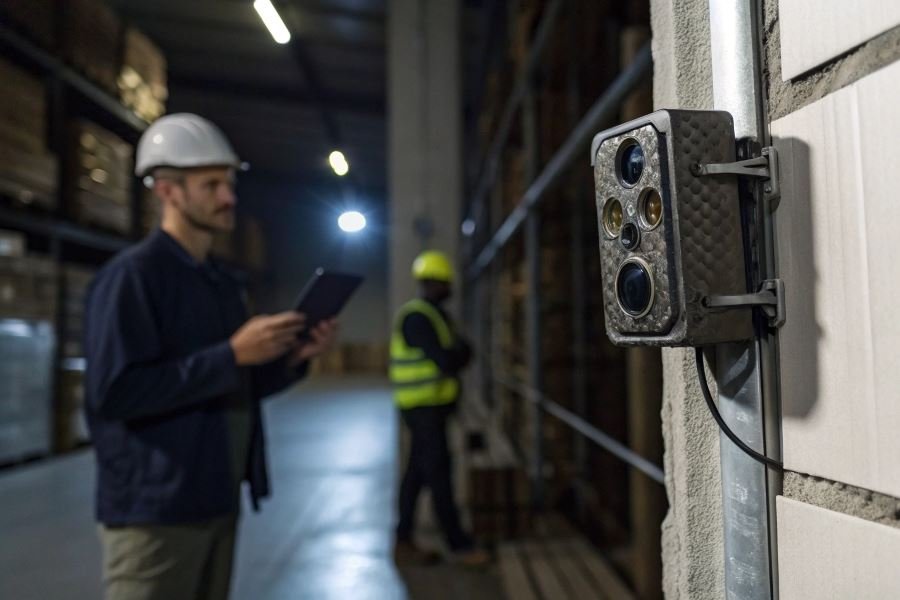
Ever walked into a warehouse and felt like you were being watched? You probably were—but not by who you might think. While traditional security cameras have long been the standard, camera traps represent a game-changing approach to protecting inventory worth millions.
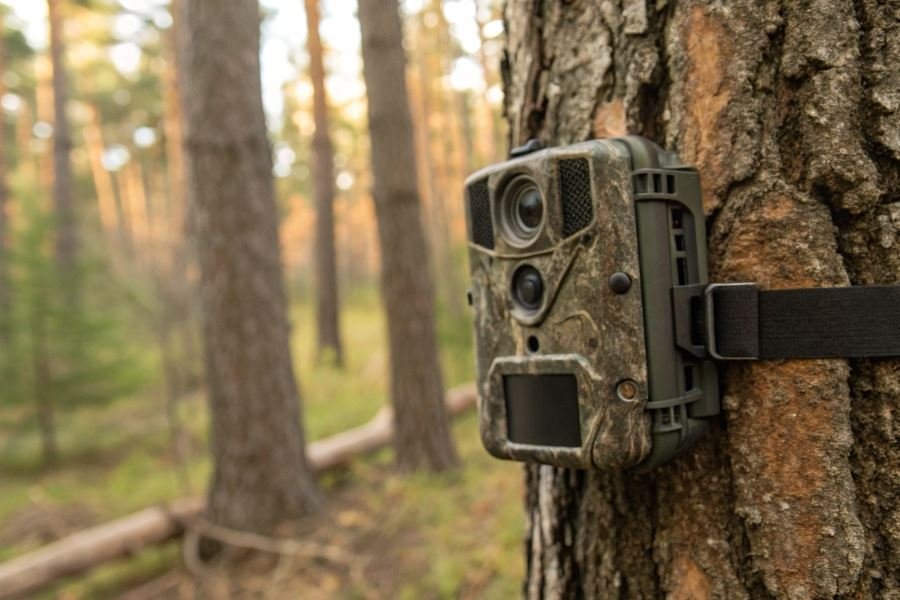
Camera traps—motion-activated surveillance devices that remain dormant until triggered—are transforming how businesses safeguard their assets. Unlike conventional CCTV systems that continuously record, these sophisticated sentinels spring to life only when detecting movement, capturing crucial moments without wading through hours of empty footage.
The challenges facing modern warehouse security are formidable. With organized retail crime syndicates becoming increasingly sophisticated and internal theft accounting for nearly 33% of inventory shrinkage, traditional security measures often fall short. The sheer scale of modern distribution centers—some exceeding 1 million square feet—creates countless blind spots where conventional cameras simply can’t reach.
What makes camera traps particularly valuable is their stealth factor. Unlike obvious security cameras that potential thieves can spot and avoid, these devices can be disguised or positioned in unexpected locations, creating an invisible security perimeter that’s nearly impossible to detect.
The benefits extend beyond theft prevention:
- Operational intelligence: Identify inefficient traffic patterns and workflow bottlenecks
- Evidence collection: Capture high-resolution images of security breaches when they occur
- Resource optimization: Dramatically reduce false alarms and unnecessary security responses
For businesses losing inventory to shrinkage, these systems deliver an average ROI within just 8-12 months while reducing security incidents by up to 47%.
Essential Features That Define Elite Warehouse Security Cameras
Resolution That Reveals Everything
When selecting camera traps for warehouse security, resolution stands as the cornerstone of an effective surveillance system. The difference between identifying a legitimate threat and capturing an indecipherable blur often comes down to megapixels. Modern warehouse environments demand nothing less than 1080p Full HD resolution, with 4K becoming the gold standard for facilities housing high-value inventory.
The strategic placement of high-resolution camera traps for warehouse security requires careful attention to coverage areas, lighting conditions, and potential blind spots. A 4K camera can capture license plate details from 50 feet away, while a standard 720p model might struggle to distinguish between authorized personnel and intruders at half that distance.
Resolution comparison for warehouse applications:
| Resolution | Pixel Count | Ideal Application | Approximate Price Range |
|---|---|---|---|
| 720p HD | 1280×720 | Small storage areas | 100−250 |
| 1080p FHD | 1920×1080 | Medium warehouses | 200−500 |
| 4K UHD | 3840×2160 | Large facilities/high-value inventory | 400−1,200 |
Motion Detection That Never Misses
The heart of any effective camera trap system lies in its motion detection capabilities. Warehouses present unique challenges with forklifts, automated systems, and personnel moving throughout the space. The ideal system balances sensitivity with intelligence.
Trigger speed matters tremendously. The difference between 0.5 seconds and 0.2 seconds can mean capturing a clear image of an intruder versus merely documenting that someone was present. Advanced systems from manufacturers like Reolink and Hikvision offer customizable zones, allowing security teams to focus detection on entry points while ignoring routine movements in high-traffic areas.
The most sophisticated systems now incorporate AI-driven motion analysis that can distinguish between humans, vehicles, and animals—virtually eliminating false alarms from environmental factors.
Adjustable sensitivity settings prove essential for warehouse environments where air currents, shifting shadows, and even insects can trigger alerts. Look for systems offering at least three sensitivity levels, with the ability to schedule different settings for business hours versus overnight periods.
Night Vision That Illuminates Threats
Warehouses operate in cycles of light and darkness, making robust night vision capabilities non-negotiable for comprehensive security. The evolution of infrared technology has transformed what’s possible in low-light surveillance.
Modern IR illuminators typically offer:
- Standard IR: Effective range of 30-50 feet, suitable for smaller storage areas
- Enhanced IR: Reaches 65-100 feet, ideal for medium warehouses
- Long-range IR: Extends beyond 100 feet for large facilities
Smart IR technology adjusts illumination intensity based on subject distance, preventing the overexposure that once plagued night vision footage.
Color night vision represents the cutting edge, with sensors from companies like Dahua capable of capturing color footage in conditions as dim as 0.005 lux. This technology proves invaluable when color details (vehicle color, clothing) become critical evidence.
For warehouses storing temperature-sensitive goods, consider thermal imaging capabilities that detect heat signatures regardless of lighting conditions. While more expensive, these systems offer unparalleled detection capabilities and can simultaneously monitor for security threats and temperature anomalies that might indicate equipment failures.
Strategic Camera Trap Deployment for Warehouse Security
Finding the perfect placement sweet spots
Optimal camera trap placement transforms ordinary surveillance into an impenetrable security shield. Start by mapping your warehouse’s critical zones: entry/exit points, high-value inventory areas, loading docks, and blind spots conventional systems miss. The cornerstone of effective placement is the “triangulation method” – positioning cameras to create overlapping fields of view that eliminate dead zones.
For maximum coverage, mount cameras at varied heights (12-15 feet is ideal for most warehouses) and angles. Corner installations provide sweeping 90-degree views while ceiling-mounted units deliver bird’s-eye perspectives critical for inventory monitoring. The Axis P3265-LVE dome cameras excel in these applications with their 360° rotation capabilities and 2MP resolution that captures crisp details even in low light.
Pro tip: Place motion-activated camera traps near emergency exits – these areas often receive less traffic but represent significant vulnerability points.
Seamless integration with existing security infrastructure
Camera traps deliver maximum value when they function as part of a cohesive security ecosystem. Modern systems from providers like Hikvision and Dahua offer robust API capabilities that facilitate integration with:
- Access control systems
- Alarm panels
- Video management software
- Inventory management platforms
The integration process typically involves three critical phases:
| Phase | Key Activities | Timeline |
|---|---|---|
| Assessment | Audit existing systems, identify integration points | 1-2 weeks |
| Configuration | Set up communication protocols, test connections | 2-3 weeks |
| Optimization | Fine-tune alerts, eliminate false positives | Ongoing |
When integrating camera traps with legacy systems, consider middleware solutions like Milestone XProtect that bridge technological gaps between older equipment and newer camera trap technology. This approach extends the lifespan of existing investments while enhancing overall security capabilities.
Maintenance protocols for sustained performance
Camera traps require systematic maintenance to deliver consistent protection. Establish a quarterly maintenance schedule that includes:
- Lens and sensor cleaning – Dust accumulation can degrade image quality by up to 40% within six months in warehouse environments
- Firmware updates – Critical for patching security vulnerabilities and accessing new features
- Power supply verification – Battery-operated units require regular checks; hardwired systems need surge protection assessment
- Field of view adjustments – Warehouse layouts change; camera positioning should evolve accordingly
The most overlooked maintenance aspect is environmental adaptation. Camera traps in cold storage areas need different maintenance protocols than those in standard warehouse conditions. Pelco offers specialized housing units for extreme temperature environments that extend camera lifespan by up to 40%.
For long-term effectiveness, implement a “maintenance passport” for each camera trap – a digital record tracking installation date, maintenance history, and performance metrics. This documentation proves invaluable during security audits and helps identify patterns that might indicate emerging issues before they compromise security.
By strategically placing camera traps, seamlessly integrating them with existing systems, and implementing rigorous maintenance protocols, warehouses can create a security infrastructure that deters threats, documents incidents, and delivers actionable intelligence.
Discover how to select effective camera traps for warehouse security systems. Learn about essential features, placement strategies, and integration options to protect inventory and prevent theft in commercial storage facilities.
Discover how to select effective camera traps for warehouse security systems. Learn about essential features, placement strategies, and integration options to protect inventory and prevent theft in commercial storage facilities.