
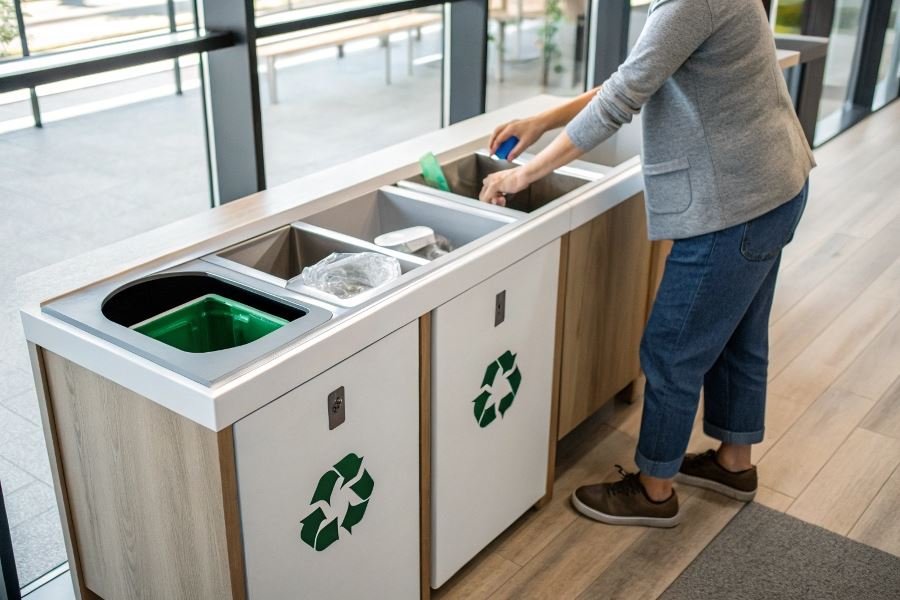
What if your kitchen could help save the planet? That’s not hyperbole—it’s happening right now in homes across America through an innovation that’s as practical as it’s revolutionary: waste collection tables with sorting capabilities.
Waste collection tables with sorting are specialized furniture pieces designed to streamline household recycling by providing designated compartments for different types of waste—paper, plastic, glass, metal, and organic materials. Unlike traditional trash bins, these tables integrate seamlessly into living spaces while making responsible disposal effortless.
From afterthought to centerpiece
The journey of waste sorting systems in homes has been remarkable. In the 1970s, recycling meant separate bins in the garage or under the sink. By the early 2000s, pull-out cabinet solutions emerged, hiding the sorting process but often making it less accessible. Today’s waste collection tables represent the third wave—functional furniture that doesn’t hide our responsibility but celebrates it.
The market landscape
The current market for sorting tables has exploded with options ranging from $200 entry-level models to designer pieces exceeding $2,000. Manufacturers like SimpleHuman and Brabantia lead with technological innovations including odor-controlling filters and touch-free operation, while artisanal woodworkers offer bespoke solutions crafted from sustainable materials.
What’s particularly fascinating is how these tables have evolved from purely utilitarian objects to statement pieces that reflect a household’s values. They’re not just about waste management—they’re about making sustainability visible and beautiful.
The Triple Win of Waste Sorting Tables
Waste collection tables with sorting have transformed how households and businesses manage their trash. These specialized stations create dedicated zones for different waste types, streamlining the recycling process from the moment something becomes waste. The environmental impact, space efficiency, and financial benefits create a compelling case for these organizational systems.
Environmental Impact That Matters
Pre-sorting waste at collection points delivers immediate environmental dividends. When examining waste collection tables with sorting: advantages and disadvantages become clear, with the environmental benefits standing at the forefront. Research from the Environmental Protection Agency shows properly sorted recyclables have a contamination rate below 8%, compared to 25% in single-stream systems.
The numbers tell the story: Every ton of paper recycled saves approximately 17 trees, 7,000 gallons of water, and 463 gallons of oil. When materials are pre-sorted at the source:
- Recycling efficiency increases by up to 40%
- Landfill diversion rates improve by 30-60%
- Processing energy requirements decrease by 25%
Pre-sorting eliminates the energy-intensive mechanical separation at processing facilities, reducing the carbon footprint of the entire waste management chain.
“The most effective recycling happens when materials never mix in the first place.” – Waste Management Association
Space Optimization That Transforms
The organizational benefits of sorting tables extend beyond environmental impact. These systems transform cluttered waste areas into models of efficiency.
Modern sorting tables feature:
- Modular compartments that adapt to changing needs
- Compact footprints that maximize available space
- Ergonomic designs that encourage proper usage
For businesses, this means reclaiming valuable square footage. Restaurants implementing sorting stations report up to 30% space savings compared to traditional waste management setups. Retail operations find similar advantages, with organized waste collection reducing storage requirements and improving back-of-house workflow.
Financial Returns That Compound
Perhaps most compelling for property owners and businesses are the long-term financial benefits of waste sorting systems.
The initial investment quickly pays dividends through:
| Benefit | Potential Savings |
|---|---|
| Reduced waste hauling fees | 15-40% annually |
| Lower contamination penalties | 500−2,000 per incident |
| Potential rebates/incentives | Varies by municipality |
| Increased material recovery value | 20-35% higher return |
Many municipalities offer incentives for businesses implementing advanced sorting systems. Recology and other waste management companies provide commercial rebates for consistent high-quality sorted materials. Some jurisdictions have implemented pay-as-you-throw programs where sorted recyclables cost significantly less to dispose of than landfill waste.
The bottom line improves when waste becomes a managed resource rather than an expense. Businesses report ROI periods of 8-24 months on sorting table investments, with benefits continuing to accumulate long after the initial payback period.
The combination of environmental stewardship, space efficiency, and financial returns makes waste collection tables with sorting capabilities a triple-win solution for forward-thinking organizations.
The Hidden Costs of Sorting Waste at Home
Waste sorting tables represent a significant step toward sustainable living, but they’re not without their challenges. While the environmental benefits are clear, practical considerations can impact their effectiveness and adoption. Let’s examine the less glamorous side of these eco-friendly installations.
Investment Beyond the Price Tag
The initial cost of quality waste sorting stations ranges from $150 for basic models to over $1,200 for premium systems with multiple compartments and specialized features. However, the true investment extends beyond the purchase price.
Installation requirements vary significantly based on your home configuration. Many sorting systems require:
- Minimum cabinet width of 24-36 inches
- Structural modifications to existing cabinetry
- Professional installation ($75-200 in labor costs)
- Potential plumbing adjustments for compost systems with drainage
Space considerations often become the hidden dealbreaker. A comprehensive sorting system typically requires 30-50% more space than traditional waste bins, creating a significant footprint in smaller kitchens.
The Maintenance Reality Check
The multi-compartment nature of sorting tables creates unique maintenance challenges that single-bin systems don’t face:
| Maintenance Challenge | Frequency | Solution |
|---|---|---|
| Cross-contamination between bins | Common | Regular sanitizing with eco-friendly cleaners |
| Odor management | Weekly | Activated charcoal filters, regular emptying |
| Mechanism wear (slides, hinges) | 6-12 months | Lubrication, occasional replacement |
| Bin cleaning | Bi-weekly | Dishwasher-safe components or manual cleaning |
The time investment for proper maintenance averages 15-20 minutes weekly, which may seem minimal but accumulates to approximately 17 hours annually dedicated to system upkeep.
Cleaning considerations are particularly important for food waste compartments, which can develop biofilms and attract pests if not regularly sanitized. Most manufacturers recommend weekly cleaning, but real-world usage often demands more frequent attention.
System Compatibility Challenges
Perhaps the most overlooked aspect of waste sorting tables is their compatibility with local waste management infrastructure.
Before investing, homeowners should verify:
- Whether local collection services accept pre-sorted waste
- If sorting categories match local recycling capabilities
- Collection schedules for different waste streams
- Any special requirements for hazardous waste disposal
The frustration of meticulously sorting waste only to see it combined in a single truck at collection time is real. Many municipalities still lack the infrastructure to maintain separation throughout the waste management chain.
Rural areas face particular challenges, with approximately 27% of American counties offering limited or no recycling programs for certain materials commonly included in home sorting systems.
The effectiveness of your sorting system ultimately depends on the final destination of your waste. Even the most sophisticated home sorting station becomes merely symbolic if your local waste management system doesn’t support material separation.
While waste sorting tables represent an admirable commitment to environmental responsibility, potential adopters should carefully weigh these practical considerations against the ecological benefits before making the investment.
Discover how smart waste sorting tables can revolutionize your home recycling system while saving space and money. Learn about their environmental benefits, potential drawbacks, and compatibility with local waste management programs.
Discover how smart waste sorting tables can revolutionize your home recycling system while saving space and money. Learn about their environmental benefits, potential drawbacks, and compatibility with local waste management programs.


