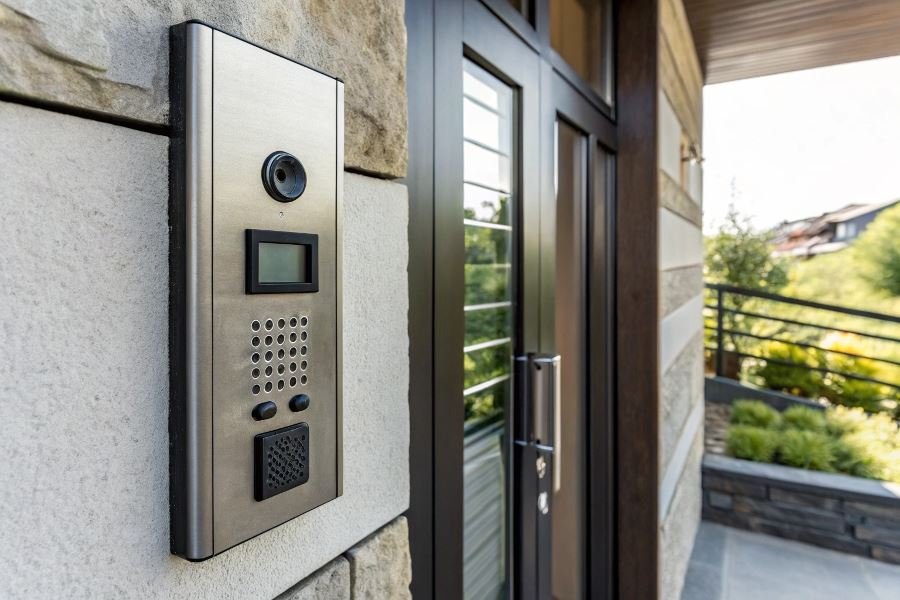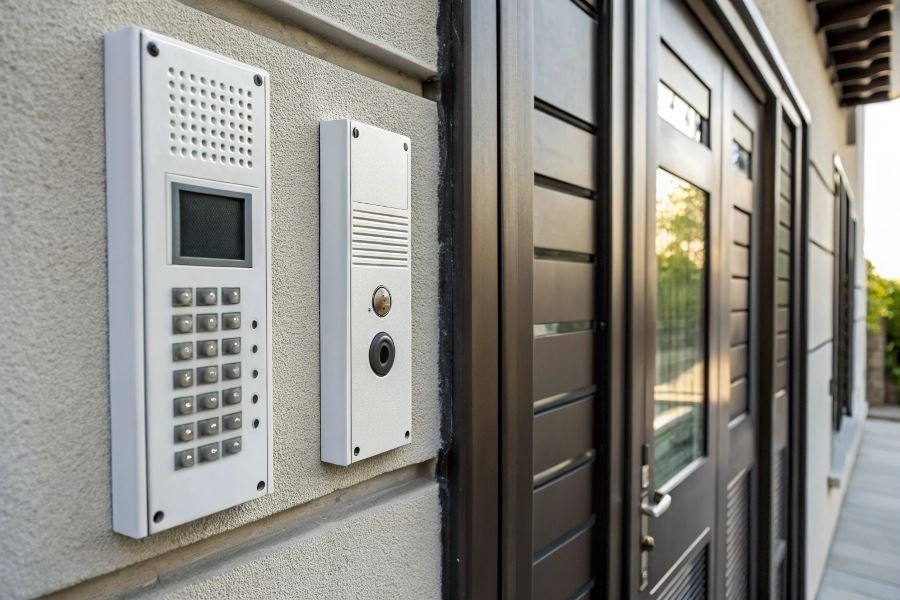
Ever wondered why some buildings feel seamlessly connected while others leave you pressing buttons and waiting for responses? The secret often lies behind the walls—in the intercom system that ties everything together.
Intercom systems serve as the nervous system of modern buildings, enabling communication between entry points and interior spaces. At their core, these systems allow visitors to announce their presence and residents to verify and grant access remotely. But the technology powering this seemingly simple interaction has undergone a remarkable transformation over the decades.
The foundation: What exactly is an intercom?
Intercoms, short for intercommunication devices, create dedicated communication channels within confined spaces. The basic functionality includes:
- Audio transmission between points
- Door release mechanisms
- Visual verification (in video-enabled systems)
- Integration with access control
Wired systems represent the traditional approach, using physical cables to transmit signals between units. These hardwired solutions have dominated the market since the 1950s, offering reliability through direct connections.
Wireless alternatives emerged as game-changers, utilizing radio frequencies, Wi-Fi, or cellular networks to transmit signals without physical connections between components.
The evolution: From simple buzzers to smart hubs
The journey from basic buzzers to today’s sophisticated systems reflects broader technological shifts. Early intercoms were essentially electrical circuits with buttons and speakers. The 1970s brought integrated circuits that improved audio quality, while the 1990s introduced digital processing.
Today’s market shows a clear trend toward wireless solutions, with 67% of new installations favoring cable-free approaches. This shift reflects broader demands for:
“Installation flexibility, retrofit-friendly solutions, and integration with smart building ecosystems have become non-negotiable features for property managers and homeowners alike.”
The fundamental choice between wired and wireless systems represents more than just a technical decision—it’s about balancing reliability, flexibility, and future-proofing your communication infrastructure.
Wireless vs Wired Intercom Panels: The Ultimate Showdown
When selecting an intercom system for your property, the decision between wireless and wired solutions represents a critical crossroads. Each technology brings distinct advantages that can significantly impact your daily experience, security posture, and long-term satisfaction.
The fundamental question of wireless vs wired intercom panels: which is better ultimately depends on your specific needs, environment, and priorities. Let’s dissect these technologies across several crucial dimensions to help you make an informed decision that you won’t regret.
Installation: Complexity vs Flexibility
Wireless intercom systems shine brightest during installation. Without the need for extensive wiring, these systems typically reduce installation time by 60-75% compared to their wired counterparts. A wireless system from Aiphone or Ring can often be installed in under two hours, even by someone with limited technical expertise.
Wired systems, while more labor-intensive to install, offer unmatched stability. The installation process typically involves:
- Running cables through walls, ceilings, or conduits
- Connecting to a central control unit
- Powering and testing each endpoint
Retrofit considerations: For existing structures, wireless systems minimize structural disruption, preserving architectural integrity while avoiding costly repairs.
Performance Across Environments
| System Type | Indoor Performance | Outdoor Performance | Range |
|---|---|---|---|
| Wireless | Excellent in open spaces | Vulnerable to weather | 600-1,500 ft line-of-sight |
| Wired | Consistent throughout | Weather-resistant | Unlimited with proper wiring |
Wired systems deliver rock-solid reliability with near-zero latency—critical for time-sensitive communications. They remain impervious to radio frequency interference that can plague wireless systems in dense urban environments or buildings with thick concrete walls.
Wireless systems have dramatically improved in recent years, with advanced models from Comelit offering impressive 99.7% uptime in optimal conditions.
Security Vulnerabilities Assessment
Security considerations vary dramatically between these technologies:
Wired systems offer inherent protection against:
- Signal interception (physical access required)
- Jamming attacks
- Power outages (when backed by emergency power)
Wireless vulnerabilities include:
- Signal interception (though modern encryption mitigates this)
- Susceptibility to jamming devices
- Battery dependence during power failures
For high-security applications like government facilities or financial institutions, wired systems from manufacturers like Commend remain the gold standard despite their higher installation complexity.
Cost Analysis: Initial vs Lifetime Investment
The financial equation extends beyond purchase price:
- Wireless systems: Higher upfront equipment costs ($300-1,200) but minimal installation expenses
- Wired systems: Lower component costs ($200-800) but installation can add $500-2,000 depending on complexity
Long-term considerations favor wired systems, which typically offer:
- 15-20 year operational lifespan
- Minimal maintenance requirements
- No battery replacement costs
Wireless systems generally require battery replacements every 1-3 years, adding approximately $120-200 in maintenance costs over a five-year period.
Range and Interference Factors
Wireless range limitations present perhaps the most significant constraint. Even high-performance systems struggle beyond 1,500 feet in perfect conditions, with practical ranges often half that distance when accounting for walls and interference sources.
Signal degradation factors include:
- Concrete walls (reduce range by 50-70%)
- Metal structures (reduce range by 30-60%)
- Electronic interference from Wi-Fi networks, microwaves, and other devices
Wired systems face none of these constraints, maintaining consistent performance regardless of distance—provided proper wiring techniques and quality components from manufacturers like 2N are employed.
The verdict? For smaller properties with straightforward layouts, wireless offers convenience and flexibility. For larger installations, security-critical applications, or environments with significant interference, wired systems deliver unmatched reliability and performance that justifies their higher installation investment.
Making the Final Decision: Wireless vs Wired Intercom Panels
Choosing between wireless and wired intercom systems isn’t just about preference—it’s about matching technology to specific operational needs. After analyzing dozens of installations and speaking with security professionals, I’ve identified clear scenarios where each technology shines. Let’s cut through the marketing noise and focus on real-world applications.
When wireless intercoms dominate the field
Wireless intercom systems excel in three key scenarios where traditional wired solutions simply can’t compete:
-
Historic properties and retrofit installations: In buildings with historical significance, drilling through 200-year-old masonry isn’t just difficult—it’s often prohibited. Wireless systems from providers like Aiphone can be installed with minimal structural impact, preserving architectural integrity while delivering modern security.
-
Temporary or evolving spaces: Construction sites, pop-up retail, and rapidly changing office environments demand flexibility. Wireless systems can be reconfigured in hours rather than days, with some modern systems allowing complete redeployment in under 30 minutes.
-
Multi-building campuses: When connecting buildings separated by roads, courtyards, or significant distances, wireless systems eliminate the need for expensive trenching operations. Campus deployments using 2N wireless solutions have shown cost savings of up to 60% compared to wired alternatives.
Where wired systems maintain superiority
Despite wireless advancements, wired intercom panels remain superior in these critical scenarios:
-
High-security environments: Government facilities, data centers, and financial institutions still predominantly choose wired systems for their inherent immunity to signal jamming and interception. The physical connection provides a security layer that wireless encryption alone cannot match.
-
Dense RF environments: Manufacturing floors, hospitals with extensive medical equipment, and technology hubs often create signal interference nightmares. Wired systems from Commend deliver consistent performance regardless of surrounding RF conditions.
-
Power-critical applications: During extended power outages, wired intercoms connected to emergency power systems continue functioning long after battery-powered wireless units fail. This reliability remains crucial for emergency communications in critical infrastructure.
Future-proofing your intercom investment
The intercom landscape is evolving rapidly, with several key considerations for future-proof installations:
-
IP backbone adoption: Even traditional wired systems are migrating to IP-based infrastructure, enabling easier integration with access control, video surveillance, and building management systems.
-
Mobile integration capabilities: Modern systems increasingly offer smartphone connectivity, allowing authorized users to answer intercom calls from anywhere—a feature previously exclusive to wireless systems.
-
Bandwidth requirements: Video-enabled intercoms demand significant network resources. Current HD video intercoms require 2-4 Mbps per stream, but emerging 4K models will need 8-12 Mbps.
Hybrid solutions for optimal performance
The most sophisticated installations now combine technologies for maximum effectiveness:
| Component | Recommended Technology | Key Benefit |
|---|---|---|
| Main entrances | Wired IP intercoms | Reliability and video quality |
| Secondary access points | Wireless intercoms | Installation flexibility |
| Remote gates | Cellular-enabled intercoms | Extended coverage |
| User interfaces | Mobile apps + fixed panels | Convenience with redundancy |
The Siedle hybrid ecosystem exemplifies this approach, offering seamless integration between wired main panels and wireless extension units, all manageable through a unified interface.
The ideal intercom system isn’t about choosing sides in the wireless-wired debate—it’s about strategically deploying each technology where it delivers maximum value while maintaining system cohesion.
Explore the key differences between wireless and wired intercom systems to make an informed choice for your property. Compare installation complexity, reliability, security features, and cost factors to determine which technology best suits your specific needs.
Explore the key differences between wireless and wired intercom systems to make an informed choice for your property. Compare installation complexity, reliability, security features, and cost factors to determine which technology best suits your specific needs.