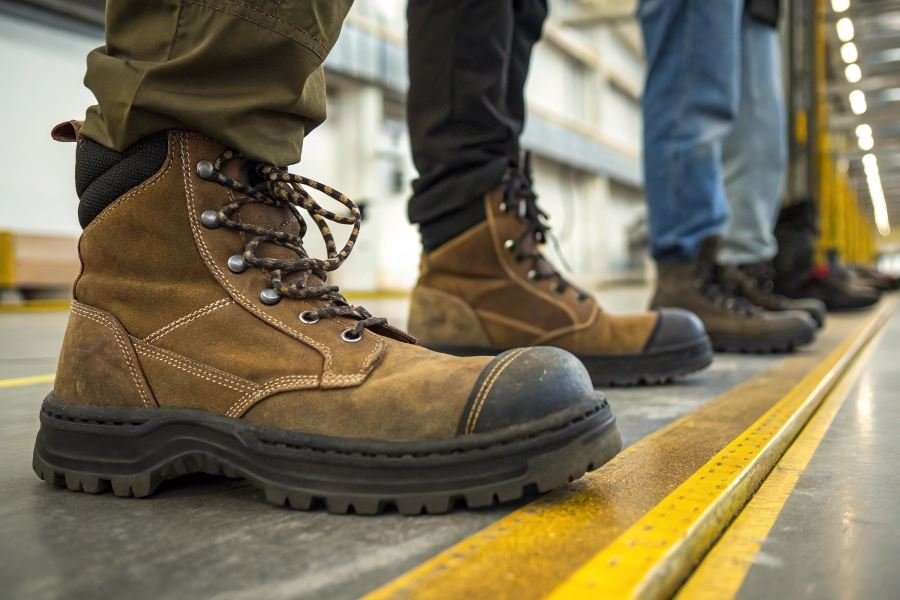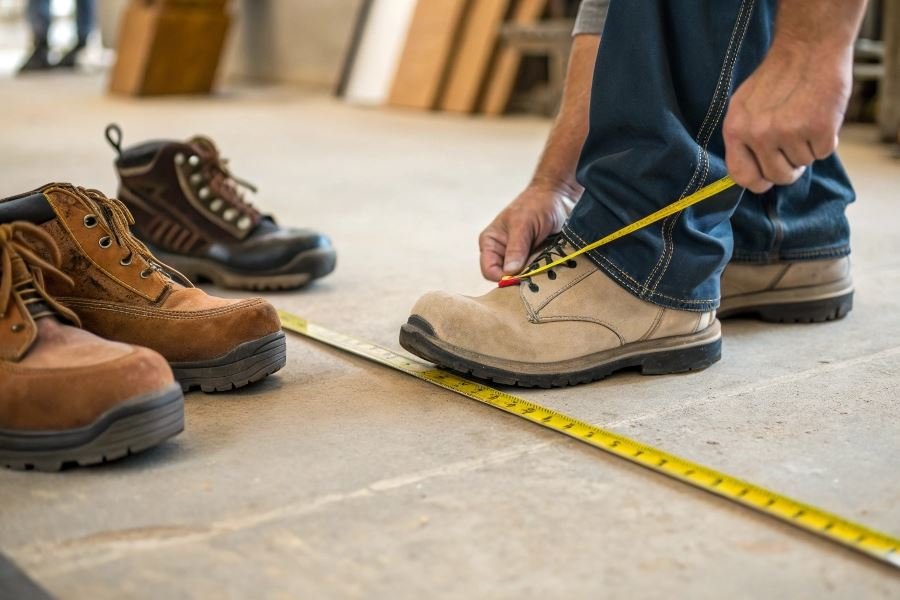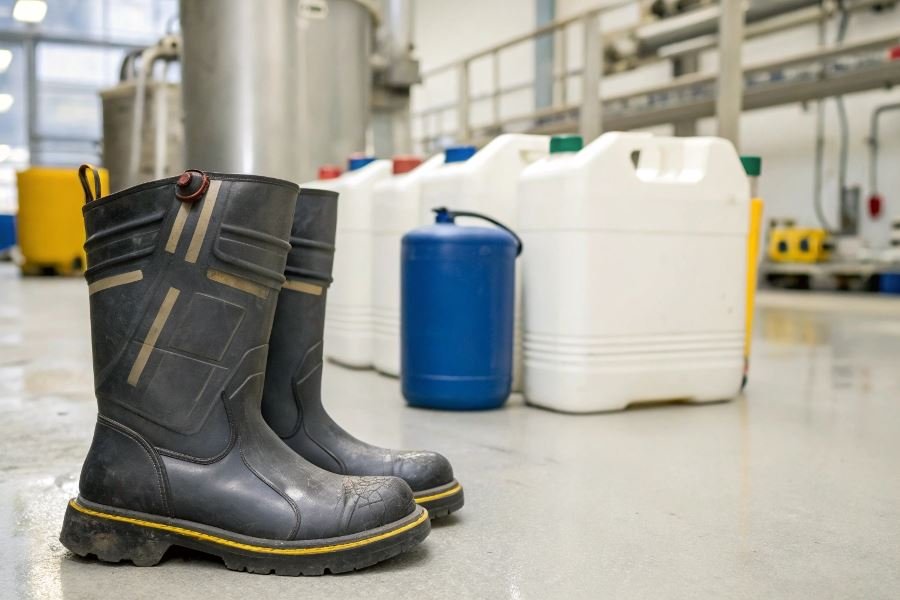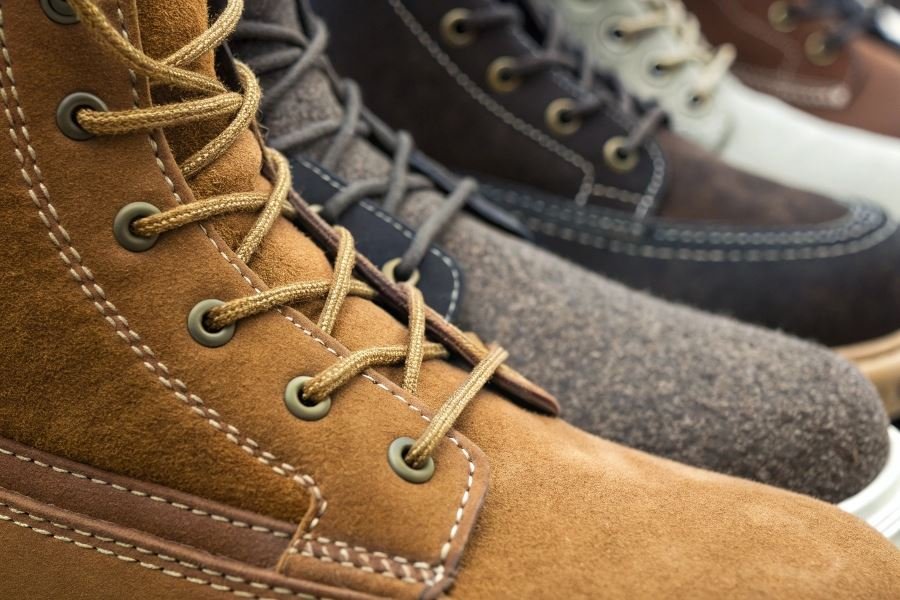
Ever wondered why some work boots feel like tanks while others crumble after a few months on the job? The secret lies not in the brand name or price tag, but in what’s beneath the surface. The materials in your safety footwear determine whether you’ll end the day with comfortable feet or painful regrets.
When selecting work boots, understanding the materials is like knowing the difference between building a house on sand versus solid bedrock. The right foundation doesn’t just protect—it transforms your entire workday experience.
Modern work boots combine a fascinating array of materials, each serving a specific purpose in the protection equation. From full-grain leather that molds to your foot over time to synthetic composites that offer lightweight protection, manufacturers have revolutionized safety footwear through material innovation.
Material selection directly impacts three critical factors: protection level, comfort during long shifts, and how long your investment will last. The ideal work boot balances these elements based on your specific working conditions.
Consider this: a construction worker in wet conditions needs waterproof materials with excellent traction, while a welder requires heat-resistant components that won’t melt when exposed to sparks. The material composition should match your daily challenges.
When evaluating work boot materials, focus on:
- Durability under your specific working conditions
- Weight versus protection trade-offs
- Breathability for temperature regulation
- Resistance to relevant hazards (chemicals, electricity, heat)
- Break-in time required before optimal comfort
The foundation of your safety starts with understanding what your boots are truly made of—and how those materials will perform when you need them most.
The Material Matrix: What Your Work Boots Are Really Made Of
When safety meets the ground, what stands between you and potential hazards matters tremendously. The materials of work boots determine not just comfort and durability, but often your safety in challenging environments. Each material choice represents a calculated trade-off between protection, weight, flexibility, and longevity.
Understanding the advantages and disadvantages of different types of materials used in work boots can make the difference between a purchase you’ll appreciate for years and one you’ll regret within weeks. From traditional leathers that mold to your feet over time to cutting-edge synthetics that offer unprecedented protection-to-weight ratios, the landscape of work boot materials has evolved dramatically while maintaining respect for time-tested solutions.
Leather: The Timeless Defender
Full-grain leather remains the gold standard for premium work boots, and for good reason. This unaltered top layer of hide retains its natural grain and inherent strength.
Benefits:
- Exceptional durability (often lasting 5+ years with proper care)
- Natural water resistance when treated
- Develops a personalized fit over time
- Breathable yet protective
Drawbacks:
- Higher initial cost ($200-400 for quality boots)
- Requires regular maintenance
- Heavier than synthetic alternatives
- Longer break-in period
Nubuck leather, created by sanding the outer layer of full-grain, offers a more refined appearance with similar durability.
Benefits:
- More flexible than full-grain
- Attractive suede-like appearance
- Good abrasion resistance
- Less break-in time
Drawbacks:
- Less water-resistant without treatment
- Shows scuffs and stains more readily
- Requires specific cleaning products
Synthetic leather (PU or PVC-based) provides a budget-friendly alternative that mimics genuine leather.
Benefits:
- Significantly lower cost
- Consistent appearance
- Minimal maintenance
- Lightweight
Drawbacks:
- Shorter lifespan (typically 1-2 years)
- Less breathable
- Doesn’t mold to foot shape
- Environmental concerns with disposal
Rubber and TPU: Water’s Worst Enemy
Vulcanized rubber components have protected workers in wet environments for generations.
Benefits:
- 100% waterproof
- Chemical resistant
- Easy to clean
- Excellent traction on wet surfaces
Drawbacks:
- Heavy
- Limited breathability
- Less flexible in cold temperatures
- Can crack with age and UV exposure
Thermoplastic Polyurethane (TPU) represents the modern evolution of rubber components.
Benefits:
- Lighter than rubber by 30-40%
- Superior flexibility across temperature ranges
- Excellent abrasion resistance
- Oil and chemical resistant
Drawbacks:
- More expensive than standard rubber
- Less insulating in extreme cold
- Can degrade under constant UV exposure
Synthetic Innovations: The Future Underfoot
Nylon and polyester materials have revolutionized the upper portions of work boots.
Benefits:
- Extremely lightweight
- Quick-drying
- Abrasion resistant
- Often more affordable
Drawbacks:
- Less protective than leather
- Shorter lifespan
- Limited puncture resistance
- Less professional appearance
Kevlar and aramid fibers have transitioned from bulletproof vests to footwear.
Benefits:
- Exceptional puncture resistance
- Lightweight protection
- Heat resistant
- Cut resistant
Drawbacks:
- Premium price point
- Often combined with other materials
- Can be stiff initially
Composite materials in toe caps and shanks have replaced traditional steel.
| Material | Weight vs. Steel | Metal Detector | Temperature Insulation | Impact Protection |
|---|---|---|---|---|
| Steel | Baseline | Triggers | Poor | Excellent |
| Aluminum | 30-50% lighter | Triggers | Moderate | Very good |
| Composite | 30-60% lighter | Non-metallic | Excellent | Good to excellent |
The evolution of work boot materials continues to accelerate, with manufacturers constantly balancing tradition with innovation. The ideal work boot doesn’t exist universally—it depends entirely on your specific needs, environment, and preferences. Understanding these material properties empowers you to make an informed decision that protects not just your feet, but your long-term comfort and safety.
Selecting the Right Work Boot Materials for Your Industry
Matching materials to workplace hazards
The perfect work boot isn’t universal—it’s specialized. Construction workers facing falling objects need steel or composite toe caps, while electrical workers require non-conductive materials like rubber or specialized composites. Oil rig workers benefit from oil-resistant rubber outsoles, and those in chemical plants need boots with chemical-resistant PVC or specialized rubber compounds.
Forestry professionals working with chainsaws require cut-resistant Kevlar layers, while miners need metatarsal guards and puncture-resistant midsoles. The environment dictates the material:
| Industry | Primary Hazards | Optimal Materials |
|---|---|---|
| Construction | Impact, punctures | Steel toe, Kevlar midsole, rubber outsole |
| Electrical | Shock, electrocution | Composite toe, rubber sole, no metal components |
| Chemical | Corrosive substances | PVC, specialized rubber, chemical-resistant leather |
| Mining | Compression, moisture | Metatarsal guards, waterproof leather, puncture-resistant plate |
| Food Processing | Slips, sanitation | Slip-resistant rubber, washable synthetic uppers |
The right material combination can mean the difference between comfort and injury—or in extreme cases, between life and death.
Balancing the material trifecta
Finding work boots that excel in protection, comfort, and durability often feels like chasing a mythical creature. Yet modern material science has made significant strides in this balancing act.
Protection doesn’t have to mean discomfort. While traditional steel toes offer excellent impact resistance, they conduct temperature and add weight. Composite materials from Timberland PRO and Red Wing provide comparable protection at 30-40% less weight.
For those on their feet all day, EVA midsoles offer superior shock absorption without sacrificing stability. Full-grain leather uppers from tanneries like Horween Leather Company provide excellent abrasion resistance while molding to your feet over time.
The durability equation isn’t just about material selection—it’s about material combinations. Boots with Goodyear welt construction allow for resoling, extending boot life by years. Vibram outsoles offer exceptional wear resistance while maintaining flexibility in varied temperatures.
The future of work boot materials
Material innovation in work footwear is accelerating rapidly. Adaptive materials that respond to environmental conditions represent the next frontier. Temperature-regulating fabrics developed by Gore-Tex are being incorporated into work boots to maintain optimal foot temperature regardless of external conditions.
Biomechanically engineered midsoles are emerging that adapt to gait patterns, reducing fatigue and improving posture. Companies like Keen Utility are pioneering asymmetrical safety toes that better match foot anatomy.
Sustainability is driving innovation as well. Recycled rubber compounds for outsoles reduce environmental impact without compromising performance. Plant-based waterproofing treatments are replacing traditional petroleum-derived compounds.
Self-healing materials that can repair minor abrasions are moving from laboratory to production. These polymers contain microcapsules of healing agents that release when damaged, extending boot life significantly.
The most exciting developments combine multiple technologies: antimicrobial treatments bonded to moisture-wicking fabrics, puncture-resistant materials that remain flexible, and lightweight composites that exceed the protection of traditional materials.
For today’s professionals, the ideal work boot isn’t about compromising—it’s about finding the precise material combination that addresses your specific workplace challenges while providing all-day comfort and lasting value.
Discover the pros and cons of leather, rubber, TPU, and synthetic materials in work boots. Our comprehensive guide helps you choose the perfect safety footwear for your specific work environment, balancing protection, comfort, and durability.
Discover the pros and cons of leather, rubber, TPU, and synthetic materials in work boots. Our comprehensive guide helps you choose the perfect safety footwear for your specific work environment, balancing protection, comfort, and durability.