Ever watched a warehouse worker struggle with an overloaded cart through a narrow doorway? Or witnessed a craftsman make three trips when one should have done? The right work cart isn’t just a convenience—it’s the difference between efficiency and frustration, productivity and wasted hours.
The fundamental challenge in selecting a work cart comes down to a classic trade-off: mobility versus capacity. Like choosing between a sports car and a pickup truck, you’re balancing the ability to move quickly and navigate tight spaces against the need to transport substantial loads in a single trip.
Why this decision matters more than you think: Studies show that inefficient material handling can waste up to 15% of a worker’s productive time. The right cart doesn’t just move stuff—it transforms workflow.
Consider three critical factors that should guide your decision:
- Space constraints – Narrow aisles, doorways, and elevators all dictate maximum cart dimensions
- Load characteristics – Weight, size, fragility, and quantity of items being transported
- Distance traveled – Short trips favor mobility, while longer hauls benefit from higher capacity
“The perfect work cart isn’t the one with the most features—it’s the one that disappears into your workflow because it so perfectly meets your needs.” — Manufacturing efficiency expert
Whether you’re outfitting a bustling warehouse, a precision manufacturing facility, or a creative workshop, understanding this fundamental trade-off is your first step toward selecting a cart that enhances productivity rather than hindering it.
The Ultimate Cart Showdown: Mobility vs. Capacity
When selecting the perfect cart for your professional needs, the age-old dilemma of mobility versus capacity inevitably surfaces. The right choice can dramatically improve workflow efficiency, while the wrong one might become an expensive obstacle. Let’s dive into what makes each option shine and how to identify which features will serve your specific requirements.
Every professional faces the fundamental question of mobility or capacity: which cart to choose for work depends entirely on your daily operational demands. The answer isn’t universal—it’s deeply personal to your business needs and workspace constraints. Understanding the core differences between mobility-focused and capacity-optimized carts will help you make an informed decision that enhances productivity rather than hindering it.
Mobility-Focused Carts: Freedom of Movement
Mobility-optimized carts prioritize ease of movement above all else. These nimble workhorses typically feature:
- Lightweight construction (usually 15-30 pounds empty)
- Premium caster wheels with 360° rotation capability
- Ergonomic handles positioned at 35-38 inches from the ground
- Compact footprints averaging 24″ x 18″
The primary advantage of mobility-focused carts from manufacturers like Rubbermaid and Uline is their ability to navigate tight spaces. With weight capacities typically ranging from 150-300 pounds, they sacrifice some storage potential for maneuverability.
These carts excel in environments where frequent movement between workstations is essential, such as healthcare settings, retail floors, or multi-room service operations.
Capacity-Optimized Carts: Storage Powerhouses
When maximum storage is the priority, capacity-optimized carts deliver impressive solutions:
- Reinforced shelving supporting 400-1,000+ pounds
- Multi-tiered organization systems with adjustable shelf heights
- Specialized compartments for tools and supplies
- Locking mechanisms for security
| Feature | Standard Capacity | Heavy-Duty Capacity |
|---|---|---|
| Weight Limit | 400-600 lbs | 800-1,200+ lbs |
| Shelf Count | 2-3 shelves | 3-5 shelves |
| Material | Steel/Plastic | Industrial Steel |
| Price Range | 150−300 | 350−800 |
Brands like Durham Manufacturing and Akro-Mils specialize in high-capacity solutions that transform disorganized workspaces into models of efficiency. These carts sacrifice some maneuverability—they’re heavier and less agile—but provide unmatched storage density.
Hybrid Solutions: The Best of Both Worlds
For those unwilling to compromise, hybrid carts offer balanced performance:
- Modular configurations that adapt to changing needs
- Collapsible sections for temporary capacity increases
- Strategic weight distribution for improved handling
- Pneumatic wheels on heavier models for easier movement
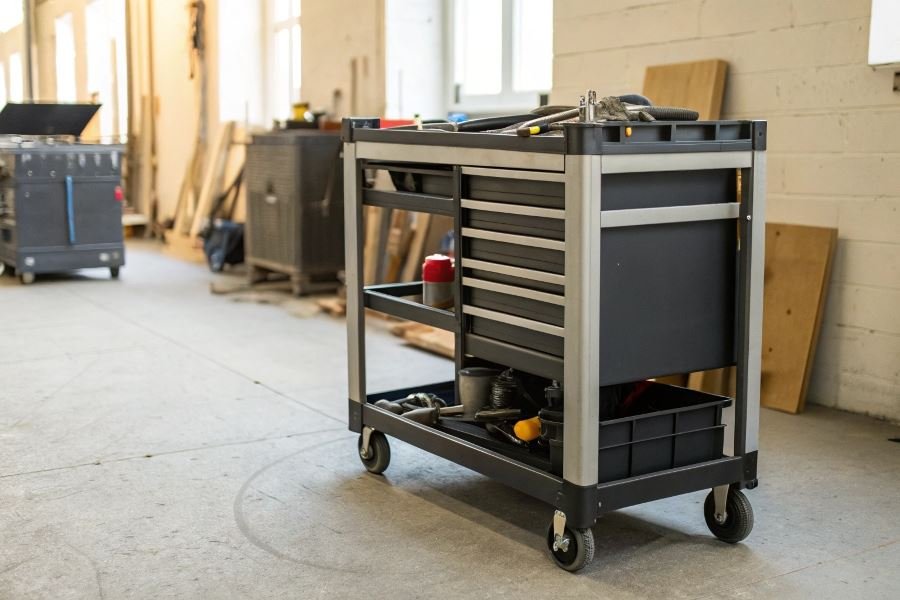
Metro and Safco have pioneered adaptable designs that perform admirably in versatile work environments. These solutions typically feature weight capacities of 300-500 pounds while maintaining reasonable maneuverability.
The hybrid approach works exceptionally well in environments where work patterns change throughout the day or week—think creative studios, maintenance departments, or multi-purpose workshops where both mobility and substantial storage are periodically required.
When evaluating your options, consider not just today’s needs but how your requirements might evolve. The most successful cart implementations anticipate future demands while solving immediate challenges, creating a seamless extension of your professional capabilities rather than just another piece of equipment.
Making the Final Decision: Your Ideal Work Cart
Choosing between mobility and capacity isn’t just a practical decision—it’s a strategic investment in your daily workflow efficiency. Let’s cut through the confusion and help you select the perfect cart for your professional needs.
The Decision Framework That Works
Selecting the right work cart requires a systematic approach. Consider these critical factors:
- Primary task frequency – Track which tasks consume most of your workday
- Travel distance – Measure the average distance you move materials
- Load weight – Calculate typical and maximum load requirements
- Space constraints – Assess doorways, elevators, and workspace dimensions
- Surface conditions – Evaluate floors, thresholds, and outdoor terrain
The perfect work cart isn’t the one with the most features—it’s the one that solves your specific daily challenges.
Create a simple scoring system: assign 1-5 points for mobility needs and 1-5 points for capacity requirements. If your mobility score exceeds capacity by 2+ points, prioritize maneuverability. If capacity wins by the same margin, maximize storage. Equal scores? Look for balanced hybrid options.
Best Carts for Your Needs
When Mobility Matters Most:
-
The Urban Navigator – The Rubbermaid Convertible utility cart combines aluminum construction with pneumatic wheels, weighing just 28 pounds while supporting up to 300 pounds of cargo. Its collapsible design allows it to shrink to just 8 inches thick for storage.
-
The Workshop Wanderer – The Milwaukee PACKOUT cart system features customizable components, modular storage, and all-terrain wheels with 360° rotation. Its reinforced corners and IP65 rating make it weather-resistant for indoor/outdoor versatility.
-
The Healthcare Hustler – The Ergotron CareFit Pro medical cart offers whisper-quiet casters, one-handed height adjustment, and ergonomic handles. Its lightweight aluminum frame includes antimicrobial surfaces and cable management systems for medical environments.
When Maximum Storage is Priority:
-
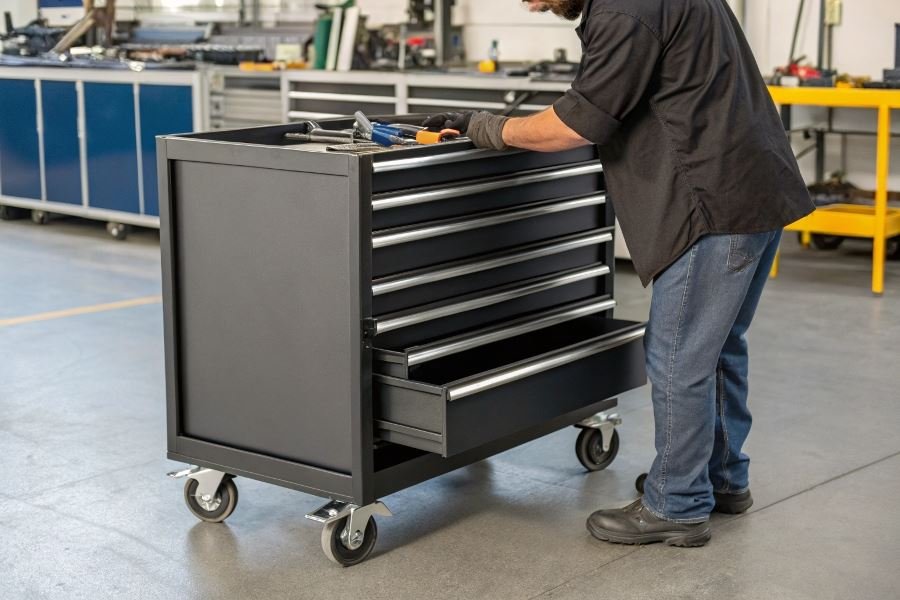
The Warehouse Workhorse – The Gladiator GarageWorks heavy-duty cart features welded steel construction with reinforced corners. Its 2,000-pound capacity makes it ideal for automotive, manufacturing, and warehouse environments.
-
The Workshop Command Center – The Husky Industrial cart combines drawer storage with open shelving, featuring integrated power outlets and USB charging ports. Its modular design allows customization for specific tool storage needs.
-
The Production Powerhouse – The Durham Manufacturing cart includes lockable cabinets, reinforced shelving, and chemical-resistant finishes. Its specialized configurations support electronics assembly, laboratory work, and production environments.
Capacity Champions at a Glance:
| Cart Model | Weight Capacity | Shelf Count | Special Features |
|---|---|---|---|
| Gladiator GarageWorks | 2,000 lbs | 3 adjustable | Steel construction, locking casters |
| Husky Industrial | 1,500 lbs | 5 modular | Drawer system, power strip integration |
| Durham Manufacturing | 1,200 lbs | 4 reinforced | Lockable cabinet, oil-resistant finish |
Remember that the best cart isn’t necessarily the most expensive or feature-rich—it’s the one that seamlessly integrates with your workflow, eliminating friction points and enhancing productivity where you need it most.
Discover how to select the perfect work cart by balancing mobility and capacity needs for your specific workplace. Learn about key design features, weight capabilities, and hybrid solutions that maximize efficiency and organization in professional settings.
Discover how to select the perfect work cart by balancing mobility and capacity needs for your specific workplace. Learn about key design features, weight capabilities, and hybrid solutions that maximize efficiency and organization in professional settings.