Ever watched a skilled craftsman at work and noticed how their clothing seemed to be an extension of their expertise? That’s no accident. The right workwear doesn’t just protect—it empowers.
When safety meets productivity on the job site, quality work overalls stand at that critical intersection. But with countless options flooding the market, distinguishing exceptional workwear from mediocre alternatives requires understanding specific evaluation criteria that professionals rely on.
Safety as non-negotiable foundation
Quality work overalls begin with uncompromising safety features. Look for reinforced seams in high-stress areas and flame-resistant materials that meet industry certifications. The difference between standard and superior protection often reveals itself during those unexpected workplace incidents that test equipment to its limits.
Durability that translates to value
The true cost of workwear isn’t on the price tag—it’s calculated over its lifespan. Premium overalls might command $120-200 upfront compared to budget options at $40-60, but when that investment delivers 3-4 times longer wear, the mathematics favor quality. Factor in reduced replacement frequency and consistent protection, and the premium choice becomes the economical one.
Functionality designed for real work
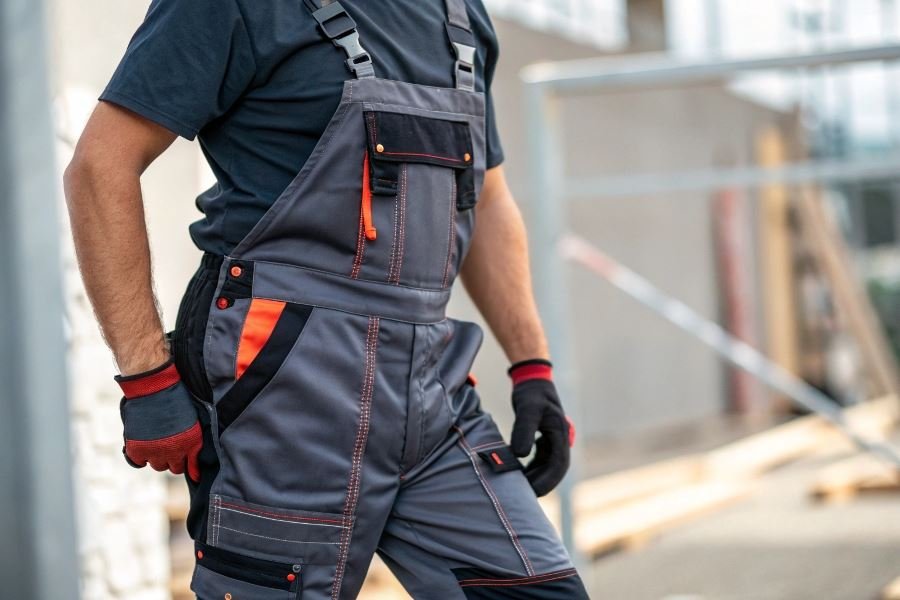
The best overalls incorporate thoughtful details born from actual workplace challenges: strategically placed tool pockets, reinforced knee panels, and mobility-enhancing stretch panels. These features don’t just add convenience—they eliminate daily friction points that silently drain productivity and focus.
The Anatomy of Excellence in Work Overalls
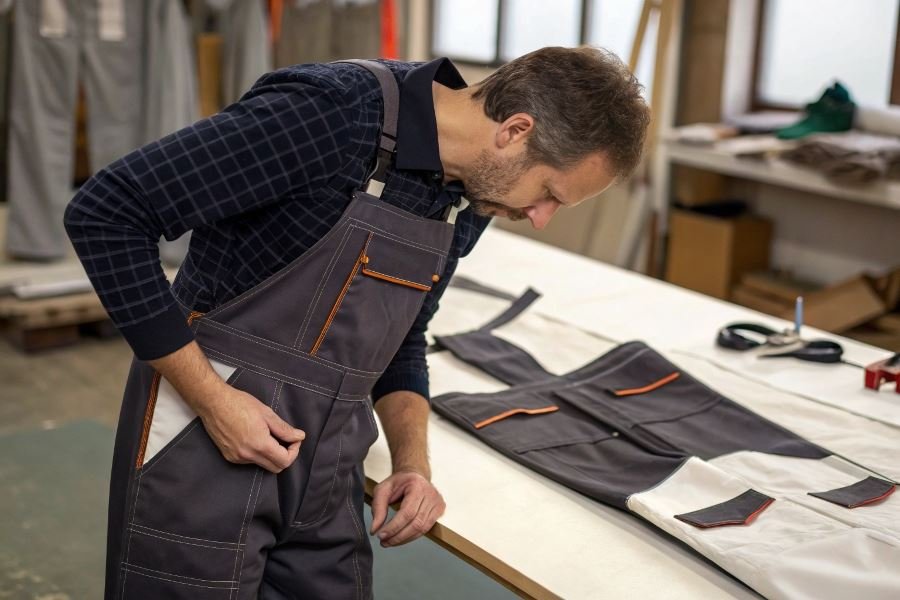
When your livelihood depends on what you wear, every stitch, seam, and material choice matters. Professional-grade work overalls aren’t just clothing—they’re specialized equipment designed to protect, perform, and persist through demanding conditions. Understanding the criteria for choosing a quality work overall means recognizing the engineering behind garments that stand between you and the elements, chemicals, abrasions, and other workplace hazards.
Durability That Defies Time
The foundation of exceptional workwear begins with fabric weight. Premium work overalls typically feature fabrics weighing between 12-16 ounces per square yard—substantially heavier than standard clothing. This increased density translates directly to longevity.
Tear resistance represents the garment’s ability to withstand catching on equipment or sharp edges. Look for ripstop patterns or fabrics with high tensile strength ratings above 400N (Newtons). Many manufacturers now incorporate CORDURA® or similar reinforced materials at critical wear points, offering up to 5x the durability of standard cotton.
“The difference between budget and professional-grade workwear becomes apparent after the third wash cycle—one maintains structure while the other begins to surrender.”
Reinforced stitching techniques separate disposable from dependable:
| Stitching Type | Durability Rating | Best Applications |
|---|---|---|
| Triple-needle | Excellent | Stress points, seams |
| Bartack | Superior | Pocket corners, tool loops |
| Chain stitch | Good | General seams |
| Flat-felled | Very good | Prevents fraying, adds comfort |
Comfort That Sustains Productivity
Breathability represents the critical balance between protection and perspiration management. Modern performance fabrics achieve moisture vapor transmission rates (MVTR) of 800-1200 g/m²/24hr while maintaining protective qualities. This technical specification directly impacts all-day wearability.
Flexibility comes through strategic design elements:
- Articulated knees with dimensional shaping
- Gusseted crotch construction adding 30-45% more range of motion
- Mechanical stretch fabrics providing 10-15% give without compromising durability
Ergonomic design principles have revolutionized workwear. Leading manufacturers now incorporate body mapping—analyzing movement patterns to place seams away from pressure points and create panels that work with, not against, natural body mechanics.
Material Intelligence for Environmental Challenges
Different environments demand specialized material properties:
For extreme heat environments, look for inherently flame-resistant (FR) fabrics like Nomex or Tecgen with arc ratings (ATPV) above 8 cal/cm². These materials self-extinguish and protect against flash hazards.
For wet conditions, breathable waterproof membranes with hydrostatic head ratings above 10,000mm provide meaningful protection while allowing sweat vapor to escape. Gore-Tex and similar technologies maintain this balance through microscopic pore structures.
For chemical exposure risks, fluoropolymer-treated fabrics offer repellency against splashes while maintaining flexibility. Full chemical protection requires specialized barriers with documented chemical breakthrough times.
Cold weather performance depends on insulation efficiency measured in CLO values—look for ratings between 1.5-2.5 CLO for moderate cold environments, with strategic insulation mapping that places warmth where needed without bulk in articulation zones.
The intersection of these material properties with construction techniques creates workwear that doesn’t just survive your workday—it enhances your performance throughout it. When evaluating options, remember that premium workwear isn’t an expense—it’s an investment in productivity, safety, and professional longevity.
Functional Design That Works as Hard as You Do
Task-specific features for every industry
Work overalls aren’t just clothes—they’re specialized equipment designed for specific environments. Construction workers need reinforced knees and hammer loops, while mechanics require oil-resistant fabrics and easy-access tool pockets. The best overalls are built around the tasks you perform daily.
Industry-specific innovations have revolutionized workwear functionality. Electricians benefit from non-conductive buttons and specialized insulated tool pockets. Welders need flame-resistant materials with strategically placed seams that minimize spark traps. Painters require splatter-resistant fabrics that clean easily without compromising breathability.
The difference between generic and task-specific overalls becomes apparent within hours of wear. Carhartt overalls designed for construction feature triple-stitched seams that withstand constant movement and abrasion, while their agricultural variants include reinforced panels specifically where farm work creates the most wear.
Storage solutions that organize your workday
The humble pocket has evolved into a sophisticated system of specialized compartments. Modern work overalls feature an average of 12-20 pockets, each engineered for specific tools and purposes.
Strategic pocket placement can reduce body movement by up to 30% during repetitive tasks, minimizing fatigue and improving productivity.
| Pocket Type | Optimal Placement | Best For |
|---|---|---|
| Tool Loops | Hip level, reinforced | Hammers, measuring tapes |
| Tech Pockets | Chest, with flaps | Smartphones, small electronics |
| Utility Pockets | Thigh, expandable | Bulkier tools, parts |
| Secure Pockets | Inside chest | Valuables, documentation |
The best storage solutions anticipate your workflow. Dickies has pioneered modular pocket systems that allow customization based on daily tasks. Their reinforced tool loops distribute weight evenly, preventing the dreaded “sagging” that creates tripping hazards and discomfort.
Specialized compartments have become increasingly sophisticated, with waterproof sections for electronics, magnetic closures for quick access, and RFID-blocking pockets for security badges and cards. These thoughtful additions transform overalls from simple clothing into comprehensive workstations.
Safety features that protect without compromise
Visibility features have advanced well beyond basic reflective strips. Modern high-visibility overalls incorporate strategically placed 3M Scotchlite™ reflective material that maintains visibility at all angles. The difference between standard reflective material and premium options can mean visibility at 300+ feet versus just 100 feet in low-light conditions.
Flame resistance has become increasingly sophisticated, with materials like Nomex providing protection without the bulk and discomfort of older fire-resistant fabrics. These advanced materials self-extinguish, preventing continued burning while maintaining breathability.
Protective properties extend beyond the obvious. Quality overalls now include:
- Impact-absorbing materials at key contact points
- Chemical-resistant treatments that don’t compromise fabric breathability
- Anti-static properties for electronics manufacturing environments
- Cut-resistant panels in areas vulnerable to sharp tools
- Waterproof sections that don’t create uncomfortable heat buildup
The integration of these safety features with comfort and functionality represents the pinnacle of workwear design. Blaklader has pioneered overalls with removable knee pads that meet EN 14404 protection standards while maintaining full mobility—proving protection doesn’t have to mean restriction.
When selecting work overalls, these functional design elements should drive your decision. The right combination of task-specific features, thoughtful storage solutions, and comprehensive safety properties creates workwear that enhances performance rather than merely covering your clothes.
Discover the 7 essential criteria for selecting durable work overalls that maximize safety, comfort, and functionality. Learn how to evaluate materials, construction quality, and task-specific features to invest in workwear that delivers long-term value and protection.
Discover the 7 essential criteria for selecting durable work overalls that maximize safety, comfort, and functionality. Learn how to evaluate materials, construction quality, and task-specific features to invest in workwear that delivers long-term value and protection.