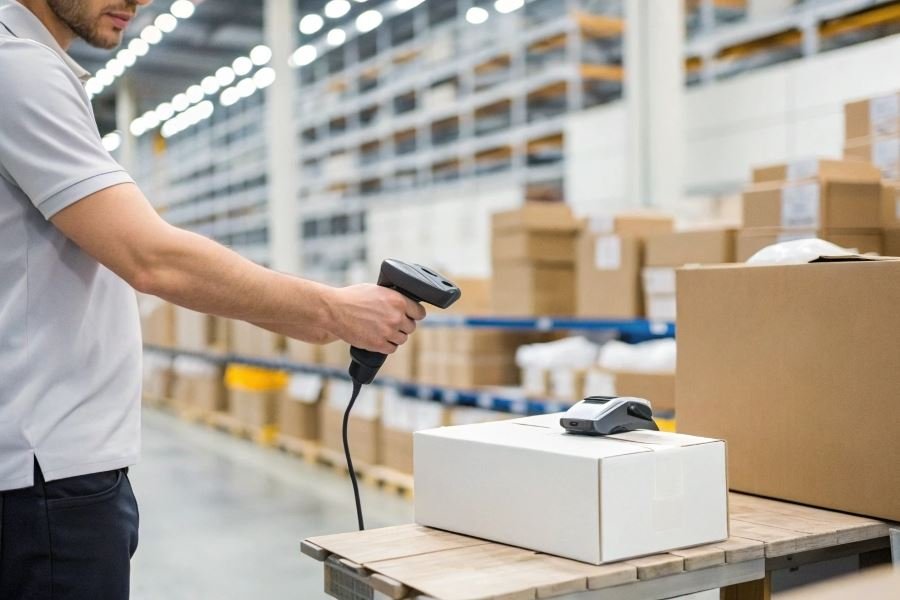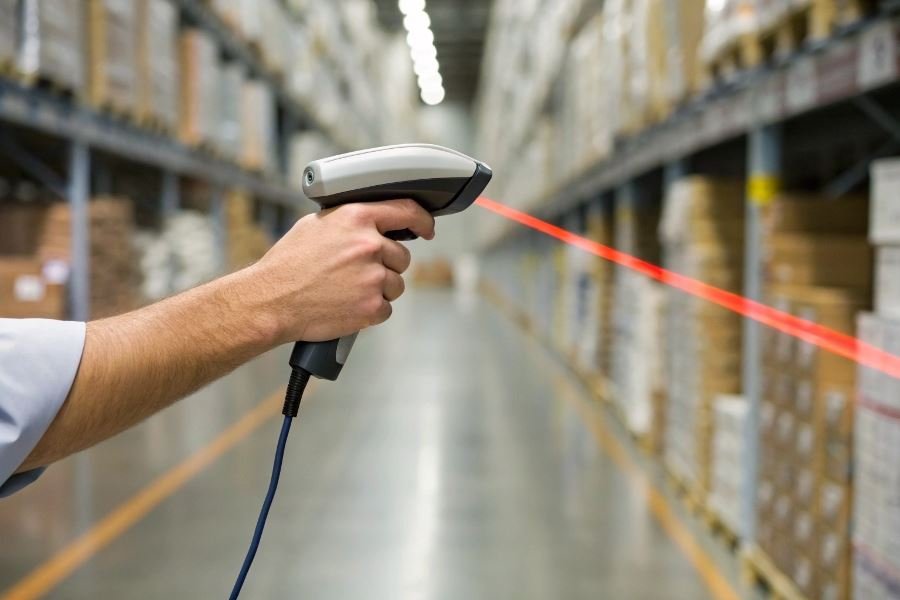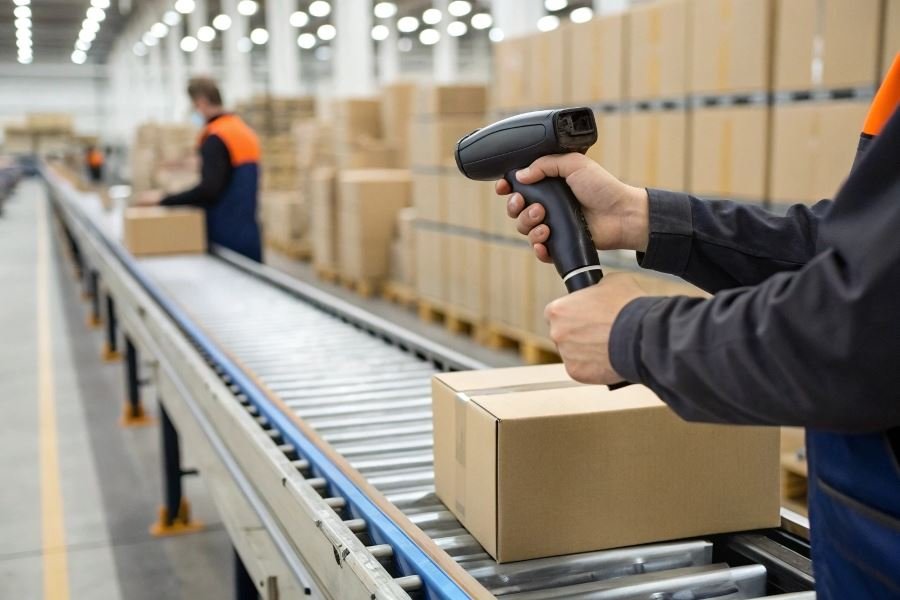
What’s the true cost of a scanner that fails mid-shift? Far more than its price tag.
In warehouses, retail backrooms, and manufacturing floors across America, barcode scanners aren’t just tools—they’re critical infrastructure. These unsung heroes process thousands of scans daily, often in punishing conditions that would destroy consumer-grade electronics within weeks. When operations depend on accurate, lightning-fast data capture, reliability isn’t a luxury—it’s the difference between smooth operations and costly bottlenecks.
What makes a scanner truly reliable?
Reliability in industrial barcode scanners stems from three critical factors: build quality, scan performance, and connectivity resilience. The most dependable models feature reinforced housings that withstand repeated 6-foot drops to concrete, IP65 or higher ratings for dust and water resistance, and components engineered for temperature extremes. But physical toughness means nothing without consistent first-pass scan rates—even when barcodes are damaged, poorly printed, or wrapped around curved surfaces.
The reliability landscape is evolving
The industrial scanner market has shifted dramatically toward devices that balance ruggedness with intelligence. Modern workhorses now incorporate onboard processors that decode damaged barcodes through algorithmic reconstruction rather than requiring perfect scans. Wireless models have evolved from connectivity liabilities to mission-critical assets, with enterprise-grade radios maintaining connections across vast warehouses.
The most forward-thinking operations now deploy scanners with predictive diagnostics—devices that alert managers to potential failures before they happen, not after productivity has already suffered.
Battle-Tested Barcode Scanners That Never Quit
When operations depend on reliable data capture, not all barcode scanners are created equal. In high-volume warehouses, manufacturing floors, and distribution centers, scanner failure means costly downtime and frustrated workers. The most reliable barcode scanners for intensive use combine industrial-grade construction with advanced scanning technology to deliver consistent performance even in the most demanding environments. Let’s examine the three champions that consistently outperform the competition when the pressure is on.
Zebra DS3600 Series: The Indestructible Workhorse
The Zebra DS3600 series redefines durability standards with specifications that read like a survival guide:
- 8-foot drop specification to concrete (2.4m) – twice the industry standard
- IP67 sealing against dust and water immersion
- -22°F to 122°F (-30°C to 50°C) operating temperature range
- 3,000 tumbles at 3.3 feet (1m) in tumble testing
What truly distinguishes the DS3600 is its advanced scanning engine. It captures barcodes in virtually any condition – damaged, dirty, poorly printed, or under shrinkwrap – from distances up to 70 feet for certain models. The PowerPrecision+ battery delivers an impressive 70,000+ scans per charge, ensuring multi-shift operation without battery swaps.
| Feature | Specification | Benefit |
|---|---|---|
| Scan Range | Up to 70ft (21.4m) | Reduces ladder climbing, improves safety |
| Battery Life | 70,000+ scans | Eliminates mid-shift battery changes |
| Decode Rate | 4-inch UPC at 26ft | Exceptional first-pass read rates |
| Memory | 512MB Flash | Stores thousands of barcodes offline |
Honeywell Granit 1980i: Never Misses a Beat
The Honeywell Granit 1980i excels in environments where continuous operation is non-negotiable. This area-imaging scanner combines extended-range capabilities with industrial-grade reliability:
- 6.5-foot drop resistance to concrete across operating temperature range
- IP65 sealing against dust and water jets
- -22°F to 122°F (-30°C to 50°C) temperature tolerance
- Bluetooth Class 1 with 300-foot (100m) wireless range
The Granit’s standout feature is its exceptional scanning versatility. It reads 1D and 2D barcodes from near-contact to distances exceeding 50 feet, making it ideal for inventory management in high-rack warehouses. Its omnidirectional scanning capability means workers spend less time aligning the scanner and more time moving product.
“The scanner that pays for itself” isn’t just marketing – many facilities report ROI within months due to productivity gains and reduced replacement costs compared to consumer-grade devices.
Datalogic PowerScan 9500: Precision Under Pressure
The Datalogic PowerScan 9500 series delivers reliability metrics that make it a favorite in manufacturing and automotive environments:
- 6.5-foot drop specification to concrete
- IP65 sealing against dust and water
- 3-point shock-absorbing system protecting internal components
- Datalogic’s patented ‘Green Spot’ technology for visual good-read feedback
What sets the PowerScan 9500 apart is its exceptional performance in high-precision applications. The scanner’s advanced optics and image processing algorithms deliver accurate reads of high-density, small barcodes common in electronics manufacturing and automotive parts tracking.
Field analysis shows the PowerScan excels in environments with extreme temperature variations, vibration, and exposure to chemicals. Users consistently report scan success rates exceeding 99.8% even after years of intensive use – a testament to both its optical quality and mechanical durability.
Bottom line: When downtime isn’t an option, these three industrial titans deliver the reliability, durability, and performance that intensive scanning operations demand. The investment in enterprise-grade scanning technology pays dividends through increased productivity, reduced replacement costs, and the elimination of costly scanning errors.
Making the Right Investment in Barcode Scanning Technology
Durability, speed, and power in perspective
When evaluating barcode scanners for high-volume environments, three critical performance metrics consistently rise to the top: durability, scan speed, and battery life. The Zebra DS3678 ultra-rugged series leads the pack with its ability to withstand 8-foot drops to concrete and 5,000 tumble tests, while maintaining IP67 sealing against dust and water immersion. Compare this to the Honeywell Granit 1981i, which offers similar drop specifications but only 3,000 tumble tests.
Scan speed creates dramatic differences in throughput over time. The Datalogic PowerScan PD9531 delivers up to 1,000 scans per second, while most mid-range scanners hover around 300-500 scans per second. In high-volume operations, this difference translates to thousands of additional processed items per shift.
Battery performance varies significantly across models:
| Scanner Model | Battery Life | Charge Time | Scans Per Charge |
|---|---|---|---|
| Zebra DS3678 | 18+ hours | 3 hours | 100,000+ |
| Honeywell Granit 1981i | 14 hours | 4.5 hours | 50,000+ |
| Datalogic PowerScan | 16+ hours | 4 hours | 80,000+ |
The difference between a scanner that lasts a full double shift versus one requiring mid-shift charging directly impacts operational efficiency.
Beyond sticker price: total cost considerations
The initial purchase price represents only 20-30% of a scanner’s total cost of ownership. When evaluating scanners for intensive use, consider these often-overlooked factors:
-
Replacement rate: Industrial-grade scanners may cost 2-3 times more upfront but typically last 5-7 years compared to 1-2 years for commercial-grade alternatives.
-
Downtime costs: When a scanner fails, the true cost includes not just repairs but lost productivity. In warehouse environments, this can exceed $100 per hour per worker.
-
Battery replacement: Premium scanners like the Honeywell Xenon XP 1952g feature field-replaceable batteries, eliminating the need to replace entire units when batteries degrade.
-
Software compatibility: Enterprise-grade scanners typically offer broader compatibility with warehouse management systems and inventory platforms, reducing integration costs.
The most expensive scanner you’ll ever buy is the one that fails when you need it most.
Future-proofing your scanning investment
Technology evolves rapidly, but strategic investments can extend the useful life of your scanning infrastructure:
-
Connectivity options: Scanners supporting multiple connection protocols (Bluetooth 5.0, Wi-Fi 6, USB-C) provide flexibility as your infrastructure evolves.
-
Symbology support: Choose scanners that read both traditional barcodes and newer 2D codes like QR, DataMatrix, and DotCode to accommodate changing labeling standards.
-
Firmware upgradeability: The Cognex DataMan 8700 series offers regular firmware updates that add new capabilities without hardware replacement.
-
Modular design: Some premium scanners allow component upgrades rather than full replacement. The scan engine might be swappable as technology improves.
Ultimately, the most reliable barcode scanner for intensive use environments balances immediate performance needs with adaptability to future requirements. By considering durability metrics, total ownership costs, and technological longevity, you can select scanning technology that delivers consistent performance today while accommodating tomorrow’s challenges.
Discover the top 3 industrial barcode scanners built for high-volume operations. Compare durability, scan speed, and battery life of Zebra DS3600, Honeywell Granit 1980i, and Datalogic PowerScan 9500 for maximum reliability and ROI.
Discover the top 3 industrial barcode scanners built for high-volume operations. Compare durability, scan speed, and battery life of Zebra DS3600, Honeywell Granit 1980i, and Datalogic PowerScan 9500 for maximum reliability and ROI.