
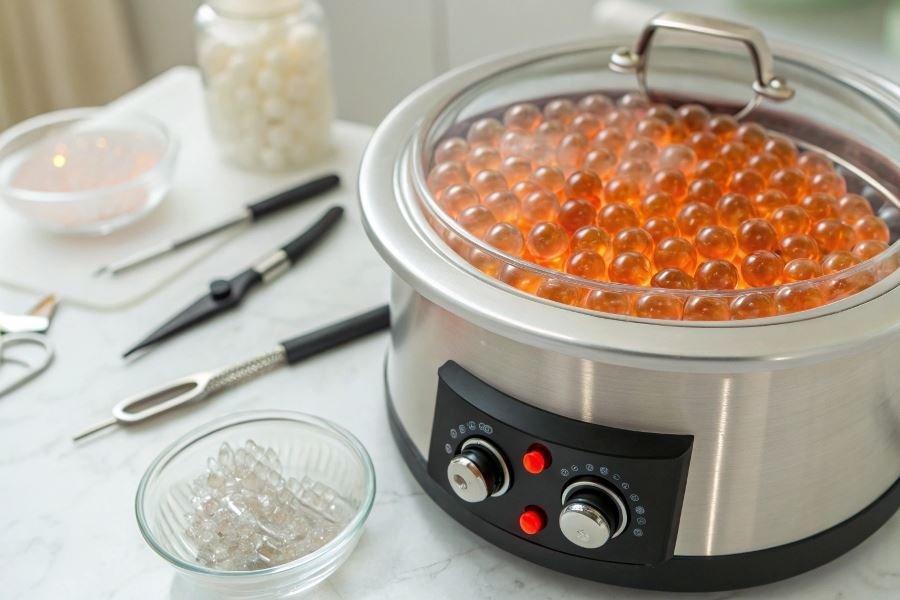
Ever wondered how your dentist ensures those metal tools are completely germ-free before they enter your mouth? The answer might be sitting quietly on their counter—a glass bead sterilizer, a critical yet often overlooked piece of equipment in medical, dental, tattoo, and beauty industries.
Glass bead sterilizers are compact devices that use small glass beads heated to temperatures between 425°F and 500°F (218°C-260°C) to rapidly sterilize small metal instruments. When tools are inserted into these superheated beads, microorganisms are destroyed within seconds—a process that combines efficiency with reliability in maintaining rigorous hygiene standards.
The technology has evolved significantly since its introduction in the mid-20th century. Early models were basic heating chambers, but today’s sterilizers feature precise digital temperature controls, automatic timers, and even antimicrobial coatings. This evolution reflects our growing understanding of infection control protocols and the need for standardized sterilization practices across professional settings.
The science behind the sterilization
What makes glass bead sterilizers particularly effective is their ability to provide dry heat sterilization without the moisture damage that can occur with autoclave methods. The tiny glass beads conduct heat efficiently, reaching into the smallest crevices of dental excavators, cuticle nippers, and other precision instruments that might harbor dangerous pathogens.
For professionals who rely on these devices daily, understanding the critical features that separate a reliable sterilizer from an inadequate one isn’t just about equipment longevity—it’s about client safety and professional reputation.
Essential Technical Specifications for Glass Bead Sterilizers
When investing in a glass bead sterilizer for your practice or workshop, the technical specifications can make the difference between efficient sterilization and frustrating underperformance. The market offers numerous options, but understanding what to pay attention to when buying a glass bead sterilizer will ensure you select equipment that delivers consistent results while meeting your specific needs.
Temperature Range and Heating Capabilities
The sterilization magic happens at precise temperatures—nothing less will do. Professional-grade glass bead sterilizers should reach temperatures between 425°F and 500°F (220°C to 260°C), with premium models hitting the sweet spot of 450°F (232°C). This temperature range effectively eliminates pathogens while preserving your instruments.
Heating element quality matters tremendously. Look for units with ceramic or high-grade metal heating elements that provide even heat distribution. The Steri-Dent Pro X5 models feature dual-core heating elements that reduce temperature fluctuations to less than ±5°F—critical for consistent sterilization cycles.
The warm-up time directly impacts workflow efficiency. Top-tier units reach optimal temperature in 10-15 minutes, while budget options might take 30+ minutes. Consider how this affects your daily operations.
| Temperature Feature | Standard Models | Premium Models |
|---|---|---|
| Maximum Temperature | 425°F (220°C) | 500°F (260°C) |
| Warm-up Time | 20-30 minutes | 8-15 minutes |
| Temperature Stability | ±10°F | ±3°F |
| Heating Elements | Single core | Dual/Triple core |
Chamber Size and Capacity Considerations
The sterilization chamber’s dimensions determine what instruments you can process and how many at once. Standard chambers range from 1.5″ to 3″ in diameter with depths between 2″ and 6″.
Deeper isn’t always better. While a 6″ chamber offers more capacity, heat distribution becomes challenging at greater depths. The optimal balance typically falls around 4″ depth, providing sufficient capacity while maintaining temperature uniformity.
Consider these practical capacity guidelines:
- Small chambers (1.5″ diameter): Ideal for dental tools and fine jewelry tools
- Medium chambers (2-2.5″ diameter): Perfect for tattoo needles and beauty implements
- Large chambers (3″+ diameter): Suitable for larger veterinary or podiatry instruments
The glass bead quantity and quality significantly impact performance. Premium glass beads conduct heat more efficiently and last longer before degrading. Most units require between 100-500g of beads depending on chamber size.
Construction Materials and Durability Factors
The materials used in constructing your sterilizer directly influence its lifespan and safety profile. The exterior housing should feature heat-resistant materials—stainless steel remains the gold standard, though high-grade aluminum with heat-resistant coatings offers a lighter alternative.
Interior chamber composition is non-negotiable: surgical-grade stainless steel prevents corrosion and contamination. The SterilMax 3000 features a seamless chamber design that eliminates crevices where contaminants might hide.
Insulation quality determines both safety and energy efficiency. Premium models incorporate ceramic fiber insulation that maintains exterior temperatures below 140°F even when the chamber reaches maximum temperature.
Control systems range from basic analog dials to sophisticated digital interfaces with programmable cycles. While analog controls offer simplicity and durability, digital systems provide precise temperature control and often include safety features like automatic shutoff and cycle completion alerts.
The best sterilizers incorporate thermal fuses and overheat protection circuits that prevent equipment damage and workplace hazards. These safety features may add to the initial cost but provide invaluable protection for your investment and workspace.
Making the Right Choice for Your Glass Bead Sterilizer
When investing in a glass bead sterilizer for your practice, the final decision deserves careful consideration. After all, this equipment will be responsible for maintaining the sterility of your instruments for years to come. Let’s explore the brands that consistently deliver excellence, how to evaluate what you’re getting for your money, and the long-term considerations that make all the difference.
Industry-Leading Brands That Deliver
The glass bead sterilizer market features several standout manufacturers, but three consistently rise above the competition:
-
Ikohe – Known for their precision engineering and temperature stability, Ikohe sterilizers feature digital temperature controls that maintain accuracy within ±2°F. Their signature blue illuminated chamber makes it easy to see instruments during insertion and removal.
-
Steri-Dent – These units earn praise for exceptional durability, with many practitioners reporting 10+ years of reliable service. Their patented thermal distribution system ensures uniform heat throughout the bead chamber.
-
Germstar – Offering the widest range of sizes, Germstar excels in energy efficiency with their rapid heat-up technology that reaches sterilization temperature in under 10 minutes while consuming 15% less electricity than competitors.
Each of these manufacturers offers comprehensive warranties and responsive customer service—factors that significantly enhance their value proposition.
Understanding Price-to-Quality Relationships
Glass bead sterilizers typically range from $75 to $450, with significant variations in what you receive at different price points:
| Price Range | What to Expect | Best For |
|---|---|---|
| $75-150 | Basic functionality, manual temperature control, smaller chambers | Occasional use, small practices |
| $151-250 | Digital controls, medium capacity, 1-2 year warranties | Regular use, mid-sized practices |
| $251-450 | Precision temperature regulation, large capacity, extended warranties, advanced safety features | High-volume practices, professional settings |
The sweet spot for most practitioners falls in the $200-300 range, where you’ll find equipment that balances quality construction with practical features. Spending more typically yields diminishing returns unless you require specialized features like extra-large chambers or ultra-precise temperature control.
Long-Term Value and Maintenance Considerations
The initial purchase price represents only part of your investment. Consider these factors for maximum long-term value:
Maintenance requirements vary significantly between models. Look for units with:
- Removable bead chambers for easy cleaning
- Stainless steel construction that resists corrosion
- Self-diagnostic systems that alert you to potential issues
Replacement parts availability becomes crucial over time. The top manufacturers maintain parts inventories for at least 7 years after model discontinuation.
Energy consumption adds up over years of operation. Units with insulated chambers and smart heating elements can reduce operating costs by $30-50 annually compared to basic models.
The most cost-effective sterilizers aren’t necessarily the cheapest upfront—they’re the ones that deliver years of trouble-free operation with minimal maintenance requirements.
When making your final selection, prioritize reliability and ease of maintenance over flashy features. A glass bead sterilizer that consistently performs its essential function day after day represents the best investment for your practice, regardless of price point.
Discover the 7 critical features to evaluate when purchasing a glass bead sterilizer for your business. Learn about temperature ranges, chamber capacity, and top brands to ensure proper sterilization and hygiene compliance in your professional setting.
Discover the 7 critical features to evaluate when purchasing a glass bead sterilizer for your business. Learn about temperature ranges, chamber capacity, and top brands to ensure proper sterilization and hygiene compliance in your professional setting.
