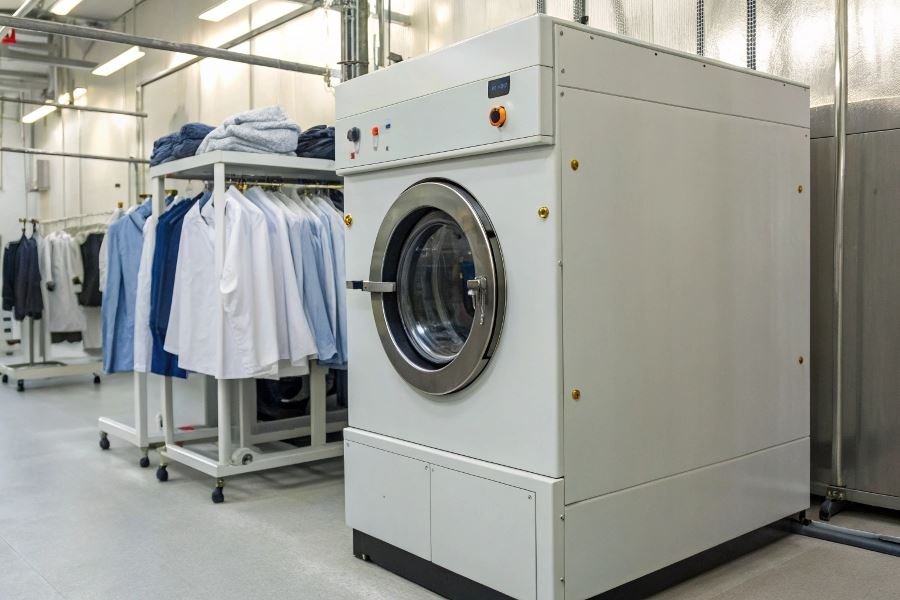
Ever stood in front of your dryer watching the timer tick down at a glacial pace while your clothes remain stubbornly damp? That frustration often stems from one overlooked detail: matching your dryer’s power to your laundry space.
Selecting the right power rating for your drying machine isn’t just about faster drying—it’s the difference between efficient operation and wasted energy, between clothes that feel fresh and fabrics that never quite dry properly. The relationship between your machine’s power and your laundry room’s dimensions creates either harmony or discord in your home laundry system.
Power selection matters more than you think. A dryer with insufficient power in a large space struggles constantly, working overtime and consuming excess electricity. Conversely, an overpowered unit in a tiny utility closet creates excessive heat, potentially damaging delicate fabrics and wasting energy. According to the Department of Energy, properly sized appliances can reduce energy consumption by up to 30%—translating to hundreds of dollars saved annually.
Key performance factors in different spaces
Your laundry room’s ventilation, ambient temperature, and humidity levels dramatically affect how hard your dryer must work. A basement laundry room typically requires more powerful drying capabilities than a well-ventilated room on an upper floor. Similarly, regions with naturally high humidity demand more robust drying power.
Understanding power ratings
Dryer power ratings typically range from 1,800 to 5,000 watts. This number isn’t just marketing—it directly correlates to the machine’s ability to generate heat and move air through your clothes. For compact spaces under 30 square feet, lower-wattage models often suffice, while dedicated laundry rooms over 50 square feet may require more powerful units to maintain efficiency.
The perfect power match creates the sweet spot where performance meets efficiency—where clothes dry quickly without unnecessary energy consumption.
Technical Calculations for Dryer Power Selection
Selecting the right power capacity for your drying machine isn’t just about buying the biggest unit you can afford—it’s about precision engineering for your specific space. When professional laundry operators determine how to select the power of a drying machine based on the volume of the laundry room, they follow a methodical approach that balances efficiency with performance. Let’s dive into the technical calculations that will ensure your dryer operates at peak efficiency.
Measuring Your Space with Precision
The foundation of proper dryer sizing begins with accurate measurements. Grab a laser measuring tool rather than a tape measure for maximum precision. You’ll need:
- Length and width measurements (to the nearest 1/8 inch)
- Floor-to-ceiling height (measure in three different spots to account for uneven floors)
- Alcove dimensions if the dryer will be installed in a recessed area
Pro tip: Create a detailed floor plan with measurements noted. Include the location of doors, windows, and existing ventilation points—these will impact airflow dynamics around your dryer.
A properly sized dryer needs adequate breathing room. Industry standards recommend a minimum of 18 inches of clearance on all sides for commercial units and at least 1 inch for residential models.
BTU and Kilowatt Calculations
Once you have your measurements, it’s time for the critical calculations:
- Calculate the cubic footage of your laundry room (Length × Width × Height)
- Determine the BTU or kilowatt requirements using this formula:
| Room Size (sq ft) | Minimum BTU Requirement | Recommended kW Range |
|---|---|---|
| Under 100 | 15,000-20,000 BTU | 3.5-5 kW |
| 100-200 | 20,000-30,000 BTU | 5-7 kW |
| 200-300 | 30,000-40,000 BTU | 7-9 kW |
| 300+ | 40,000+ BTU | 9+ kW |
For gas dryers, the calculation is typically 20 BTU per cubic foot of laundry room space. Electric dryers require approximately 0.05 kW per cubic foot.
Remember: These are baseline calculations. Your specific needs may vary based on additional factors we’ll cover next.
Adjusting for Room Variables
The raw numbers are just the starting point. Several critical factors require adjustment to your power calculations:
Ceiling Height Considerations
Standard calculations assume an 8-foot ceiling. For each foot above this:
- Increase BTU requirements by 10-15%
- Add approximately 0.5-1 kW for electric units
For lower ceilings (under 8 feet), you may need to select a unit with enhanced ventilation capabilities rather than reducing power.
Ventilation Factors
The ventilation efficiency dramatically impacts power requirements:
- Poor ventilation: Increase power requirements by 20-25%
- Excellent ventilation: Standard calculations are sufficient
- No external venting: Consider condensation or heat pump dryers from Miele or Bosch
For rooms with humidity issues, factor in an additional 5,000 BTU or 1-1.5 kW to combat moisture buildup.
A properly sized dryer based on these technical calculations will deliver optimal drying performance while minimizing energy consumption and preventing the premature wear that comes from constant overworking of undersized units. The investment in proper sizing pays dividends in both performance and longevity.
Making the Final Call: Your Drying Machine Power Decision
Selecting the right drying machine power based on your laundry room’s dimensions isn’t just about matching numbers—it’s about creating a harmonious system that serves your household efficiently for years to come. Let’s finalize your decision with some critical considerations that go beyond basic calculations.
Energy Efficiency and Power Requirements
The relationship between power and efficiency isn’t always linear. Today’s high-efficiency dryers from brands like Miele and LG often deliver superior performance while consuming less energy than their predecessors.
Wisdom nugget: A higher-powered machine running for shorter cycles often consumes less total energy than a lower-powered unit running extended cycles.
Consider heat pump dryers, which use approximately 50% less energy than conventional models. While they may have lower power ratings (typically 800-1400W compared to 2000-5000W for conventional dryers), they achieve excellent drying results through advanced technology rather than brute force.
| Dryer Type | Typical Power Range | Energy Efficiency | Best For |
|---|---|---|---|
| Heat Pump | 800-1400W | Excellent | Small-medium spaces, energy-conscious homes |
| Condenser | 2000-3000W | Good | Medium spaces without venting |
| Vented | 3000-5000W | Fair | Larger spaces with exterior venting |
When balancing power with efficiency, focus on the energy star rating rather than just the wattage number. A machine with intelligent moisture sensors will automatically adjust cycle times, preventing energy waste regardless of its power rating.
Future-Proofing Your Purchase
Household needs evolve. The compact dryer that perfectly suits your current two-person household might become woefully inadequate when children arrive or when aging parents move in.
When selecting your dryer’s power capacity, consider:
- Anticipated household changes over the next 5-7 years
- Seasonal variations in laundry volume (winter clothing typically requires more drying power)
- Potential renovations that might alter your laundry room dimensions
Oversizing slightly is generally wiser than undersizing. A larger-capacity, higher-powered machine running at partial loads is more efficient than forcing a smaller machine to handle oversized loads repeatedly.
Expert Consultation for Complex Setups
For laundry rooms with unusual dimensions, electrical limitations, or special requirements, professional consultation becomes invaluable.
A qualified appliance specialist can:
- Conduct a comprehensive electrical assessment to determine if your home can support higher-powered machines
- Recommend specific models optimized for your unique space constraints
- Provide custom installation solutions for challenging spaces
Home Depot and Lowe’s offer free consultation services with appliance purchases, while independent appliance dealers often provide more personalized expertise.
Remember that installation costs for higher-powered machines might include electrical upgrades. Factor these into your total budget rather than being surprised later.
The perfect dryer balances power requirements with your specific space constraints while accommodating your household’s current and future needs. By considering energy efficiency, anticipating future requirements, and seeking expert advice when needed, you’ll select a drying machine that delivers optimal performance within your unique laundry environment.
Learn how to match your dryer's power to your laundry room size for optimal performance and energy efficiency. Discover the technical calculations, space requirements, and key factors that ensure perfect drying results in any home setup.
Learn how to match your dryer's power to your laundry room size for optimal performance and energy efficiency. Discover the technical calculations, space requirements, and key factors that ensure perfect drying results in any home setup.