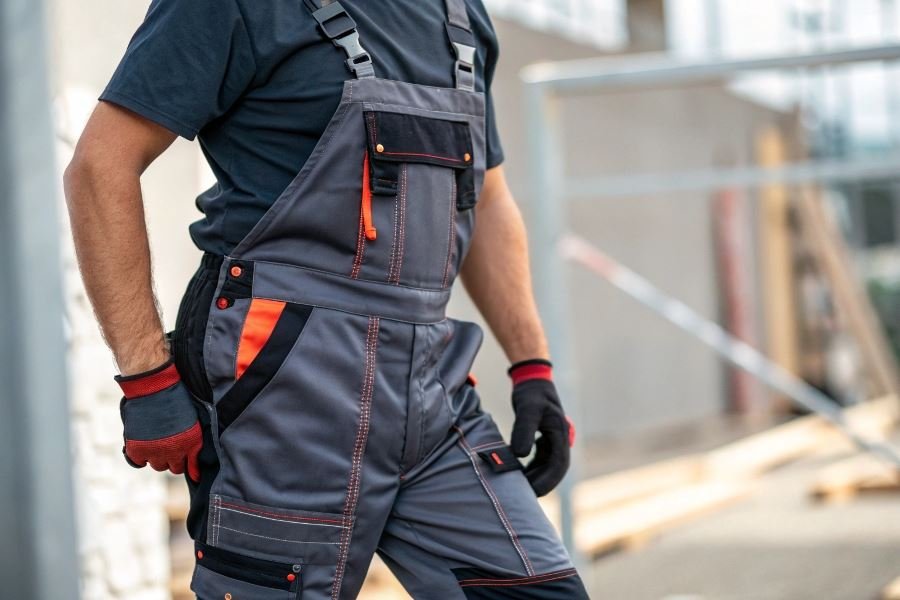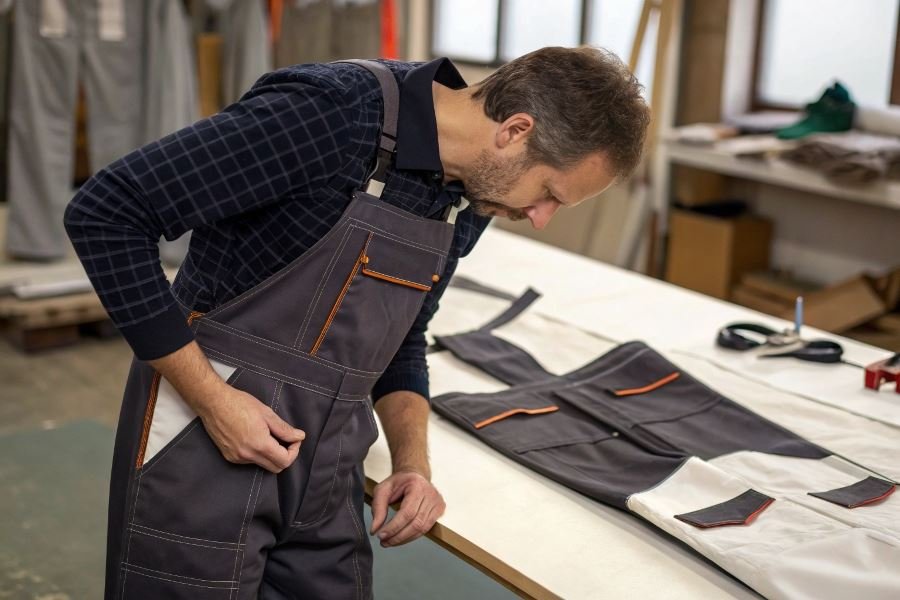
Ever watched a skilled craftsman struggle with sleeves that keep sliding up while welding? Or witnessed a construction worker constantly hitching up pants that are too loose? These aren’t just minor annoyances—they’re serious safety hazards and productivity killers.
Properly fitted work overalls aren’t just about comfort; they’re your first line of defense in hazardous environments. When your coveralls fit correctly, they protect against chemicals, flames, and physical hazards exactly as designed. Too loose, and they snag on machinery. Too tight, and they restrict movement during critical moments.
The sizing puzzle that frustrates even veterans
Finding your perfect fit isn’t straightforward. A “Large” from one manufacturer might fit like a “Medium” from another. This inconsistency stems from the lack of universal sizing standards across the industry. European, American, and Asian manufacturers often use entirely different measurement systems, creating a confusing landscape for buyers.
“The difference between a good day and a miserable one often comes down to how well your workwear fits.” — Veteran construction supervisor
The measurement maze
Most manufacturers base their sizing on three key measurements:
- Chest circumference
- Waist size
- Inseam length
But here’s where it gets tricky: some brands add extra room for layering in cold environments, while others design for a closer fit. Some use stretch fabrics that accommodate movement differently than traditional cotton duck.
Understanding these variations is essential for making informed decisions that keep you safe, comfortable, and performing at your best throughout demanding workdays.
Essential Measurements for Perfect-Fitting Workwear
Finding workwear that fits properly isn’t just about comfort—it’s about safety, productivity, and professional appearance. When your coveralls pinch, your safety pants ride up, or your work jacket restricts movement, you’re not just uncomfortable—you’re potentially compromising your safety and efficiency.
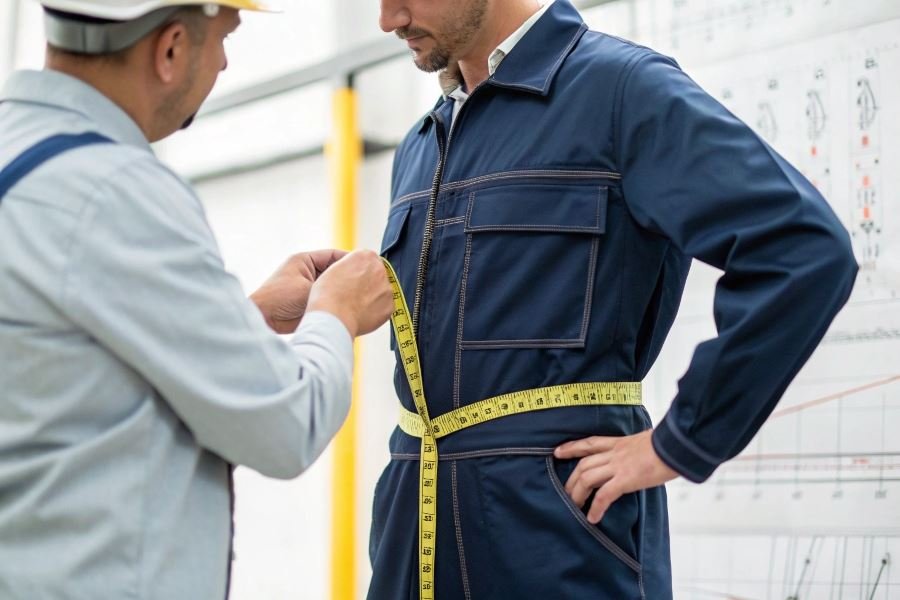
The process of selecting the right size of work overalls begins with understanding your body’s unique measurements. Taking accurate measurements at home requires nothing more than a flexible measuring tape and a few minutes of your time. This small investment pays dividends in workwear that performs as hard as you do throughout demanding shifts.
Primary Body Measurements You Need
Four key measurements form the foundation of properly fitted workwear:
Chest/Bust: Measure at the fullest part of your chest, keeping the tape parallel to the floor. For women, this means around the fullest part of the bust; for men, just under the armpits across the pectoral muscles.
Waist: Find your natural waistline—typically the narrowest part of your torso, about an inch above your navel. Keep the tape snug but not tight.
Inseam: This crucial measurement runs from your crotch to where you want your pants to end. For most work pants, measure to just above the ankle or where your work boots begin.
Height: Stand straight against a wall, have someone mark your height, and measure from floor to mark. This helps determine if you need tall, regular, or short sizing options.
| Measurement | How to Measure | Common Mistakes |
|---|---|---|
| Chest/Bust | Around fullest part, tape parallel to floor | Measuring too loosely or over thick clothing |
| Waist | At natural waistline, snug but not tight | Measuring over belt or sucking in stomach |
| Inseam | From crotch to desired pant length | Measuring outside leg instead of inside |
| Height | Floor to top of head while standing straight | Measuring with shoes on |
Taking Accurate Measurements at Home
For precision that rivals professional tailoring:
- Wear minimal clothing – Measure over underwear or thin, form-fitting clothes
- Stand naturally – Don’t adjust your posture to appear taller or slimmer
- Use a flexible fabric tape – Metal measuring tapes can bend and distort readings
- Get assistance – Having someone else take measurements improves accuracy
- Measure twice – Confirm each measurement with a second reading
Pro tip: Record your measurements in both inches and centimeters to simplify conversion when shopping across different sizing systems.
Navigating Size Charts and Conversion Systems
Workwear sizing varies dramatically between manufacturers, countries, and even product lines from the same brand. Understanding how to interpret these differences saves time and prevents costly returns.
American vs. European Sizing:
- US sizes typically use inches and may include descriptors like “Large” or “XL”
- European sizes use centimeters and often appear as numbers (e.g., 52, 54)
- UK sizing falls somewhere between, with its own unique numbering system
Size Chart Translation:
| US Size | EU Size | UK Size | Chest (inches) | Waist (inches) |
|---|---|---|---|---|
| M | 48-50 | 38-40 | 38-40 | 32-34 |
| L | 52-54 | 42-44 | 42-44 | 36-38 |
| XL | 56-58 | 46-48 | 46-48 | 40-42 |
When examining size charts, pay special attention to:
- Tolerance ranges – Some manufacturers build in extra room
- Fit descriptions – Terms like “relaxed,” “athletic,” or “slim” provide context
- Material properties – Stretch fabrics may accommodate slightly different measurements
By mastering these measurement fundamentals, you’ll navigate the workwear marketplace with confidence, ensuring that every piece you purchase performs exactly as intended—keeping you comfortable, protected, and productive throughout your workday.
Mastering the Final Fit: Crucial Considerations for Work Overall Sizing
When it comes to work overalls, the difference between “good enough” and “perfect fit” isn’t just about comfort—it’s about safety, productivity, and longevity of your workwear investment. Let’s dive into the final critical considerations that separate professionals who struggle with their gear from those who forget they’re even wearing it.
The layering equation
Work doesn’t stop when temperatures drop. The best-fitting overalls account for what goes underneath. During colder months, you’ll likely wear thermal layers, fleece, or even multiple shirts that add bulk. Smart professionals select overalls with a 1-2 inch allowance beyond their standard measurements when planning for layering.
Pro tip: Test your overalls with your heaviest expected underlayers. What fits perfectly over a t-shirt in summer might become restrictively tight over winter gear.
A survey by the National Safety Council found that workers who couldn’t comfortably layer under their protective clothing were 37% more likely to remove or modify their PPE during shifts—creating unnecessary safety risks.
Movement is money
Static measurements tell only half the story. Your body expands, contracts, and shifts dimensions dramatically during work activities.
Test these critical movements before finalizing your purchase:
| Movement Test | What to Check | Red Flag |
|---|---|---|
| Full squat | Crotch tension, knee mobility | Binding or excessive pulling |
| Overhead reach | Torso length, shoulder mobility | Exposure of lower back, restricted arm movement |
| Torso twist | Side seam flexibility | Tightness across chest or back |
| Knee bend | Leg length, knee articulation | Fabric bunching behind knees |
The most expensive overalls are the ones sitting unused in your locker because they restrict your movement.
Manufacturer mysteries decoded
Not all size 36 waists are created equal. Manufacturers often have proprietary sizing standards that can vary by as much as 2-3 inches for identical labeled sizes.
When switching brands, never assume size equivalency. Carhartt overalls typically run slightly larger than Dickies in the same labeled size. European brands like Mascot often use different measurement systems entirely.
Brand-specific considerations worth noting:
- Bib-style overalls from American manufacturers often provide more torso length than European counterparts
- Asian-manufactured workwear frequently runs 1-2 sizes smaller than Western equivalents
- Premium brands typically offer more adjustment points (side tabs, suspender length, etc.)
The real-world test drive
Before removing tags or committing to bulk purchases, perform a “work simulation” wearing your new overalls. Spend 15 minutes mimicking your typical job movements.
The first five minutes tell you if they fit. The next ten minutes tell you if they’ll work.
Pay particular attention to:
- Heat buildup zones – Areas where fabric bunches or creates unwanted insulation
- Pressure points – Spots where seams, fasteners or fabric edges create discomfort
- Range limitation – Movements that become more difficult or impossible
Remember that quality work overalls typically “break in” over the first few wears, with fabric relaxing up to 3-5% from initial fit. However, length dimensions and critical safety features should never require a break-in period.
By approaching your workwear selection with this level of attention to detail, you’re not just buying clothing—you’re investing in a performance tool that will either enhance or hinder your daily productivity and safety.
Discover expert techniques for measuring and selecting perfectly fitted work overalls that enhance safety, comfort, and mobility. Learn to navigate size charts and manufacturer variations for optimal workplace protection.
Discover expert techniques for measuring and selecting perfectly fitted work overalls that enhance safety, comfort, and mobility. Learn to navigate size charts and manufacturer variations for optimal workplace protection.