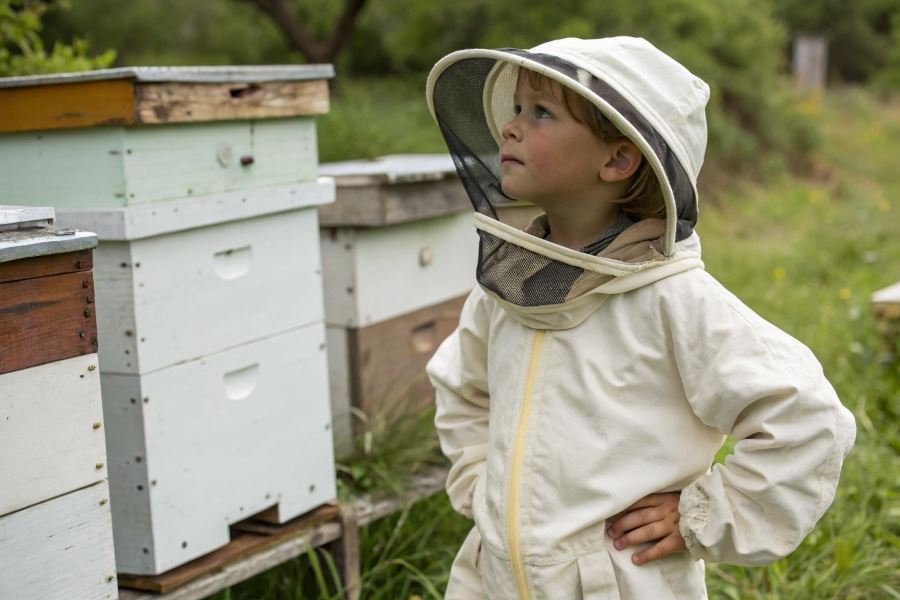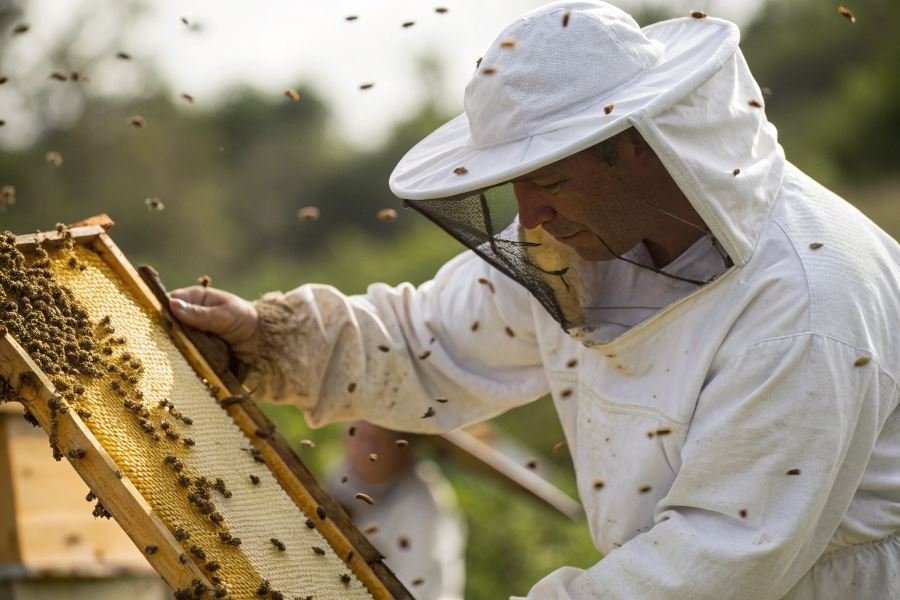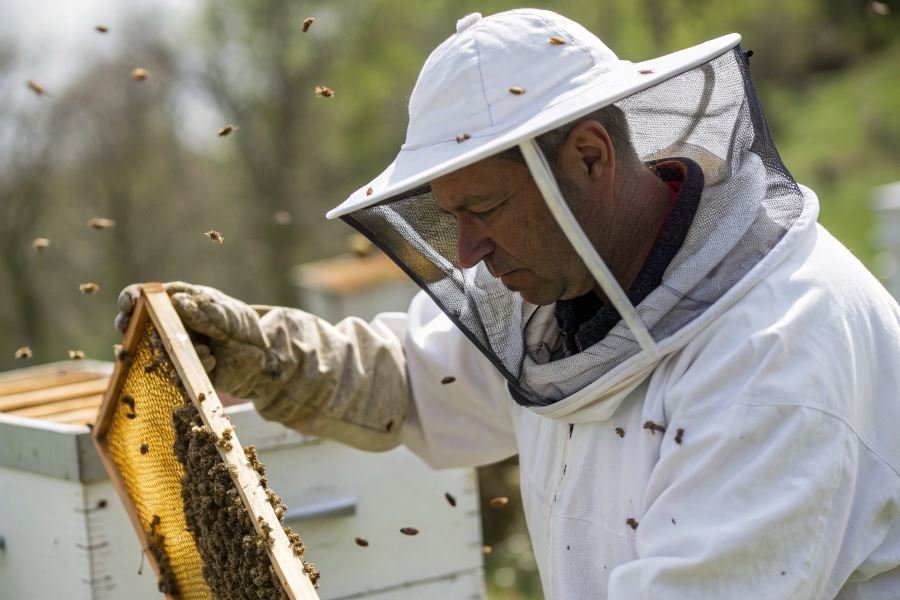
Ever stood inches away from 60,000 stinging insects with nothing but fabric between you and potential pain? That’s beekeeping without proper protection—a scenario no beginner should experience.
Selecting your first beekeeper jacket isn’t just about avoiding stings; it’s about creating confidence that transforms nervous first-timers into comfortable apiarists. When you’re focused on learning hive management rather than worrying about protection, you’ll develop better beekeeping skills faster.
Protection that matters
A quality beekeeper’s jacket serves three critical functions:
- Sting prevention – The primary purpose is creating a physical barrier between your skin and bee stingers
- Visibility – Many jackets feature dark mesh visors against white fabric, maximizing your ability to see while minimizing bee attraction
- Accessibility – Strategic pocket placement allows tool access without exposing skin
What truly makes a difference
When evaluating jackets, focus on these game-changing elements:
“The veil is your window to the beekeeping world. Never compromise on veil quality—it affects both safety and your ability to observe hive behavior.” — Professional beekeeper with 30+ years experience
Look for triple-stitched seams that prevent bees from finding entry points. Consider ventilation panels that prevent overheating during summer inspections. And don’t overlook thumb hooks that keep sleeves in place when reaching into hives.
The right jacket doesn’t just protect—it empowers your beekeeping journey by eliminating fear and focusing your attention where it belongs: on the fascinating world of honeybees.
Essential Features That Make or Break a Beginner’s Beekeeping Jacket
When stepping into the fascinating world of beekeeping, your protective gear becomes your most trusted ally. The right jacket doesn’t just shield you from stings—it builds confidence that transforms nervous first-timers into assured apiarists. Let’s dive into what truly matters when selecting this crucial piece of equipment.
For those wondering how to choose a beekeeper’s jacket for beginners, the decision comes down to three critical factors: material quality, thoughtful design elements, and comfort features that make long sessions with your hives bearable—even enjoyable. Each component plays a vital role in your beekeeping journey.
Material Matters: Your First Line of Defense
The fabric of your beekeeping jacket determines both protection level and durability:
Cotton Canvas: The traditional choice offering excellent sting protection with a thickness bees can’t penetrate. Durable but heavier, especially when temperatures rise.
Polycotton Blends: Provide a balance of protection and breathability, typically 65% polyester and 35% cotton. These resist wrinkles and dry faster than pure cotton.
Ventilated Synthetic Meshes: Modern options featuring multiple layers with protective solid fabric reinforced with breathable mesh panels. Ideal for hot climates but sometimes at a premium price point.
| Material Type | Protection Level | Breathability | Durability | Price Range |
|---|---|---|---|---|
| Cotton Canvas | Excellent | Fair | High | $80-120 |
| Polycotton | Very Good | Good | Good | $70-110 |
| Ventilated Mesh | Good | Excellent | Moderate | $100-180 |
Design Elements That Enhance Safety
The difference between comfort and anxiety often lies in these critical design features:
Veil Variations:
- Round Veils: Traditional design offering good visibility but can collapse against your face
- Fencing Veils: Square-shaped with rigid structure, maintaining distance from your face
- Collapsible Veils: Modern option that folds down when not needed—practical for inspections
Zipper Systems: Double-zipper designs create redundancy against failure—a crucial safety feature when surrounded by defensive bees. YKK zippers have become the industry standard for reliability.
Elastic Barriers: Tight elastic cuffs at wrists and ankles prevent bee entry—never compromise on this feature. The best jackets include thumb loops to keep sleeves securely in place during arm movements.
Ventilation: The Overlooked Essential
Beekeeping is physical work, often performed in warm weather. Without proper ventilation, you’ll face a difficult choice between overheating and removing protection.
Strategic Mesh Panels: Look for jackets with mesh under arms, across the back, and behind the veil.
Color Considerations: While white remains traditional (and reflects heat), some manufacturers now offer light-colored alternatives with proven cooling properties.
Layering Compatibility: The best jackets allow comfortable wearing over t-shirts in summer and sweatshirts in cooler seasons without becoming restrictively tight.
Remember that your comfort directly impacts your hive management quality. A jacket that leaves you sweating profusely will shorten your inspection time, potentially causing you to miss crucial signs within the colony.
By prioritizing these essential features—quality materials, thoughtful safety design, and comfort-enhancing ventilation—your beekeeping jacket will become an investment that supports your growth from cautious beginner to confident apiarist.
Making the Final Decision on Your Beekeeper Jacket
Selecting the right beekeeper jacket isn’t just about protection—it’s about creating a foundation for your beekeeping journey. After testing dozens of models and speaking with beekeepers across experience levels, I’ve distilled the decision-making process into actionable insights that balance protection, comfort, and investment.
Quality, protection, and budget in perfect harmony
The sweet spot in beekeeping gear isn’t always the most expensive option. A quality beginner jacket typically ranges from $80-150, offering the essential protection without unnecessary features. The critical decision factors should be:
- Sting-proof material (minimum 250-280 GSM cotton-polyester blend)
- Reinforced stitching at stress points
- Elastic or velcro closures at wrists and waist
- Properly sized veil with clear visibility
The difference between adequate and excellent protection often comes down to construction details rather than price tag. Inspect seams and zippers—they’re your first line of defense.
For beginners, I recommend the Ultra Breeze ventilated jacket for hot climates (149)orthe[MannLake](https : //www.mannlakeltd.com/)EconomyJacket(89) for temperate regions. Both provide excellent protection-to-price ratios while allowing room to grow your skills.
Extending your jacket’s lifespan
Beekeeping gear maintenance isn’t complicated, but it’s absolutely essential. Proper care can extend your jacket’s life from 2-3 seasons to 5+ years.
The maintenance routine that professionals swear by:
| Maintenance Task | Frequency | Notes |
|---|---|---|
| Visual inspection | Before each use | Check for tears, loose threads, zipper issues |
| Spot cleaning | After each use | Remove propolis with rubbing alcohol |
| Full washing | Monthly or as needed | Cold water, gentle cycle, mild detergent |
| Storage | Between seasons | Hang in dry place away from direct sunlight |
Never use bleach or fabric softener on your beekeeping jacket—these chemicals break down protective coatings and can reduce the fabric’s effectiveness against stings.
For stubborn propolis stains, freeze the jacket overnight before gently scraping with a plastic card. This prevents damage to the material while effectively removing sticky residue.
When to level up your protective gear
As your confidence grows, your gear requirements evolve. Most beginners outgrow their first jacket within 2-3 years, not because it wears out, but because their beekeeping style changes.
Signs it’s time to upgrade include:
- You’re working hives more than twice weekly
- You’re managing 5+ hives regularly
- You’ve developed specific preferences about veil style or ventilation
- You’re comfortable enough to consider lighter protection in some situations
Experienced beekeepers often maintain multiple jackets—a premium full suit for aggressive colonies or extensive hive work, and a lightweight option for quick inspections.
The Dadant Professional Grade Jacket represents an excellent second-tier investment at around $180, offering enhanced durability and comfort features that beginners appreciate after gaining experience.
Remember that your protective gear should evolve with your confidence and skill level. The jacket that perfectly serves you today may feel restrictive or overbuilt tomorrow—and that’s a sign of your growth as a beekeeper, not a poor initial purchase.
Discover how to choose the perfect beekeeper's jacket with our comprehensive guide for beginners. Learn about essential protective features, material options, and comfort considerations to safely start your beekeeping journey.
Discover how to choose the perfect beekeeper's jacket with our comprehensive guide for beginners. Learn about essential protective features, material options, and comfort considerations to safely start your beekeeping journey.