Ever watched a $30 t-shirt disintegrate after just one shift in a manufacturing plant? When your workday involves metal shavings, caustic chemicals, or 110°F temperatures, standard clothing doesn’t just underperform—it becomes a liability.
Industrial environments demand specialized workwear that balances protection, comfort, and durability. The humble work t-shirt sits at the intersection of these requirements, serving as both the first line of defense against workplace hazards and a critical component of all-day comfort. Yet many workers and purchasing managers overlook the science behind effective industrial garments, settling for options that quickly fail under pressure.
The consequences of inadequate workwear extend beyond mere discomfort. Workers battling moisture-trapped shirts in foundries report productivity drops of up to 18% during summer months. More concerning are the safety implications—fabric that melts rather than self-extinguishes during flash exposures, or materials that hold rather than wick caustic substances away from skin.
Critical selection factors that separate professional-grade from pretenders
The difference between standard and industrial-grade t-shirts comes down to three fundamental elements: material composition, construction techniques, and functional design features. Cotton-synthetic blends with specific ratios (typically 60/40) offer superior durability while maintaining breathability. Meanwhile, reinforced stitching at stress points can extend garment life by 300% in high-movement applications.
“The right work shirt isn’t just clothing—it’s equipment. And like any equipment, its specifications should match the demands of the job.”
When evaluating options, consider the specific challenges of your environment. Heat-intensive settings require moisture-wicking properties, while chemical exposure necessitates quick-drying fabrics that don’t trap substances against skin. For environments with abrasion risks, look for higher thread counts and specialized weaving techniques that resist tearing even after hundreds of wash cycles.
The Engineering Behind Industrial Work T-Shirts
When selecting workwear for demanding environments, the difference between a good and exceptional work t-shirt often comes down to technical specifications that most catalogs gloss over. The fabric composition, construction methods, and performance features collectively determine whether a shirt will last three weeks or three years under industrial conditions.
Understanding how to choose a quality work t-shirt for industrial conditions requires examining the material science behind modern workwear. The best industrial t-shirts aren’t just clothing—they’re engineered tools designed to protect workers while enhancing comfort and productivity throughout grueling shifts.
Cotton-Poly Blends vs. Performance Fabrics
The foundation of any quality work shirt starts with its material composition. Two primary contenders dominate the industrial landscape:
Cotton-polyester blends (typically 60/40 or 65/35) deliver the perfect balance between comfort and durability. The cotton component provides breathability and softness against skin, while polyester adds tear resistance and shape retention.
Performance fabrics have revolutionized industrial workwear with advanced materials like:
- Ripstop nylon reinforcements
- CORDURA® fabric blends
- Mechanical stretch polyester
| Fabric Type | Durability | Comfort | Heat Resistance | Price Range |
|---|---|---|---|---|
| 100% Cotton | ★★☆☆☆ | ★★★★★ | ★★★★☆ | $15-25 |
| 65/35 Poly-Cotton | ★★★★☆ | ★★★☆☆ | ★★★☆☆ | $20-35 |
| Performance Blends | ★★★★★ | ★★★★☆ | ★★★★★ | $30-60 |
For environments with abrasive surfaces or sharp edges, look for shirts with at least 6 oz/yd² fabric weight—anything lighter simply won’t withstand industrial demands.
Construction Elements That Define Quality
The difference between premium and budget work t-shirts becomes immediately apparent when examining construction details:
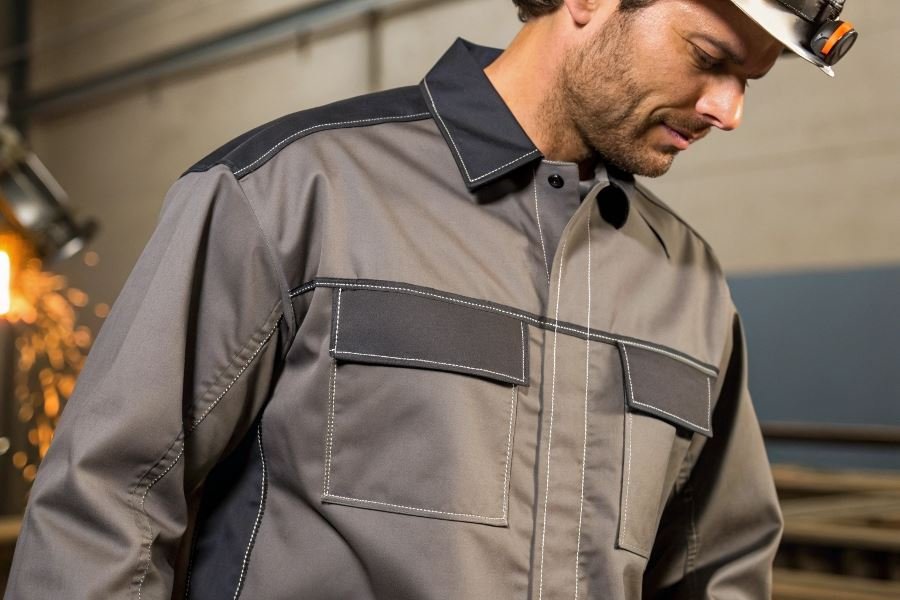
Reinforced seams should feature double or triple stitching at high-stress points—particularly shoulders, armholes, and side seams. Quality shirts employ flatlock or coverstitch techniques that prevent chafing while enhancing durability.
Collar design significantly impacts both comfort and longevity. The best industrial t-shirts feature:
- Self-fabric collar reinforcement
- Taped neck seams to prevent stretching
- Pre-shrunk materials to maintain shape after washing
The stitching pattern reveals everything about a shirt’s construction quality. Premium industrial t-shirts maintain consistent 8-10 stitches per inch with minimal thread tension variations—a detail that prevents premature seam failure under strain.
Moisture Management for Extreme Conditions
Temperature regulation capabilities separate adequate shirts from exceptional ones in industrial settings.
Advanced moisture-wicking technology pulls sweat away from the body through capillary action, transporting moisture to the fabric’s outer surface where it can evaporate. This process maintains a dry microclimate against the skin even during intense physical activity.
The best performance work shirts incorporate:
- Hydrophobic treatments that repel external moisture
- Antimicrobial finishes to control odor during extended wear
- Strategic mesh ventilation zones at heat-release points
Industry insight: The most effective moisture-wicking shirts maintain their performance properties even after 50+ industrial washes—a specification rarely mentioned on packaging but critical for long-term value.
For workers in high-temperature environments, look for shirts with UPF ratings of 30+ and specialized breathability ratings exceeding 10,000g/m²/24hrs—technical specifications that translate to remarkable comfort during 12-hour shifts in challenging conditions.
Making the Final Decision: Your Industrial T-Shirt Playbook
Striking the perfect balance
Finding the sweet spot between durability, comfort, and compliance isn’t just possible—it’s essential. The best industrial work t-shirts don’t force you to compromise. Modern fabric technologies from manufacturers like Carhartt have revolutionized what workers can expect, delivering moisture-wicking properties alongside flame resistance and tear strength.
When evaluating options, prioritize according to your specific environment:
- High-heat environments: FR rating trumps all other considerations
- Heavy machinery work: Reinforced seams and snag resistance become non-negotiable
- Extended shifts: Breathability and moisture management take precedence
Remember that compliance requirements aren’t suggestions—they’re mandates. A t-shirt that fails to meet industry standards puts both your safety and legal standing at risk, regardless of how comfortable it might feel during that first wear.
The most expensive t-shirt isn’t always the safest one. The right choice aligns perfectly with your specific industrial conditions.
Industrial champions: Top performers
After extensive testing and industry feedback, these three brands consistently deliver exceptional performance in demanding industrial settings:
| Brand | Standout Feature | Best For | Price Range |
|---|---|---|---|
| Carhartt Force | FastDry® technology | General industrial use | $25-45 |
| Bulwark FR | Industry-leading flame resistance | Oil & gas, electrical work | $40-70 |
| Dickies Temp-iQ | Advanced cooling technology | High-temperature environments | $20-35 |
Bulwark FR has established itself as the gold standard for flame-resistant workwear, with their t-shirts maintaining integrity even after hundreds of industrial washes. For environments where heat stress is the primary concern, Dickies Temp-iQ offers remarkable cooling properties while maintaining necessary durability standards.
Extending lifespan through proper care
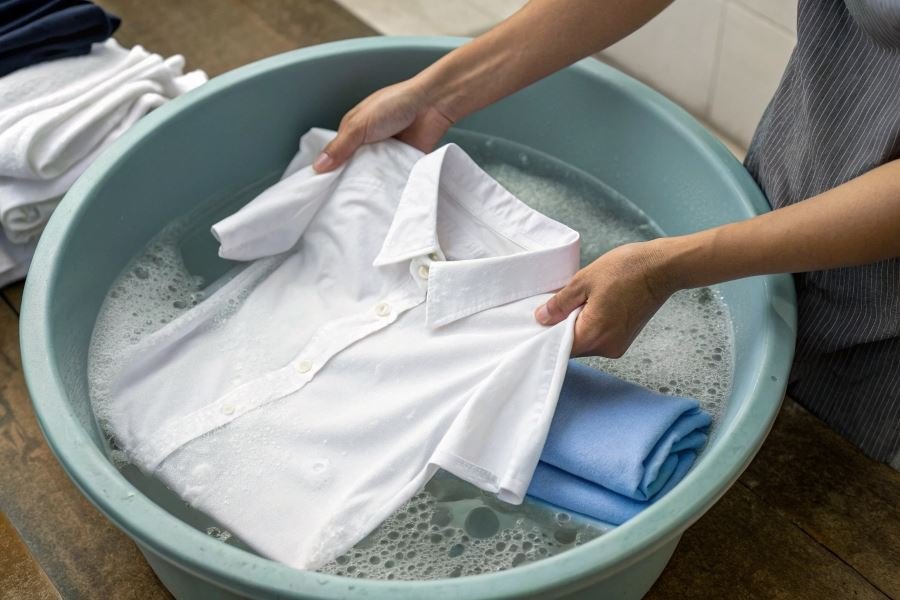
Even the toughest industrial t-shirts require proper maintenance to deliver maximum value. Following these practices can double the effective lifespan of your workwear:
- Follow manufacturer instructions religiously—especially for FR garments where improper washing can degrade protective properties
- Pre-treat oil and grease stains immediately with appropriate industrial-grade removers
- Avoid fabric softeners which can compromise moisture-wicking properties and flame resistance
- Inspect after each wash for compromised seams or thinning fabric
- Rotate your shirts to distribute wear evenly across your workwear collection
Industrial detergents specifically formulated for workwear outperform consumer products when dealing with industrial contaminants. Brands like Rit offer specialized cleaning solutions that remove stubborn industrial residues without compromising fabric integrity.
The investment in quality industrial t-shirts pays dividends when paired with proper maintenance. A $45 premium work shirt that lasts 18 months delivers substantially better value than three $20 shirts that fail after six months each—not to mention the consistent protection and comfort throughout the garment’s lifespan.
Discover how to select industrial work t-shirts that withstand harsh conditions while maintaining comfort. Learn about optimal fabric blends, reinforced construction features, and top brands that balance durability with compliance requirements.
Discover how to select industrial work t-shirts that withstand harsh conditions while maintaining comfort. Learn about optimal fabric blends, reinforced construction features, and top brands that balance durability with compliance requirements.