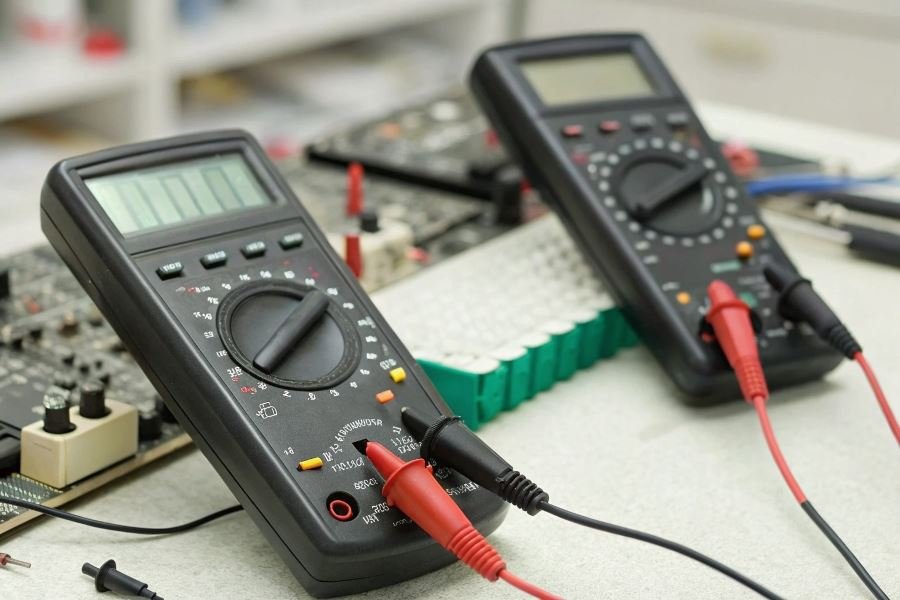
Ever watched a DIY project go up in smoke because of a simple electrical miscalculation? That’s the moment you realize a quality voltmeter isn’t just another tool—it’s your workshop’s guardian angel.
When embarking on home electrical projects, accurate voltage readings stand between success and potential disaster. Whether you’re troubleshooting a faulty appliance, building custom electronics, or simply checking if your batteries still have life, a reliable voltmeter transforms guesswork into precision. The difference between 12V and 14V might seem trivial until it’s the reason your circuit board becomes an expensive paperweight.
Today’s market offers an impressive array of voltage measuring instruments, each with distinct advantages. The classic analog voltmeter, with its swinging needle display, provides a visual representation of fluctuating voltages that digital models might miss. Digital multimeters (DMMs) offer exceptional accuracy (typically ±0.5% or better), multiple measurement functions, and easy-to-read displays. For those working in tight spaces, pocket-sized pen testers deliver basic functionality with maximum portability.
Before reaching for your wallet, consider these critical factors:
-
Measurement range – Will you be testing household AC circuits (110-240V), low-voltage DC electronics (3-24V), or both?
-
Accuracy requirements – Basic home repairs might need ±2% accuracy, while precision electronics work demands ±0.5% or better.
-
Safety ratings – Look for CAT ratings (CAT II, III, or IV) that match your intended applications. Never compromise here—a properly rated meter can prevent serious accidents.
-
Additional features – Auto-ranging capability, data hold functions, and backlit displays transform convenience into efficiency.
Remember: the best voltmeter isn’t necessarily the most expensive one—it’s the one that reliably measures what you need to measure.
Essential Features for Workshop Voltmeter Selection
When setting up a home workshop, having the right measurement tools can make the difference between professional results and costly mistakes. Selecting the appropriate voltmeter requires understanding several critical features that align with your specific needs. The process of how to choose a voltmeter for a home workshop involves evaluating measurement capabilities, accuracy requirements, and form factors that best suit your projects.
Analog vs Digital: The Workshop Showdown
The first decision you’ll face is whether to go analog or digital. Each has distinct advantages in a workshop environment:
Analog voltmeters offer real-time visualization of fluctuating readings—perfect for tracking voltage changes during troubleshooting. They require no batteries to function and typically handle voltage spikes better than their digital counterparts.
However, analog models come with limitations: lower precision (typically 3-5% accuracy), parallax reading errors, and they’re generally bulkier than modern digital options.
Digital voltmeters deliver precise readings (often 0.5% accuracy or better) with clear numeric displays that eliminate interpretation errors. Most modern digital multimeters (DMMs) like the Fluke 117 include auto-ranging capabilities, eliminating the need to manually select measurement ranges.
| Feature | Analog Voltmeters | Digital Voltmeters |
|---|---|---|
| Accuracy | 3-5% typical | 0.5-1% typical |
| Power Source | Self-powered | Battery dependent |
| Reading Speed | Real-time response | Slight sampling delay |
| Additional Functions | Limited | Extensive |
| Price Range | $15-50 | $25-200+ |
Voltage Range and Accuracy Requirements
Your workshop’s specific projects dictate the voltage range and accuracy needs:
- Hobbyist electronics: 0-50V DC with 0.5% accuracy
- Automotive work: 0-20V DC with spike protection
- Home electrical: 0-600V AC with safety certification
- Precision electronics: 0-30V DC with 0.1% accuracy
Workshop Wisdom: Always select a voltmeter with measurement ranges at least 20% higher than your anticipated maximum readings to prevent overloading the instrument.
For most home workshops, a multimeter with DC voltage ranges up to 600V and AC voltage up to 750V provides sufficient headroom for nearly any project. The Klein Tools MM600 offers these ranges with excellent accuracy for under $100.
Beyond Voltage: Essential Measurement Capabilities
A voltmeter that only measures voltage is rarely sufficient for a versatile workshop. Modern digital multimeters offer crucial additional functions:
Current measurement capabilities allow you to diagnose power consumption issues and verify circuit designs. Look for:
- AC current ranges (200μA to 10A)
- DC current ranges (200μA to 10A)
- Fused current inputs for protection
Resistance measurement is essential for component testing and continuity verification. Quality multimeters provide:
- Wide resistance ranges (0.1Ω to 20MΩ)
- Audible continuity testing for quick circuit checks
- Diode testing functionality
Advanced features worth considering include:
- Non-contact voltage detection
- Capacitance measurement
- Frequency counting
- Temperature probes
- Data logging capabilities
The Extech EX330 exemplifies a well-rounded instrument that balances comprehensive measurement capabilities with reasonable pricing for workshop use.
Remember that safety ratings (CAT III or CAT IV) become critical when working with household electrical systems, ensuring your instrument can handle potential surges without becoming a hazard itself.
Top Voltmeters That Will Transform Your Home Workshop
Finding the right voltmeter can make the difference between frustrating guesswork and confident electrical work in your home workshop. Let’s explore the best options across three distinct categories, with specifications and features that matter to real users.
The Perfect Starter: Fluke 101 Basic Digital Multimeter
The Fluke 101 stands as the gold standard for beginners entering the world of electrical measurement. This pocket-sized powerhouse delivers professional-grade accuracy without overwhelming complexity.
Key specifications:
- DC voltage range: 200mV to 600V (±0.5% accuracy)
- AC voltage range: 200V to 600V (±1.0% accuracy)
- Resistance measurement: 200Ω to 20MΩ
- Battery life: approximately 3,000 hours
- Price point: $79.99
What makes the Fluke 101 exceptional is its remarkable durability coupled with straightforward operation. The large, clear display shows readings instantly, while the auto-shutoff feature preserves battery life.
The Fluke 101 eliminates the frustration factor for beginners while providing measurements you can actually trust.
Unlike cheaper alternatives, this meter includes CAT III 600V safety rating—essential protection when you’re learning and most vulnerable to mistakes.
Mid-Range Marvel: Klein Tools MM600 Digital Multimeter
For regular DIYers who need more comprehensive testing capabilities, the Klein Tools MM600 delivers exceptional versatility without breaking the bank.
Advanced features include:
- True RMS measurements for accurate readings on non-linear loads
- Temperature measurement capability (-40°F to 1832°F)
- Capacitance testing (up to 1000μF)
- Low impedance mode to eliminate ghost voltage readings
- Built-in non-contact voltage tester
- Price point: $149.95
The MM600 shines with its auto-ranging functionality, eliminating the need to manually select measurement ranges. Its backlit display makes working in dimly lit workshop corners significantly easier.
| Feature | Benefit for DIYers |
|---|---|
| True RMS | Accurate readings when working with variable speed motors or modern electronics |
| Low-Z mode | Prevents false readings from induced voltage in adjacent wires |
| Data hold | Captures readings in hard-to-reach places |
| Rubber overmolding | Survives the inevitable workshop drops |
Professional Precision: Keysight U1282A Handheld Digital Multimeter
For serious hobbyists and small business owners who demand laboratory-grade precision, the Keysight U1282A represents the pinnacle of portable measurement technology.
Professional-grade specifications:
- 4½ digit resolution (up to 50,000 counts)
- Basic DC accuracy of 0.025%
- AC bandwidth up to 100kHz
- 10A current measurement capability
- Data logging with Bluetooth connectivity
- OLED display visible in all lighting conditions
- Price point: $399.00
The U1282A’s exceptional accuracy makes it ideal for troubleshooting sensitive electronics, calibrating equipment, or developing prototypes. Its IP67 water and dust resistance rating means it survives workshop conditions that would destroy lesser instruments.
What truly separates this meter is its smart connectivity. The companion app allows you to monitor readings remotely, log data over time, and even create professional reports—perfect for documenting repairs or tracking system performance.
For workshops that handle precision electronics, vintage equipment restoration, or product development, the investment delivers measurable returns through faster troubleshooting and fewer component replacements.
Discover the top 5 voltmeters for your home workshop with our expert guide. Learn how to choose between analog and digital options, understand essential features, and find the perfect voltmeter for your DIY electrical projects.
Discover the top 5 voltmeters for your home workshop with our expert guide. Learn how to choose between analog and digital options, understand essential features, and find the perfect voltmeter for your DIY electrical projects.