
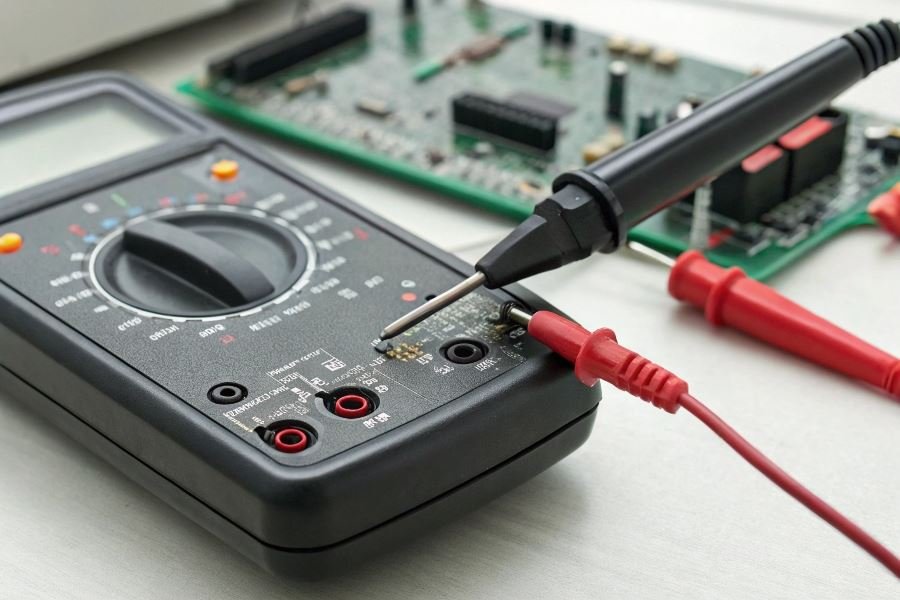
Ever wondered why electricians grimace when you mention your $15 multimeter from the discount bin? The difference between a near-miss and precision can mean everything—from diagnosing why your expensive electronics failed to preventing potentially dangerous electrical situations.
A quality multimeter serves as your eyes into the invisible world of electricity. Think of it as the difference between squinting at a distant road sign and viewing it through precision binoculars. Budget doesn’t have to mean inaccurate, but it does require knowing what truly matters in measurement technology.
The accuracy imperative
Accuracy in electrical measurements isn’t just about perfectionism—it’s about safety and functionality. When troubleshooting a circuit that’s supposed to deliver exactly 3.3 volts to a sensitive component, the difference between 3.3V and 3.5V could determine whether your $200 microcontroller survives or fries.
What “budget-friendly” really means
The sweet spot for budget multimeters typically falls between 30−70—not the cheapest available, but far below professional models that can cost $300+. The key is identifying which premium features you can sacrifice without compromising measurement integrity.
Specifications that matter
Three critical specifications separate genuinely accurate budget multimeters from pretenders:
- Basic DC accuracy: Look for ±0.5% or better
- Resolution: A 3½ or 4-digit display provides sufficient precision for most applications
- Input impedance: Higher values (≥10MΩ) ensure your measurements don’t affect the circuit
Remember: the best multimeter isn’t necessarily the most expensive—it’s the one that delivers reliable readings for your specific needs without unnecessary bells and whistles.
Top 3 Budget Multimeters That Deliver Professional Accuracy
Finding budget multimeters with high measurement accuracy doesn’t mean compromising on quality or performance. Today’s market offers impressive options that deliver professional-grade results without the premium price tag. Whether you’re troubleshooting home electrical issues, diagnosing automotive problems, or diving into electronics projects, there’s an affordable multimeter that meets your specific needs. Let’s explore the standout performers in three key categories.
Best for Household Electrical Work: Innova 3320
The Innova 3320 strikes the perfect balance between simplicity and functionality for home electrical tasks. Priced around $35, this auto-ranging multimeter eliminates the guesswork of setting measurement ranges manually.
Key specifications:
- Accuracy: ±0.5% for DC voltage
- Measurement categories: AC/DC voltage, resistance, continuity
- Safety rating: CAT III 600V
- Battery test function for common household batteries
What sets the Innova apart is its color-coded LED display that instantly indicates whether wiring is correctly installed—a feature weekend warriors will appreciate when checking outlets or light fixtures. The large display and built-in stand make readings visible from multiple angles, perfect when working in tight spaces like electrical panels.
“The auto-ranging feature alone saved me hours of frustration when troubleshooting my kitchen renovation,” notes one reviewer, highlighting why this model consistently outperforms competitors twice its price.
Most Accurate for Automotive Diagnostics: AstroAI WH5000A
Vehicle electrical systems demand specialized testing capabilities, and the AstroAI WH5000A delivers exceptional accuracy at approximately $45.
| Feature | Specification |
|---|---|
| DC Voltage Accuracy | ±0.5% |
| Temperature Range | -4°F to 1832°F |
| Duty Cycle | 1% to 99% |
| Frequency | Up to 10MHz |
This multimeter excels at diagnosing automotive electrical issues with specialized functions for testing diodes, capacitance, and frequency—critical measurements when troubleshooting modern vehicle electronics. The temperature probe allows for quick diagnosis of overheating components, while the duty cycle measurement helps pinpoint issues with fuel injectors and other pulse-width modulated systems.
The backlit display proves invaluable when working in dimly lit engine compartments, and the 10A high-current measurement capability handles starter motor and alternator testing with ease. Its rubber holster provides protection against inevitable drops in the garage environment.
Optimal for Electronics Hobbyists: Aneng AN8008
Electronics enthusiasts and DIY project builders will find the Aneng AN8008 offers remarkable precision for under $30. This true-RMS multimeter provides accuracy typically found in models costing three times as much.
Standout capabilities:
- 9999 count display (compared to typical 2000 count in this price range)
- True RMS AC measurements
- 0.1% basic DC accuracy
- Auto-ranging with manual override option
- Square wave output for testing
The AN8008’s high resolution makes it perfect for sensitive component testing and troubleshooting circuit boards. Its fast sampling rate (3 times per second) provides near-instant readings when tracing intermittent faults in complex circuits.
Electronics hobbyists particularly appreciate the relative measurement mode, which allows for quick component tolerance testing. The low input impedance mode helps identify “ghost voltages” in circuits—a common source of confusion for beginners.
Each of these multimeters demonstrates that accuracy and reliability don’t require emptying your wallet. By matching the tool to your specific application, you’ll get professional results without the professional price tag—proving that smart testing equipment choices begin with understanding your unique measurement needs.
Squeeze Every Ounce of Accuracy from Budget Multimeters
Calibration is your accuracy lifeline
Even the most affordable multimeter can deliver impressive accuracy when properly calibrated. Calibration isn’t just for lab technicians—it’s your first defense against measurement drift. Most budget multimeters come factory-calibrated, but this calibration deteriorates over time.
For DIY calibration, you’ll need reference standards. A precision resistor kit ($15-30) provides known values to check against. The classic "zero ohm" test is free: simply touch the probes together and adjust until your meter reads zero ohms. For voltage calibration, consider a **voltage reference source** like the [Fluke 9100S](https://www.fluke.com/calibration-equipment) ($80-120), which provides stable reference voltages.
Calibration frequency matters more than you might think. Even budget models like the Aneng AN8008 benefit from quarterly checks if used regularly. Keep a calibration log with dates and adjustments to track your meter’s stability over time.
The difference between a calibrated budget multimeter and an uncalibrated premium one? The budget option often wins.
Know your error margins
Budget multimeters aren’t inherently inaccurate—they just have defined limitations you need to understand. The key specifications to watch:
| Measurement Type | Typical Budget Accuracy | Premium Accuracy | Real-world Impact |
|---|---|---|---|
| DC Voltage | ±(0.5% + 3 digits) | ±(0.05% + 1 digit) | 0.45V difference when measuring a 100V circuit |
| AC Voltage | ±(1.0% + 5 digits) | ±(0.2% + 2 digits) | 0.8V difference on 100V measurement |
| Resistance | ±(0.8% + 4 digits) | ±(0.1% + 1 digit) | 7Ω difference on a 1kΩ resistor |
These error margins matter most at the extremes of your meter’s range. When measuring near the upper or lower limits, take multiple readings and average them for better accuracy. Temperature also affects accuracy—most budget meters are calibrated for 23°C (73.4°F), with accuracy degrading by about 0.1% per 1°C deviation.
The Uni-T UT61E demonstrates how a $50 meter can achieve 0.5% basic accuracy—comparable to meters costing three times as much just a decade ago.
Strategic accessories boost capabilities
The right accessories transform a basic multimeter into a versatile measurement powerhouse:
-
High-quality test leads ($10-20): Silicone-insulated leads with gold-plated tips reduce contact resistance and measurement noise. The difference between stock leads and premium ones can be as much as 0.2Ω—significant when measuring low resistances.
-
Current clamp adapters ($25-40): Add non-contact current measurement capability to your basic multimeter. The Mastech MS3302 clamp converts current to voltage your meter can read.
-
Temperature probes ($15): K-type thermocouple probes extend your meter’s functionality to temperature measurement from -50°C to 750°C.
-
Banana plug adapters ($8): Connect specialized probes and extensions to standard multimeter inputs.
-
Protective holster with tilt stand ($5-10): Improves viewing angles and protects against drops—extending your meter’s lifespan dramatically.
These strategic investments enhance functionality without the cost of a premium meter. A $40 AstroAI WH5000A with $30 in accessories often outperforms a $100 meter with stock accessories in both versatility and measurement accuracy.
Discover the top 5 budget multimeters that deliver professional-grade accuracy without the premium price tag. Compare features, specifications, and performance to find the perfect precision testing tool for your electrical projects.
Discover the top 5 budget multimeters that deliver professional-grade accuracy without the premium price tag. Compare features, specifications, and performance to find the perfect precision testing tool for your electrical projects.


