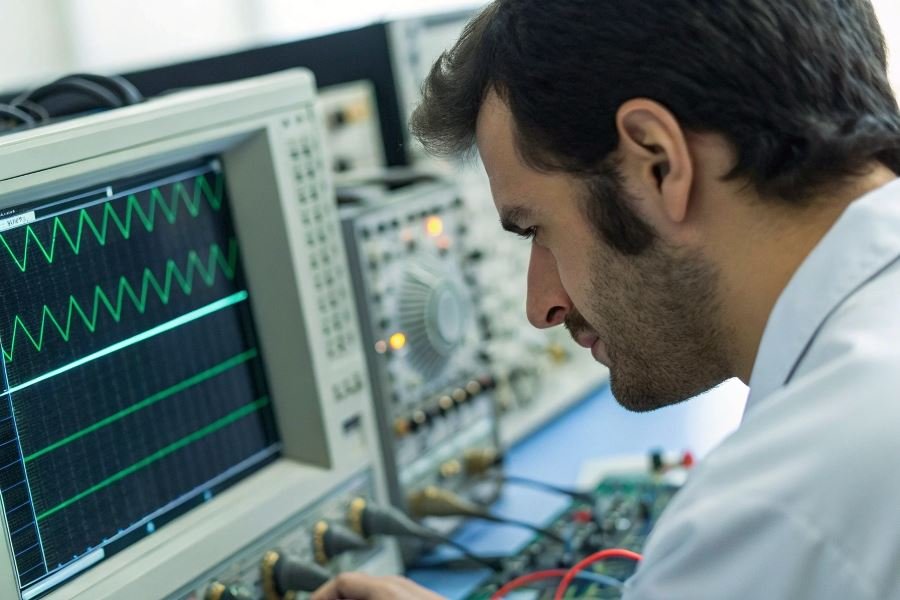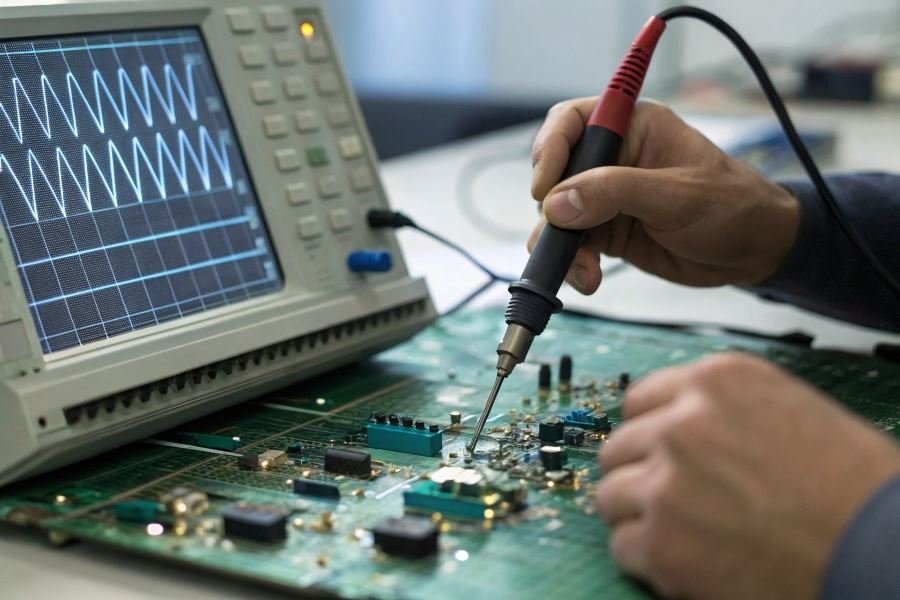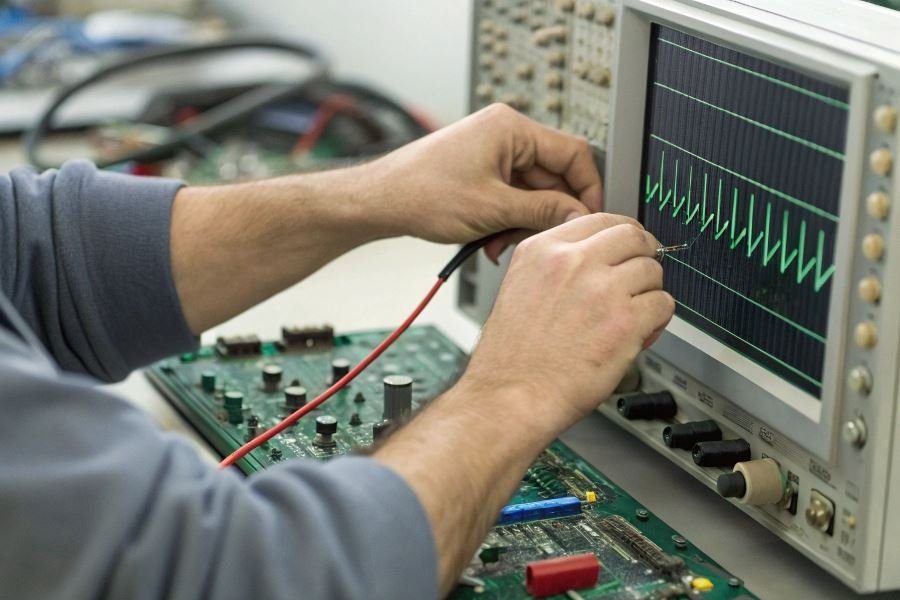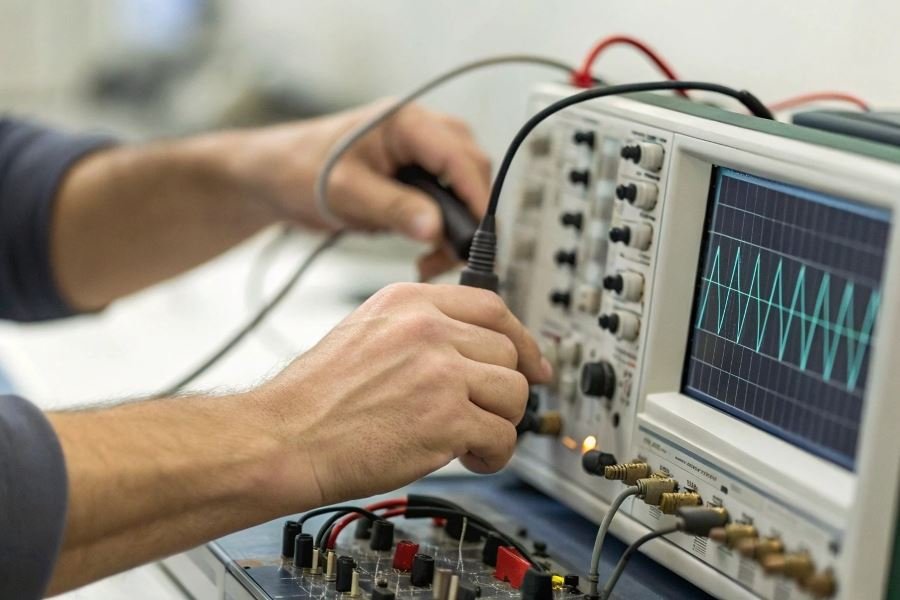
Ever watched a doctor use a stethoscope to diagnose a patient? Oscilloscopes serve the same critical function for ailing electronics—they’re the diagnostic powerhouses that reveal what’s happening inside circuits when nothing else can. When that expensive amplifier starts making strange noises or your custom-built controller fails intermittently, an oscilloscope becomes your most trusted ally.
Oscilloscopes transform invisible electrical signals into visual waveforms you can actually analyze. Imagine being able to see electricity flow through a circuit—that’s essentially what these instruments provide. They capture voltage changes over time, displaying them as graphs that tell the story of what’s happening inside your electronics. This visualization is what makes oscilloscopes indispensable for troubleshooting complex issues that multimeters simply can’t detect.
The backbone of effective diagnosis lies in understanding three fundamental parameters that define oscilloscope performance:
-
Bandwidth – Determines the highest frequency signals your oscilloscope can accurately measure. Too low, and you’ll miss critical high-frequency problems.
-
Sample rate – Controls how many “snapshots” of your signal the oscilloscope takes per second. Higher rates capture fast-changing signals with greater precision.
-
Resolution – Affects how precisely voltage differences can be measured, with higher resolution revealing subtle signal variations that might indicate developing problems.
These parameters aren’t just technical specifications—they’re the difference between finding an elusive fault and remaining frustrated. The right oscilloscope doesn’t just display signals; it reveals truths about your circuits that remain hidden to the naked eye.
Essential Parameters That Make or Break Your Oscilloscope
When diving into electronics repair, understanding how to choose an oscilloscope for electronics repair: key parameters becomes the difference between frustrating guesswork and confident troubleshooting. The right oscilloscope transforms invisible electrical signals into visual data you can actually work with. Let’s explore the critical specifications that separate adequate tools from exceptional ones.
Bandwidth: The Foundation of Signal Clarity
Bandwidth determines what frequencies your oscilloscope can accurately measure, and choosing incorrectly means missing critical signal details.
Rule of thumb: Select bandwidth at least 5 times higher than the fastest signal you’ll measure.
| Repair Application | Typical Signal Frequency | Recommended Minimum Bandwidth |
|---|---|---|
| Audio equipment | 20Hz-20kHz | 100MHz |
| Consumer electronics | 1-50MHz | 250MHz |
| Digital circuits | 100-500MHz | 500MHz-1GHz |
| High-speed communications | 1GHz+ | 2.5GHz+ |
Working with modern smartphones or computers? Don’t settle for less than 200MHz bandwidth. For automotive electronics, 100MHz typically suffices, while power electronics repair might only require 50-70MHz.
Insufficient bandwidth doesn’t just limit what you can see—it actively distorts your measurements.
Sample Rate and Memory Depth: Capturing the Complete Picture
Sample rate (expressed in GSa/s or MSa/s) determines how many points your oscilloscope captures per second, while memory depth dictates how long it can record at that rate.
Sample rate requirements:
- Minimum: 5x your bandwidth (Nyquist theorem suggests 2x, but real-world signals demand more)
- Ideal: 10x your bandwidth for accurate waveform reconstruction
Memory depth becomes crucial when you need to:
- Capture rare events or glitches
- Maintain high sample rates over longer timeframes
- Zoom into specific portions of complex signals
Memory depth sweet spots:
- Basic troubleshooting: 1-4 Mpoints
- Intermediate work: 8-16 Mpoints
- Advanced debugging: 32+ Mpoints
Pro tip: A 1GHz scope with shallow memory might miss intermittent faults that a 500MHz scope with deep memory would catch.
Channel Count and Triggering: The Troubleshooter’s Arsenal
Modern electronics rarely operate with single signals in isolation. Multiple channels allow you to observe relationships between signals—timing issues, cause-and-effect relationships, and complex interactions.
Channel considerations:
- 2 channels: Sufficient for basic comparisons (input vs. output)
- 4 channels: Ideal for most repair work (power, ground, data lines, clock signals)
- 8+ channels: Specialized digital troubleshooting (with logic analyzer functionality)
Triggering capabilities determine your ability to stabilize and capture elusive signals. Advanced triggering options transform impossible troubleshooting tasks into straightforward procedures:
- Edge triggering: The baseline for stable displays
- Pulse width triggering: Catches glitches and timing anomalies
- Pattern triggering: Essential for digital circuit debugging
- Serial bus triggering: Decodes protocols like I²C, SPI, CAN, and USB
The most valuable oscilloscope isn’t necessarily the most expensive—it’s the one with parameters matched precisely to your repair challenges. Prioritize bandwidth for high-frequency work, memory depth for capturing rare events, and advanced triggering for complex troubleshooting scenarios.
Advanced Oscilloscope Features That Transform Your Repair Game
Digital vs analog oscilloscopes for repair work
The battle between digital and analog oscilloscopes continues to shape electronics repair workflows, though digital has largely won the war. Analog oscilloscopes, with their phosphor displays and direct signal representation, offer real-time visualization without sampling limitations. This makes them exceptional for observing glitches and intermittent signals that digital scopes might miss between samples.
However, Tektronix and other manufacturers have largely shifted to digital oscilloscopes because they deliver game-changing advantages:
- Signal storage and analysis – capture and review waveforms hours after they occur
- Automated measurements – instantly calculate frequency, rise time, and dozens of other parameters
- Advanced triggering options – isolate specific signal events with precision
- Waveform math functions – perform calculations between channels in real-time
The analog vs. digital debate isn’t about which is better—it’s about matching your repair challenges with the right tool. Some repair technicians maintain both types in their arsenal.
For component-level repair work, digital oscilloscopes with at least 100MHz bandwidth have become the standard, with their ability to decode serial protocols like I²C and SPI providing critical insights when troubleshooting modern electronics.
Form factors for different repair environments
The physical design of your oscilloscope dramatically impacts its utility across repair scenarios:
| Form Factor | Best For | Typical Weight | Key Advantage |
|---|---|---|---|
| Benchtop | Fixed workshop | 5-15 lbs | Larger displays, more channels |
| Portable | Field service | 2-5 lbs | Battery operation, rugged design |
| Handheld | On-site diagnostics | Under 2 lbs | Extreme portability, quick deployment |
| PC-based | Space-constrained setups | Under 1 lb | Cost efficiency, software integration |
Keysight offers compelling portable options that don’t sacrifice functionality, while Rigol has revolutionized the benchtop segment with feature-rich, affordable models.
The tablet-style oscilloscopes represent an emerging category that combines touchscreen interfaces with field-ready durability. These hybrid instruments shine in educational environments and mobile repair operations where space and setup time are limited.
Budget considerations and value assessment
Investing in an oscilloscope requires balancing immediate needs against future-proofing:
Entry-level options (300−500) from manufacturers like Siglent provide sufficient capabilities for hobbyists and basic repairs, typically offering 50-100MHz bandwidth and two channels.
Mid-range instruments (500−1,500) deliver the sweet spot for most repair professionals, with four channels, 200-350MHz bandwidth, and deeper memory depth that captures longer signal sequences.
Professional-grade scopes (1, 500−5,000+) from Rohde & Schwarz and others offer specialized features like mixed-signal capabilities, higher sampling rates, and advanced decoding options.
When assessing value, consider these often-overlooked factors:
- Software upgrades – some manufacturers charge for protocol analyzers while others include them
- Probe quality – bundled probes vary dramatically in performance and durability
- User interface – an intuitive interface saves countless hours over the instrument’s lifetime
- Support ecosystem – availability of training resources, forums, and manufacturer support
The true cost of ownership extends beyond the purchase price. A slightly more expensive oscilloscope with included software bundles often delivers better long-term value than budget models requiring paid add-ons.
For repair professionals, the ideal approach is identifying the specific signals you’ll measure most frequently, then selecting an instrument that exceeds those requirements by approximately 30% to accommodate future needs.
Discover the essential oscilloscope parameters for effective electronics repair. Learn about bandwidth, sample rate, and channel requirements to select the perfect diagnostic tool for troubleshooting complex electronic circuits.
Discover the essential oscilloscope parameters for effective electronics repair. Learn about bandwidth, sample rate, and channel requirements to select the perfect diagnostic tool for troubleshooting complex electronic circuits.