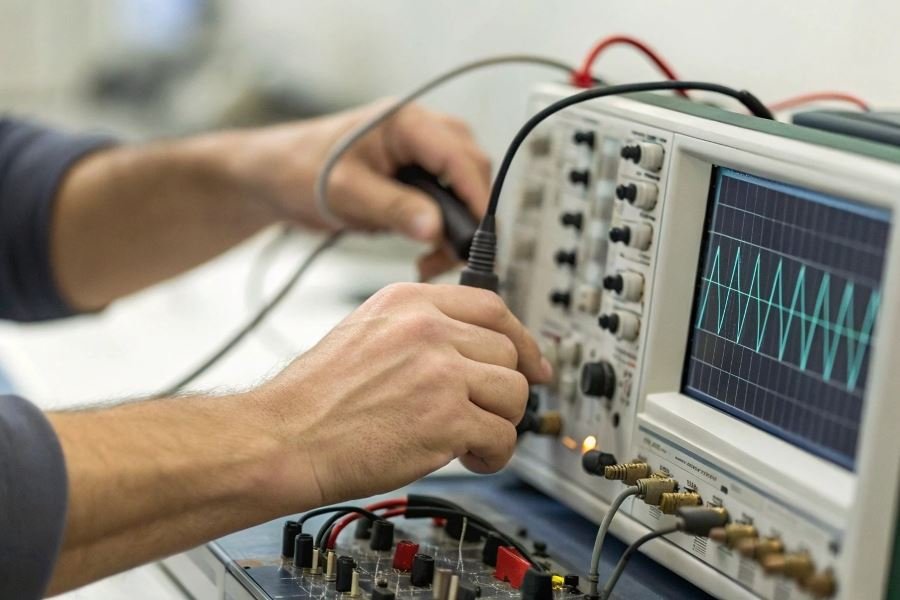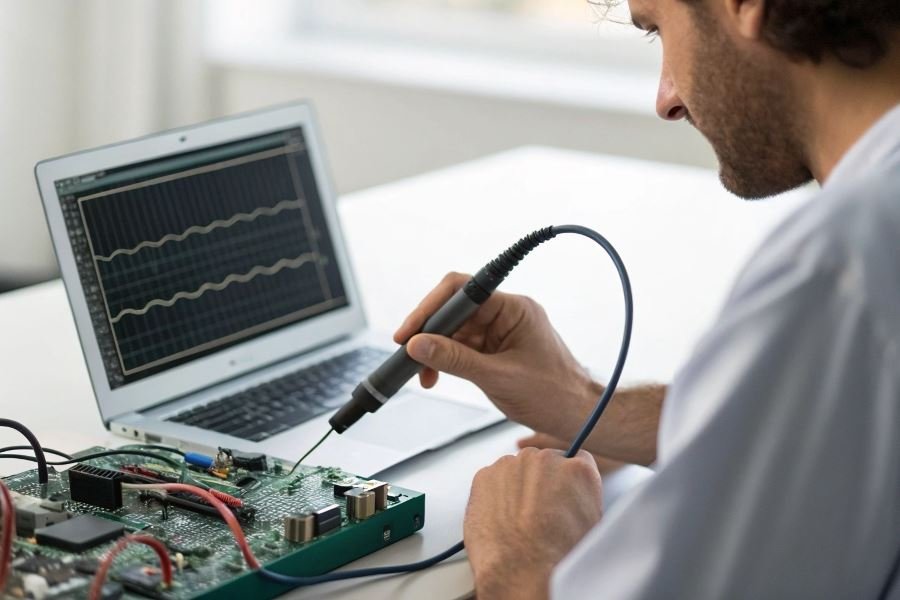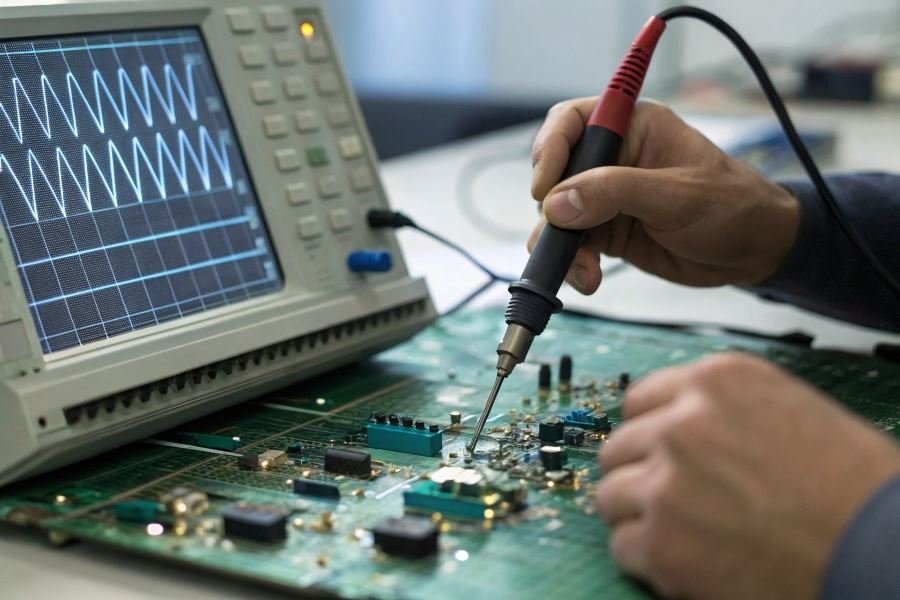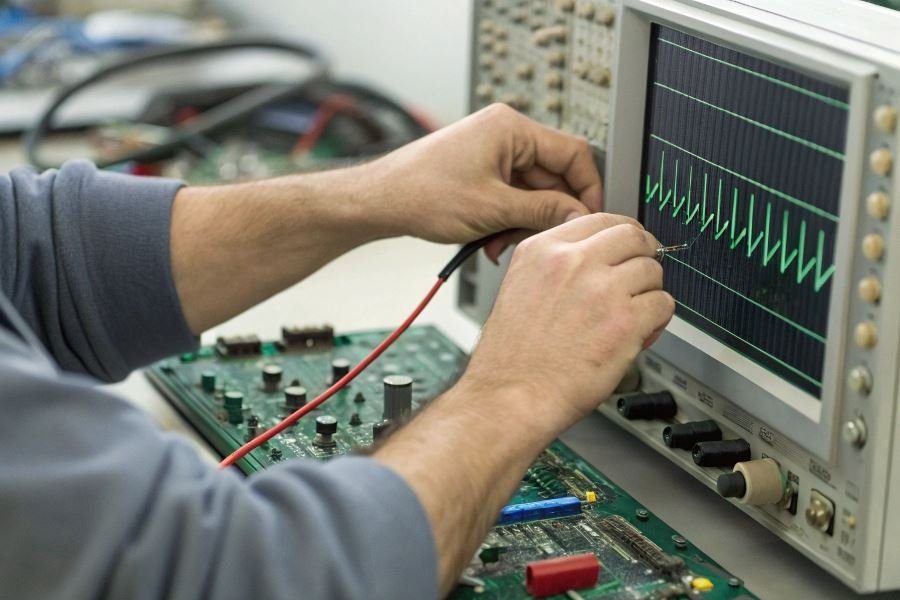
Ever watched a heart surgeon monitor multiple vital signs simultaneously? That’s essentially what multichannel oscilloscopes do for electronic signals. These powerful instruments have transformed from simple voltage-time graphing tools into sophisticated diagnostic powerhouses that can simultaneously capture, display, and analyze multiple electrical signals—revealing relationships between them that would otherwise remain invisible.
A multichannel oscilloscope is fundamentally a measurement instrument that displays varying signal voltages as waveforms on a screen, with the critical distinction that it can show multiple signals at once. While single-channel scopes were revolutionary when introduced in the 1940s, today’s multichannel versions (typically offering 2, 4, or 8 channels) have become essential for anyone working with complex electronic systems.
From single to multi: an evolution of necessity
The transition from single to multichannel capabilities wasn’t merely about adding more inputs—it represented a fundamental shift in how engineers approach troubleshooting. When Tektronix introduced the first dual-channel oscilloscope in the 1950s, it suddenly became possible to directly compare input and output signals, revolutionizing circuit analysis.
Key specifications that separate the good from the great
When selecting a multichannel oscilloscope, several critical specifications determine its effectiveness:
- Bandwidth: Measured in MHz or GHz, this determines the highest frequency signal the scope can accurately measure
- Sample rate: Higher rates (measured in GSa/s) capture faster signal changes
- Memory depth: Deeper memory allows longer signal captures at high sample rates
- Channel-to-channel isolation: Prevents signal bleeding between channels
- Triggering capabilities: Advanced options like pattern triggering across multiple channels
The true power of multichannel analysis emerges when examining timing relationships between signals, debugging complex digital buses, or analyzing power conversion circuits—tasks simply impossible with single-channel instruments.
Essential Applications for Multichannel Oscilloscopes
When precision matters in electronic design and troubleshooting, single-channel solutions simply don’t cut it. Engineers facing complex circuit behaviors need tools that can simultaneously capture multiple signals with perfect synchronization. Multichannel oscilloscopes have become indispensable in modern electronics work, offering the ability to visualize relationships between signals that would otherwise remain invisible.
The decision to invest in multichannel oscilloscopes: when they are necessary in work depends largely on the complexity of the systems being analyzed. While basic testing can be accomplished with simpler instruments, today’s integrated circuits and sophisticated electronic systems demand simultaneous monitoring of multiple test points to properly diagnose issues and verify proper operation.
Debugging Complex Digital Circuits
Digital systems rarely operate in isolation. From microprocessors communicating with memory to FPGAs interfacing with sensors, timing relationships between signals determine whether a system functions correctly or fails mysteriously.
Clock-to-data relationships form the foundation of digital circuit analysis. With a 4-channel oscilloscope like the Tektronix MSO46, engineers can simultaneously monitor:
- Clock signals
- Data lines
- Enable pins
- Reset signals
This capability proves critical when hunting down timing violations that cause intermittent failures. For example, when a memory read operation occasionally fails, viewing the address lines, data bus, and control signals in perfect time alignment reveals setup and hold time violations invisible to single-channel instruments.
Power Electronics Analysis
Modern power conversion systems employ sophisticated switching techniques that demand precise phase relationships between multiple voltage and current waveforms.
The ability to simultaneously capture input voltage, output voltage, gate drive signals, and current waveforms transforms power electronics troubleshooting from guesswork to science.
Three-phase power systems particularly benefit from multichannel analysis. Engineers can observe:
| Measurement Point | Purpose | Typical Anomalies |
|---|---|---|
| Phase voltages | Balance verification | Sags, swells, harmonics |
| Line currents | Load distribution | Imbalance, distortion |
| DC bus voltage | Ripple measurement | Excessive ripple, instability |
| Gate drive signals | Switching integrity | Timing errors, noise coupling |
When designing switch-mode power supplies, the ability to correlate switching events with current spikes and voltage transients proves invaluable for optimizing efficiency and reducing electromagnetic interference.
Embedded Systems Troubleshooting
Modern embedded systems incorporate multiple communication protocols operating simultaneously. Debugging these systems requires correlating protocol-specific signals with processor activity.
Serial bus analysis becomes dramatically more effective with multichannel capabilities. Engineers can monitor:
- I²C clock and data lines while simultaneously watching chip select signals
- SPI MOSI, MISO, and clock lines alongside interrupt signals
- CAN bus differential signals while monitoring system power rails
Protocol decoding features in instruments like the Keysight InfiniiVision series transform raw waveforms into human-readable protocol information, dramatically accelerating troubleshooting.
When embedded systems exhibit intermittent failures, the ability to trigger on specific protocol conditions while monitoring power supply quality often reveals the root cause—like voltage droops during high-current operations causing communication errors.
For engineers working with complex electronic systems, multichannel oscilloscopes aren’t luxury items—they’re essential tools that transform impossible troubleshooting scenarios into solvable problems, ultimately saving countless hours of development time and preventing costly design iterations.
Maximizing Productivity with Multichannel Oscilloscopes
The ROI of Advanced Test Equipment
When evaluating the investment in multichannel oscilloscopes, professionals must consider both immediate costs and long-term returns. High-end models from Tektronix or Keysight can range from $5,000 to upwards of $30,000 depending on bandwidth, channel count, and analysis capabilities. However, this initial sticker shock must be weighed against tangible productivity gains.
A four-channel oscilloscope allows engineers to simultaneously monitor multiple test points, reducing debugging time by up to 60% compared to single-channel alternatives. For organizations handling complex embedded systems or power electronics, this time savings translates directly to accelerated product development cycles.
The math is compelling: reducing a six-month development cycle by even two weeks can offset the entire cost of a premium multichannel oscilloscope.
Consider this cost-benefit breakdown:
| Factor | Single-Channel Approach | Multichannel Implementation |
|---|---|---|
| Initial Equipment Cost | $1,500-3,000 | $8,000-25,000 |
| Setup Time Per Test | 15-20 minutes | 5-8 minutes |
| Debugging Accuracy | Limited correlation | Direct signal comparison |
| Annual Labor Savings | Baseline | $15,000-40,000 |
| Product Time-to-Market | Baseline | 15-30% faster |
Organizations reporting the highest ROI typically integrate these instruments into automated test environments, further multiplying their value through consistent, repeatable measurements across development teams.
Tomorrow’s Oscilloscope Technology
The multichannel oscilloscope landscape continues to evolve rapidly. Several key trends are reshaping what professionals can expect from these essential instruments:
Cloud integration is becoming standard, with manufacturers like Rohde & Schwarz developing platforms that allow remote access, collaborative analysis, and seamless data sharing across global teams.
AI-powered analysis represents perhaps the most transformative advancement. Modern oscilloscopes increasingly incorporate machine learning algorithms that can identify anomalous signal patterns, predict potential failures, and even suggest troubleshooting approaches based on historical data.
Mixed-signal capabilities continue to expand, with the line between traditional oscilloscopes and logic analyzers blurring. The latest instruments from Siglent and others offer 16+ digital channels alongside their analog inputs, creating truly comprehensive debugging environments.
Workflow Integration Best Practices
Maximizing the value of multichannel oscilloscopes requires thoughtful integration into existing workflows. Organizations seeing the greatest benefits typically follow these approaches:
-
Standardize probe configurations across teams to ensure measurement consistency and reduce setup time. Custom probe fixtures for common test points can reduce connection time by 75%.
-
Develop measurement templates for recurring tests. Modern oscilloscopes support saving complex trigger conditions, measurement parameters, and display configurations that can be instantly recalled.
-
Implement centralized data management systems that connect with your oscilloscope’s native storage capabilities. This creates searchable measurement archives that transform individual tests into organizational knowledge.
-
Train beyond basics. Engineers proficient only in fundamental oscilloscope operation miss approximately 70% of advanced capabilities that directly impact productivity. Targeted training on protocol decoding, advanced triggering, and automated measurements delivers exceptional returns.
-
Create cross-functional access protocols that allow teams beyond engineering—including quality assurance, production, and even customer support—to leverage oscilloscope data for their specific needs.
When properly implemented, multichannel oscilloscopes become more than test instruments—they transform into central hubs of technical insight that accelerate innovation while reducing development costs and improving product quality.
Discover when multichannel oscilloscopes become essential tools for engineers. Learn how these advanced instruments help debug complex circuits, analyze power systems, and troubleshoot embedded devices for improved workflow efficiency.
Discover when multichannel oscilloscopes become essential tools for engineers. Learn how these advanced instruments help debug complex circuits, analyze power systems, and troubleshoot embedded devices for improved workflow efficiency.