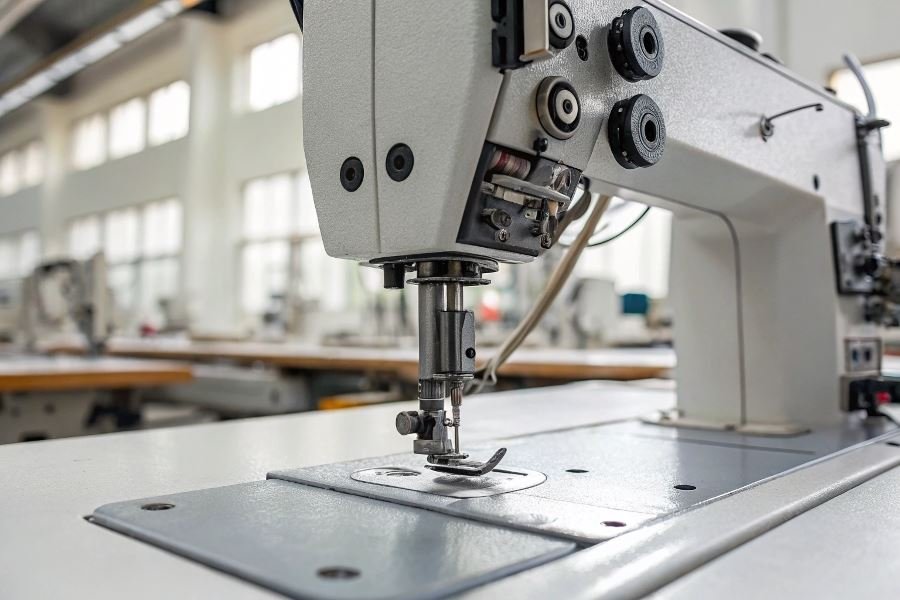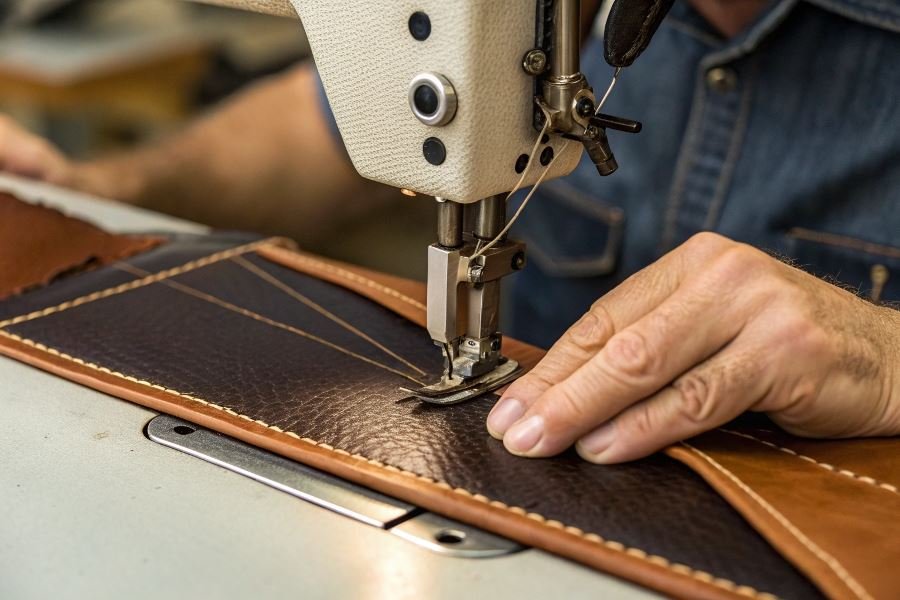
Ever watched a standard sewing machine struggle and stall when faced with thick leather? That frustrating moment reveals why professional leatherworkers invest in specialized equipment. The difference isn’t just convenience—it’s the dividing line between amateur projects and professional-grade creations.
Industrial sewing machines designed specifically for leather work represent a quantum leap in capability. These powerhouses deliver the precise tension control, superior feeding mechanisms, and raw power needed to transform tough hides into everything from luxury handbags to automotive upholstery. The market for leather goods continues to expand, with premium leather products commanding top dollar for their durability and timeless appeal.
Why leather demands specialized machinery
Leather presents unique challenges that ordinary machines simply can’t handle:
- Thickness variations within a single hide require adjustable pressure and feeding
- Low elasticity means punctures are permanent—there’s no room for error
- Surface friction creates feeding problems with standard feed dogs
- Density demands significantly more power than fabric sewing
Essential features for leather-worthy machines
When evaluating industrial leather sewing machines, focus on these critical elements:
- Walking foot mechanism that moves both above and below the material
- High-torque motor (preferably 1/2 HP or greater)
- Adjustable stitch length for different leather weights
- Compound feed systems that prevent material shifting
- Heavy-duty needle capability (sizes 18-23)
The right machine transforms challenging leather work into a smooth, predictable process—eliminating frustration and dramatically expanding what’s possible in your leathercraft journey.
The Leather Workhorses: Industrial Machines That Deliver
When crafting leather goods that stand the test of time, your choice of sewing machine becomes the foundation of your success. The top 3 industrial sewing machines for working with leather represent decades of engineering excellence specifically designed to tame this challenging material. Let’s dive into the powerhouses that professional leatherworkers trust with their most demanding projects.
Juki DNU-1541: The Gold Standard
The Juki DNU-1541 stands as a testament to Japanese engineering precision. This walking foot machine delivers exceptional performance with its:
- Triple feed mechanism that handles multiple layers with minimal slippage
- Impressive 9mm maximum stitch length perfect for both decorative and structural seams
- Needle feed timing that prevents material shifting during high-speed operation
What truly sets the DNU-1541 apart is its remarkable balance of power and finesse. With a servo motor capable of 2,500 stitches per minute yet precise enough for detailed work, it excels in both production environments and custom workshops.
The machine’s cast-iron construction ensures vibration-free operation even when penetrating 8mm of leather. For saddle makers, bag manufacturers, and upholstery specialists, the DNU-1541 represents an investment that typically delivers 15+ years of reliable service.
Consew 206RB-5: Workhorse Reliability
The Consew 206RB-5 has earned its reputation as the dependable workhorse in leather production facilities across America. Its standout features include:
- Large bobbin capacity (approximately 40% larger than standard)
- Reverse feed mechanism for secure lockstitching
- Safety clutch that prevents hook damage during heavy use
This machine excels in high-volume environments where consistent performance matters more than flashy features. The 206RB-5’s value proposition becomes clear when examining its durability factors:
| Component | Expected Lifespan | Maintenance Requirement |
|---|---|---|
| Hook Assembly | 7-10 years | Quarterly oiling |
| Feed Dog | 5+ years | Annual inspection |
| Motor | 10+ years | Minimal |
Leather furniture manufacturers particularly appreciate the Consew’s ability to maintain consistent tension across varying thicknesses. Its relatively straightforward mechanical design also means repairs can be handled by most industrial machine technicians, minimizing downtime.
Cowboy CB3200: Innovation Meets Tradition
The Cowboy CB3200 represents American innovation in the industrial sewing space. This relative newcomer has quickly gained followers for its:
- Programmable stitch patterns with digital interface
- Automatic thread trimming that increases production efficiency
- Specialized presser feet designed specifically for leather applications
What makes the CB3200 particularly noteworthy is its versatility across leather weights. While most machines excel at either light glove leather or heavy saddle leather, the Cowboy handles the full spectrum with minimal adjustments.
The comparative advantage becomes clear when examining setup time between projects. Workshops producing diverse leather goods report 60% faster changeovers compared to traditional machines. The CB3200’s innovative needle cooling system also prevents skipped stitches when working with dense, oil-tanned leathers.
For custom leather shops handling everything from wallets to motorcycle seats, this adaptability translates directly to profitability. Though priced approximately $1,200 higher than the Juki or Consew, many owners report the versatility justifies the premium for mixed-product workshops.
Each of these industrial powerhouses represents a significant investment in your craft. The right choice ultimately depends on your specific production needs, material focus, and workflow requirements.
Investing Wisely in Leather Sewing Powerhouses
When it comes to leather craftsmanship, your machine choice isn’t just a purchase—it’s a business partnership that will either elevate your creations or become your workshop’s greatest frustration. After examining the top contenders in the leather sewing arena, let’s analyze what makes each machine worth your hard-earned dollars and how to ensure your investment pays dividends for years to come.
The magnificent three at a glance
| Machine | Standout Feature | Best For | Price Range |
|---|---|---|---|
| Juki DNU-1541 | Unmatched durability with walking foot | High-volume production | 2, 200−2,800 |
| Consew P1206RB | Compound feed with exceptional power | Medium to heavy leather | 1, 800−2,300 |
| Cowboy CB3500 | Specialized for decorative stitching | Custom leather goods | 2, 500−3,200 |
The Juki DNU-1541 remains the gold standard for professional leatherworkers, with its industrial-grade construction handling everything from delicate lambskin to thick saddle leather. The Consew delivers remarkable value for shops that need reliability without the premium price tag, while the Cowboy excels for artisans focused on decorative work and specialty stitching patterns.
Dollars and sense of leather machinery
Industrial leather sewing machines represent significant capital expenditure, but their ROI calculation extends far beyond the initial price tag. Consider:
- Production capacity increases – The Juki can process up to 2,500 stitches per minute, potentially tripling your output compared to standard machines
- Reduced material waste – Precision stitching from the Consew means fewer ruined pieces, saving approximately 15% on material costs
- Maintenance economics – The Cowboy’s modular design makes parts replacement simpler, reducing downtime by up to 40%
The cheapest machine is rarely the most economical. Calculate cost per stitch over a five-year period to reveal the true value proposition.
For small leather goods businesses, the Consew typically reaches ROI within 14-18 months of regular use. Custom shops focusing on high-margin products may see the Cowboy pay for itself in under a year through enhanced capabilities that command premium pricing.
Keeping your workhorse running
The longevity equation for industrial leather machines involves three critical factors:
Regular maintenance schedules make the difference between a decade-long partnership and premature replacement. The Juki demands the most rigorous care but rewards owners with legendary reliability—many units from the early 2000s still operate flawlessly today.
Parts availability varies significantly. Consew’s widespread dealer network ensures same-week parts delivery throughout North America, while Cowboy owners should maintain a strategic parts inventory as replacements can take longer to source.
Operator training represents the hidden investment many overlook. Budget approximately $500 for professional training to maximize your machine’s potential and prevent costly operator errors.
The wisest approach combines preventative maintenance with relationship-building with a qualified technician. Annual service costs average $200-350 for these machines, but this investment typically extends operational life by 30-50% compared to reactive maintenance strategies.
Your leather sewing machine isn’t merely equipment—it’s the foundation upon which your craftsmanship stands. Choose accordingly, maintain diligently, and your investment will empower your business growth for years to come.
Discover the ultimate guide to professional leather crafting with our in-depth comparison of the Juki DNU-1541, Consew 206RB-5, and Cowboy CB3200 industrial sewing machines. Expert insights on performance, durability, and ROI for serious leatherworkers.
Discover the ultimate guide to professional leather crafting with our in-depth comparison of the Juki DNU-1541, Consew 206RB-5, and Cowboy CB3200 industrial sewing machines. Expert insights on performance, durability, and ROI for serious leatherworkers.