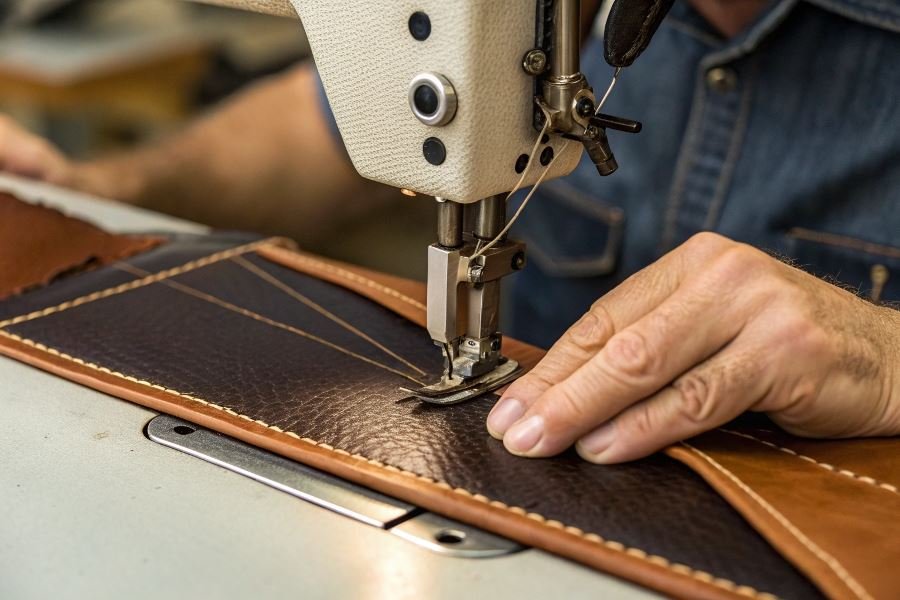
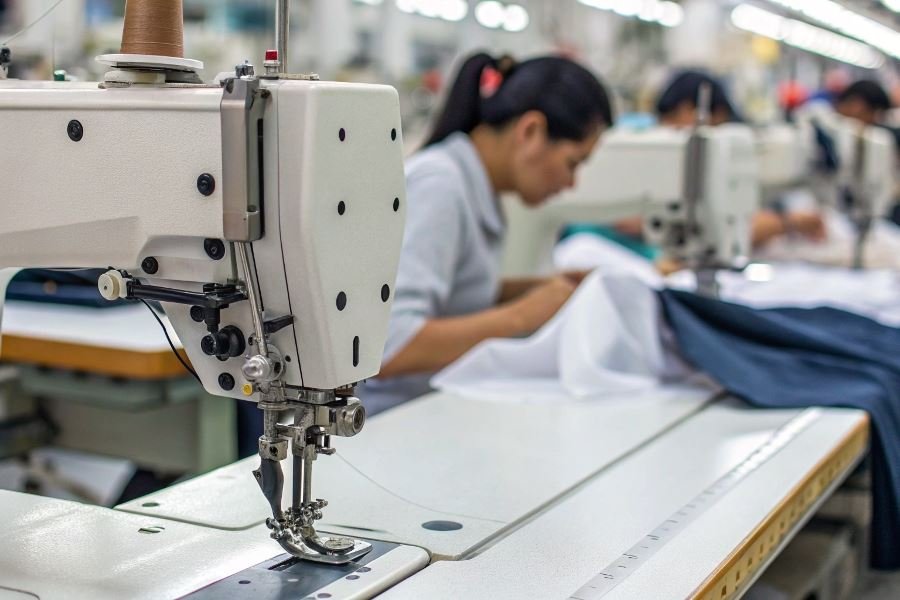
Ever watched a master craftsman transform fabric into profit with lightning speed? That’s the magic of having the right industrial sewing machine in your small business arsenal. While domestic machines might serve a hobbyist well, they simply can’t deliver the performance that keeps a business competitive.
Industrial sewing machines aren’t just bigger versions of home machines—they’re precision-engineered workhorses designed for specific tasks and continuous operation. The difference is like comparing a family sedan to a Formula 1 race car: both have engines and wheels, but they’re built for entirely different purposes.
“The right machine doesn’t just stitch fabric—it stitches profit into every seam of your business model.”
Domestic vs. industrial: A world apart
Industrial machines typically run at speeds of 1,500-5,000 stitches per minute, compared to the 600-1,000 range of domestic models. They’re constructed with all-metal parts for durability, specialized for specific operations (straight stitch, overlock, buttonhole), and designed to run 8+ hours daily without overheating.
Matching machine to mission
Before investing 1, 000−5,000 in an industrial machine, ask yourself:
- What materials will you primarily work with? Leather demands different capabilities than silk.
- What’s your production volume? A boutique creating 10 custom pieces weekly needs different equipment than a workshop producing 100 identical items daily.
- What specific operations will you perform most? Straight stitching, hemming, buttonholes?
The machine that revolutionizes one business might cripple another. Your production needs should drive your selection—not trends, not what your competitor uses, and certainly not what’s on sale this month.
The Powerhouse Behind Your Stitches: Choosing Your Industrial Machine
Selecting the right industrial sewing machine for your small business isn’t just a purchase—it’s a strategic investment that will either propel your production forward or become your operation’s bottleneck. The market offers a dazzling array of options, each designed for specific applications and materials.
When approaching how to choose an industrial sewing machine for a small business, you need to think like both an engineer and an artist. The machine becomes an extension of your creative vision while simultaneously serving as the workhorse that transforms raw materials into marketable products. The right choice can dramatically increase your output quality, reduce production time, and ultimately boost your bottom line.
Machine Types: The Foundation of Your Operation
Flat-bed machines remain the versatile standard-bearers of the industry. With their horizontal work surface extending on both sides of the needle, they excel at handling most straight stitching on fabrics that lay flat. Perfect for apparel, curtains, and basic upholstery.
Post-bed machines feature an elevated column that allows material to wrap around it—ideal for working with tubular items like sleeves, pant legs, or bags. The height of the post varies between models, with higher posts accommodating bulkier projects.
Cylinder-bed machines offer a narrow, horizontal cylinder where the needle and feed mechanisms are mounted, allowing fabric to pass around and under it. These specialized machines shine when working with shoes, boots, and other three-dimensional products.
The machine type you select should match your most frequent projects—not the occasional outliers that represent only 5% of your production.
Power and Performance Metrics That Matter
Industrial machines are categorized by more than just their physical configuration:
| Feature | Light Duty | Medium Duty | Heavy Duty |
|---|---|---|---|
| Motor Power | 400-550W | 550-750W | 750W+ |
| Speed (SPM) | 1,500-3,000 | 3,000-4,500 | 4,500-5,500+ |
| Material Thickness | Light fabrics | Medium fabrics | Heavy materials |
| Price Range | $800-1,500 | $1,500-3,000 | $3,000-7,000+ |
Stitch quality requirements deserve careful consideration. Machines with adjustable stitch length, width, and tension provide greater versatility. For specialized work, features like automatic thread trimmers, programmable stitch patterns, and computerized controls might justify the higher investment.
Practical Considerations for Your Workspace
Space constraints often dictate viable options for small businesses. Measure your dedicated sewing area before shopping, accounting for not just the machine footprint but also the operator’s movement zone and material handling space. Some industrial machines require reinforced tables due to their weight and vibration.
Noise levels vary dramatically between models. Servo motors run significantly quieter than clutch motors, making them preferable for shared workspaces or residential areas. Some manufacturers like Juki and Brother offer noise-reduction technology in their newer models.
Maintenance requirements should factor heavily into your decision. Consider:
- Availability of local technicians familiar with your chosen brand
- Ease of accessing replacement parts
- Frequency of required maintenance
- Cost of consumables like needles, bobbins, and specialized feet
The ideal industrial sewing machine balances your immediate production needs with room for growth, all while fitting within your spatial, acoustic, and maintenance capabilities. Remember that the cheapest option rarely delivers the best long-term value for a serious business operation.
Smart Money: Investment Considerations for Industrial Sewing Machines
New vs. Refurbished: The Value Equation
When launching or upgrading your sewing operation, the “new versus refurbished” debate deserves serious attention. New machines from manufacturers like Juki or Brother typically command 1, 500−8,000 but arrive with comprehensive warranties (usually 2-5 years) and zero mechanical history. They incorporate the latest technology—like digital stitch control and automated thread cutting—that can dramatically boost productivity.
Refurbished machines present a compelling alternative at 40-60% of new pricing. A professionally refurbished Consew or Singer can deliver 10-15 years of reliable service when properly maintained. The key is sourcing from reputable refurbishers who:
- Replace all wear components
- Calibrate to factory specifications
- Offer at least a 6-month warranty
- Provide documentation of the restoration process
The smartest investment isn’t always the newest or the cheapest—it’s the machine that delivers the most value per dollar over its operational lifetime.
Total Cost of Ownership: Beyond the Price Tag
The sticker price represents just 50-70% of what you’ll ultimately invest in your industrial sewing machine. A comprehensive TCO calculation includes:
| Cost Category | Typical Range | Often Overlooked |
|---|---|---|
| Initial Purchase | 1, 500−8,000 | Shipping/installation (200−600) |
| Essential Accessories | 300−1,200 | Thread stands, lighting, ergonomic seating |
| Annual Maintenance | 200−500 | Downtime costs during servicing |
| Operator Training | 300−1,000 | Productivity loss during learning curve |
| Power Consumption | 100−300/year | Varies by motor type and usage patterns |
Servo motors add approximately 200−400 to initial costs but reduce power consumption by up to 70% compared to clutch motors—paying for themselves within 2-3 years of regular use.
Training costs are particularly deceptive. An experienced operator can produce 3-4 times the output of a novice on the same machine. Investing in proper training (500−1,000) typically delivers ROI within months through increased productivity and reduced material waste.
Brand and Vendor Selection: The Support Ecosystem
The machine is only as good as the support system behind it. When evaluating brands and vendors, look beyond the hardware to assess:
- Parts availability – Leading brands like Juki and Durkopp Adler maintain robust parts networks with 10+ years of support for discontinued models
- Technical documentation – Comprehensive manuals in your language with clear diagrams
- Service network – Local technicians certified to work on your specific model
- User communities – Active forums where you can troubleshoot issues and share techniques
A $500 repair becomes a $5,000 disaster when your machine sits idle for weeks waiting for parts.
The most reliable vendors offer post-purchase support packages that include installation, initial training, and preventative maintenance schedules. While these services add 10-15% to your initial investment, they dramatically reduce the likelihood of costly operational disruptions.
When selecting your vendor, prioritize those who specialize in your specific industry application rather than general equipment suppliers. Their expertise in your particular production requirements will prove invaluable as your business grows.
Discover how to select the perfect industrial sewing machine for your small business. Learn key differences from domestic machines, essential factors to consider, and smart investment strategies to maximize productivity and ROI.
Discover how to select the perfect industrial sewing machine for your small business. Learn key differences from domestic machines, essential factors to consider, and smart investment strategies to maximize productivity and ROI.