Ever watched a standard home sewing machine struggle and eventually surrender when faced with leather, canvas, or denim? That frustrating moment reveals why specialized equipment exists—and why it matters so much to professionals who work with demanding materials daily.
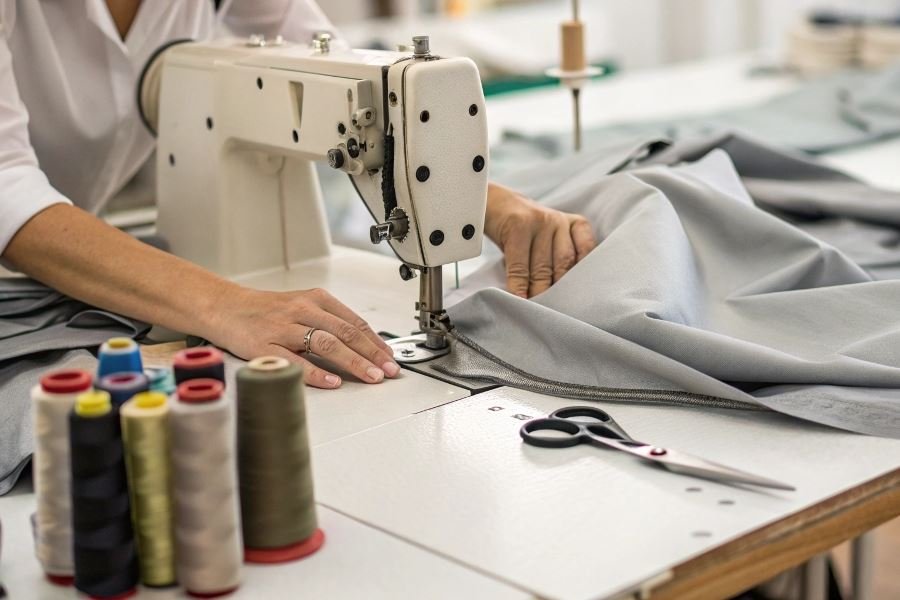
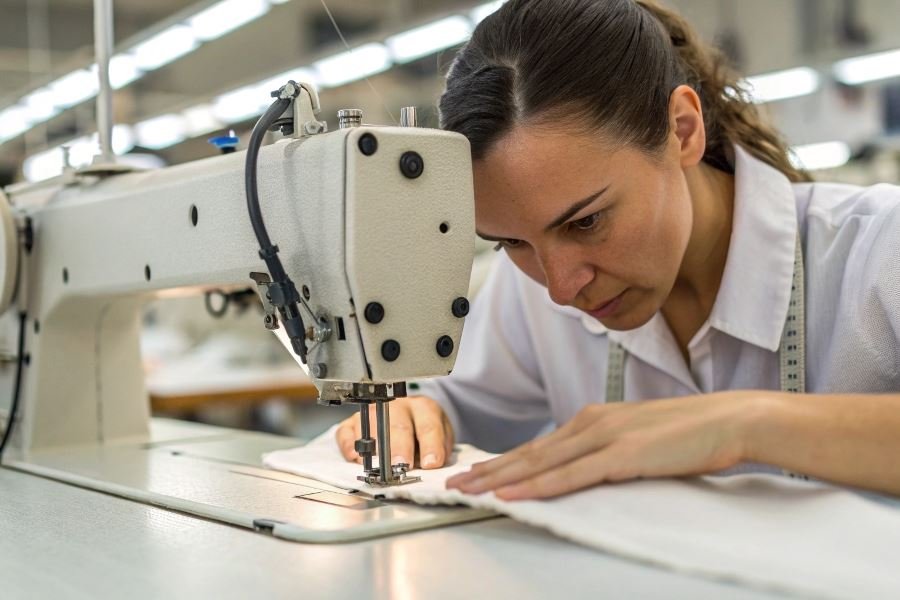
Industrial sewing machines designed for heavy fabrics are the unsung heroes of manufacturing, built specifically to handle materials that would make conventional machines whimper. These robust workhorses feature reinforced components, powerful motors (typically 550-1800 watts compared to a home machine’s modest 100 watts), and specialized feed mechanisms that effortlessly guide thick, stubborn materials through precise stitching paths.
Beyond strength: What makes industrial machines different
The distinction between regular and industrial machines goes far beyond mere power. Industrial machines are purpose-built for continuous operation—often running 8+ hours daily without overheating or performance degradation. They typically focus on performing one specific function exceptionally well rather than attempting multiple mediocre functions.
Key differences include:
| Feature | Home Machine | Industrial Machine |
|---|---|---|
| Motor placement | External | Built-in |
| Stitches per minute | 850-1,000 | 1,600-5,500 |
| Durability | 5-10 years with moderate use | 15-20+ years with heavy daily use |
| Thread capacity | Small spools | Large cones |
Where heavy-duty capabilities shine
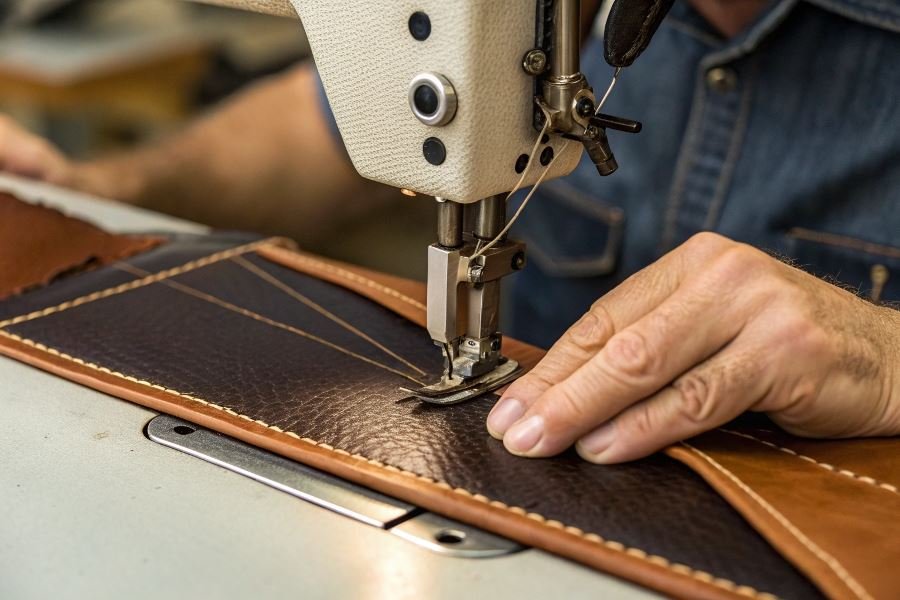
These specialized machines form the backbone of numerous industries: automotive upholstery workshops transforming leather into luxurious interiors; marine fabricators crafting weather-resistant boat covers and sails; furniture manufacturers assembling durable sofas and chairs; and fashion houses producing premium denim and leather goods.
The construction industry relies on them for creating heavy-duty tarps and protective coverings, while military and tactical gear manufacturers depend on their precision when assembling equipment where stitch failure could have serious consequences.
Essential Features for Heavy-Duty Sewing Success
When selecting industrial sewing machines for heavy fabrics, understanding the core technical specifications becomes the difference between struggling with thick materials and powering through them effortlessly. The specialized machinery required for upholstery, leather goods, canvas, or denim demands particular attention to three critical components that determine performance.
Professional tailors and manufacturing specialists recognize that industrial sewing machines for heavy fabrics: features of selection must prioritize robust engineering over aesthetic considerations. Unlike domestic machines that might occasionally handle heavier projects, industrial models designed for thick materials are purpose-built workhorses that deliver consistent results under demanding conditions.
Power and Speed: The Heart of Heavy-Duty Performance
The motor represents the literal powerhouse of any industrial machine tackling heavy fabrics. Look for:
- Servo motors of 550-750 watts minimum for consistent torque when penetrating multiple layers
- Adjustable speed controls that allow for precision at both low speeds (200 SPM) and high production rates (up to 3,000 SPM)
- Power reserves that prevent stalling when hitting seam intersections
The relationship between power and speed isn’t simply “more is better.” The ideal machine provides sufficient torque at lower speeds where most heavy material work occurs.
| Motor Type | Power Range | Best Applications |
|---|---|---|
| Clutch Motors | 550W+ | Production environments, consistent thickness |
| Servo Motors | 550-750W | Varied materials, precision work |
| Direct Drive | 600W+ | Energy efficiency, reduced vibration |
Feed Mechanisms That Conquer Thickness
The feed system determines how smoothly thick materials move through the machine without shifting, bunching, or creating uneven stitches.
Compound feed systems combine three critical movements:
- Bottom feed (feed dogs)
- Needle feed
- Walking foot (top feed)
This triple-action approach ensures layers move in perfect synchronization, preventing the dreaded “shifting” effect that ruins precision work on leather, canvas, or upholstery materials.
The differential feed capability allows operators to adjust the ratio between top and bottom feeding, essential when working with materials that stretch or compress during sewing.
Needle and Thread Systems: The Final Frontier
Even with perfect power and feeding, inadequate needle and thread systems will doom heavy fabric projects. Critical specifications include:
- Needle sizes 100-140 (American 16-22) depending on material thickness
- Thread capacity up to size 138 (Tex 135) for structural seams
- Hook systems with enlarged bobbins that reduce thread changes
The Groz-Beckert R-system needles with reinforced blades prevent deflection when penetrating dense materials, while specialized thread tensioning systems accommodate the thicker threads required for structural integrity.
When evaluating thread paths, look for machines with simplified threading and tension adjustment that can handle the substantial variations between lightweight and heavyweight threads without complex reconfiguration.
The combination of these three systems—powerful motors, advanced feed mechanisms, and robust needle/thread systems—creates the foundation for successful heavy material sewing. Manufacturers who understand these relationships produce machines that deliver the reliability and precision that professional operations demand.
The Ultimate Guide to Industrial Sewing Machines for Heavy Fabrics
When tackling heavyweight materials like leather, canvas, or denim, your standard domestic machine simply won’t cut it. The right industrial powerhouse can transform your heavy-duty sewing projects from frustrating to flawless. Let’s dive into the three machine types that dominate the heavy fabric landscape, each with distinct advantages for specific applications.
Flatbed industrial machines that deliver
Flatbed machines represent the workhorses of industrial sewing. With their horizontal work surface extending from the needle area, they provide maximum stability for handling substantial materials.
Key selection factors:
- Motor power: Look for machines offering at least 550-750 watts for effortless penetration through multiple layers
- Feed mechanism: Compound feed systems (combining bottom, needle, and walking foot feeds) ensure precise material movement without shifting
- Stitch length capacity: Opt for machines capable of 8-10mm stitch lengths for optimal heavy fabric joining
The Juki DDL-8700 and Consew 206RB-5 represent industry standards, with the latter featuring a walking foot specifically designed for heavyweight applications.
The flatbed’s expansive work surface makes it ideal for large panels of upholstery fabric, canvas, or heavy drapery where material support is crucial.
Cylinder-bed machines for dimensional challenges
When working with tubular or three-dimensional items, cylinder-bed machines provide the specialized access needed for professional results.
Advantages for heavy applications:
| Feature | Benefit for Heavy Fabrics |
|---|---|
| Narrow column bed | Allows access to tight spaces like boots, bags, and sleeves |
| Elevated work surface | Reduces friction for smoother feeding of thick materials |
| Specialized presser feet | Available for specific heavy applications (piping, binding) |
The Adler 669 excels with leather goods, while the Seiko STH-8BLD-3 handles heavy canvas with remarkable precision.
These machines truly shine when working with dimensional products that would be impossible to maneuver on standard flatbeds.
Post-bed machines for precision work
When extreme accuracy meets challenging thickness, post-bed machines deliver unmatched results. Their elevated column design provides exceptional visibility and access to detailed work areas.
Selection considerations for specialized heavy material work:
- Post height: Higher posts (10-12 inches) provide better clearance for bulky materials
- Needle bar stroke: Longer strokes (30-35mm) accommodate thicker materials
- Presser foot lift: Look for at least 12mm lift capacity for multi-layer work
The Durkopp Adler 867 series offers exceptional performance for leather goods manufacturing, while the PFAFF 1295 excels in automotive and furniture upholstery applications.
Material-specific considerations should drive your selection process. Leather demands oil-free operation to prevent staining, while canvas benefits from extended arm depth for handling large panels. Denim work requires specialized needle cooling systems to prevent thread breakage at high speeds.
By matching your specific heavy material challenges to the right machine architecture, you’ll dramatically improve both efficiency and quality outcomes in your industrial sewing operation.
Discover the essential features of industrial sewing machines for heavy fabrics. Learn how to select the right machine type—flatbed, cylinder-bed, or post-bed—based on motor power, feed mechanisms, and specialized needle systems for your heavy-duty projects.
Discover the essential features of industrial sewing machines for heavy fabrics. Learn how to select the right machine type—flatbed, cylinder-bed, or post-bed—based on motor power, feed mechanisms, and specialized needle systems for your heavy-duty projects.