Ever wondered what makes your favorite jeans so durable or how high-end clothing maintains perfect stitching even after years of wear? The answer lies not in magic, but in the industrial-grade machines that stitch our world together.
Industrial sewing machines represent the backbone of modern manufacturing, with the global market projected to reach $5.6 billion by 2027. These workhorses come in three primary configurations—straight stitch, overlock, and coverstitch—each designed for specific applications that transform raw fabric into finished products.
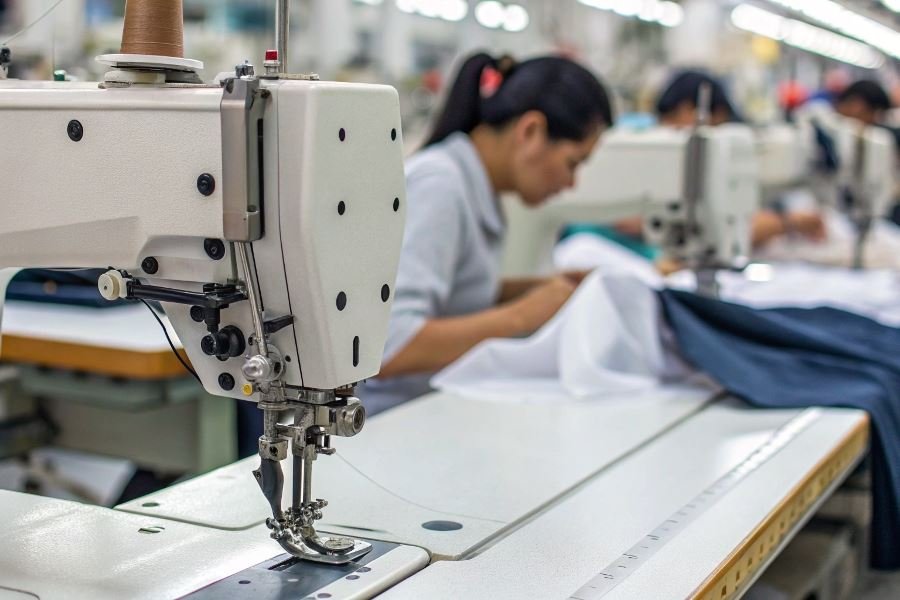
The industrial advantage is immediately apparent when comparing these machines to their domestic counterparts. While your home sewing machine might handle a few hours of weekly use, industrial machines are engineered to operate 10+ hours daily, 6 days a week, for decades. They typically run 3-5 times faster (up to 5,000 stitches per minute), feature all-metal construction, and utilize specialized motors that deliver consistent power without overheating.
Beyond speed: Purpose-built precision
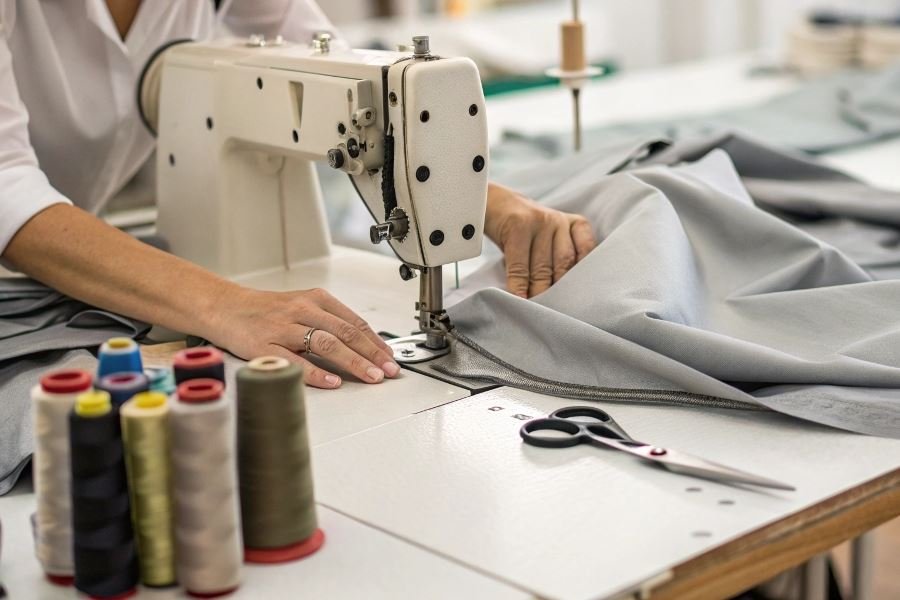
The difference between selecting the right or wrong machine type can mean the difference between profitability and failure for production facilities. Straight stitch machines excel at creating strong, clean seams for structural integrity. Overlocks (sergers) simultaneously trim fabric edges while creating finished seams that prevent fraying. Coverstitch machines produce those professional-looking hems on t-shirts and stretchy garments that maintain elasticity.
“The right industrial machine doesn’t just improve production speed—it fundamentally transforms what’s possible in your manufacturing process,” notes one industry veteran with 30 years of factory floor experience.
Choosing between these powerhouses isn’t about finding the “best” machine, but rather identifying which specialized tool aligns with your specific production requirements, material types, and output goals.
The Industrial Sewing Machine Showdown
Straight Stitch Powerhouses
Industrial straight stitch machines are the workhorses of professional sewing operations. With speeds reaching an impressive 5,500 stitches per minute, these machines outpace domestic models by nearly 5x. The Juki DDL-8700 exemplifies this category with its cast-iron frame construction that withstands decades of continuous use.
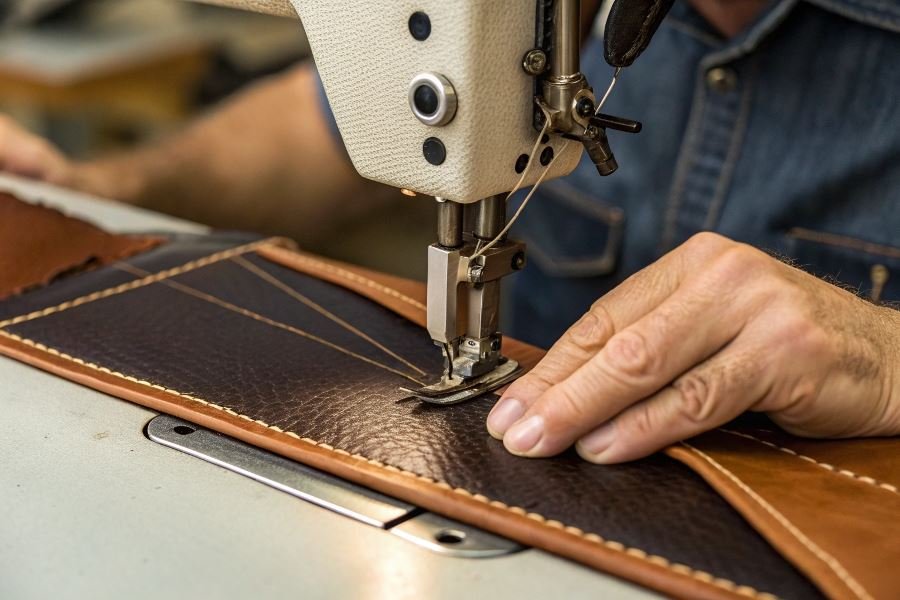
When evaluating industrial sewing equipment, a comprehensive comparison of industrial sewing machines of different types: straight stitch, overlock, coverstitch reveals distinct operational advantages for each category. Straight stitch machines excel in creating precise, strong seams essential for structured garments, upholstery, and leather goods. Their single-needle precision makes them irreplaceable for detailed work.
Durability metrics worth noting:
- Average motor lifespan: 15,000+ operational hours
- Maintenance interval: 500-1,000 hours
- Typical frame longevity: 20+ years
Overlock Edge Masters
Overlock machines transform raw fabric edges into professionally finished seams while simultaneously trimming excess material. The Brother R-1000 can process up to 7,000 stitches per minute, making it a production line essential.
These machines typically feature 3-5 thread capabilities, allowing for various edge finishes from basic serging to decorative rolled hems. The differential feed system enables perfect seams on stretchy fabrics—something straight stitch machines simply cannot match.
The true value of industrial overlocks emerges in production environments where a single machine can finish approximately 300 garment pieces per hour.
Coverstitch Specialists
Coverstitch machines create those professional-looking stretchy hems you see on t-shirts and activewear. The Yamata FY31016 offers specialized functions like chain stitching and flatlock seaming that other machine types cannot replicate.
| Feature | Coverstitch Advantage |
|---------|----------------------|
| Stretch recovery | 30-40% more than standard seams |
| Decorative potential | Multiple needle configurations |
| Fabric compatibility | Handles ultra-lightweight to medium-heavy |
These machines typically operate at 4,500-6,000 stitches per minute while maintaining perfect tension across multiple threads—a technical achievement that justifies their specialized status in production facilities.
Performance Face-Off
Speed comparison:
- Straight stitch: 5,000-5,500 SPM
- Overlock: 6,000-7,500 SPM
- Coverstitch: 4,500-6,000 SPM
While overlocks win the raw speed race, stitch quality varies significantly by application. Straight stitch machines produce the strongest structural seams, while coverstitch creates the most elastic joins. Maintenance requirements follow a similar pattern—overlocks require the most frequent attention due to their complex threading and cutting mechanisms.
Investment Analysis
Entry-level industrial machines start around $800 for basic straight stitch models, while specialized coverstitch units can exceed $2,500. The Consew 7360RH represents the mid-range sweet spot at approximately $1,200, offering exceptional value for small production facilities.
ROI considerations:
- Production volume threshold: 20+ garments daily
- Energy efficiency: Newer servo motors use 70% less electricity
- Space requirements: 4-6 square feet per machine
For businesses producing consistent volumes, the industrial upgrade pays for itself within 6-8 months through increased output quality and reduced downtime. The key is matching machine type to production needs rather than overspending on features that won’t improve your specific workflow.
Making the Right Investment for Your Production Needs
Choosing between straight stitch, overlock, and coverstitch industrial machines isn’t just about budget—it’s about aligning technology with your production goals. Let’s cut through the noise and build a framework for this critical business decision.
Matching Machines to Production Requirements
The perfect industrial sewing machine investment hinges on three critical factors:
Production volume determines the durability and speed requirements of your equipment. High-volume operations processing 500+ garments daily need machines with metal components and motors rated for continuous operation. Small workshops with intermittent production can consider industrial-grade machines with lower duty cycles.
Material types dictate specialized features. Heavy materials like denim or canvas require machines with higher penetration power (look for machines offering 1,000+ grams of pressure), while delicate fabrics need adjustable tension systems and specialized feed mechanisms.
The right machine prevents costly material waste and production delays that can devastate profit margins.
Finish requirements ultimately determine which machine types you’ll need:
| Machine Type | Best For | Typical Production Speed |
|---|---|---|
| Straight Stitch | Construction, topstitching, precision work | 4,000-5,500 SPM |
| Overlock | Seam finishing, knit construction | 7,000-9,000 SPM |
| Coverstitch | Professional hems, decorative stitching | 4,500-6,000 SPM |
Scaling Your Equipment to Business Size
For small workshops (1-3 operators), prioritize versatility over specialization:
- Start with a high-quality industrial straight stitch machine like the Juki DDL-8700
- Add a 4-thread overlock for finishing when budget allows
- Consider a combination machine if space is limited
For mid-sized operations (4-15 operators):
- Invest in dedicated machines for each function
- Incorporate specialized machines for frequent operations
- Begin building redundancy in critical machine types
For large manufacturing facilities (16+ operators):
- Implement production lines with specialized machines
- Invest in automated features like thread trimmers and programmable stitch patterns
- Consider computerized machines for complex operations
Investment wisdom: Better to purchase one premium machine that will last 15+ years than three budget models that require replacement every 3-5 years.
The Future of Industrial Sewing Technology
The industrial sewing landscape is evolving rapidly with several key developments:
Automation integration is transforming production floors. Machines with programmable stitch patterns, automatic thread cutting, and position memory reduce operator training time by up to 40% while increasing consistency.
IoT connectivity enables production monitoring and predictive maintenance. Connected machines from manufacturers like Durkopp Adler can alert maintenance teams before failures occur, reducing downtime.
Sustainability features including energy-efficient servo motors reduce power consumption by 70% compared to clutch motors while providing superior speed control.
The most forward-thinking manufacturers are already implementing machines with reduced environmental footprints and enhanced productivity features.
Your industrial sewing machine investment should balance immediate production needs with the flexibility to adapt to emerging technologies—ensuring your operation remains competitive as manufacturing continues its technological evolution.
Discover the key differences between industrial straight stitch, overlock, and coverstitch machines to optimize your production workflow. Compare speed, durability, and specialized functions to make the best investment for your manufacturing needs.
Discover the key differences between industrial straight stitch, overlock, and coverstitch machines to optimize your production workflow. Compare speed, durability, and specialized functions to make the best investment for your manufacturing needs.