Ever wondered why some manufacturing operations flow seamlessly while others struggle with costly reworks and material waste? The difference often lies in the quality of their pipe bending operations—a critical yet frequently overlooked aspect of modern fabrication.
Pipe bending represents the cornerstone of countless industries, from automotive exhaust systems to aerospace hydraulics, architectural structures to HVAC installations. At its core, this process transforms straight metal tubes into precisely curved components that form the backbone of our built environment. Unlike cutting and welding separate pieces, bending creates seamless curves that maintain structural integrity while reducing potential failure points.
When evaluating which pipe bending machine will revolutionize your production capabilities, three fundamental factors demand your attention: material compatibility, production volume requirements, and dimensional specifications. The ideal machine aligns perfectly with the materials you process daily—whether that’s thin-walled stainless steel tubing or heavy-gauge carbon steel pipe—while handling your required throughput without becoming a workflow bottleneck.
The performance trinity: Precision, speed, and versatility
The most successful manufacturing operations balance three critical performance metrics:
- Precision: Measured in degrees and millimeters, top-tier benders achieve tolerances within ±0.1° and ±0.5mm
- Speed: From setup time to cycle completion—modern CNC benders can reduce production time by up to 70% compared to manual alternatives
- Versatility: The ability to handle multiple materials, diameters, and bend configurations without extensive retooling
The difference between adequate and exceptional bending equipment often reveals itself in the details—springback compensation capabilities, intuitive programming interfaces, and robust construction that maintains calibration through thousands of cycles. These seemingly minor advantages compound into significant competitive edges when production demands intensify.
Pipe Bending Machines: Technical Analysis and Applications
When precision meets power in metal fabrication, pipe bending machines become the unsung heroes of production floors across America. These specialized tools transform rigid metal tubes into complex shapes that form the backbone of everything from automotive exhaust systems to custom furniture.
The comparison of pipe bending machines of different types reveals a fascinating spectrum of capabilities that can dramatically impact your production efficiency and output quality. Whether you’re scaling up operations or seeking that perfect bend radius, understanding the distinct advantages of each machine type is crucial for making informed investment decisions.
Hydraulic Pipe Benders: Raw Power Meets Versatility
Hydraulic pipe benders represent the workhorses of the bending world, utilizing fluid pressure to generate tremendous force. These machines excel when handling thick-walled pipes and heavy-duty materials that would challenge lesser equipment.
Key advantages:
- Force capabilities typically ranging from 10-150 tons
- Excellent for low-volume, high-variety production
- Relatively lower initial investment (5, 000−30,000 for quality models)
- Simpler maintenance requirements
The limitations become apparent in precision applications, where hydraulic systems may experience slight variations in pressure that can affect bend consistency across multiple pieces. Additionally, cycle times tend to be longer compared to automated alternatives.
Industry insight: Hydraulic benders shine in fabrication shops handling diverse projects with varying material specifications rather than high-volume production environments.
Mandrel Pipe Benders: When Perfection Is Non-Negotiable
For operations where deformation simply isn’t acceptable, mandrel pipe benders deliver exceptional precision by inserting a supporting rod (mandrel) inside the pipe during the bending process.
What separates mandrel bending from standard approaches:
| Feature | Benefit | Application |
|---|---|---|
| Internal support | Prevents pipe collapse | Thin-walled tubing |
| Minimal wall thinning | Maintains structural integrity | Aerospace components |
| Tight radius capability | Complex geometries possible | Performance exhaust systems |
These machines require more specialized setup and operator expertise but deliver unmatched results for critical applications where aesthetics and flow characteristics matter. The investment typically ranges from $25,000 to $100,000 depending on capacity and features.
CNC Pipe Bending Machines: Automation Excellence
The integration of Computer Numerical Control has revolutionized pipe bending by introducing unprecedented levels of repeatability, efficiency, and complexity management.
Production advantages:
- Dramatic reduction in setup time between different bend configurations
- Consistent quality across thousands of identical parts
- Multi-axis control enabling complex 3D bends in a single operation
- Digital part libraries for instant recall of previous jobs
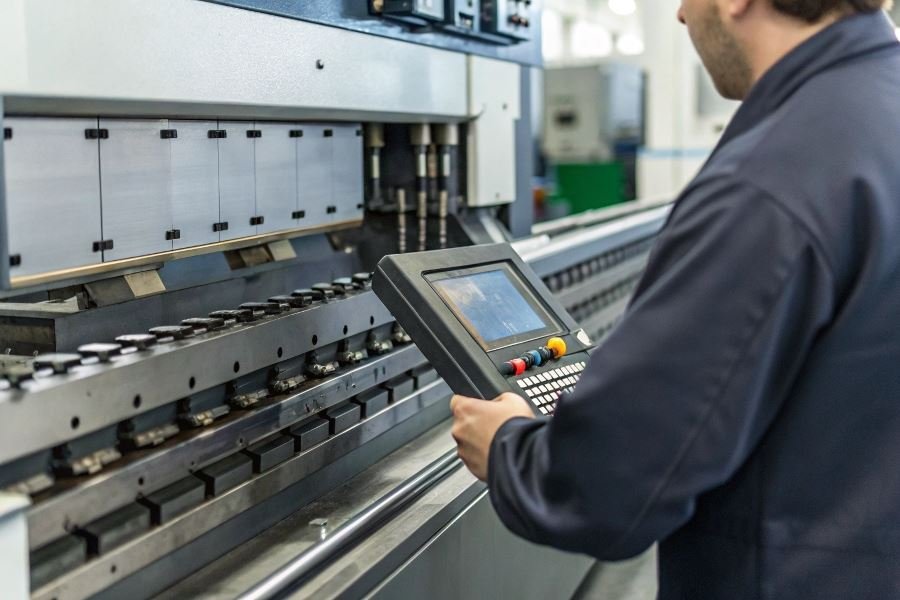
CNC bending systems represent the highest initial investment (75, 000−500,000) but deliver exceptional ROI through labor savings and scrap reduction. Modern machines feature intuitive interfaces that transform complex bend sequences into simple programming tasks.
For production environments processing more than 100 similar parts monthly, the automation benefits typically offset the higher acquisition costs within 18-36 months, making CNC benders the clear choice for volume-oriented operations.
The right pipe bending technology ultimately depends on your specific production requirements, material specifications, and quality standards—factors that deserve careful consideration before committing to any significant equipment investment.
Making the Right Pipe Bender Your Production MVP
Selecting the perfect pipe bending machine isn’t just a purchasing decision—it’s a strategic investment that will shape your production capabilities for years to come. The right machine becomes your operation’s Most Valuable Player, while the wrong choice can bottleneck your entire workflow. Let’s dive into how to match your specific production requirements with the ideal bending technology.
Aligning Volume with Capacity
Production volume is the cornerstone of your decision-making process. Consider this breakdown:
| Production Volume | Recommended Machine Type | Key Advantage |
|---|---|---|
| Low volume/custom | Manual benders | Lower initial investment, flexibility |
| Medium production | Semi-automatic | Balance of throughput and versatility |
| High-volume manufacturing | CNC/fully automatic | Consistency, speed, minimal operator intervention |
When Baileigh Industrial conducted their manufacturing efficiency study, they found that operations often purchase machines with 30% more capacity than current needs to accommodate growth. This buffer prevents the need for premature upgrades when production demands increase.
Production frequency matters as much as volume. A shop that bends 1,000 identical pipes once a month has different needs than one bending 50 unique configurations daily. The former might excel with a high-capacity rotary draw bender, while the latter might benefit from a CNC machine’s quick changeover capabilities.
Investment Economics That Make Sense
The true cost of a pipe bending machine extends far beyond the price tag. A comprehensive cost-benefit analysis includes:
-
Initial investment vs. operational costs: Manual benders from Huth Benders might cost $5,000-15,000, while advanced CNC systems from BLM Group can exceed $250,000—but may reduce labor costs by 70%.
-
Material waste reduction: High-precision machines typically reduce scrap by 15-25%, creating significant savings on material costs.
-
Energy consumption: Hydraulic benders consume substantially more power than electric servo-driven alternatives, sometimes 3-4 times more during operation.
The cheapest machine rarely delivers the best long-term value. Calculate your return on investment based on labor savings, reduced material waste, and increased production capacity—not just acquisition cost.
Seamless Implementation Strategies
Even the most advanced bender becomes a liability without proper implementation planning.
Training requirements vary dramatically between machine types. Manual benders might require 1-2 days of operator training, while CNC systems from Schwarze-Robitec often demand 1-2 weeks of comprehensive programming and operation instruction.
Maintenance considerations should influence your decision:
“The most expensive machine isn’t the one that costs the most to buy—it’s the one that sits idle when production demands are highest.”
Integration with existing workflows requires careful planning. Consider:
- Physical footprint and facility requirements
- Material handling before and after bending
- Quality control processes
- Programming compatibility with your design software
The Trumpf integration methodology recommends a phased implementation approach, starting with operator training, followed by test production runs, and culminating in full integration with upstream and downstream processes.
Scalability potential should factor into your decision. Will this machine grow with your business, or become a limitation? Modular systems that allow for future upgrades often provide better long-term value despite higher initial costs.
By methodically evaluating these factors against your specific production requirements, you’ll select a pipe bending solution that delivers optimal performance, efficiency, and return on investment for your unique manufacturing environment.
Discover the perfect pipe bending machine for your production needs with our comprehensive comparison of hydraulic, mandrel, and CNC benders. Learn how to evaluate precision, efficiency, and cost-effectiveness for optimal manufacturing results.
Discover the perfect pipe bending machine for your production needs with our comprehensive comparison of hydraulic, mandrel, and CNC benders. Learn how to evaluate precision, efficiency, and cost-effectiveness for optimal manufacturing results.