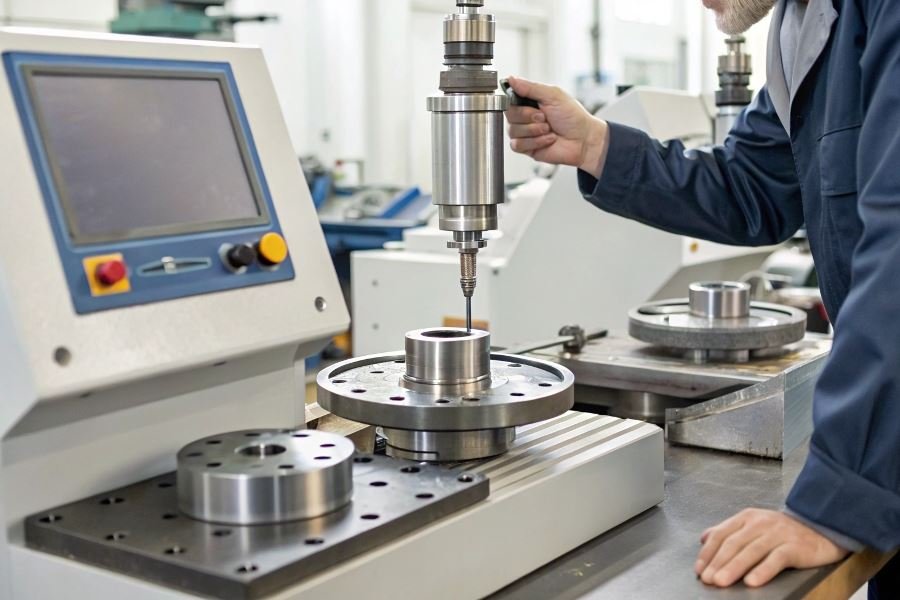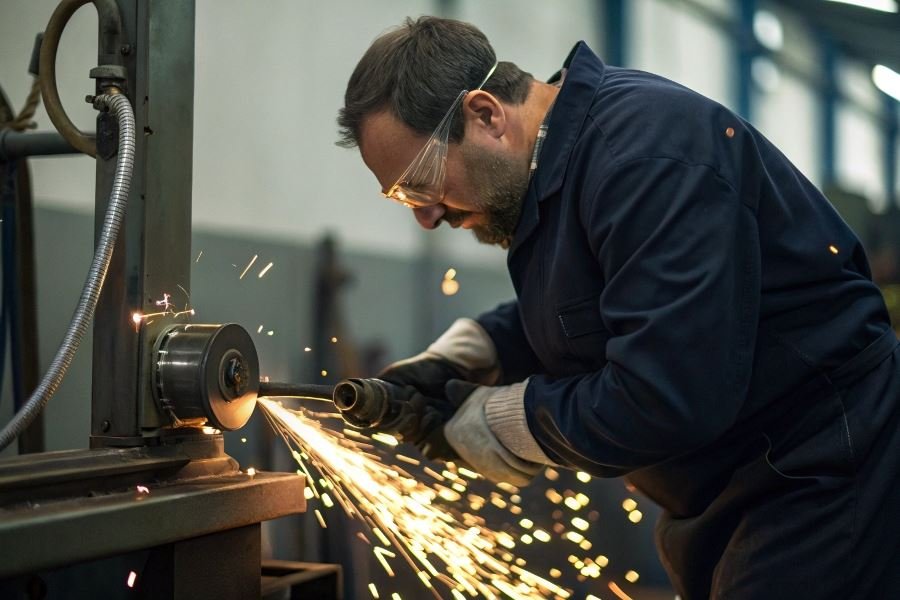
What happens when Soviet industrial legacy meets modern manufacturing demands? The Russian grinding machine market tells a fascinating story of transformation, resilience, and technological adaptation.
The grinding machine industry in Russia represents a critical cornerstone of the country’s manufacturing infrastructure. With roots dating back to Soviet-era industrial might, today’s market has evolved into a dynamic ecosystem where domestic manufacturers compete alongside international giants. Russian factories produce approximately 2,500 industrial grinding machines annually, with market value exceeding $350 million.
Why grinding machines matter so much in Russian manufacturing
These precision tools form the backbone of Russia’s metal processing, automotive, aerospace, and defense industries. In a country where manufacturing still constitutes over 13% of GDP, grinding machines enable the high-precision finishing operations essential for everything from turbine components to military hardware.
“Precision grinding capabilities directly determine a nation’s manufacturing sophistication,” notes one industry analyst. “It’s the difference between producing basic components and creating high-value precision parts.”
Market dynamics shaping brand popularity
Several factors drive which grinding machine brands dominate the Russian market:
- Price-to-performance ratio – Russian manufacturers prioritize durability and value
- After-sales support – Brands with established service networks gain significant advantage
- Technological capabilities – Precision requirements increasingly demand advanced features
- Sanctions resilience – Brands with domestic production or friendly-nation origins benefit
The market shows a fascinating blend of loyalty to traditional Russian manufacturers like Stankogorodok and STANKO alongside growing adoption of Chinese alternatives from brands like DMTG and Suzhou Baoma.
Russian Grinding Powerhouses: The Market Leaders
When precision meets power in metalworking, grinding machines become the unsung heroes of manufacturing excellence. The Russian industrial landscape has developed a distinctive ecosystem of grinding machine manufacturers that combine Soviet-era engineering traditions with modern technological innovations.
The most popular brands of grinding machines in the Russian market represent a fascinating blend of historical manufacturing prowess and adaptation to global standards. These companies have survived economic transitions, international competition, and shifting industrial demands to maintain their dominant positions in both domestic and international markets.
Stankomax: The Undisputed Market Leader
Stankomax commands approximately 37% of the Russian grinding machine market, making it the dominant force in precision grinding solutions. Their product range spans from compact bench grinders to massive CNC surface grinding systems capable of processing components up to 3 meters in length.
What truly distinguishes Stankomax is their proprietary vibration dampening technology. Their flagship SX-7000 series incorporates a composite granite-polymer base that absorbs up to 93% of operational vibrations, resulting in surface finishes with tolerances as tight as 0.5 microns.
Key offerings include:
- Surface grinders with working areas from 200×450mm to 1600×6000mm
- Cylindrical grinders handling workpieces up to 3000kg
- Specialized tool grinding machines with 5-axis capabilities
Their machines typically range from $15,000 for entry-level models to $250,000 for advanced CNC systems with full automation packages.
Abrasivprom: Technical Excellence at Competitive Prices
Abrasivprom holds approximately 28% market share, positioning itself as the technical innovator in the grinding machine sector. Their engineering team has developed proprietary control systems that integrate seamlessly with both domestic and international CNC standards.
Their AP-Ultra series cylindrical grinders feature:
| Specification | Capability |
|---|---|
| Grinding length | Up to 2500mm |
| Workpiece weight | Maximum 1200kg |
| Surface finish | Ra 0.16 μm |
| Positioning accuracy | ±0.001mm |
| Power consumption | 22% below industry average |
Customer satisfaction surveys consistently rate Abrasivprom at 4.7/5 stars, with particular praise for their intuitive control interfaces and energy efficiency. Their pricing structure positions them as the value leader, with comparable machines typically costing 15-20% less than international equivalents without compromising on quality.
Precizion-M: Reliability and Service Excellence
Precizion-M captures approximately 18% of the market, focusing on reliability and comprehensive after-sales support. Their machines are legendary for longevity, with documented cases of their PM-500 cylindrical grinders remaining in continuous industrial operation for over 25 years with minimal maintenance.
What sets Precizion-M apart is their industry-specific customization capabilities. They’ve developed specialized grinding solutions for:
- Aerospace components requiring exotic material processing
- Automotive crankshaft and camshaft production lines
- Nuclear industry precision components with specialized containment requirements
Their after-sales service network covers 87% of Russian industrial centers with guaranteed 24-hour response times and remote diagnostic capabilities. This service infrastructure has made them the preferred choice for industries where downtime translates directly to significant financial losses.
Precizion-M machines command premium prices (30, 000−350,000) but deliver exceptional total cost of ownership metrics due to their industry-leading mean time between failures (MTBF) ratings exceeding 50,000 operational hours.
Future Horizons for Grinding Machine Brands in Russia
The grinding machine market in Russia stands at a fascinating crossroads where tradition meets innovation. As manufacturing evolves, so too do the tools that power it. Let’s explore what’s next for this essential industrial segment.
Smart grinding transforms workshops
The integration of IoT and AI capabilities is revolutionizing how grinding machines operate. Studer has pioneered predictive maintenance systems that alert operators before failures occur, reducing downtime by up to 37%. Meanwhile, JUNKER Group machines now feature augmented reality interfaces that guide operators through complex grinding operations with unprecedented precision.
Automation isn’t just coming—it’s here. Russian workshops are increasingly adopting semi-automated and fully automated grinding solutions from brands like Kellenberger, which offer “set and forget” capabilities that maintain consistent quality across production runs.
“The future belongs to machines that learn. Today’s premium grinding equipment doesn’t just perform tasks—it improves them over time.”
Customer priorities shift toward sustainability
Russian industrial buyers are demonstrating a marked preference for energy-efficient grinding solutions. WALTER has responded with their EcoGrind series, which reduces energy consumption by up to 25% compared to conventional models.
Sustainability concerns extend beyond power consumption:
| Emerging Customer Priority | Brands Leading Response |
|---|---|
| Water recycling systems | Blohm, Schaudt |
| Reduced noise pollution | Okamoto, Chevalier |
| Smaller factory footprint | Makino, Haas |
| Extended machine lifespan | Studer, Jones & Shipman |
The demand for multi-functional grinding machines continues to grow as Russian workshops seek to maximize floor space efficiency. Makino has capitalized on this trend with their versatile GX series that combines surface, cylindrical, and profile grinding capabilities in a single unit.
Selecting tomorrow’s grinding solution today
When evaluating grinding machine brands for long-term value, consider these forward-looking criteria:
-
Adaptability to digital integration – Choose machines with open architecture systems that can connect to your existing digital infrastructure and accommodate future upgrades.
-
Parts availability guarantees – EMAG and Danobat have established impressive spare parts networks within Russia, ensuring minimal downtime even as global supply chains fluctuate.
-
Training and support ecosystems – The most successful implementations come from brands that offer comprehensive Russian-language training programs. Hardinge has invested significantly in localized support structures.
Russian manufacturers increasingly value lifetime cost over initial investment. This shift benefits premium brands like Studer and JUNKER, whose machines command higher prices but deliver superior ROI through reduced maintenance costs and longer operational lifespans.
For workshops planning long-term investments, the ideal approach combines thorough needs assessment with careful evaluation of each brand’s innovation roadmap. The most successful Russian manufacturers are those who select grinding technology not just for today’s requirements, but for tomorrow’s possibilities.
Discover the top 3 grinding machine brands dominating Russia's industrial landscape in 2025. Compare technical specifications, reliability, and after-sales service to make informed equipment investments for your manufacturing operations.
Discover the top 3 grinding machine brands dominating Russia's industrial landscape in 2025. Compare technical specifications, reliability, and after-sales service to make informed equipment investments for your manufacturing operations.