When seconds count during a break-in, would a burglar know where to look for your safe?
Security isn’t just about having a safe—it’s about having the right safe in the right location. The difference between built-in wall safes and floor safes goes far beyond aesthetics, touching on fundamental aspects of accessibility, concealment, and protection levels that directly impact how effectively your valuables remain secured.
The fundamental divide: Walls vs floors
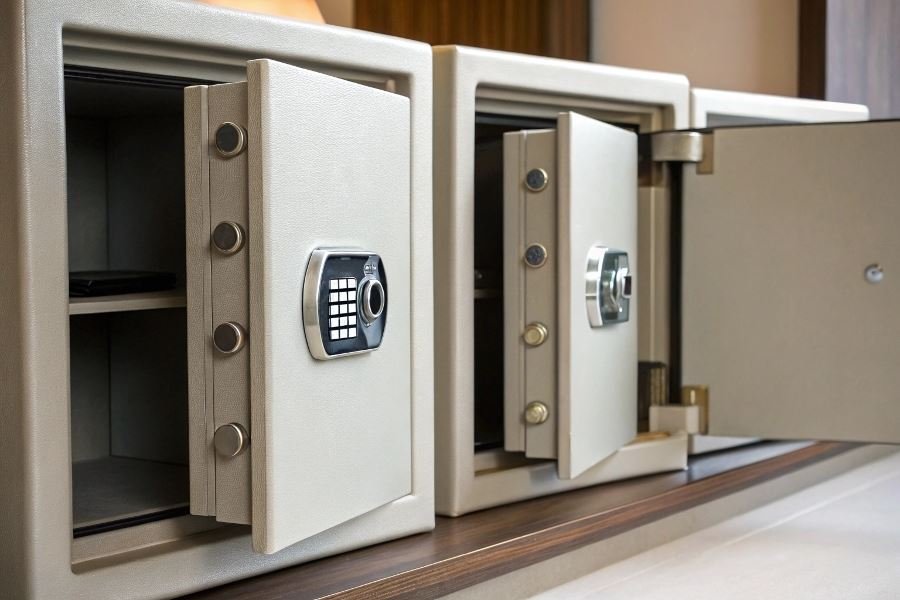
Built-in wall safes integrate directly into your wall structure, typically between wall studs, creating a flush installation that can be easily concealed behind artwork or furniture. Floor safes, by contrast, embed into concrete foundations, offering protection from multiple angles while utilizing gravity as an additional security feature.
The concealment factor: Wall safes offer excellent concealment options but provide limited space due to standard wall depth constraints (typically 3.5-4 inches). Floor safes sacrifice some convenience for superior concealment and typically offer greater storage capacity.
Critical decision factors
When evaluating your options, consider:
- Installation environment: Concrete foundation availability vs wall accessibility
- Weight capacity: Floor safes typically support heavier contents
- Fire protection: Floor safes often provide superior fire resistance (concrete acts as additional insulation)
- Accessibility needs: Wall safes offer easier access without bending or kneeling
Understanding security ratings
Both safe types follow standardized security classifications:
The Underwriters Laboratories (UL) rating system remains the gold standard for safe certification, with ratings from B-rate (basic protection) through TL-30X6 (tool and torch resistant from all six sides).
For residential use, look for safes with at least B-rate protection, while businesses handling cash should consider UL TL-15 or higher ratings. Remember that floor safes often achieve higher ratings due to their concrete encasement providing additional protection on five of six sides.
The Ultimate Showdown: Built-in vs Floor Safes
Security That Stops Thieves Cold
When comparing built-in wall safes and floor safes, security capabilities stand as the primary consideration for any serious buyer. Floor safes offer exceptional theft resistance by virtue of their concealed position and substantial weight. Typically weighing 100+ pounds when empty, a quality floor safe becomes virtually immovable once properly installed in concrete. The AMSEC B-rated floor safes, for instance, feature pry-resistant doors and relockers that activate automatically during break-in attempts.
The decision between built-in vs floor safes: which is better ultimately depends on your specific security needs and property layout. Wall safes provide excellent concealment options behind artwork or furniture but lack the physical anchoring that makes floor safes so formidable. A determined thief with the right tools might extract a wall safe entirely if given enough time, while floor safes require extensive demolition work that few burglars would attempt.
Security insight: Most residential burglaries last less than 10 minutes. A properly installed floor safe typically requires 30+ minutes to forcibly remove, making it effectively burglar-proof in real-world scenarios.
Installation Requirements and Structural Considerations
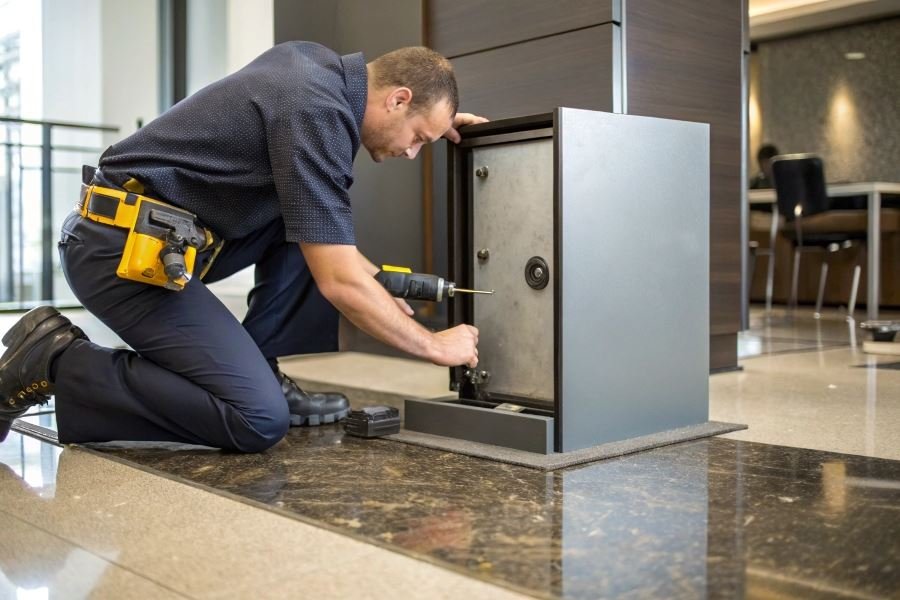
Floor safe installation demands significant planning and often professional assistance. Requirements include:
- Concrete foundation at least 6 inches thick
- Minimum 2 inches of concrete surrounding all sides
- Proper drainage considerations to prevent water damage
- Professional-grade concrete mixture for maximum strength
Wall safes present their own installation challenges, requiring sufficient wall depth (typically 4-6 inches) and proper anchoring between wall studs. The Gardall wall safes can be installed in standard 2×4 stud walls, making them more adaptable to existing structures without major modifications.
Accessibility and Space Utilization
The practical aspects of daily safe use often determine long-term satisfaction with your security investment.
| Feature | Floor Safes | Wall Safes |
|---|---|---|
| Access position | Requires kneeling/bending | Eye/chest level access |
| Visibility | Excellent concealment | Requires covering |
| Space efficiency | Uses otherwise unused floor space | Utilizes wall cavity space |
| Interior organization | Limited vertical space | Better document organization |
| Moisture concerns | Higher risk in some locations | Generally drier environment |
Floor safes excel in discreet protection, often hidden beneath rugs or furniture. Their primary drawback is ergonomic—accessing contents requires bending or kneeling, which may be problematic for users with mobility limitations. The Hollon floor safes mitigate this somewhat with spring-assisted doors, but the physical position remains unchanged.
Wall safes shine in convenience and accessibility. Typically installed at eye level, they allow comfortable access without physical strain. Their interior configurations often include document organizers and shelving systems that maximize the usable space. However, they consume potential storage space within walls and require more thoughtful concealment strategies.
Space utilization tip: Floor safes are ideal for storing high-value, rarely accessed items like property deeds or family heirlooms, while wall safes better serve items requiring frequent access like firearms or business documents.
The ideal security solution might incorporate both safe types—a floor safe for maximum security of critical valuables and a wall safe for convenient access to frequently needed secured items. Your specific property layout, security requirements, and physical abilities should guide this important decision.
Making the Final Decision: Built-in vs Floor Safes
When investing in home security, choosing between built-in and floor safes isn’t just about preference—it’s about matching the right solution to your specific needs. After examining the strengths and weaknesses of both options, let’s cut through the noise and identify exactly when each type shines brightest.
When Built-in Safes Take the Crown
Built-in wall safes deliver exceptional value in several key scenarios:
-
Space-constrained environments – In apartments, condos, or homes where floor space comes at a premium, wall safes utilize otherwise unused wall cavities. This preservation of valuable floor real estate makes them ideal for urban dwellings where every square foot counts.
-
Quick access requirements – When you need to retrieve documents or valuables rapidly, wall safes positioned at eye level eliminate the need to kneel or bend down. For business owners who frequently access important papers or homeowners who need regular access to secured items, this ergonomic advantage becomes increasingly valuable over time.
-
Discreet protection needs – When concealment is paramount, wall safes hidden behind artwork, mirrors, or furniture provide security through obscurity. The thief can’t steal what they can’t find—making built-in safes perfect for storing smaller valuables in homes that might be targeted for quick “grab-and-go” burglaries.
When Floor Safes Reign Supreme
Floor safes dominate in these specific situations:
-
Maximum security requirements – When protecting truly irreplaceable items or substantial cash reserves, floor safes offer superior protection. Their concrete encasement and lower visibility create formidable barriers against even determined thieves with significant time and tools at their disposal.
-
Fire protection priorities – For protecting critical documents, family heirlooms, or digital media from catastrophic house fires, floor safes benefit from their position. Being below ground level provides natural insulation and protection from the rising heat that typically destroys wall-mounted alternatives during structure fires.
-
Heavy or bulky item storage – When securing larger valuables, firearms collections, or heavier items, floor safes typically offer greater interior capacity and weight-bearing capabilities. Their solid foundation eliminates concerns about wall structural integrity that might limit built-in safe contents.
Investment Considerations Beyond Purchase Price
The true cost of ownership extends far beyond the initial price tag:
Long-term value
Floor safes typically retain value better over decades of ownership. Their permanence becomes part of your property’s security infrastructure, potentially increasing home value. Built-in safes, while less expensive initially, may require more frequent replacement as security technologies evolve.
Maintenance requirements
| Safe Type | Typical Maintenance | Average Annual Cost |
|---|---|---|
| Built-in | Lock lubrication, hinge inspection | $20-50 |
| Floor | Moisture monitoring, seal inspection | $30-75 |
Floor safes require vigilance against moisture intrusion, particularly in regions with high water tables or flooding risks. Conversely, built-in safes generally need simpler maintenance but may require more frequent electronic component updates if featuring digital locks.
Insurance implications
Many insurers offer premium discounts for homes with permanently installed safes. Floor safes typically qualify for greater insurance benefits, sometimes reducing homeowner policy costs by 5-15% for high-value items. However, the specific rating of the safe (UL listing, fire rating, burglary classification) matters more than its location type.
The perfect safe isn’t about choosing the “best” option—it’s about selecting the right tool for your specific security needs, property constraints, and lifestyle requirements.
When making your final decision, prioritize your most common usage scenarios and highest-value protection needs rather than focusing solely on price point or installation complexity. The right choice provides not just physical security, but also the priceless peace of mind that comes from knowing your valuables are properly protected.
Discover which home safe offers superior protection for your valuables. Compare built-in vs floor safes based on security ratings, installation requirements, and accessibility to make the best choice for your specific security needs.
Discover which home safe offers superior protection for your valuables. Compare built-in vs floor safes based on security ratings, installation requirements, and accessibility to make the best choice for your specific security needs.