The difference between a minor incident and a devastating fire often comes down to 30 critical seconds and one crucial tool.
When flames erupt, having the correct fire extinguisher within reach isn’t just a good idea—it’s your first line of defense against potential tragedy. Yet many property owners unknowingly purchase extinguishers that would be ineffective against the specific fire hazards in their environments.
Understanding fire classes is the foundation of proper extinguisher selection. Each class corresponds to different types of fires:
- Class A: Ordinary combustibles (wood, paper, cloth)
- Class B: Flammable liquids (gasoline, oil, grease)
- Class C: Electrical equipment
- Class D: Combustible metals (magnesium, titanium)
- Class K: Cooking oils and fats (commercial kitchens)
The National Fire Protection Association reports that kitchen fires account for 49% of home structure fires—making proper extinguisher selection particularly critical in residential settings.
“The right extinguisher in the right location can mean the difference between a minor incident and catastrophic loss.”
When selecting fire extinguishers, consider three key factors:
- Environment assessment: Identify the most likely fire hazards in your specific space
- Size and weight: Ensure users can comfortably handle the extinguisher during an emergency
- Accessibility: Position extinguishers strategically for quick access during emergencies
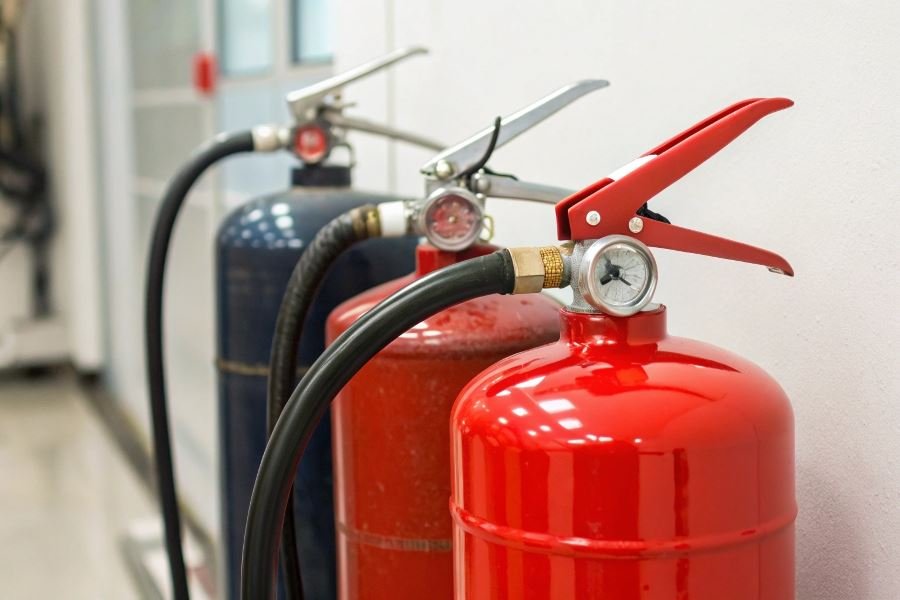
Multi-purpose ABC extinguishers offer versatility for most home and small office environments, while specialized settings may require specific types. Remember that extinguishers aren’t permanent solutions—they require regular inspection and maintenance to remain effective when you need them most.
Technical Specifications That Make Fire Extinguishers Work
When selecting fire protection equipment for your property, understanding the technical aspects becomes crucial for effective emergency response. The right fire extinguisher can mean the difference between a minor incident and devastating damage.
Finding the perfect balance of size, weight, and firefighting capability requires careful consideration of your specific environment. How to choose a fire extinguisher for home and office often comes down to matching technical specifications with your space requirements and the types of fires you might encounter. Let’s dive into the specifications that truly matter.
Size and Weight: Finding Your Perfect Match
The physical dimensions of your fire extinguisher directly impact its usability during emergencies:
Residential Spaces:
- 2-5 lb extinguishers – Ideal for kitchens, cars, and small apartments
- 5-10 lb models – Perfect for general home protection, garages, and workshops
Commercial Settings:
- 10-20 lb units – Standard for offices, retail spaces, and corridors
- 20+ lb extinguishers – Reserved for industrial applications or high-risk areas
Remember: An extinguisher too heavy to operate confidently defeats its purpose entirely.
The First Alert HOME1 weighing just 5 pounds offers excellent maneuverability for home users, while the Kidde Pro 10 MP provides robust protection at 16 pounds for business environments.
Fire Ratings and Room Coverage
Fire extinguisher effectiveness is measured through standardized ratings that indicate fighting capacity:
| Rating Type | What It Measures | Recommended Coverage |
|---|---|---|
| Class A | Ordinary combustibles capacity | 1A per 2,500 sq ft |
| Class B | Flammable liquid fighting power | 10B per 1,500 sq ft |
| Class C | Electrical fire capability | Supplement to A:B ratings |
| Class K | Kitchen grease fires | One per cooking area |
Coverage Formula: For residential spaces under 3,000 square feet, a minimum 2-A:10-B:C rating provides adequate protection. Commercial spaces typically require 2-A:20-B:C or higher, with one extinguisher per 3,000 square feet or within 75 feet of any location.
The Amerex B500 with its 5-A:40-B:C rating delivers exceptional coverage for medium-sized offices, making it a standout performer in versatility.
Top 3 Fire Extinguishers Worth Your Investment
After analyzing hundreds of models, these three consistently deliver superior performance:
1. ABC Dry Chemical Extinguishers
- Best for: General protection across homes and offices
- Key advantage: Versatility against multiple fire types
- Standout model: Kidde Pro 210 with 4-A:60-B:C rating
2. Clean Agent Extinguishers
- Best for: Electronics-heavy environments and server rooms
- Key advantage: Leaves no residue after discharge
- Standout model: Amerex Halotron I (model B386)
3. Class K Wet Chemical Extinguishers
- Best for: Commercial kitchens and food service areas
- Key advantage: Specialized for cooking oil and grease fires
- Standout model: Buckeye K-Guard K-5
The technical specifications might seem overwhelming initially, but they translate directly to real-world protection capability. By matching your space requirements with the appropriate size, weight, and fire rating, you’ll ensure your property has the right defense when seconds count.
Maximizing Your Fire Protection Investment
Strategic placement saves lives
The most advanced fire extinguisher becomes useless if it’s inaccessible during an emergency. Mount extinguishers at eye level (approximately 3-5 feet from the floor) on walls near exit paths—never tucked away in closets or cabinets. In homes, prioritize kitchen installations (where 49% of residential fires start), garage entrances, and near major appliances.
For offices, follow the “75-foot rule”—no person should need to travel more than 75 feet to reach an extinguisher. This creates a critical response window of approximately 15 seconds during an emergency. High-risk areas like server rooms, kitchenettes, and electrical panels deserve dedicated units.
The 30-second rule: If you can’t reach your fire extinguisher within 30 seconds while blindfolded, it’s in the wrong location.
Visibility matters tremendously. Consider installing photoluminescent signs above extinguisher locations—these glow in darkness and smoke conditions when electrical systems may fail.
Maintenance isn’t optional
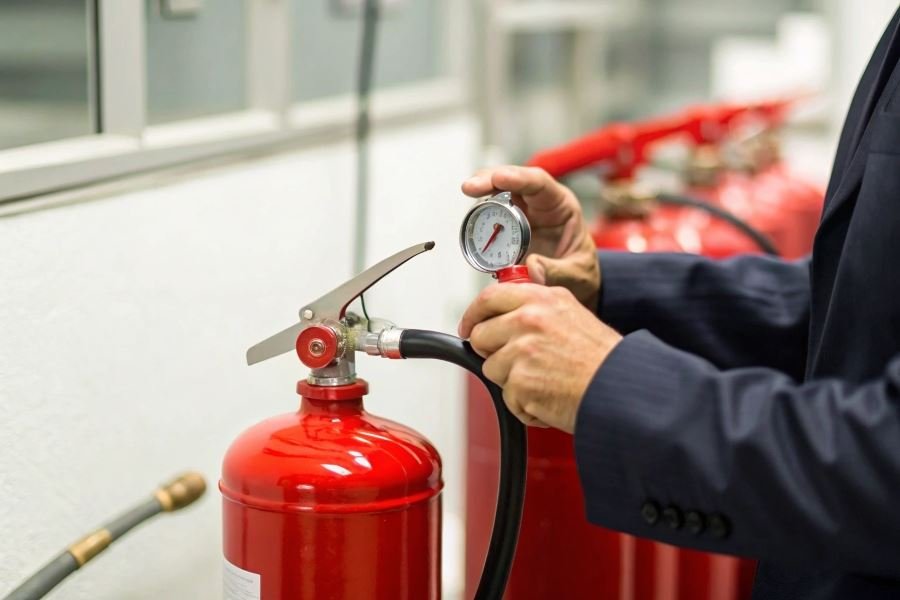
Fire extinguishers aren’t “set and forget” safety equipment. Monthly visual inspections should become routine:
- Pressure gauge reading in green zone
- No physical damage to the cylinder
- Pin and tamper seal intact
- Nozzle clear of obstructions
- Accessible and visible location
Professional inspections should occur annually, with hydrostatic testing (pressure testing of the cylinder) required every 5-12 years depending on extinguisher type. Document all inspections with dated tags—this creates accountability and provides critical information during emergencies.
When to recharge or replace
Fire extinguishers require recharging after any discharge—even a brief test spray depletes pressure and compromises effectiveness. Most quality extinguishers can be recharged 5-6 times before replacement becomes necessary.
The lifespan decision matrix:
| Condition | Action Required |
|---|---|
| Used (any discharge) | Immediate recharge |
| 6+ years old (disposable) | Replace unit |
| 12+ years old (rechargeable) | Hydrostatic testing or replacement |
| Failed inspection | Professional evaluation |
| Visible corrosion/damage | Immediate replacement |
Rechargeable models typically cost more initially but offer better long-term value. A quality rechargeable ABC extinguisher costs $50-75 with recharging services averaging $15-25—significantly less than replacement.
Training completes the protection package
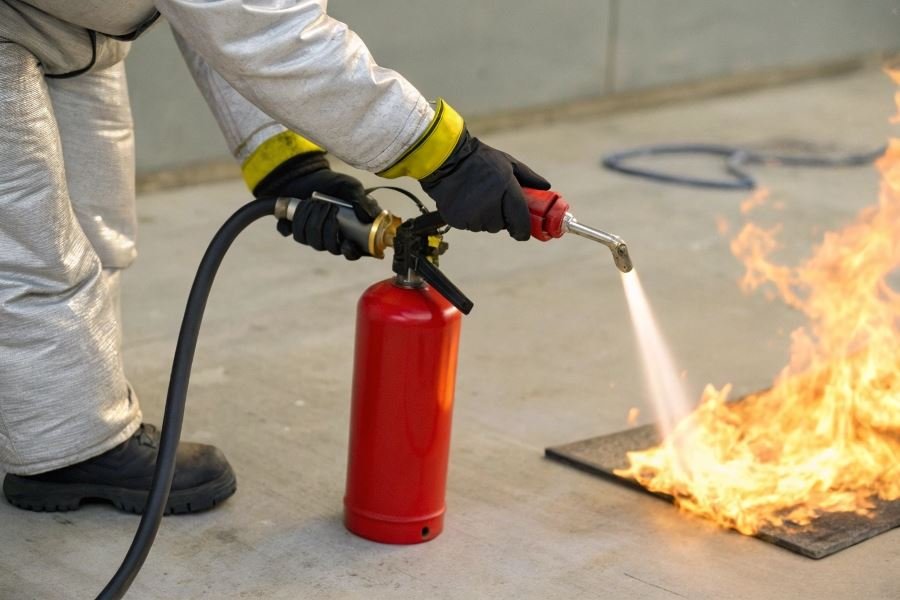
Even perfectly maintained extinguishers fail without proper user knowledge. Schedule annual household or office training sessions using the PASS technique (Pull, Aim, Squeeze, Sweep). Consider investing in training extinguishers that use water vapor instead of chemicals for realistic practice.
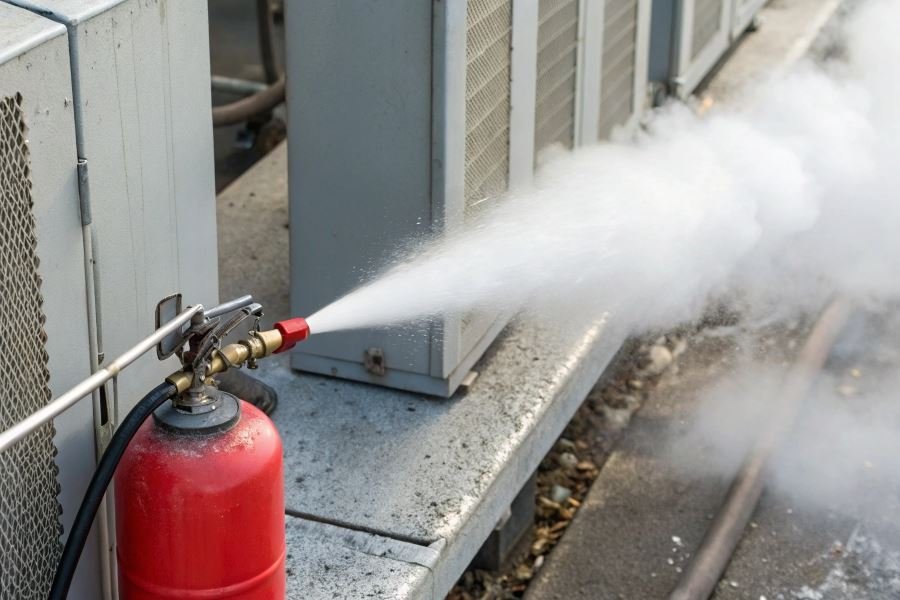
Remember that extinguishers provide approximately 10-20 seconds of firefighting capability—sufficient for small, contained fires only. Establish clear evacuation protocols when fires exceed one square meter or when the extinguisher empties before extinguishment.
Your fire extinguisher represents the critical first line of defense between safety and disaster—treat its placement, maintenance, and replacement with the seriousness this responsibility demands.
Learn how to choose the right fire extinguisher for your home and office based on fire classes, size requirements, and placement strategies. Comprehensive safety guide for proper protection against different fire types.
Learn how to choose the right fire extinguisher for your home and office based on fire classes, size requirements, and placement strategies. Comprehensive safety guide for proper protection against different fire types.