$4.5 million – that’s the average cost of a single industrial fire incident according to the National Fire Protection Association. When production lines fall silent due to security breaches or fire damage, the financial impact can be devastating.
Industrial facilities face unique protection challenges that standard commercial systems simply can’t handle. From volatile materials to sprawling campuses, these environments demand specialized solutions that integrate both security and fire protection into seamless defensive networks. The stakes couldn’t be higher – human lives, irreplaceable equipment, and business continuity all hang in the balance.
Evaluation criteria that separate elite systems from the rest
When evaluating industrial alarm systems, decision-makers must consider several critical factors:
- Environmental resilience: Systems must perform flawlessly despite dust, vibration, extreme temperatures, or corrosive atmospheres
- Scalability: The ability to expand protection as facilities grow
- Integration capabilities: Seamless communication between security, fire detection, and building management systems
- Compliance alignment: Meeting NFPA, OSHA, and industry-specific regulations
Today’s industrial security landscape
The threat matrix facing industrial facilities has evolved dramatically. Sophisticated cyber-physical attacks target industrial control systems, while traditional risks like theft and fire remain persistent concerns. Regulatory requirements have similarly intensified, with authorities demanding more comprehensive protection strategies and documentation.
The most effective industrial alarm systems don’t just detect threats – they provide actionable intelligence that enables rapid, appropriate responses. As we examine the top contenders in this space, we’ll see how they balance technological sophistication with practical reliability to create truly resilient protection frameworks.
Industrial Fortress: Elite Security and Fire Systems
When protecting industrial facilities, the stakes couldn’t be higher. Lives, assets, and operational continuity hang in the balance. The marketplace offers numerous security and fire alarm systems, but three titans consistently outperform the competition in industrial environments. These top 3 security and fire alarm systems for industrial facilities combine cutting-edge technology with robust reliability to create comprehensive protection frameworks that address the unique challenges of industrial settings.
Honeywell NOTIFIER® Integrated Solution
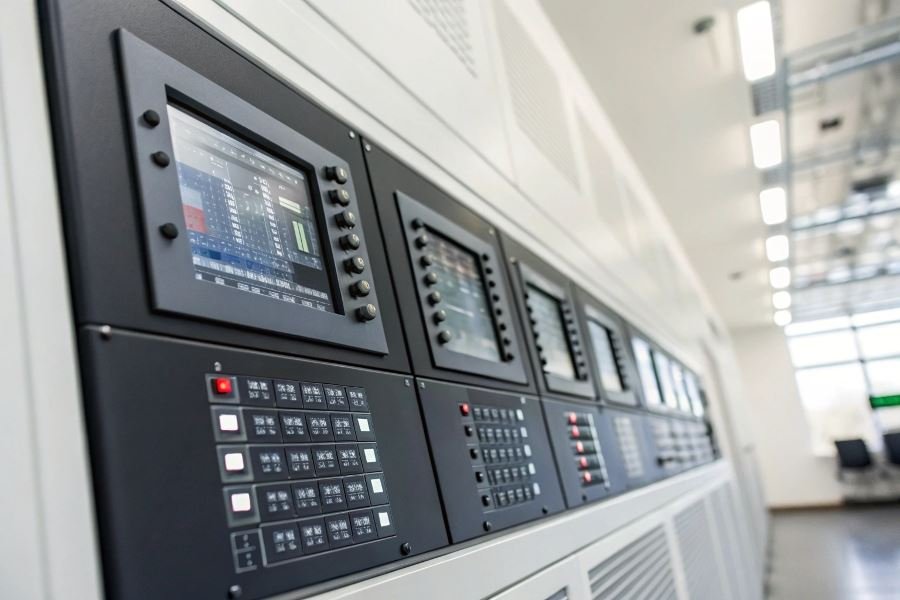
The NOTIFIER system from Honeywell stands as a paragon of integration excellence. What distinguishes this platform is its seamless unification of fire detection, access control, and video surveillance within a single command interface.
Key strengths:
- Advanced smoke detection algorithms that reduce false alarms by 47%
- Scalable architecture supporting up to 10,000 detection points
- UL-listed components with industrial-grade durability
The NOTIFIER’s ONYX® Series fire panels feature peer-to-peer networking capabilities, allowing facilities to expand protection as operations grow. Its intelligent sensors adapt to environmental conditions—crucial for manufacturing spaces where ambient conditions fluctuate dramatically.
“The NOTIFIER system’s ability to distinguish between actual threats and normal industrial processes saved us from at least 12 unnecessary evacuations last year alone.” — Operations Director at a major chemical processing facility
Johnson Controls Tyco Integration Platform
Johnson Controls Tyco delivers a powerhouse solution that excels in harsh industrial environments. Their system architecture prioritizes redundancy and fault tolerance—essential qualities when protecting critical infrastructure.
Standout features:
- Triple-redundant communication pathways
- Chemical-resistant sensors designed for corrosive environments
- Integration with industrial control systems via secure protocols
| Feature | Capability | Industrial Benefit |
|---|---|---|
| Explosion-proof detectors | Class I Div 1 rated | Safe deployment in hazardous locations |
| Smart monitoring | AI-powered analytics | Predictive maintenance alerts |
| Emergency response | Automated protocols | 4-minute average response time |
The Tyco system’s strength lies in its industrial-specific engineering. Unlike general commercial systems retrofitted for industrial use, every component is purpose-built for environments where dust, vibration, and extreme temperatures are constant challenges.
Siemens Cerberus PRO Industrial Platform
The Siemens Cerberus PRO represents German engineering excellence applied to industrial safety. This platform distinguishes itself through unparalleled detection sensitivity combined with environmental adaptability.
Core advantages:
- ASAtechnology™ detection algorithms that analyze multiple fire signatures simultaneously
- Decentralized intelligence architecture minimizing single points of failure
- Industry-leading 8-year sensor lifespan in industrial conditions
Siemens’ approach to industrial protection centers on their proprietary detection technology that can differentiate between actual fire conditions and industrial processes that might trigger false alarms in lesser systems. Their multi-criteria detectors analyze particles, heat patterns, and carbon monoxide levels to achieve 99.7% detection accuracy.
The Cerberus PRO also features exceptional integration capabilities with manufacturing execution systems (MES) and enterprise resource planning (ERP) platforms, creating a unified security posture that extends beyond physical protection into operational intelligence.
Each of these systems represents the pinnacle of industrial protection technology, offering robust frameworks that can be customized to specific facility requirements while maintaining the core reliability demanded by industrial operations.
Making the Smart Investment: Implementation Guide for Industrial Security Systems
The real cost behind the price tag
When evaluating security and fire alarm systems for industrial facilities, the sticker price is just the tip of the financial iceberg. The Total Cost of Ownership (TCO) reveals the complete financial picture that decision-makers need to consider.
Honeywell Enterprise Buildings Integrator systems typically command a premium upfront investment ($75,000-150,000 for mid-sized facilities), but their maintenance costs average just 8-12% of initial investment annually. Their proprietary components come with extended warranties, often reducing five-year TCO by up to 15% compared to less expensive alternatives.
By contrast, Siemens Cerberus PRO systems present a more balanced cost structure. With installation costs ranging from $60,000-120,000, they offer competitive annual maintenance contracts (10-15% of initial investment) and modular upgrades that don’t require wholesale system replacement.
Bosch Security Systems offer the most attractive initial investment ($50,000-100,000) but require more frequent firmware updates and component replacements, pushing their five-year TCO closer to premium solutions.
Industry insight: The lowest upfront cost rarely translates to the best long-term value. Facilities that prioritize initial savings often spend 30-40% more over a system’s lifetime.
Scaling up without starting over
Industrial facilities evolve—expanding operations, changing compliance requirements, and adopting new technologies. Your security infrastructure must evolve too.
| System | Expansion Capacity | Legacy System Integration | API Availability |
|---|---|---|---|
| Honeywell | Up to 32,000 points | Excellent (proprietary protocols) | Limited, enterprise licensing |
| Siemens | Up to 40,000 points | Good (open protocols) | Comprehensive, included |
| Bosch | Up to 20,000 points | Very good (hybrid approach) | Modular, add-on pricing |
Siemens Cerberus PRO excels with its open-protocol architecture, supporting MODBUS, BACnet, and OPC UA integration with existing building management systems. This makes it particularly valuable for facilities with mixed-vendor environments.
Honeywell’s strength lies in its robust proprietary ecosystem—if you’re already using Honeywell systems, the integration is nearly seamless. Their Enterprise Buildings Integrator creates a unified security environment but can struggle with third-party components.
Bosch offers remarkable flexibility through their Building Integration System (BIS), which bridges the gap between proprietary excellence and open-standard compatibility.
Deployment strategies that deliver results
Phase implementation for minimal disruption
The most successful industrial security deployments follow a zone-based implementation approach. Begin with critical areas (server rooms, hazardous material storage) before expanding to production floors and finally administrative spaces.
Leverage existing infrastructure intelligently
Siemens systems can repurpose up to 70% of existing cabling infrastructure when upgrading from legacy systems, dramatically reducing installation costs and facility disruption.
Prioritize staff training from day one
Systems with dedicated training programs show 65% fewer false alarms and 40% faster emergency response times. Bosch’s certification program has proven particularly effective for facilities with limited IT staff.
Implement redundant communication pathways
Best-in-class deployments incorporate at least three communication methods (ethernet, cellular, radio) to ensure system functionality during emergencies. Honeywell’s triple-redundant communication architecture provides industry-leading 99.999% uptime.
Document everything meticulously
Facilities that maintain comprehensive digital documentation of their security systems reduce maintenance costs by approximately 25% and cut troubleshooting time in half during critical incidents.
Discover the most advanced industrial security solutions with our in-depth comparison of Honeywell NOTIFIER, Johnson Controls Tyco, and Siemens Cerberus PRO systems. Learn key selection criteria and implementation strategies for optimal facility protection.
Discover the most advanced industrial security solutions with our in-depth comparison of Honeywell NOTIFIER, Johnson Controls Tyco, and Siemens Cerberus PRO systems. Learn key selection criteria and implementation strategies for optimal facility protection.