Ever wondered what separates a truly protected home from one that’s merely equipped with random security gadgets? The answer lies not in having more devices, but in having the right integrated system that addresses both security threats and fire hazards simultaneously.
When homeowners experience a break-in or fire, the average response time for emergency services ranges from 7 to 10 minutes—an eternity when every second counts. This reality underscores why choosing the right security and fire alarm system isn’t just a convenience; it’s a critical decision that protects your family, property, and peace of mind.
Today’s integrated systems have evolved dramatically from the simple motion sensors and smoke detectors of the past. Modern solutions now offer seamless protection through smart integration, connecting security cameras, motion detectors, glass-break sensors, smoke and carbon monoxide detectors into unified systems that communicate with each other and with you.
The technology revolution in home protection
The latest systems leverage AI-powered analytics to distinguish between a pet moving through your living room and an actual intruder, dramatically reducing false alarms. Meanwhile, advanced fire detection technology can now identify the specific type of fire developing, allowing for faster, more appropriate responses.
Decision factors that truly matter
When selecting your system, three factors should guide your decision:
- Property assessment: Your home’s size, layout, and existing vulnerabilities
- Response requirements: How quickly you need alerts and what actions should follow
- Integration capabilities: How your system connects with other smart home features
The most effective protection doesn’t come from purchasing the most expensive equipment, but from thoughtfully mapping your specific needs to the right technological solutions.
Property Assessment: The Foundation of Home Security
When selecting a security and fire alarm system for your home, the process should begin with a thorough property assessment. This critical first step ensures your investment addresses your specific vulnerabilities rather than applying a one-size-fits-all solution that might leave dangerous gaps in protection.
Understanding how to choose a security and fire alarm system for your home starts with mapping your property’s unique characteristics. Just as a tailor measures before cutting fabric, security professionals evaluate entry points, blind spots, and structural elements before recommending equipment. This personalized approach delivers protection that works specifically for your living situation.
Identifying Your Home’s Security Weak Points
Every property has its security fingerprint. A comprehensive vulnerability assessment examines:
- Entry points: Doors, windows, skylights, and basement access
- Visibility factors: Landscaping that might conceal intruders
- Structural elements: Construction materials and architectural features
- Neighborhood context: Local crime patterns and response times
The Ring Security System might be perfect for a suburban home with multiple ground-floor windows, while a SimpliSafe setup could better serve an urban apartment with fewer entry points but higher traffic areas.
Fire Detection Mapping Based on Home Layout
Fire protection requires strategic sensor placement based on your home’s specific layout:
Smoke detectors should be installed in every bedroom, outside sleeping areas, and on each level of your home, including the basement.
Consider these placement principles:
| Area | Detector Type | Placement Considerations |
|---|---|---|
| Kitchen | Heat/Smoke combo | Ceiling, 10+ feet from cooking appliances |
| Bedrooms | Photoelectric smoke | Ceiling center or high on wall |
| Hallways | Ionization smoke | Between sleeping areas and exits |
| Basement | CO + Smoke | Near stairs, away from furnace |
Nest Protect offers smart detection that distinguishes between fast-flaming and smoldering fires, while First Alert provides reliable, budget-friendly options with proven track records.
Protection-Budget Balance
Security doesn’t have to break the bank when you prioritize based on risk assessment:
- Start with critical vulnerabilities: Address main entry points and high-risk areas first
- Phase your implementation: Build your system over time, beginning with essentials
- Consider monitoring options: Self-monitoring can reduce costs while professional monitoring provides peace of mind
Cost-saving tip: Many insurers offer discounts of 5-20% for homes with monitored security systems, offsetting the investment over time.
The Abode Security System offers flexible monitoring plans that can be activated only when needed, while ADT provides comprehensive coverage with professional installation and monitoring.
Remember that the most expensive system isn’t necessarily the most effective for your specific needs. A thoughtfully designed $500 system addressing your actual vulnerabilities often provides better protection than a $2,000 system with unnecessary features. The key is matching your security solution to your property’s unique profile and your family’s lifestyle patterns.
Making the Final Call on Your Home Security System
Professional monitoring vs. self-monitoring
When finalizing your home security and fire alarm system, the monitoring approach you choose fundamentally shapes your protection strategy. Professional monitoring services operate 24/7 response centers that spring into action when your system triggers an alarm. These services typically cost between 20−50 monthly, but deliver peace of mind through constant vigilance.
Self-monitoring shifts responsibility to you via smartphone notifications. When your Ring Alarm or SimpliSafe system detects an issue, you’ll receive an alert requiring your assessment and response. This approach eliminates monthly fees but demands your constant availability and quick judgment during potential emergencies.
The monitoring decision ultimately balances responsibility against cost: professional services offer comprehensive protection but require ongoing investment, while self-monitoring saves money but places the emergency response burden squarely on your shoulders.
Many homeowners find the hybrid approach most effective—self-monitoring for minor events while maintaining professional backup for critical situations like fire detection or glass-break sensors triggering during vacations.
Smart integration transforms security into convenience
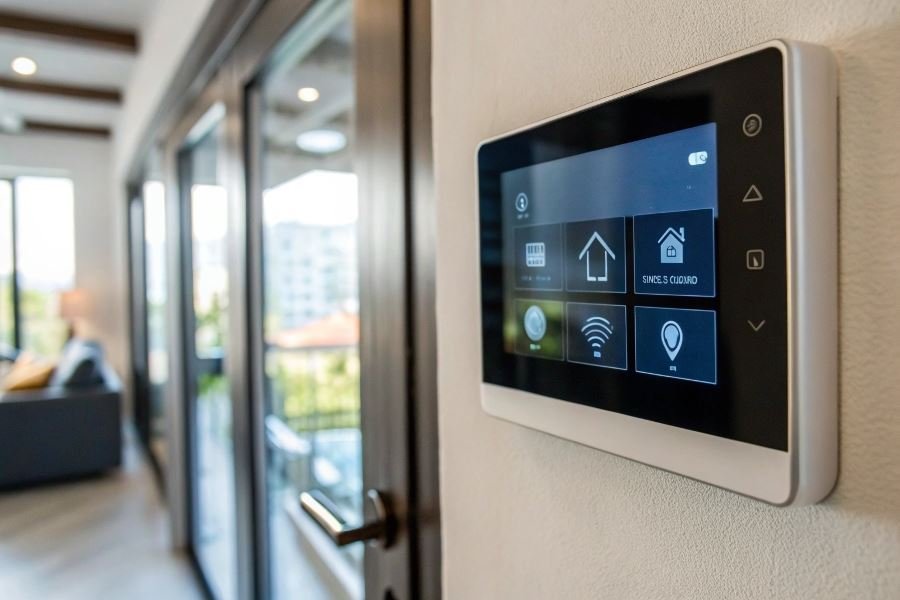
Today’s leading security systems don’t just protect—they integrate. The Google Nest ecosystem allows your security cameras to trigger smart lights when motion is detected, while Amazon Alexa compatibility lets you arm your system with voice commands.
Remote access capabilities have evolved from simple notifications to comprehensive control. Modern systems offer:
| Feature | Benefit | Common in |
|---|---|---|
| Live video streaming | Real-time situation assessment | Most camera-based systems |
| Two-way audio | Communicate with visitors or intruders | Doorbell cameras and indoor monitors |
| Geofencing | Automatic arming/disarming based on your location | Premium smart systems |
| Custom rules | Trigger specific responses to different events | Advanced integration platforms |
The most effective systems allow granular control—like disarming only certain zones when a trusted service provider arrives or automatically adjusting sensitivity during specific hours.
The fine print matters more than you think
Installation considerations often get overlooked until after purchase. Professional installation for comprehensive systems typically costs 100−500 depending on complexity, while DIY options like Abode ship with pre-programmed components requiring minimal technical knowledge.
Maintenance requirements vary dramatically between systems. Hardwired solutions require less frequent attention but more invasive installation, while wireless systems need battery replacements every 1-3 years. Smart smoke detectors from companies like Nest Protect perform self-diagnostics but still require occasional testing.
Warranty coverage deserves careful scrutiny. Leading providers offer equipment warranties ranging from 1-3 years, but read the exclusions carefully. Some warranties become void if you self-install or use third-party monitoring. Extended protection plans might seem expensive upfront but can save thousands if multiple components fail outside the standard coverage period.
The most overlooked aspect? Scalability. Your security needs will evolve, so choose a system that allows component additions without requiring wholesale replacement. The ability to add sensors, cameras, or smart integrations incrementally provides long-term value that often justifies a higher initial investment.
Discover how to choose the perfect security and fire alarm system for your home with our comprehensive guide. Learn about integrated protection technologies, property assessment strategies, and key considerations for optimal home safety and peace of mind.
Discover how to choose the perfect security and fire alarm system for your home with our comprehensive guide. Learn about integrated protection technologies, property assessment strategies, and key considerations for optimal home safety and peace of mind.