When disaster strikes, the difference between minor damage and catastrophic loss often comes down to preparation. Fire incidents in commercial settings cost American businesses over $2.6 billion annually—yet many enterprises remain dangerously underprepared.
Think of your fire and rescue kit as the ultimate insurance policy you hope never to cash in. Selecting the right components isn’t just about checking boxes on a compliance form; it’s about creating a comprehensive safety ecosystem that protects your most valuable assets—your people, your property, and your business continuity. The stakes couldn’t be higher: according to the National Fire Protection Association, businesses that experience major fires without proper safety equipment have a staggering 70% failure rate within three years.
The regulatory landscape: Beyond basic compliance
Fire safety regulations aren’t arbitrary bureaucratic hurdles—they’re life-saving frameworks established through hard-learned lessons. OSHA requirements, local fire codes, and industry-specific regulations create a baseline for safety, but forward-thinking enterprises view these as minimum standards rather than ultimate goals.
“The most expensive fire safety equipment is the one you didn’t have when you needed it.” — Fire Safety Journal
Essential components of an enterprise fire and rescue kit
Your comprehensive fire safety arsenal should include:
- Detection systems: Early warning smoke and heat detectors with backup power
- Suppression equipment: Appropriate fire extinguishers for specific hazard types (Class A, B, C, D, or K)
- Emergency communication tools: Alarm systems and emergency notification infrastructure
- Evacuation aids: Emergency lighting, clearly marked exit routes, and assembly point designations
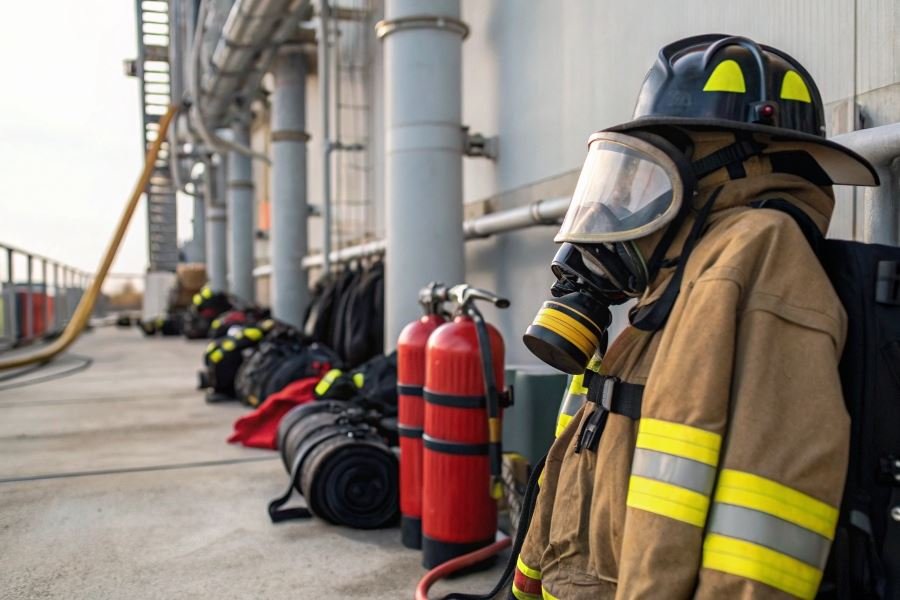
- First response gear: First aid supplies, emergency breathing apparatus, and protective equipment
Remember that the best fire safety equipment becomes virtually worthless without proper training, regular maintenance, and strategic placement throughout your facility.
Strategic Fire Protection Planning for Enterprises
When developing a comprehensive safety strategy for your business, selecting the right fire and rescue equipment becomes a critical decision with far-reaching implications. The process of evaluating and choosing a fire and rescue kit for an enterprise requires methodical analysis of several interconnected factors that directly impact both compliance and actual protection capabilities.
Mapping Your Enterprise’s Unique Fire Risk Profile
Every business faces distinct fire hazards based on its operations. Manufacturing facilities working with flammable chemicals face fundamentally different risks than data centers with extensive electrical equipment. Begin by conducting a thorough fire risk assessment that identifies:
- Primary ignition sources specific to your operations
- Fuel sources that could accelerate a fire
- Areas where fire could spread rapidly due to ventilation or layout
- Historical near-misses or incidents within your facility
The assessment should categorize risks by both likelihood and potential severity. This data-driven approach ensures your fire and rescue kit addresses your actual threats rather than generic scenarios.
Facility Dimensions and Occupancy Considerations
Your building’s physical characteristics dramatically influence equipment requirements. A sprawling warehouse demands different protection strategies than a multi-story office building.
| Facility Factor | Equipment Implication |
|---|---|
| Square footage | Determines extinguisher quantity and distribution |
| Ceiling height | Affects sprinkler system requirements |
| Exit pathway length | Influences emergency lighting needs |
| Occupant density | Dictates evacuation equipment requirements |
OSHA regulations specify maximum travel distances to fire extinguishers (typically 75 feet for Class A hazards), but these requirements vary based on your specific hazard classification. Consider not just current occupancy but peak occupancy during special events or seasonal operations.
Selecting Appropriate Extinguisher Types and Quantities
Fire extinguishers are not universal tools. Their effectiveness depends entirely on matching the right extinguisher to the specific fire class present in your facility.
Class A fires (ordinary combustibles like wood and paper) require water-based extinguishers, while Class B fires (flammable liquids) demand foam or dry chemical agents. Electrical equipment fires (Class C) require non-conductive extinguishing agents, and Class D fires involving combustible metals need specialized dry powder extinguishers.
Many enterprises benefit from ABC multipurpose extinguishers that handle multiple fire types, but specialized areas may require dedicated solutions:
- Server rooms: Clean agent extinguishers like Halotron that leave no residue
- Commercial kitchens: Class K extinguishers designed specifically for cooking oils
- Manufacturing areas with combustible metals: Class D extinguishers
Beyond type, quantity matters significantly. The National Fire Protection Association provides specific guidelines on extinguisher placement based on hazard level and floor area. High-risk areas typically require more units with greater capacity ratings.
Remember that extinguishers represent just one component of a comprehensive fire protection system. Integrated solutions including detection systems, sprinklers, and emergency communication equipment create multiple layers of protection that compensate for potential failures in any single system.
By methodically addressing these key factors, you’ll develop a fire and rescue kit that not only meets regulatory requirements but provides genuine protection tailored to your enterprise’s specific needs and vulnerabilities.
Bringing Your Fire Safety Plan to Life
Training That Sticks
Fire safety training isn’t just a checkbox—it’s the difference between chaos and coordination when seconds count. Effective employee training programs should combine theoretical knowledge with hands-on practice. Schedule quarterly drills where team members actually handle extinguishers, practice evacuation routes, and demonstrate proper alarm activation.
The most successful programs include:
- Role-specific training tailored to different departments
- Practical demonstrations with real equipment
- Scenario-based exercises that simulate various emergency situations
Research from the National Fire Protection Association shows that employees who receive hands-on training retain critical information 4-6 times longer than those who only receive verbal instructions. Consider implementing a certification program where employees earn recognition for mastering fire safety protocols.
Maintenance Matters
Even the highest-quality fire and rescue equipment becomes a liability when improperly maintained. Establish a comprehensive inspection schedule that leaves nothing to chance:
| Equipment | Inspection Frequency | Responsible Party | Documentation |
|---|---|---|---|
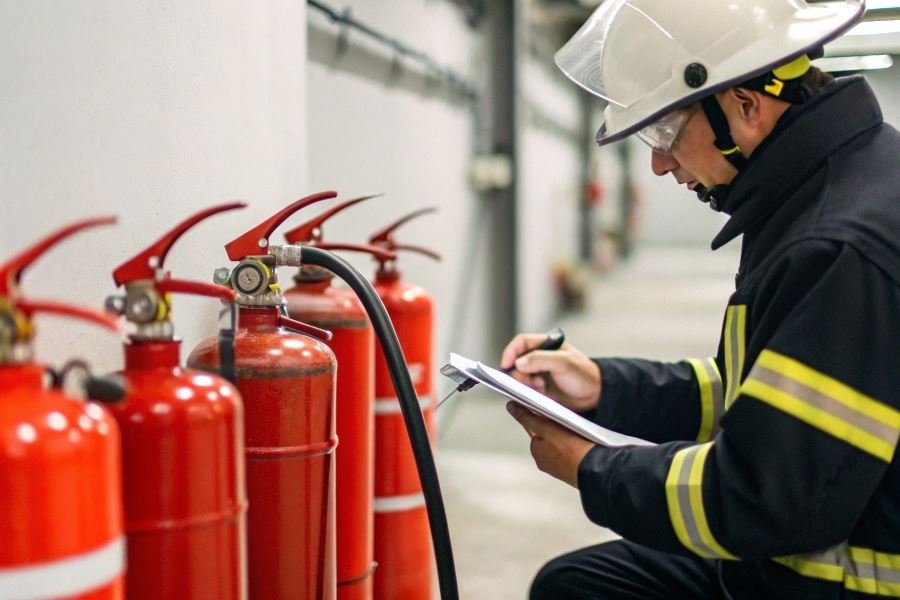
| Fire Extinguishers | Monthly visual, Annual professional | Safety Officer | Digital log with photos |
| Sprinkler Systems | Quarterly | Licensed Contractor | Compliance certificate |
| Smoke Detectors | Monthly testing, Annual replacement | Facilities Team | Testing records |
| Emergency Lighting | Monthly activation test | Maintenance Staff | Inspection tags |
Document every inspection with digital timestamps and photographs. Many enterprises now use specialized maintenance tracking software like InspectionLogic to ensure nothing falls through the cracks.
Evacuation Excellence
Your emergency evacuation plan must seamlessly integrate with your fire and rescue equipment strategy. The most effective plans include:
- Clearly marked primary and secondary evacuation routes with illuminated signage
- Designated assembly points at safe distances from the building
- Assigned floor wardens equipped with emergency kits containing flashlights, whistles, and first aid supplies
Don’t overlook the power of wayfinding technology. Modern systems like EvacTech use low-mounted LED guidance systems that remain visible even in smoke-filled environments.
For multi-story facilities, consider dedicated evacuation chairs for mobility-impaired individuals. These specialized chairs, like those from Evacu-Trac, allow safe descent down stairwells when elevators are unavailable.
Remember that your evacuation plan must account for visitors unfamiliar with your facility. Create simple, visual evacuation maps at key locations and ensure all emergency exits are clearly marked with internationally recognized symbols.
By implementing these comprehensive strategies for training, maintenance, and evacuation, you transform your fire and rescue equipment from mere tools into an integrated safety ecosystem that protects both lives and property when every second counts.
Learn how to select the optimal fire and rescue kit for your enterprise with our comprehensive guide. Discover key safety compliance standards, risk assessment strategies, and essential equipment selection tips to protect your business and employees.
Learn how to select the optimal fire and rescue kit for your enterprise with our comprehensive guide. Discover key safety compliance standards, risk assessment strategies, and essential equipment selection tips to protect your business and employees.