Did you know that 77% of businesses that experience a serious fire never fully recover? Yet the equipment that could prevent this devastation varies dramatically depending on your industry. What works for a restaurant kitchen won’t protect a chemical manufacturing plant—and getting it wrong isn’t just expensive, it could be catastrophic.
Fire safety compliance isn’t just about checking boxes on a form. It’s about understanding the unique hazards your business faces and implementing targeted solutions that actually work when seconds count. The mandatory elements of fire and rescue kits vary significantly across industries because the risks themselves are fundamentally different.
“The right equipment in the right place can mean the difference between a minor incident and a business-ending disaster.” — National Fire Protection Association
Regulatory frameworks: Navigating the compliance maze
OSHA, NFPA, ICC—the alphabet soup of regulatory bodies can be overwhelming. Each industry faces its own set of standards, from NFPA 30 for flammable liquids to OSHA’s 1910.157 for portable fire extinguishers. These aren’t arbitrary rules; they’re evidence-based protocols developed from real-world disasters and near-misses.
The risk assessment approach: Beyond the minimum requirements
Smart businesses go beyond minimum compliance. A thorough risk assessment identifies your specific vulnerabilities—whether it’s dust explosion risks in grain processing, electrical fires in data centers, or chemical reactions in laboratories. This assessment becomes your roadmap for determining which specialized equipment belongs in your fire and rescue kit.
The most effective fire safety programs are built on three pillars: prevention, detection, and response—with each pillar requiring industry-specific solutions tailored to your unique operational environment.
Fire Safety Arsenal: Industry-Specific Requirements
When lives and property hang in the balance, having the right fire and rescue equipment isn’t just good practice—it’s essential. The mandatory elements of the fire and rescue kit for different industries vary significantly based on specific hazards, building layouts, and occupancy types. Let’s dive into what makes a comprehensive fire safety system across various sectors.
Universal Fire Safety Fundamentals
Every workplace, regardless of industry, requires certain non-negotiable fire safety equipment. The foundation of any fire protection strategy starts with these universal tools:
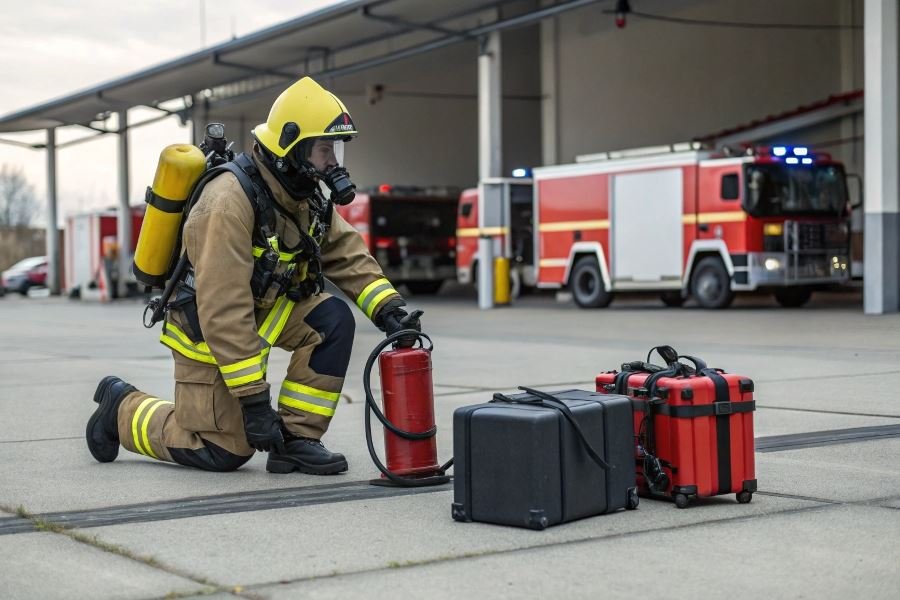
Fire extinguishers remain the first line of defense, with specific types required based on potential fire classes:
- Class A: For ordinary combustibles (wood, paper)
- Class B: For flammable liquids
- Class C: For electrical equipment
- Class D: For combustible metals
- Class K: For cooking oils and fats
The strategic placement of these extinguishers—typically within 75 feet of any location—can mean the difference between a minor incident and catastrophic loss.
Fire alarm systems with manual pull stations, smoke and heat detectors, and emergency lighting form the backbone of early warning systems. Equally important are clearly marked exit signs, evacuation plans, and fire-resistant doors that automatically close during emergencies.
Manufacturing’s Specialized Requirements
Manufacturing facilities face unique fire hazards that demand specialized equipment beyond the basics. High-risk environments require:
Specialized suppression systems tailored to specific manufacturing processes:
- Foam systems for flammable liquid storage areas
- Dry chemical systems for metal-working operations
- CO₂ systems for electrical equipment rooms
Industrial facilities must also maintain:
- Explosion-proof electrical equipment in areas with combustible dust
- Thermal imaging cameras for detecting hotspots in machinery
- Emergency shutdown systems integrated with fire detection
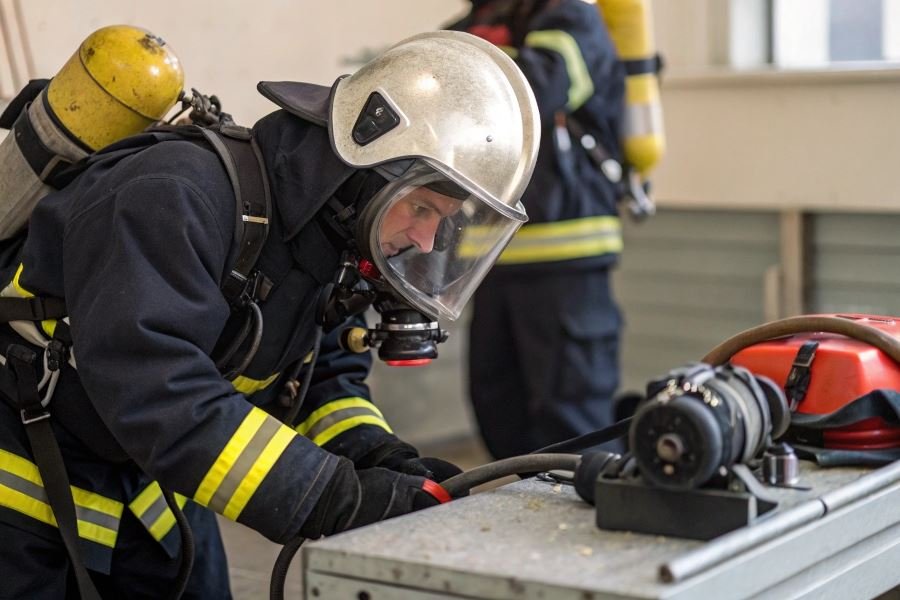
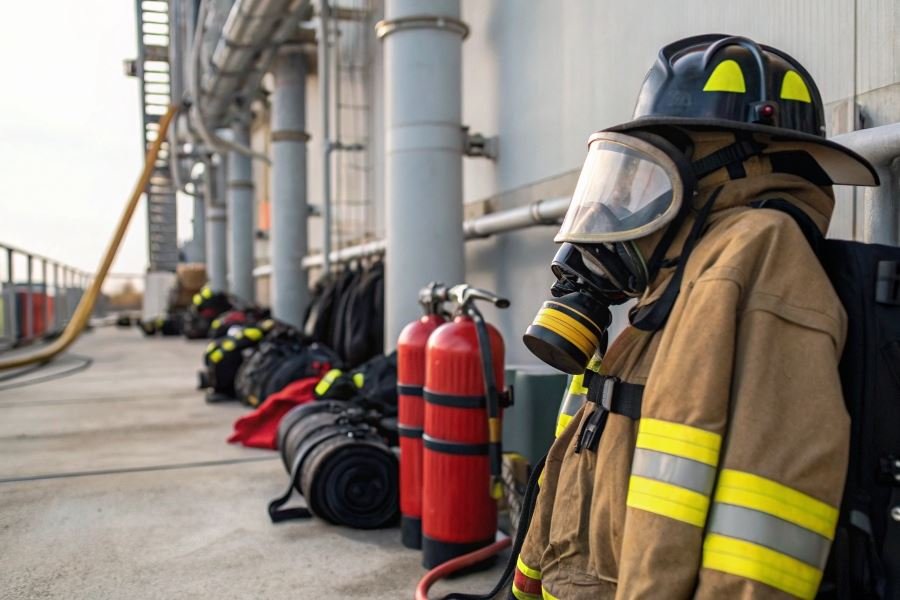
- Specialized PPE including flame-resistant clothing and self-contained breathing apparatus (SCBA)
A manufacturing plant’s fire safety protocol must account for hazardous materials storage, with spill containment systems and specialized neutralizing agents readily available.
Healthcare’s Critical Fire Safety Needs
Healthcare facilities present unique challenges—immobile patients, oxygen-enriched environments, and critical equipment that can’t be shut down during emergencies.
Healthcare-specific requirements include:
- Horizontal evacuation equipment for non-ambulatory patients
- Smoke compartmentation systems that allow for defend-in-place strategies
- Specialized evacuation devices like Med Sleds
- Oxygen shutdown protocols and equipment
| Healthcare Area | Specialized Equipment Required |
|---|---|
| Operating Rooms | Isolated electrical systems, specialized extinguishing agents |
| Patient Rooms | Evacuation chairs, patient tracking systems |
| Imaging Suites | Non-ferrous fire equipment, MRI-safe extinguishers |
| Laboratories | Chemical-specific suppression systems, spill control kits |
Healthcare facilities must also maintain backup power systems that automatically engage during emergencies to support life-saving equipment and evacuation procedures.
The complexity of these requirements underscores why fire safety isn’t one-size-fits-all. Each industry must carefully assess its unique risks and implement appropriate protective measures—because when emergency strikes, having the right equipment isn’t just about compliance, it’s about survival.
Mastering Fire Safety: Implementation and Maintenance That Saves Lives
Strategic Placement Makes All The Difference
The difference between life-threatening chaos and orderly evacuation often comes down to where you position your fire safety equipment. In manufacturing facilities, fire extinguishers should be placed at 75-foot intervals maximum, ensuring no employee ever needs to travel more than 37.5 feet to reach one. For chemical plants, this distance shrinks to 50 feet due to the rapid spread potential of chemical fires.
Height matters critically. Mount fire extinguishers so their tops are no more than 5 feet above the floor for accessibility, but the bottom should be at least 4 inches off the ground to prevent corrosion. For facilities with disabled workers, the Americans with Disabilities Act requires mounting heights not exceeding 48 inches.
“The most sophisticated fire suppression equipment becomes worthless if it’s inaccessible during an emergency.”
In healthcare settings, emergency oxygen shutoff valves require clear signage and unobstructed access. Hospitals typically implement color-coded floor plans showing exact locations of all fire safety equipment—a practice worth adopting across industries.
Inspection Schedules That Meet Compliance Standards
Documentation isn’t just paperwork—it’s protection. OSHA and NFPA standards require monthly visual inspections of all fire extinguishers, with detailed annual maintenance performed by certified professionals. Smart facility managers are implementing digital tracking systems that automatically generate compliance reports.
For industry-specific equipment:
| Industry | Equipment | Inspection Frequency | Documentation Required |
|---|---|---|---|
| Healthcare | Medical gas shutoffs | Weekly | Electronic verification |
| Manufacturing | Fire blankets | Monthly | Signed inspection tags |
| Data Centers | Clean agent systems | Quarterly | Pressure testing logs |
| Construction | Emergency evacuation equipment | Daily | Site safety log |
The National Fire Protection Association recommends maintaining inspection records for at least three years. Many industries are moving toward QR-coded equipment that allows instant access to maintenance history and compliance status.
Training That Creates Confidence Under Pressure
Equipment only works when people know how to use it. Effective training protocols follow the 70-20-10 model: 70% hands-on practice, 20% peer learning, and 10% formal instruction.
Manufacturing facilities showing best practices conduct quarterly hands-on drills where employees must:
- Identify the correct extinguisher type for different fire classes
- Demonstrate proper PASS technique (Pull, Aim, Squeeze, Sweep)
- Navigate to emergency exits while wearing vision-obscuring masks
Documentation of training is non-negotiable. Beyond basic compliance, detailed training records provide liability protection and can reduce insurance premiums by up to 15%.
For specialized industries, virtual reality training is showing remarkable retention improvements. Construction companies using VR fire response training report 87% knowledge retention after six months, compared to 29% with traditional methods.
Healthcare facilities have pioneered “micro-drills”—5-minute scenario-based exercises conducted weekly rather than lengthy quarterly drills. This approach has reduced response time by an average of 64 seconds—potentially the difference between containment and catastrophe.
The most effective organizations create a culture where safety equipment knowledge isn’t just compliance—it’s competence that becomes second nature when seconds count.
Discover industry-specific fire safety requirements and essential rescue equipment for regulatory compliance. Learn about mandatory elements, proper implementation, and maintenance protocols to protect your business and employees from fire hazards.
Discover industry-specific fire safety requirements and essential rescue equipment for regulatory compliance. Learn about mandatory elements, proper implementation, and maintenance protocols to protect your business and employees from fire hazards.