Did you know that improper rag disposal causes over 14,000 workplace fires annually in the United States? That’s one fire every 37 minutes—and many could be prevented with the right rag bin.
When it comes to fire safety in workshops, manufacturing facilities, and even home garages, selecting appropriate rag bins isn’t just about tidiness—it’s about preventing potential disasters. Oil-soaked rags, solvent-dampened cloths, and chemical-laden wipes can spontaneously combust under the right conditions, turning an ordinary workday into an emergency situation.
“The difference between a code-compliant rag bin and a standard trash can could be the difference between business as usual and a catastrophic fire.” — National Fire Protection Association
Fire safety regulations for rag disposal aren’t arbitrary bureaucracy—they’re life-saving protocols developed from decades of incident analysis. The Occupational Safety and Health Administration (OSHA) and the National Fire Protection Association (NFPA) have established clear guidelines that businesses must follow, with NFPA 30 specifically addressing flammable waste handling.
Failing to comply with these regulations carries serious consequences beyond the obvious fire risks:
- Financial penalties reaching up to $13,653 per violation
- Potential business closure until compliance is achieved
- Insurance premium increases or coverage denial
- Legal liability if negligence leads to property damage or injuries
Selecting the right rag bin isn’t just checking a box for your next inspection—it’s a fundamental investment in your business continuity and team safety. The proper receptacle creates a critical barrier between potentially combustible materials and ignition sources, dramatically reducing your fire risk profile.
Fire-Safe Rag Bin Selection: What Inspectors Look For
When managing flammable waste in workshops, studios, or industrial settings, choosing the right rag bin isn’t just about organization—it’s about preventing potential disasters. The criteria for selecting a rag bin according to fire inspection requirements focus on three critical elements: material construction, lid design, and appropriate sizing. Let’s dive into what makes these containers a crucial safety investment rather than just another workplace accessory.
Fire-Resistant Materials That Actually Work
The foundation of any fire-safe rag bin starts with its construction materials. Fire inspectors don’t just glance at your bin—they evaluate whether it can contain a potential ignition.
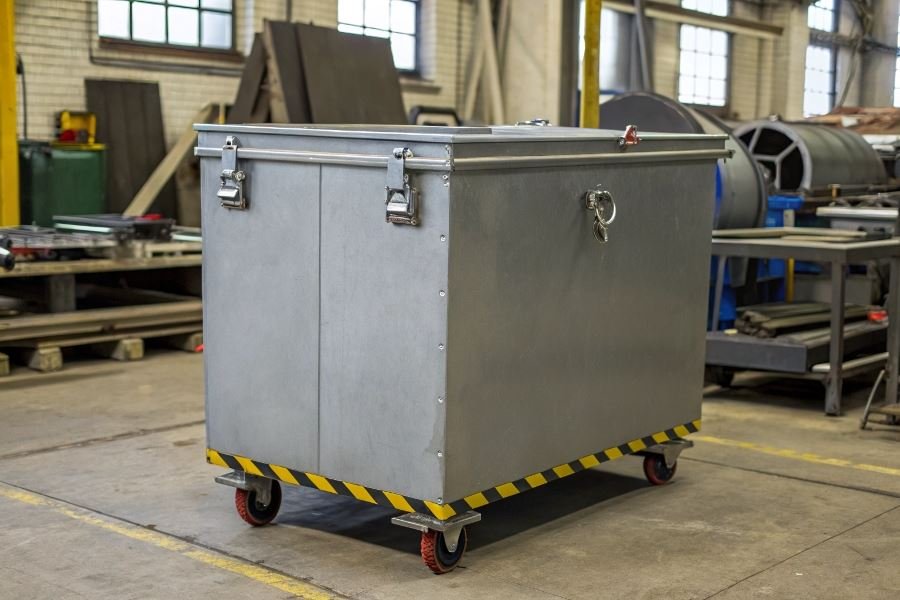
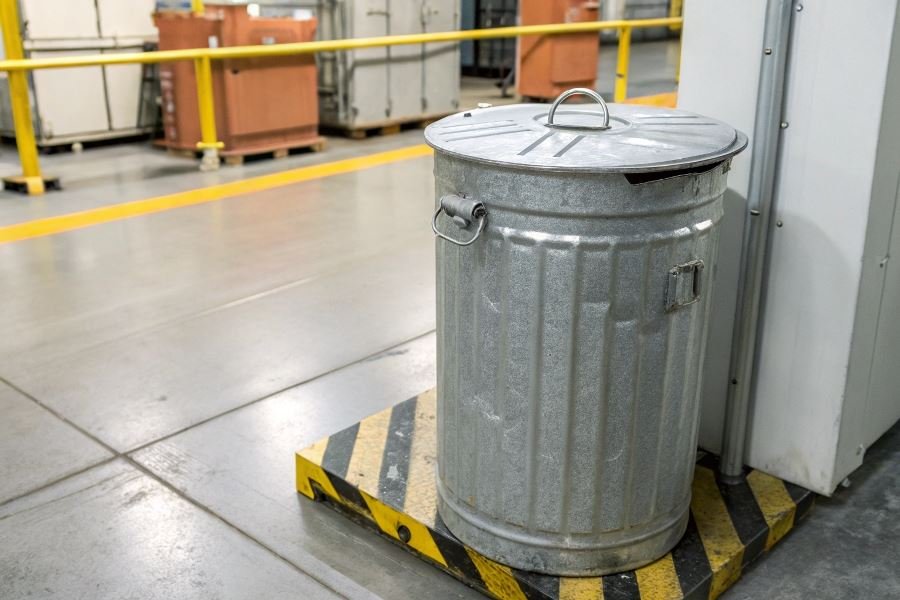
Steel reigns supreme in the fire-resistant container world, with 18-gauge or thicker galvanized steel offering exceptional heat resistance up to 1,200°F. While aluminum containers weigh about 60% less than steel equivalents, they have a lower melting point (around 1,220°F compared to steel’s 2,500°F).
Some manufacturers like Justrite offer specialized coatings that provide additional chemical resistance without compromising fire safety ratings.
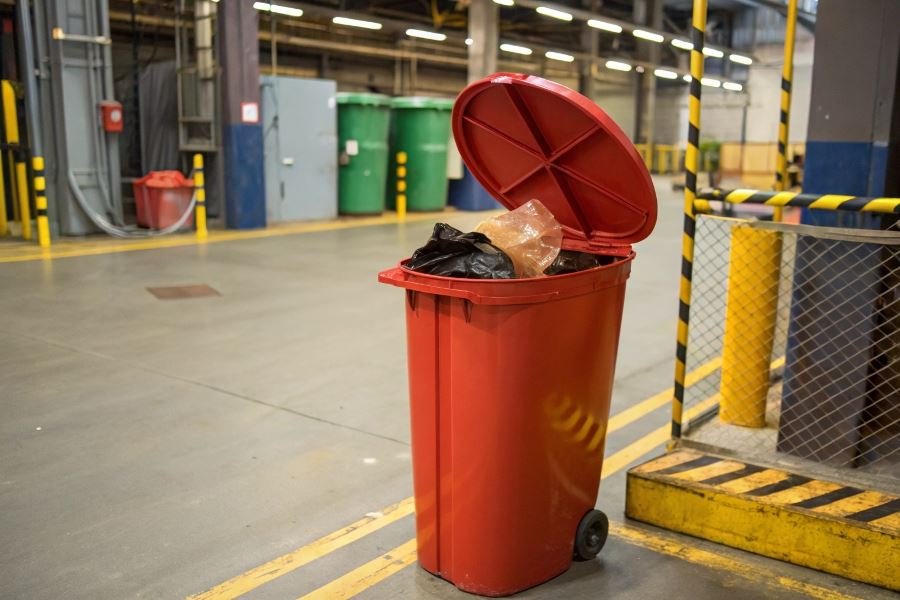
Never select containers made from conventional plastics for oily rag disposal, regardless of price advantages.
| Material | Heat Resistance | Corrosion Resistance | Relative Cost |
|---|---|---|---|
| Steel (18-gauge) | Excellent (2,500°F) | Good with coating | Moderate |
| Aluminum | Good (1,220°F) | Excellent | High |
| Stainless Steel | Excellent (2,750°F) | Excellent | Very High |
Self-Closing Lids: The Oxygen Barrier
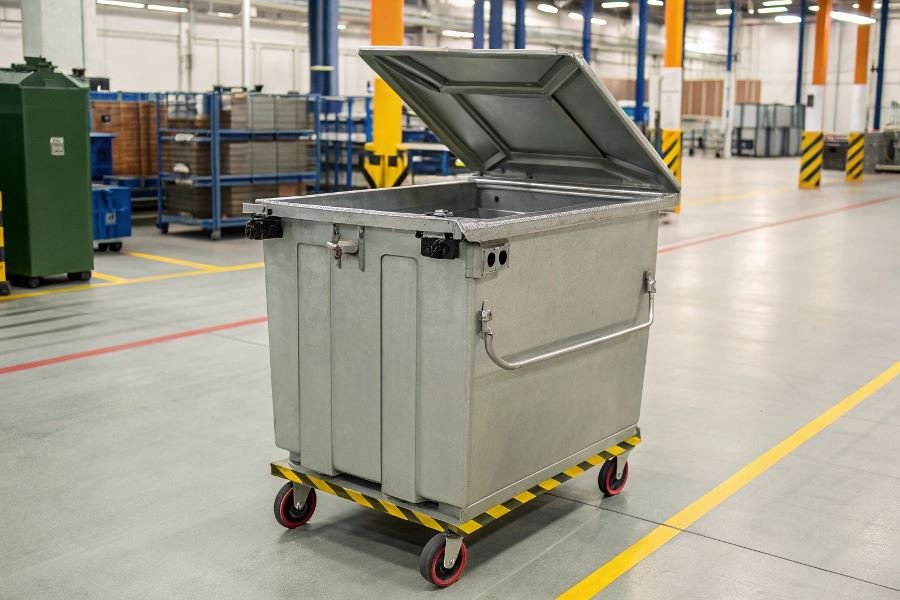
Perhaps the most critical feature inspectors check is the self-closing lid mechanism. These aren’t just convenient—they’re essential safety devices that automatically seal the container when not in use.
The science is straightforward: fire needs oxygen. A properly functioning self-closing lid creates an oxygen-starved environment that can prevent spontaneous combustion of oil-soaked materials. The best designs use:
- Counterbalanced mechanisms that ensure closure regardless of user behavior
- Fusible links that melt at specific temperatures (usually 165°F), causing the lid to close during fire conditions
- Spring-loaded hinges that maintain tension even after thousands of cycles
Eagle Manufacturing produces models with foot pedals that allow hands-free operation while maintaining the crucial self-closing functionality.
Size Matters: Capacity Considerations
Selecting appropriate container size isn’t about maximizing storage—it’s about managing risk through proper waste distribution.
Fire safety experts recommend following the “two-thirds rule”: never fill rag bins beyond 67% of their total capacity. This creates sufficient space for the self-closing mechanism to function properly and reduces compression of materials that might accelerate heating.
Standard sizes typically range from:
- 6-gallon units (ideal for small workshops or limited-volume applications)
- 10-14 gallon containers (standard for most commercial applications)
- 20+ gallon industrial models (requiring strategic placement and more frequent emptying)
Remember that larger isn’t always better. Multiple smaller containers distributed throughout a facility often provide better safety profiles than a single large unit, as they prevent concentration of potentially combustible materials.
When evaluating your workspace needs, consider both daily waste volume and available floor space. The perfect rag bin balances capacity with accessibility while meeting all material and mechanical requirements that fire inspectors will verify during their next visit.
Mastering Rag Bin Implementation for Fire Safety Success
Fire safety isn’t just about having the right equipment—it’s about implementing and maintaining it with precision. Rag bins, those unsung heroes of workshop and industrial safety, require strategic deployment and consistent attention to truly protect your facility. Let’s dive into the critical aspects of implementation that separate compliant operations from potential hazards.
Strategic placement saves lives
The positioning of your rag bins isn’t arbitrary—it’s science. Place bins at least 10 feet away from ignition sources including machinery that generates heat, electrical panels, and smoking areas. This critical distance creates a safety buffer that dramatically reduces fire risk.
For optimal accessibility, position bins:
- Within 50 feet of workstations where oily rags are generated
- Away from emergency exits and evacuation routes
- On non-combustible surfaces (concrete preferred over wood)
- With at least 18 inches of clearance from walls and other storage
Corner placement is a common mistake. While it seems logical to tuck bins away, this can create dead air spaces where vapors concentrate. Instead, position bins in areas with adequate ventilation to disperse potentially combustible fumes.
Emptying schedules that mean business
The most sophisticated fire-resistant rag bin becomes a hazard when overfilled. Implement a non-negotiable emptying schedule based on your operation’s volume:
| Usage Level | Emptying Frequency | Documentation Required |
|---|---|---|
| Light | Weekly | Monthly log entries |
| Moderate | Every 2-3 days | Weekly log entries |
| Heavy | Daily | Daily log entries with supervisor sign-off |
Documentation isn’t just paperwork—it’s your legal shield. Create a digital or physical log that records:
- Date and time of emptying
- Employee responsible
- Approximate volume removed
- Disposal method used
- Any irregularities observed
Many facilities now use QR codes on bins that link to digital logging systems, creating accountability and real-time compliance tracking.
Maintenance protocols that stand up to scrutiny
Fire inspectors don’t just check if you have rag bins—they evaluate how well you maintain them. Develop a three-tier inspection protocol:
- Daily visual checks: Train employees to spot and report damaged lids, leaking containers, or improper usage
- Weekly functional tests: Ensure self-closing mechanisms, foot pedals, and seals are operating correctly
- Monthly thorough inspections: Examine for structural integrity, corrosion, and proper labeling
Document these inspections using a standardized checklist that includes:
- Lid functionality (closes completely without gaps)
- Container integrity (no cracks, punctures, or deformation)
- Proper labeling (hazard warnings clearly visible)
- Ventilation openings unobstructed
- Base stability on floor surface
The difference between compliance and excellence is systematic maintenance. Compliance keeps you open; excellence prevents disasters.
When replacing components, use only manufacturer-approved parts from suppliers like Justrite or Eagle to maintain the fire-resistance rating of your equipment.
By implementing these strategic placement guidelines, disciplined emptying schedules, and rigorous maintenance protocols, your rag bin system becomes more than a compliance checkbox—it becomes an integrated component of your facility’s comprehensive fire prevention strategy.
Discover essential criteria for selecting fire-resistant rag bins that meet safety inspection standards. Learn about proper materials, self-closing mechanisms, and maintenance protocols to ensure workplace fire safety compliance.
Discover essential criteria for selecting fire-resistant rag bins that meet safety inspection standards. Learn about proper materials, self-closing mechanisms, and maintenance protocols to ensure workplace fire safety compliance.