When Officer Sarah Jennings was shot during a routine traffic stop in 2018, her standard-issue body armor left a critical gap that nearly cost her life. The vest—designed primarily for male physiques—had shifted during pursuit, exposing vulnerable areas. This wasn’t a training failure; it was a design failure.
The reality is stark: properly fitted body armor isn’t just about comfort—it’s about survival. Women in tactical professions face unique protection challenges that only recently gained the attention they deserve. The female torso’s distinct contours require specialized engineering approaches that traditional flat-panel designs simply cannot accommodate.
Since the early 2000s, we’ve witnessed remarkable progress in women-specific protective gear. What began as crude “shrink it and pink it” modifications has evolved into sophisticated systems with anatomically correct curvature, strategic bust accommodation, and tailored weight distribution. The transformation accelerated after 2013 when military combat roles officially opened to women, creating unprecedented demand for female-specific protection solutions.
The anatomical considerations driving these innovations are complex. Women typically have:
- Shorter torsos requiring adjusted plate dimensions
- Different chest-to-waist ratios affecting vest stability during movement
- Distinct shoulder structures changing how weight distributes across the upper body
These differences aren’t merely cosmetic—they fundamentally alter how protective equipment interacts with the body during critical situations. Modern women’s armor incorporates strategic darting, specialized cut patterns, and innovative materials that flex with movement while maintaining ballistic integrity.
The message is clear: in life-or-death scenarios, gender-specific design isn’t optional—it’s essential.
Engineering Protection for the Female Form
Anatomical Precision in Design
The evolution of women’s body armor represents one of the most significant advancements in personal protection equipment. For decades, female officers and military personnel wore armor designed for male physiques, resulting in dangerous gaps, uncomfortable pressure points, and restricted movement. Modern women’s body armor features anatomically correct curvature that accommodates the female form without compromising ballistic integrity. These designs incorporate strategic darting and three-dimensional shaping that follows natural contours while maintaining critical standoff distance between the body and the armor plate.
When examining women’s body armor: design features and selection criteria, the fundamental difference lies in the chest and waist proportions. Leading manufacturers like Point Blank and Safariland now offer female-specific vests with bust cups that prevent the armor from riding up during movement—a potentially life-threatening flaw in older designs. The curvature adaptations aren’t merely about comfort; they ensure complete coverage of vital organs regardless of body position.
Precision measurements matter. Female-specific armor typically features:
- Front panel curvature with 3-7° greater angle than male counterparts
- Tapered side panels that accommodate waist-to-hip ratios
- Shorter torso lengths with adjusted shoulder straps
- Reinforced bust areas that prevent ballistic material compression
Balanced Protection and Mobility
The weight distribution in women’s armor presents unique engineering challenges. Traditional armor places significant pressure on the shoulders and neck, causing fatigue and potential long-term injuries. Modern female-specific designs redistribute weight across the torso through:
- Wider shoulder straps with ergonomic padding
- Adjustable side panels that transfer weight to the hips
- Lightweight composite materials strategically placed in high-movement areas
- Integrated cummerbund systems that balance front-to-back load distribution
The difference becomes apparent during extended wear. Field tests show female officers wearing properly designed armor report 62% less discomfort during 12-hour shifts compared to universal designs.
Protection Calibrated to Threat Levels
| Threat Level | Protection Rating | Typical Scenarios | Weight Consideration |
|---|---|---|---|
| Level IIA | 9mm, .40 S&W | Urban patrol, corrections | 4-5 lbs |
| Level II | 9mm, .357 Magnum | Standard law enforcement | 5-6 lbs |
| Level IIIA | High-velocity 9mm, .44 Magnum | High-risk operations | 6-7 lbs |
| Level III | Rifle threats (7.62mm) | Military, SWAT | 7-8 lbs |
| Level IV | Armor-piercing rifle | Combat deployment | 8-10 lbs |
Female-specific armor maintains these protection standards while addressing critical coverage areas. The armor must protect vital organs without creating mobility restrictions or uncomfortable pressure points. Key considerations include:
Side coverage extensions that protect without limiting arm movement—particularly important for female officers who may have different reaching mechanics due to physiological differences.
Trauma plate positioning that accounts for anatomical variations in heart and lung placement, which can differ slightly between male and female bodies.
Adjustable coverage zones that allow customization based on threat assessment and operational requirements, from slimline concealed carriers to full tactical setups with side, neck, and groin protection.
The most effective women’s body armor balances these three critical elements—anatomical fit, weight distribution, and appropriate coverage—creating protection that becomes an asset rather than a hindrance in high-stress situations.
Making the Right Choice in Women’s Body Armor
Protection meets comfort in modern designs
The evolution of women’s body armor represents one of the most significant advancements in personal protection equipment. Finding the perfect balance between protection, comfort, and functionality isn’t just a preference—it’s a necessity. The most effective armor solutions recognize that women in tactical roles need equipment that works with their bodies, not against them.
Protection level should never be compromised, but the days of accepting discomfort as the price of safety are over. Modern manufacturers like Point Blank and Safariland have developed female-specific armor that maintains NIJ certification standards while incorporating anatomical considerations that were overlooked for decades.
The right body armor doesn’t just protect your body—it protects your performance capacity and operational longevity.
Research shows that properly fitted armor increases wear compliance by up to 78%, directly correlating to improved safety outcomes in the field. When evaluating options, consider the threat level you’ll face most frequently and select armor rated appropriately, but don’t overlook mobility requirements for your specific role.
Fitting and maintenance essentials
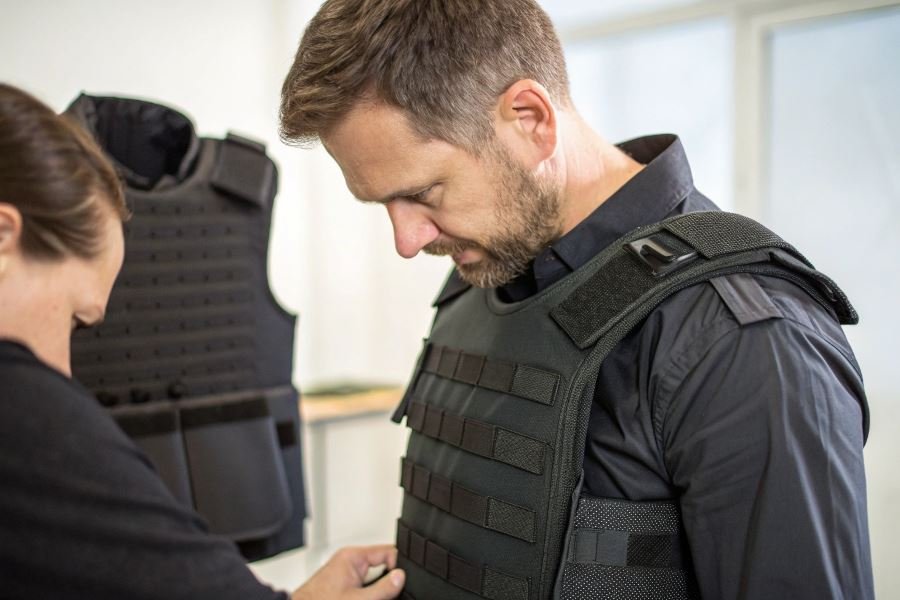
Proper fitting procedures make the difference between armor that protects and armor that hinders. The fitting process should include:
- Measurements while standing naturally – not inhaling or slouching
- Checking coverage of vital organs – particularly heart and lungs
- Movement testing in positions relevant to your duties
- Weight distribution assessment across shoulders and torso
Never accept armor that rides up when seated or creates pressure points during extended wear.
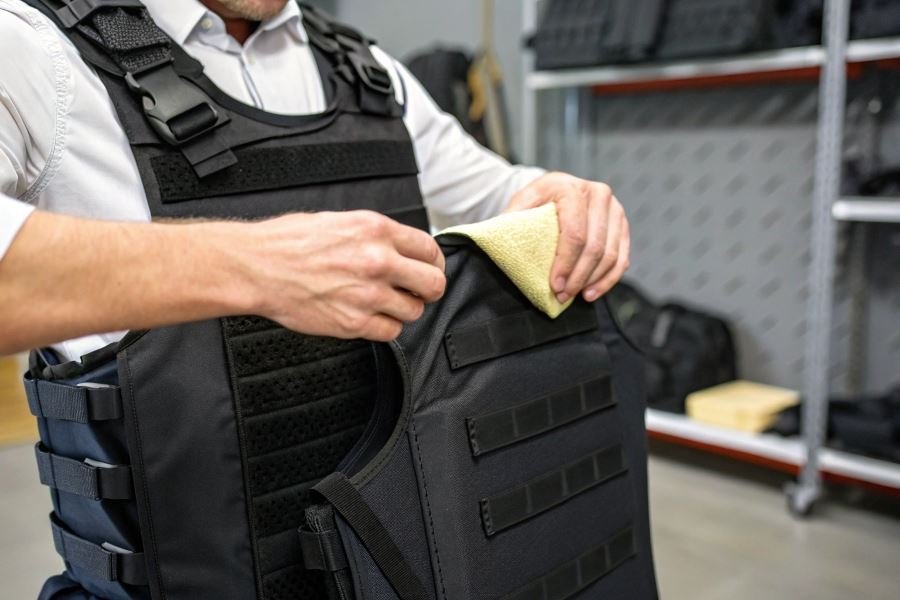
Maintenance extends the life and effectiveness of your investment. Modern armor requires specific care protocols:
| Maintenance Task | Frequency | Notes |
|---|---|---|
| Visual inspection | Before each use | Check for tears, deformities |
| Carrier cleaning | Monthly | Follow manufacturer guidelines |
| Panel wiping | Weekly | Use damp cloth only |
| Professional inspection | Annually | Document certification |
| Complete replacement | 5-7 years | Even without visible damage |
Store armor flat or on a purpose-built hanger, never folded or compressed, and always in climate-controlled environments away from direct sunlight.
Tomorrow’s protection today
The future of women’s body armor is arriving faster than anticipated. Innovations currently in development include:
- Adaptive materials that stiffen on impact but remain flexible during movement
- Integrated biometric monitoring systems that track vital signs and exertion levels
- 3D-printed custom panels created from individual body scans for perfect anatomical matching
- Weight reduction technologies utilizing carbon nanotube reinforcement
Armor Express has already introduced temperature-regulating materials that reduce heat buildup by 23% compared to traditional designs, addressing one of the most common complaints among female operators.
The most promising development may be the shift toward modular systems that allow customization based on mission requirements and individual body types. These systems enable wearers to add or remove protection elements without compromising the core ballistic integrity.
When selecting women’s body armor, remember that the best protection is the protection that’s actually worn. Prioritize solutions that offer the right balance for your specific needs, ensure proper fitting, maintain your equipment diligently, and stay informed about emerging technologies that could enhance your safety and performance.
Discover the essential design features of women's body armor engineered for female anatomy. Learn how proper fit, weight distribution, and protection levels impact selection for optimal safety and comfort in tactical environments.
Discover the essential design features of women's body armor engineered for female anatomy. Learn how proper fit, weight distribution, and protection levels impact selection for optimal safety and comfort in tactical environments.