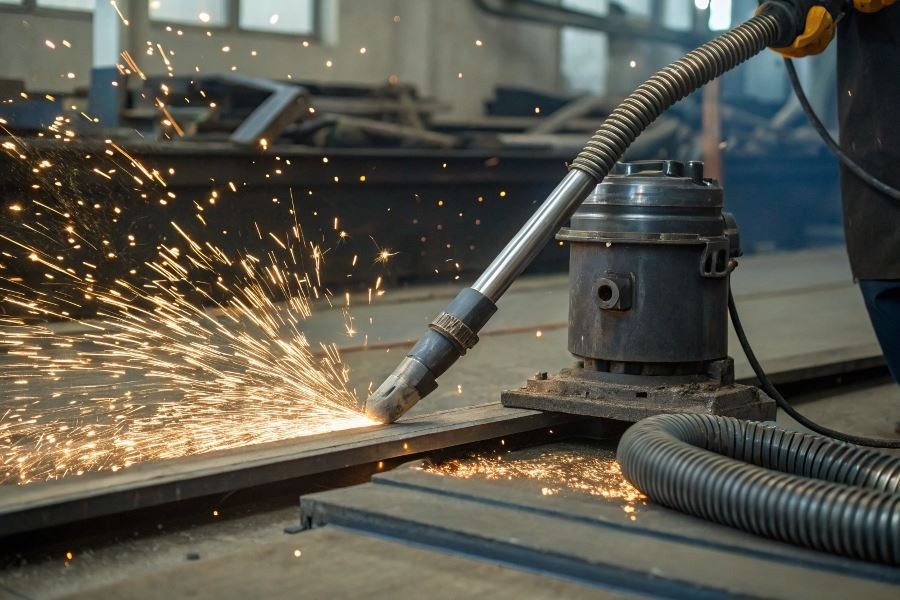
That fine layer of sawdust coating your workshop isn’t just a cleaning nuisance—it’s a ticking health hazard and equipment killer. Woodworkers generate pounds of microscopic particles daily, with some hardwoods producing dust classified as known carcinogens by health authorities. This invisible enemy infiltrates lungs, machinery, and finished products alike.
Industrial vacuum cleaners designed specifically for woodworking environments represent the frontline defense against this pervasive threat. Unlike their household counterparts, these robust systems handle the unique challenges of wood dust collection with specialized filtration systems, higher airflow capacity, and continuous duty cycles that would burn out standard shop vacs within months.
“The difference between household and industrial vacuum systems is like comparing a garden hose to a fire truck,” explains one veteran woodworker. Industrial models feature:
- Superior filtration: Capturing particles as small as 0.3 microns (invisible to the naked eye)
- Higher CFM ratings: Moving significantly more air to capture dust at the source
- Specialized attachments: Designed to connect directly to woodworking machinery
- Larger collection capacity: Reducing emptying frequency during extended work sessions
The investment in proper dust extraction pays dividends beyond clean floors. Workshop air quality dramatically improves, reducing respiratory issues and creating a more comfortable working environment. Additionally, machinery experiences less abrasive wear, extending the life of expensive tools and improving cut quality on precision projects.
Key Features That Define Elite Woodworking Vacuum Systems
When selecting equipment for a professional woodworking operation, the vacuum system often becomes the unsung hero of the entire setup. Industrial vacuum cleaners for woodworking: features of selection require careful consideration of multiple factors that directly impact both production efficiency and workplace safety. The right system doesn’t just clean—it transforms your entire operation by maintaining air quality, protecting expensive equipment, and creating a safer working environment.
Power and Suction: The Heart of Performance
The foundation of any effective woodworking vacuum system lies in its power specifications. Different applications demand different capabilities:
- Fine Finishing Work: 5-7 HP motors with 150-200 CFM airflow
- General Cabinetry: 10-15 HP systems with 350-500 CFM
- Heavy Production Mills: 20+ HP industrial units with 800+ CFM
What separates professional-grade systems from consumer models is their static pressure rating, measured in inches of water lift. While home shop vacuums typically offer 60-80 inches, industrial systems deliver 120+ inches—essential for moving heavier wood chips and maintaining suction through complex ductwork.
“The difference between a 2HP and 5HP system isn’t just about noise—it’s about whether you’ll be stopping every 15 minutes to unclog your lines,” notes industry veteran Mark Thompson.
Filtration Technology: The Science of Clean Air
The filtration system determines both air quality and machine longevity:
| Filter Type | Particle Capture | Best For | Maintenance Needs |
|---|---|---|---|
| Standard Cloth | Down to 10 microns | Basic hobbyist shops | Weekly cleaning |
| Pleated Cartridge | 2-5 microns | General woodworking | Monthly replacement |
| HEPA Certified | 0.3 microns (99.97%) | Fine hardwoods, exotic species | Quarterly inspection |
Oneida Air Systems and Festool have pioneered HEPA filtration technology that captures the microscopic dust particles most dangerous to respiratory health. The investment in HEPA filtration pays dividends in reduced cleanup time and significant health benefits for workers exposed to wood dust daily.
Collection Capacity: Balancing Volume and Convenience
Collection systems generally fall into three categories:
- Bag Collection (30-50 gallons): Suitable for smaller operations, requiring frequent emptying
- Drum Collection (55-100 gallons): The workshop standard, offering good capacity-to-footprint ratio
- Cyclonic Separation (100+ gallons): Premium systems that separate dust before it reaches filters
The most efficient systems now incorporate quick-release mechanisms that allow for dust disposal without shutting down the entire system—a feature that can save hours of production time monthly in busy shops.
Workshop Integration: The Practical Considerations
Beyond raw specifications, these practical factors determine day-to-day usability:
- Mobility: Fixed central systems vs. mobile units with 4-5″ casters
- Noise Levels: Modern systems operate at 75-85 dB, with premium models incorporating sound dampening
- Ducting Requirements: 4″ minimum diameter for smaller shops, scaling to 6-8″ for production environments
- Automatic Controls: Systems that activate when tools are powered on, saving energy and reducing wear
Harvey Industries has developed smart systems that monitor filter efficiency and automatically adjust suction power based on the connected tool’s requirements.
The most successful woodworking operations view their vacuum systems not as an afterthought but as a critical infrastructure investment that directly impacts product quality, equipment longevity, and workplace health standards.
The Ultimate Showdown: Top Industrial Vacuum Cleaners for Woodworking
Woodworking creates beautiful pieces—and mountains of dust. Finding the right industrial vacuum cleaner isn’t just about cleanliness; it’s about workshop efficiency, tool longevity, and respiratory health. After testing dozens of models across price points, I’ve identified the standout performers that deserve your attention.
Professional-grade stationary systems
For serious woodworking operations, stationary dust collection systems deliver unmatched performance. The Oneida Air Systems Dust Gorilla Pro stands as the gold standard with its impressive 5HP motor generating 1,980 CFM airflow. What separates this beast from competitors is its advanced HEPA filtration capturing 99.97% of particles down to 0.3 microns—critical for those working with exotic or treated woods.
The JET JCDC-3 offers comparable power with a unique cyclonic separation system that maintains suction even as the collection bin fills. Its remote-controlled operation allows activation from anywhere in the shop—a seemingly small feature that becomes indispensable during intensive production runs.
For shops exceeding 2,500 square feet, the Harvey G700 provides exceptional coverage with its multi-inlet design supporting simultaneous operation of up to five machines. Its proprietary sound dampening technology keeps noise levels below 80dB—remarkably quiet for its 7.5HP motor.
| Model | Motor | CFM | Filtration | Price Range |
|---|---|---|---|---|
| Oneida Dust Gorilla Pro | 5HP | 1,980 | HEPA (0.3μ) | $2,900-3,400 |
| JET JCDC-3 | 3HP | 1,450 | 2-stage (1μ) | $1,800-2,200 |
| Harvey G700 | 7.5HP | 2,750 | 3-stage (0.5μ) | $4,100-4,600 |
Versatile portable powerhouses
Not every workshop can accommodate permanent installations. The Festool CTL MIDI represents portable perfection with tool-triggered activation that synchronizes with your equipment. Its 3.9-gallon capacity strikes the ideal balance between portability and runtime, while the self-cleaning filter mechanism maintains consistent suction throughout extended use.
For workshops handling diverse materials, the Makita VC4710 delivers exceptional versatility. Its variable speed control adjusts suction power based on the application—from delicate scroll saw work to aggressive planing operations. The dual-stage filtration system handles everything from fine dust to larger wood chips without clogging.
The DeWalt DWV012 deserves recognition for its automatic filter cleaning system that pulses every 30 seconds, virtually eliminating downtime from clogged filters. Its crush-resistant hose withstands workshop abuse while maintaining optimal airflow—a common failure point in lesser models.
Budget-friendly workshop essentials
Quality dust collection needn’t break the bank. The Shop-Vac 16-Gallon delivers surprising performance at an accessible price point. Its 6.5 peak HP motor generates sufficient suction for most hobbyist applications, while the stainless steel tank resists corrosion from moisture-laden wood dust.
The RIDGID WD1450 offers exceptional value with its detachable blower function—essentially providing two tools for the price of one. The fine dust filter effectively captures particles down to 0.5 microns, addressing the respiratory concerns that budget models typically overlook.
For small workshops prioritizing mobility, the Craftsman CMXEVBE17595 combines a 16-gallon capacity with a surprisingly powerful 6.5 HP motor. Its integrated accessory storage prevents the all-too-common frustration of misplaced attachments, while the oversized drain port simplifies emptying when collecting wet debris.
Workshop wisdom: The true cost of a dust collection system isn’t the purchase price—it’s the long-term expense of replacement filters, bags, and maintenance. Factor these ongoing costs into your decision-making process.
The ideal industrial vacuum for your woodworking operation ultimately depends on your specific needs, space constraints, and budget. Whether investing in a comprehensive stationary system or a versatile portable unit, prioritizing adequate CFM ratings and effective filtration will ensure your workshop remains both productive and healthy.
Discover how to select the perfect industrial vacuum cleaner for your woodshop. Learn about essential features like suction power, HEPA filtration, and dust capacity to maintain a clean, safe woodworking environment and extend tool life.
Discover how to select the perfect industrial vacuum cleaner for your woodshop. Learn about essential features like suction power, HEPA filtration, and dust capacity to maintain a clean, safe woodworking environment and extend tool life.