What’s the difference between a bakery that produces consistently exceptional bread and one that struggles with quality control? Often, it’s the equipment they don’t showcase on their website.
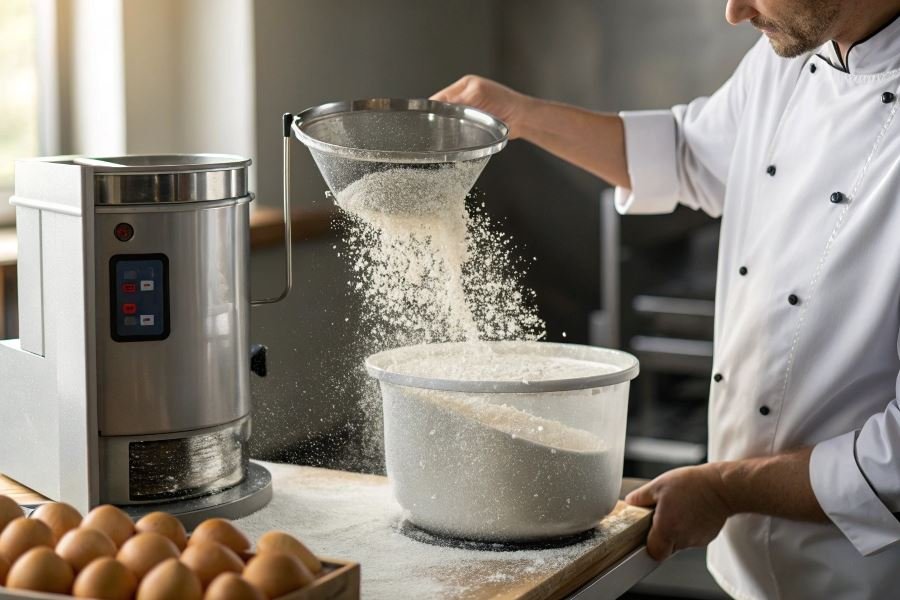
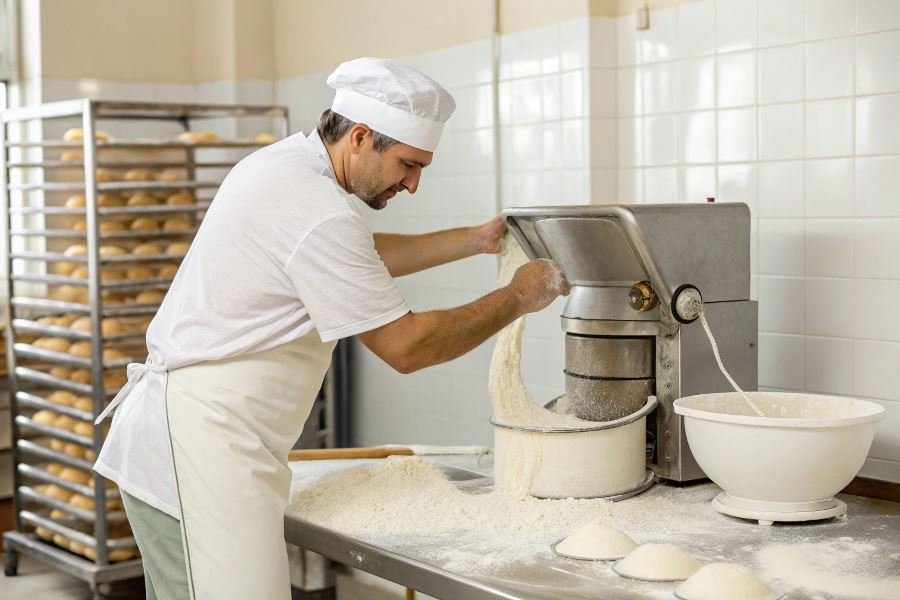
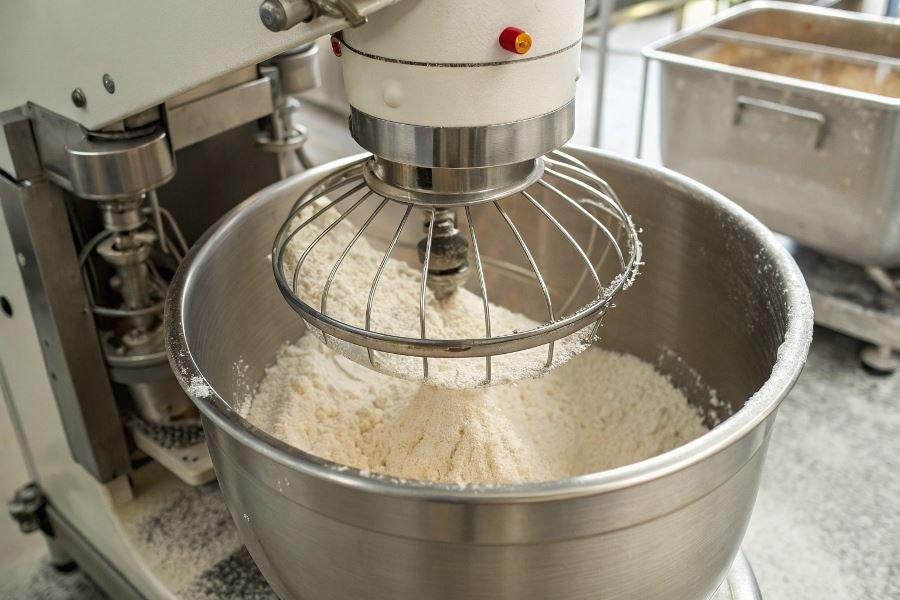
Behind every perfectly textured loaf of bread and every flawlessly structured cake lies a critical piece of equipment that rarely gets the spotlight: the industrial flour sifter. These powerhouse machines form the foundation of quality control in commercial baking operations across America.
The backbone of production excellence
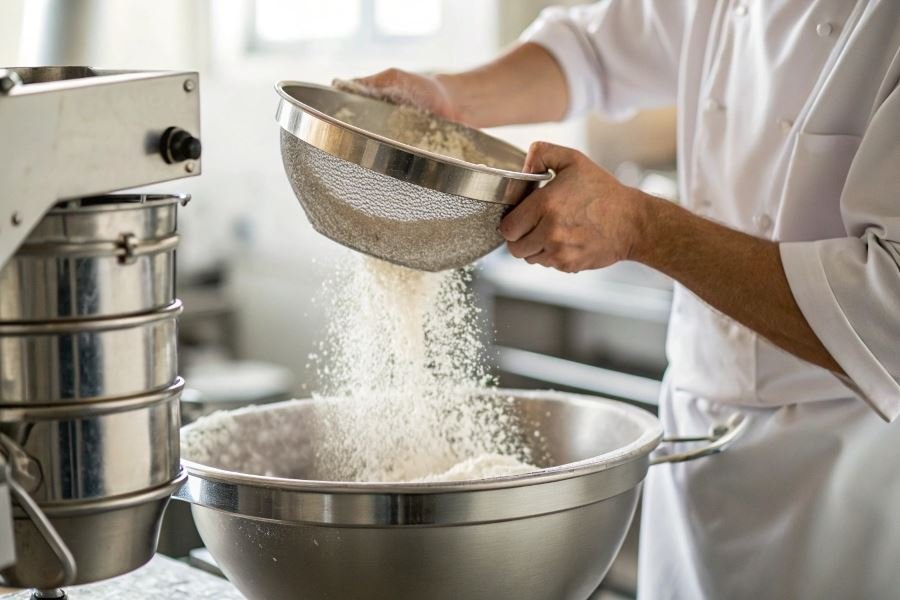
Industrial flour sifters serve as the first line of defense in food manufacturing. They meticulously remove foreign particles, break up flour clumps, and aerate the flour—transforming a raw ingredient into a bakery-ready component. When the Pillsbury Company revolutionized commercial baking in the early 1900s, their implementation of advanced sifting technology was a key factor in achieving consistent quality at scale.
The most reliable industrial sifters share several defining characteristics: vibration-resistant construction, precision mesh screens (typically between 30-100 mesh), and automated cleaning systems that prevent clogging during extended production runs. The difference between standard and premium models often comes down to throughput capacity and material construction—with stainless steel remaining the gold standard for food-grade durability.
Beyond basic filtration
Proper sifting doesn’t just remove unwanted elements—it fundamentally transforms the ingredient. When flour passes through a quality industrial sifter, its volume increases by up to 20%, creating a more oxygen-rich mixture that directly impacts gluten development and final product texture. This aeration process can reduce mixing times by 15-25%, creating substantial efficiency gains in high-volume operations.
The most reliable flour sifters don’t just filter—they elevate your entire production process.
Top 3 Most Reliable Flour Sifters That Dominate Industrial Baking
When production demands perfection, the right flour sifting equipment becomes the unsung hero of your operation. The most reliable flour sifters for industrial use separate contenders from pretenders in commercial bakeries, pasta factories, and large-scale food manufacturing facilities where consistency isn’t just preferred—it’s mandatory.
Let’s examine the three powerhouse categories that have revolutionized industrial flour processing, each bringing unique advantages to high-volume operations where downtime simply isn’t an option.
Heavy-Duty Rotary Sifters: The Workhorses
Heavy-duty rotary sifters represent the gold standard for continuous operation facilities. These machines feature a horizontal cylindrical screen with internal paddles or brushes that force flour through the mesh while moving foreign particles toward the discharge end.
Construction highlights:
- Stainless steel 304 or 316 food-grade construction
- Reinforced paddle assemblies with nylon or silicone brushes
- Quick-release clamps for rapid screen changes
- Sealed bearings rated for 24/7 operation
The Buhler Group MHXS series exemplifies this category with throughput capacities ranging from 2,000 to 22,000 pounds per hour. What truly distinguishes premium rotary sifters is their maintenance profile—many require only monthly brush inspections and quarterly screen evaluations.
“The ROI on a quality rotary sifter isn’t measured in months but in years of uninterrupted production.”
Maintenance requirements remain straightforward: regular brush tension checks, screen integrity inspections, and bearing lubrication typically every 2,000 operating hours.
Vibratory Sifters: Precision Through Motion
Vibratory technology has transformed industrial sifting with its exceptional throughput-to-footprint ratio. These machines employ gyroscopic motion to move material across horizontal screens while preventing clogging.
Technology advantages:
- Multi-plane inertial vibration patterns
- Adjustable amplitude controls for different flour types
- Self-cleaning ball-deck systems
- Lower energy consumption per ton processed
The Russell Finex Vibrasonic models incorporate ultrasonic technology that prevents mesh blinding—a common issue with fine flours. These machines achieve remarkable reliability through simplified mechanics: fewer moving parts means fewer failure points.
Throughput capabilities typically range from 3,000 to 30,000 pounds per hour, with premium models featuring automated tension monitoring systems that alert operators before screen failures occur.
Centrifugal Sifters: Compact Powerhouses
Centrifugal sifting technology leverages high-speed rotation to force material through cylindrical screens using paddle assemblies. Their compact design makes them ideal for facilities with space constraints.
Design benefits:
- Vertical orientation minimizes floor space requirements
- Enclosed systems reduce dust contamination
- Continuous discharge of oversized particles
- Toolless disassembly for cleaning
The Kason Centri-Sifter models demonstrate exceptional performance metrics, processing between 1,000 and 25,000 pounds per hour while maintaining particle size consistency within ±2 microns.
Durability considerations favor machines with independently mounted bearings outside the product zone and helical paddle designs that create uniform screen loading. Premium models feature variable frequency drives that allow operators to optimize rotation speed based on specific flour characteristics.
When evaluating centrifugal options, look for units with hardened steel or tungsten carbide paddle tips, which can extend service intervals to 4,000+ operating hours before requiring replacement.
Maximizing Your Industrial Flour Sifter Investment
Maintenance practices that extend equipment life
The difference between a flour sifter that lasts 5 years versus 15 years often comes down to maintenance discipline. Industrial bakeries reporting the highest equipment longevity follow a three-tier maintenance protocol: daily inspection, weekly cleaning, and monthly component assessment.
Daily inspections should focus on screen integrity and motor performance. Screen tears as small as 1mm can compromise product quality and accelerate wear on downstream components. The most successful operations implement a 10-minute pre-shift inspection routine that includes:
- Visual examination of screens under proper lighting
- Verification of proper tension on all sifting surfaces
- Brief operational test to identify unusual vibrations or sounds
Weekly cleaning protocols must address more than visible flour accumulation. Microscopic flour particles create abrasive compounds when mixed with ambient moisture, gradually degrading metal components. Leading bakeries use food-grade compressed air systems like the Pneumatic Cleaning System rather than brushes, which can damage delicate screens.
The most expensive maintenance is the maintenance you skip. A $200 monthly service prevents $20,000 catastrophic failures.
Monthly component assessments should include vibration analysis using digital tools. The VibrationMaster Pro can detect bearing wear patterns before they’re audible to even experienced operators.
Premium vs standard sifters: The real cost equation
When evaluating industrial flour sifters, the initial purchase price represents only 15-30% of total lifetime costs. Premium models from manufacturers like Great Western Manufacturing command prices 40-60% higher than standard alternatives, but deliver compelling long-term advantages:
| Feature | Standard Sifters | Premium Sifters | Impact on ROI |
|---|---|---|---|
| Screen material | 304 stainless steel | 316L stainless steel | 2-3x longer screen life |
| Motor efficiency | 75-80% | 90-95% | 12-18% energy savings |
| Cleaning access | Limited panel removal | Tool-free access | 40% reduction in cleaning time |
| Throughput consistency | ±5% variation | ±1% variation | Improved product consistency |
The crossover point where premium sifters become more economical typically occurs between 30-36 months of operation. Facilities processing more than 2,000 pounds of flour daily reach this threshold even faster.
Implementation strategies for maximum return
Space requirements for industrial sifters extend beyond the equipment footprint. Effective installations require 360° access for maintenance, with overhead clearance for screen removal. The most efficient bakeries allocate 150% of the machine footprint for operational space.
Integration with existing systems demands attention to three connection points:
- Power supply compatibility (voltage, phase, and amperage)
- Dust collection system capacity (minimum 400 CFM per sifter)
- Material handling interfaces (custom adapters often required)
ROI calculations should incorporate both direct and indirect benefits. Direct savings include reduced labor costs and lower maintenance expenses. Indirect benefits—often overlooked but equally valuable—include improved product consistency, reduced waste, and decreased downtime.
Facilities that have implemented comprehensive sifter optimization programs report payback periods averaging 18-24 months, with ROI exceeding 200% over a five-year period. The key success factor isn’t selecting the most expensive equipment, but rather choosing sifters precisely matched to production requirements and implementing rigorous maintenance protocols.
Discover the top 5 industrial flour sifters engineered for maximum reliability and efficiency. Compare heavy-duty rotary, vibratory, and centrifugal models to optimize your production line and enhance product quality.
Discover the top 5 industrial flour sifters engineered for maximum reliability and efficiency. Compare heavy-duty rotary, vibratory, and centrifugal models to optimize your production line and enhance product quality.