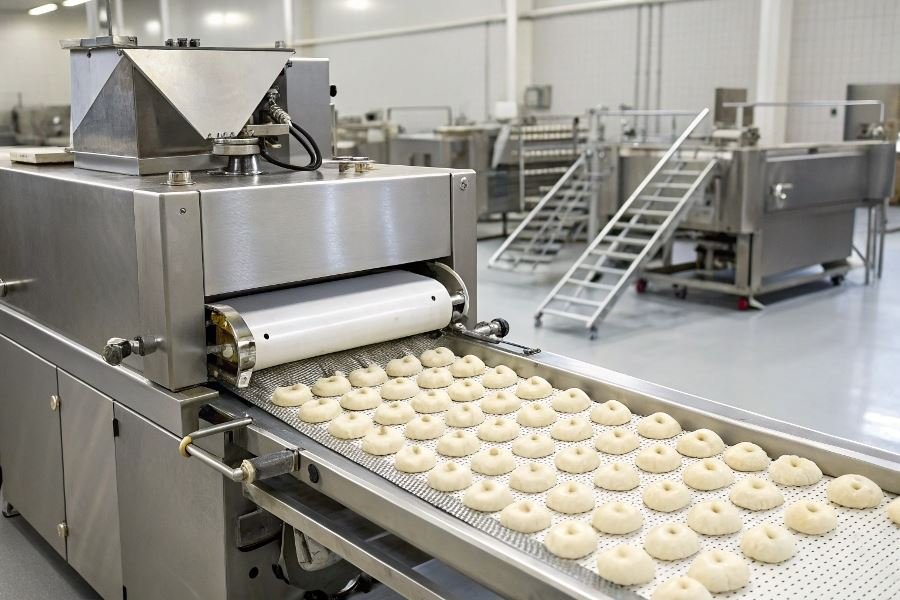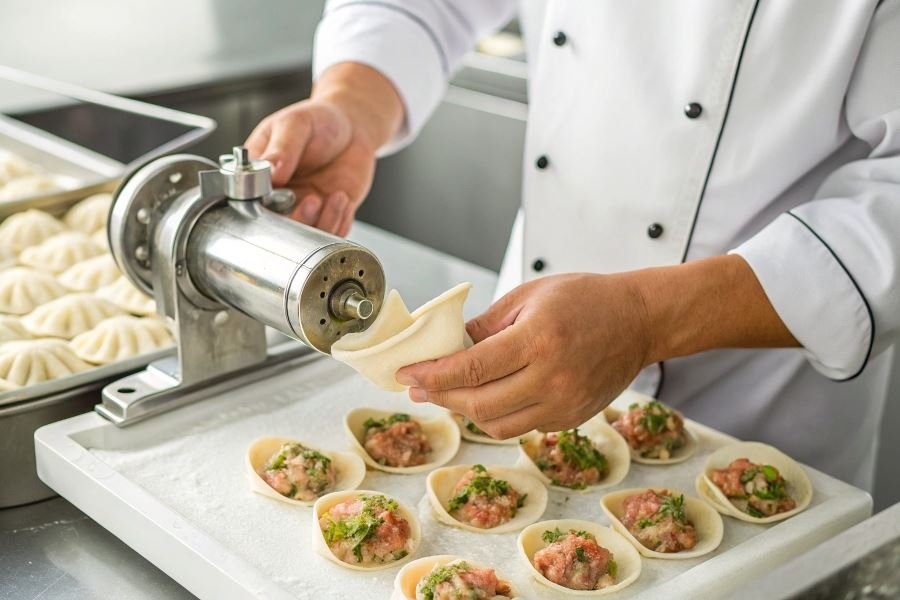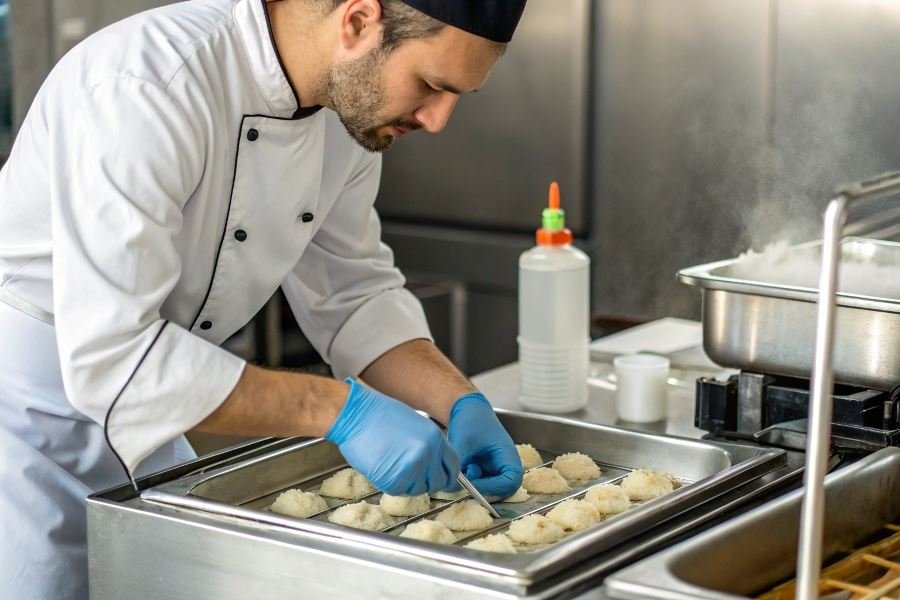
Did you know that 78% of commercial dumpling machine failures could be prevented with proper maintenance? That’s right—the difference between a machine that lasts 3 years versus 15 years often comes down to how you care for it.
When investing in commercial food equipment, particularly specialized tools like dumpling machines, understanding maintenance requirements isn’t just about preventing breakdowns—it’s about protecting your bottom line. A well-maintained dumpling machine delivers consistent product quality, maintains production efficiency, and significantly extends operational lifespan.
The maintenance spectrum across machine types
Different dumpling machines demand different care routines:
- Automatic models with their complex pneumatic systems and electronic components require more technical attention but often include self-diagnostic features
- Semi-automatic machines strike a balance between maintenance complexity and production capacity
- Manual machines offer mechanical simplicity but need more frequent cleaning and lubrication of moving parts
Critical factors determining your maintenance schedule
Your maintenance frequency isn’t arbitrary—it’s dictated by specific operational realities:
“The three horsemen of equipment failure are production volume, ingredient characteristics, and operational environment.” — Equipment Reliability Institute
Production volume naturally accelerates wear and tear, while sticky dough varieties can create residue buildup in critical components. Meanwhile, kitchen humidity and temperature fluctuations can affect electronic systems and accelerate corrosion in ways many owners never anticipate.
The most successful dumpling operations implement preventative maintenance schedules based on these factors rather than waiting for problems to emerge—turning maintenance from a cost center into a profit-protection strategy.
Essential Service and Maintenance: The Dumpling Machine Lifecycle
Investing in a commercial dumpling machine isn’t just about the initial purchase—it’s about understanding the ongoing relationship you’ll have with this equipment for years to come. The difference between a machine that delivers consistent quality for a decade and one that fails within months often comes down to maintenance discipline. Service and maintenance of dumpling machines: what you need to know before buying encompasses everything from daily cleaning routines to long-term component care, and this knowledge should influence your purchasing decision from day one.
Cleaning Protocols That Preserve Performance
The food-safe environment required for dumpling production demands rigorous cleaning standards. High-quality dumpling machines like those from Anko Food Machine are designed with cleaning in mind, but require specific protocols:
Daily cleaning requirements:
- Disassemble all food-contact components
- Use food-grade sanitizers (typically quaternary ammonium compounds)
- Hand-wash delicate components (never submerge electronic parts)
- Air dry completely before reassembly
The most common cause of premature machine failure is inadequate drying after cleaning, which leads to corrosion of critical components.
For machines with automated cleaning systems, verify the cycle duration and chemical requirements. Many operators underestimate that proper cleaning can take 45-60 minutes daily—a crucial factor when calculating production schedules.
Preventative Maintenance: The Schedule That Saves
Preventative maintenance isn’t just recommended—it’s essential for food production equipment. Understanding the maintenance calendar before purchase helps you budget both time and resources appropriately.
| Component | Inspection Frequency | Typical Replacement Timeline | Early Warning Signs |
|---|---|---|---|
| Forming dies | Weekly | 12-18 months | Inconsistent dumpling shapes |
| Drive belts | Monthly | 24-36 months | Unusual noise, slipping |
| Sealing mechanisms | Bi-weekly | 18-24 months | Leaking fillings |
| Bearings | Quarterly | 36-48 months | Grinding sounds, vibration |
| Control systems | Semi-annually | 5-7 years | Erratic operation |
The Yamato and Rheon machines typically include detailed maintenance schedules with purchase, while some lower-cost alternatives may require you to develop these protocols independently.
Technical Skills: The Hidden Operating Cost
Perhaps the most overlooked aspect of dumpling machine ownership is the technical expertise required for day-to-day operation and troubleshooting. Before finalizing your purchase, consider:
Skill requirements for routine maintenance:
- Basic mechanical aptitude for component disassembly
- Understanding of food-safe lubricants and their application points
- Electrical troubleshooting for control system issues
- Calibration skills for maintaining precise portion control
Many manufacturers offer training programs, but these vary dramatically in quality and comprehensiveness. The Sammic training program, for example, includes hands-on maintenance certification, while other brands may provide only basic operational guidance.
Consider budgeting for a maintenance contract if in-house expertise isn’t available—these typically cost 8-12% of the machine’s purchase price annually but can extend equipment life by 30-50%.
The most successful dumpling operations maintain detailed maintenance logs and establish clear responsibility chains for each maintenance task. This documentation not only ensures consistent care but becomes invaluable during troubleshooting or when training new staff on equipment protocols.
Making the Smart Investment: Service and Maintenance Essentials for Dumpling Machines
When investing in commercial dumpling equipment, what happens after the purchase often determines your long-term satisfaction. The most sophisticated machine can become your operation’s greatest liability without proper support systems in place. Let’s cut through the noise and focus on what truly matters when evaluating service and maintenance before signing that purchase order.
Manufacturer Support That Actually Delivers
The difference between mediocre and exceptional manufacturer support can be measured in thousands of dollars and countless hours of downtime. When evaluating potential dumpling machine manufacturers, look beyond the glossy brochures and investigate:
- Response time guarantees – Top-tier manufacturers like Anko Food Machine offer 24-hour response commitments for critical issues
- Warranty coverage depth – Standard warranties typically cover 12 months, but premium manufacturers may offer up to 36 months on critical components
- Spare parts availability – Can parts be shipped overnight? Are common wear items stocked domestically?
The strength of a service network becomes apparent only when you need it most—during an unexpected breakdown during peak production.
A robust service network should include certified technicians within reasonable proximity to your operation. For example, Sammic maintains service centers in 17 major U.S. cities, ensuring most customers receive on-site support within 48 hours.
The True Cost Equation
Purchase price represents just the beginning of your financial relationship with a dumpling machine. The total cost of ownership (TCO) provides a much clearer picture of your investment:
| Cost Component | Typical Range (5-Year Period) | Notes |
|---|---|---|
| Initial Purchase | 8, 000−75,000 | Varies by capacity and automation level |
| Preventative Maintenance | 15-25% of purchase price | Includes scheduled service visits |
| Replacement Parts | 10-30% of purchase price | Higher for machines with proprietary components |
| Downtime Costs | Highly variable | Often overlooked but potentially substantial |
| Training | 500−2,500 annually | Necessary for staff turnover |
Smart buyers recognize that a machine with a higher upfront cost but lower maintenance requirements often delivers superior long-term value. Hobart equipment, for instance, typically commands premium pricing but demonstrates lower 5-year TCO due to reduced maintenance needs and exceptional durability.
Your Pre-Purchase Maintenance Assessment Checklist
Before finalizing your dumpling machine purchase, complete this essential service and maintenance evaluation:
- Maintenance schedule clarity – Obtain a detailed maintenance calendar showing required service frequency and estimated costs
- Consumable parts inventory – Identify all wear items, their replacement intervals, and current pricing
- Technical documentation access – Ensure comprehensive manuals are available, preferably digitally
- Training provisions – Confirm what operator and maintenance training is included with purchase
- Service contract options – Review extended warranty and service plan pricing against typical repair costs
Remember that the best time to negotiate service terms is before purchase, not after problems arise.
Manufacturers offering transparent maintenance requirements demonstrate confidence in their equipment’s reliability. When Rheon provides detailed 5-year maintenance projections with their quotes, it signals their commitment to long-term customer success rather than just making the initial sale.
By thoroughly evaluating support infrastructure, calculating true ownership costs, and completing your maintenance assessment checklist, you’ll make an informed decision that serves your operation for years to come. The right dumpling machine backed by exceptional service isn’t just equipment—it’s a production partner.
Discover essential maintenance requirements for commercial dumpling machines before investing. Learn about cleaning protocols, preventative care schedules, and long-term ownership costs to maximize equipment lifespan and production efficiency.
Discover essential maintenance requirements for commercial dumpling machines before investing. Learn about cleaning protocols, preventative care schedules, and long-term ownership costs to maximize equipment lifespan and production efficiency.