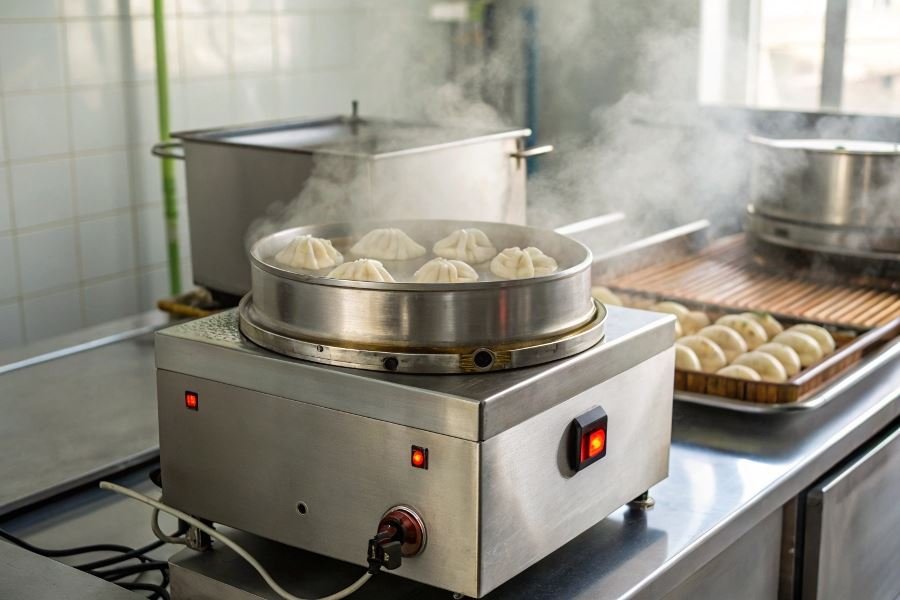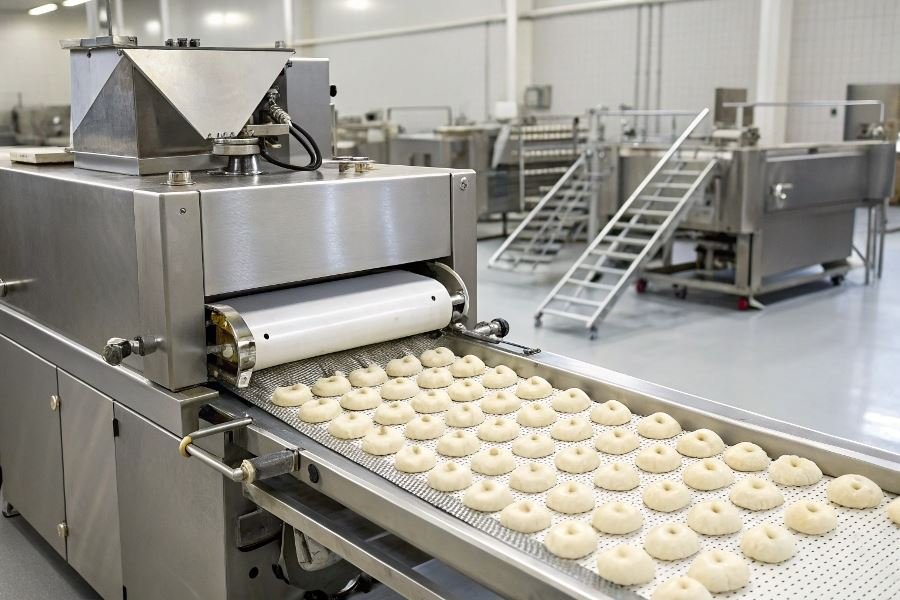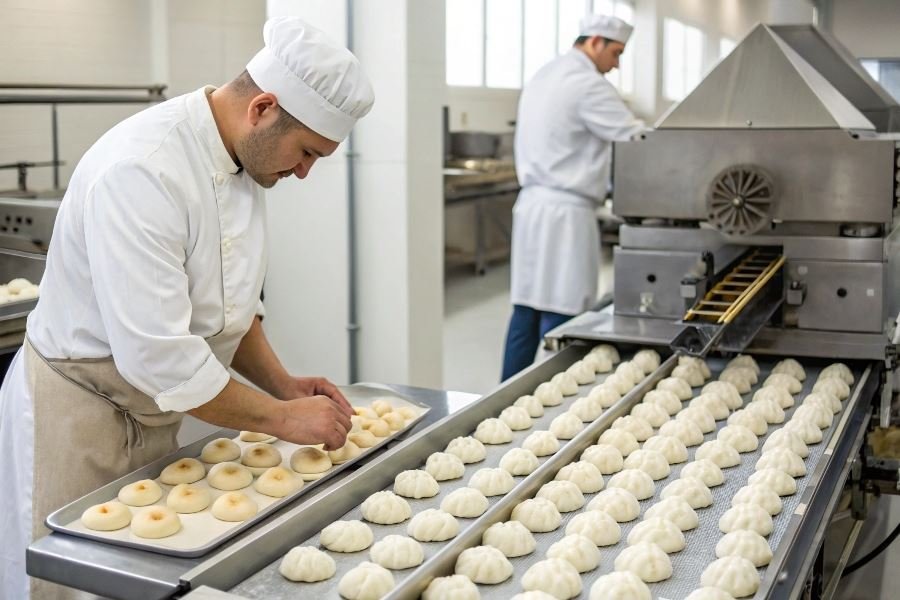
Ever watched $50,000 of gleaming stainless steel dumpling equipment being installed in your production facility and wondered, “When will this massive investment actually pay for itself?” You’re not alone. The payback period calculation is the unsung hero of food production profitability—especially in the competitive dumpling market where margins matter.
The payback period represents the time required for an investment to generate enough cash flow to recover its initial cost. For dumpling producers, this calculation isn’t just financial housekeeping—it’s the difference between thriving and barely surviving. A machine that pays for itself in 18 months versus 36 months fundamentally changes your business trajectory.
Several critical factors influence your equipment’s return on investment. Production capacity tops the list—a machine producing 2,000 dumplings hourly versus 1,000 dramatically accelerates payback. Energy efficiency creates significant long-term savings, while maintenance requirements can silently drain profits. The often-overlooked labor reduction factor might be your biggest ROI driver, as automated equipment can replace multiple production workers.
The most successful dumpling operations understand that calculating payback isn’t a one-time exercise but an ongoing analysis that informs every equipment decision.
By mastering this calculation, you transform equipment purchases from intimidating expenses into strategic investments with predictable returns—putting you firmly in control of your dumpling business’s financial future.
The Financial Blueprint for Dumpling Equipment Success
When investing in commercial dumpling equipment, understanding the path to profitability isn’t just smart—it’s essential. The equipment that transforms simple ingredients into delectable dumplings represents a significant capital investment, and knowing exactly when that investment will pay for itself allows for confident business planning.
Calculating the payback period of dumpling equipment requires a methodical approach that accounts for all financial variables. This calculation serves as your financial compass, guiding decisions about equipment selection, production volume, and pricing strategy. The formula is straightforward—divide your initial investment by the net annual cash flow—but the devil lies in the details of what goes into each of these figures.
Initial Investment: Beyond the Price Tag
The foundation of any payback calculation starts with a comprehensive accounting of your initial investment costs:
- Equipment purchase price – Commercial dumpling machines range from $5,000 for basic models to $50,000+ for automated production lines
- Installation expenses – Professional setup typically adds 10-15% to base equipment costs
- Facility modifications – Electrical upgrades, plumbing changes, ventilation requirements
- Staff training – Both direct costs and productivity losses during learning periods
- Initial inventory – First batches of ingredients and packaging materials
The most common mistake in payback calculations is underestimating initial costs by focusing solely on equipment purchase price.
Many entrepreneurs overlook ancillary costs like shipping (which can reach $2,000+ for heavy equipment), customs fees for imported machinery, and specialized tools required for operation.
Revenue Projections: Production Capacity Meets Market Reality
Your equipment’s earning potential depends on several interconnected factors:
| Production Factor | Impact on Revenue |
|---|---|
| Hourly output | Determines maximum possible daily production |
| Operating hours | Realistic daily/weekly utilization rate |
| Product pricing | Market-appropriate price point per unit |
| Sell-through rate | Percentage of production actually sold |
A mid-range dumpling machine from Sammic might produce 1,500 dumplings per hour. At 6 productive hours daily and 22 operating days monthly, that’s 198,000 dumplings monthly. At a wholesale price of $0.40 per dumpling, the theoretical monthly revenue reaches $79,200—but realistic sell-through rates typically start at 60-70% for new operations.
Operational Expenses: The Ongoing Investment
The final piece of the payback puzzle involves accurately tracking continuing costs:
Direct production expenses:
- Raw ingredients (flour, fillings, etc.)
- Packaging materials
- Labor costs for machine operators
Equipment-specific costs:
- Maintenance – Preventive service contracts typically run 5-8% of equipment value annually
- Utilities – Electricity consumption (3-7 kWh for standard machines)
- Replacement parts – Dies, cutters, and other wear items
Indirect expenses:
- Storage costs for ingredients and finished products
- Distribution expenses
- Marketing to drive sales
When these expenses are subtracted from your gross revenue, you’ll arrive at the net cash flow figure needed to complete your payback calculation.
By meticulously tracking these three components—initial investment, revenue projections, and operational expenses—you’ll develop a precise understanding of when your dumpling equipment will cross the threshold from expense to profit-generating asset. This financial clarity doesn’t just satisfy accountants; it empowers confident scaling decisions and strategic planning for your dumpling operation’s future.
Calculating Dumpling Equipment Payback Period
When investing in commercial dumpling equipment, understanding the payback period isn’t just financial housekeeping—it’s the difference between a thriving operation and a cash-flow nightmare. Let’s dive into the nuts and bolts of determining exactly when your pelmeni press or gyoza folder will start paying for itself.
The simple math behind equipment ROI
The basic payback period calculation is refreshingly straightforward:
Payback Period = Initial Investment ÷ Annual Cash Inflow
This formula reveals how many years it will take for your equipment to recoup its cost. For example, if you invest $25,000 in a commercial dumpling machine that generates $8,000 in annual profit (after accounting for all operational costs), your payback period is:
$25,000 ÷ $8,000 = 3.125 years
That’s approximately 3 years and 1.5 months until you break even.
But real-world calculations demand more nuance. Consider this expanded approach:
| Factor | Example Values | Impact on Calculation |
|---|---|---|
| Equipment Cost | $25,000 | Base investment |
| Installation | $3,000 | Increases initial investment |
| Training | $1,500 | Increases initial investment |
| Annual Revenue Increase | $15,000 | Improves cash flow |
| Annual Operating Costs | $7,000 | Reduces net cash flow |
Using these figures, your actual initial investment is $29,500 with an annual net cash inflow of $8,000, extending the payback period to 3.69 years.
Beyond basic calculations
Depreciation and tax benefits significantly improve your equipment’s financial performance. These aren’t just accounting tricks—they’re legitimate value creators.
Depreciation allows you to allocate the equipment’s cost over its useful life. For food processing equipment, the IRS typically allows a 7-year depreciation schedule. This creates tax deductions that reduce your effective cost.
Let’s enhance our calculation:
- Calculate annual depreciation: $25,000 ÷ 7 = $3,571 per year
- At a 21% corporate tax rate, this creates annual tax savings of $750
- Add this to your annual cash inflow: $8,000 + $750 = $8,750
- Recalculate: $29,500 ÷ $8,750 = 3.37 years
The tax benefits just shaved nearly 4 months off your payback period.
Section 179 deductions can accelerate these benefits further, potentially allowing first-year deduction of the entire equipment cost, dramatically improving first-year cash flow.
Making sense of the numbers
Interpreting payback period results requires context. Industry benchmarks suggest:
- Under 2 years: Exceptional investment
- 2-3 years: Strong investment
- 3-5 years: Acceptable for durable equipment
- Over 5 years: Requires careful consideration
But numbers alone don’t tell the whole story. Consider these qualitative factors:
- Does the equipment improve product consistency?
- Will it reduce labor costs over time?
- Does it enable production scaling without proportional cost increases?
- How does it compare to leasing options?
Sensitivity analysis adds another dimension. Calculate how changes in production volume, ingredient costs, or equipment efficiency might affect your payback timeline. A 10% increase in production efficiency might reduce your payback period by several months.
The most informed equipment decisions balance quantitative payback calculations with qualitative business impacts, creating a comprehensive view of when—and how—your dumpling equipment investment will truly pay off.
Learn how to accurately calculate the payback period for your dumpling equipment investment. Our step-by-step guide covers initial costs, cash flow projections, and ROI analysis to help food business owners make profitable equipment decisions.
Learn how to accurately calculate the payback period for your dumpling equipment investment. Our step-by-step guide covers initial costs, cash flow projections, and ROI analysis to help food business owners make profitable equipment decisions.