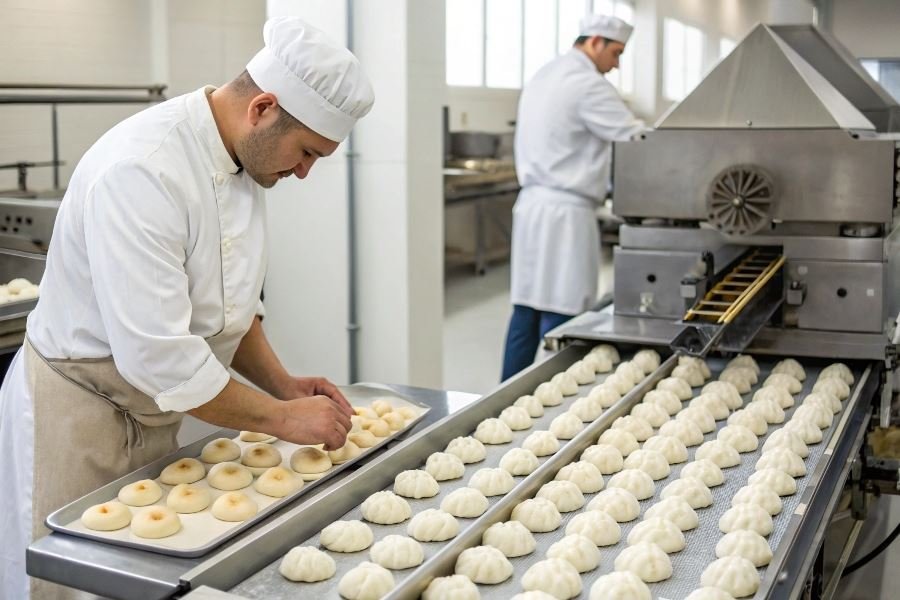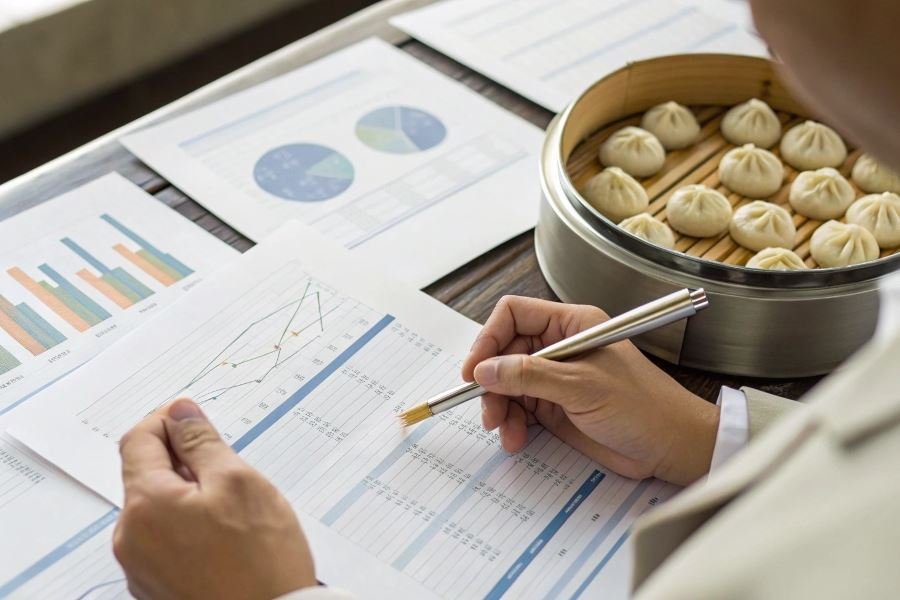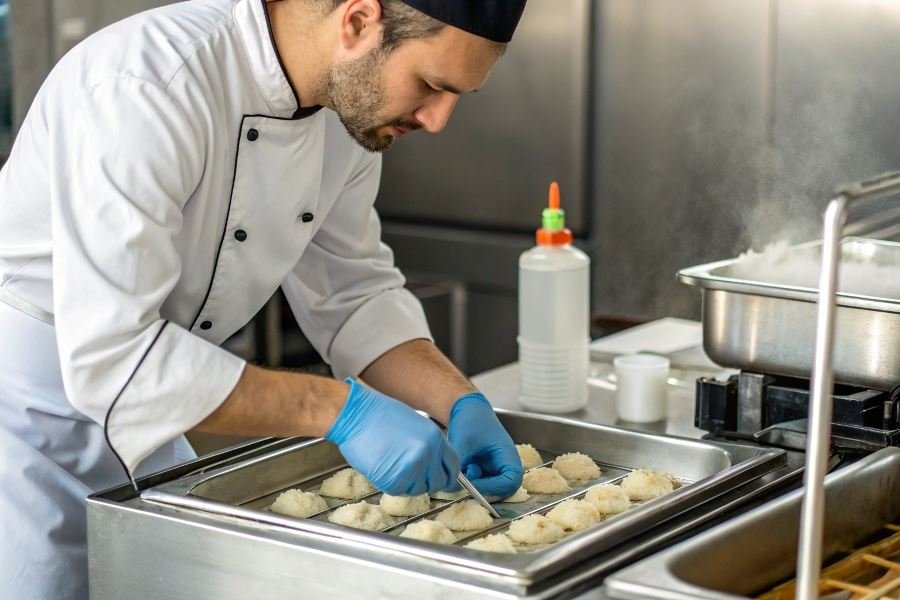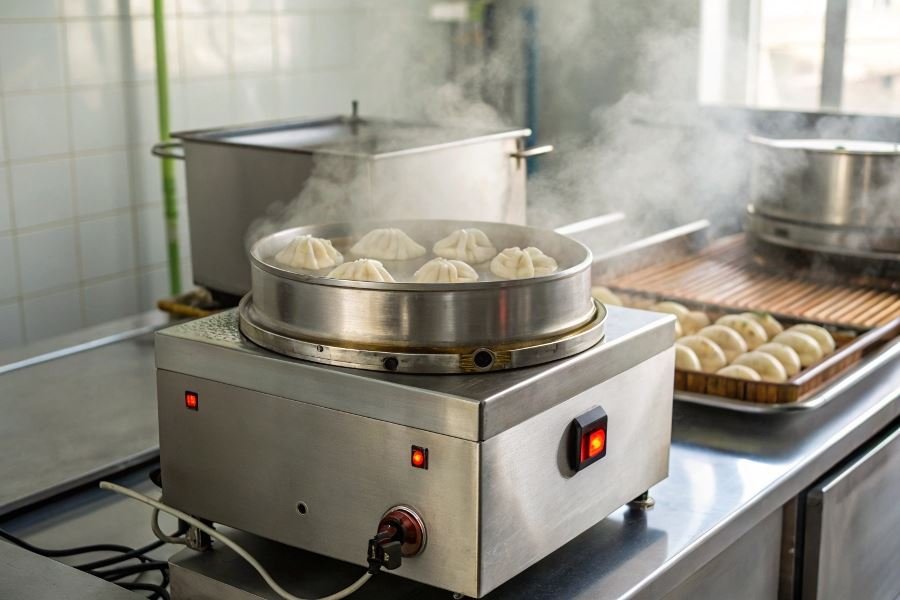
Ever wondered how much electricity it takes to make your favorite dumplings? The answer might surprise you. Modern dumpling machines have undergone a remarkable transformation in energy efficiency, with today’s models using up to 70% less power than their predecessors from just two decades ago.
The journey toward energy-efficient dumpling production has been nothing short of revolutionary. In the 1970s, commercial dumpling machines were industrial behemoths, consuming electricity with abandon. A standard production line from 1975 required approximately 45 kWh to produce 1,000 dumplings—enough energy to power an average American home for nearly two days!
By the early 2000s, manufacturers began incorporating variable frequency drives and improved insulation, cutting consumption to roughly 25 kWh per 1,000 units. Fast forward to 2025, and the most advanced machines operate at an impressive 12-15 kWh for the same output.
This efficiency evolution matters tremendously in today’s food manufacturing landscape. With energy costs climbing and sustainability becoming a business imperative, manufacturers are scrutinizing every kilowatt-hour. The most successful food processing operations now measure their energy performance through three critical metrics:
- Energy Use Intensity (EUI): Power consumed per unit produced
- Thermal Efficiency Rating: How effectively heat is utilized during cooking phases
- Standby Power Consumption: Energy used during non-production periods
These metrics don’t just represent cost savings—they’re increasingly becoming competitive differentiators in a market where both buyers and consumers demand environmental responsibility alongside quality and consistency.
The Technology Powering Efficient Dumpling Production
The revolution in commercial food equipment has transformed how we think about production efficiency. Modern dumpling machines have undergone remarkable engineering advances that significantly reduce energy consumption while maintaining—or even improving—production capacity. These innovations represent a perfect marriage of mechanical engineering and digital intelligence.
When examining the energy efficiency of modern dumpling machines, three technological pillars stand out as game-changers for manufacturers and operators alike. These systems work in concert to slash power bills, reduce environmental impact, and ultimately deliver better products with less waste.
Smart Motors That Know When to Push
At the heart of every modern dumpling machine beats an advanced motor system that bears little resemblance to its power-hungry predecessors. Variable frequency drives (VFDs) have revolutionized how these machines operate, allowing motors to run at precisely the speed required for each production phase.
Traditional motors operated at full power regardless of the task—like driving a car with the accelerator fully pressed and controlling speed with the brake. Modern systems with VFDs adjust power consumption in real-time, resulting in:
- Energy savings of 30-50% compared to fixed-speed motors
- Reduced mechanical stress and longer equipment lifespan
- Smoother operation with fewer production interruptions
Leading manufacturers like Anko Food Machine have implemented premium-efficiency IE3 and IE4 motors that exceed international efficiency standards, delivering payback periods as short as 12-18 months through energy savings alone.
Thermal Systems That Waste Nothing
The second technological pillar focuses on managing thermal energy—a critical factor since cooking and freezing processes account for approximately 60% of a dumpling machine’s energy consumption.
Modern machines employ sophisticated thermal management through:
- Multi-layer composite insulation materials that reduce heat transfer by up to 85%
- Heat recovery systems that capture waste heat from refrigeration units to preheat water
- Zone-specific temperature control that applies precise heating only where needed
These thermal innovations don’t just save energy—they improve product quality by maintaining more consistent cooking temperatures and reducing moisture loss during production.
| Thermal Technology | Energy Savings | Quality Impact |
|---|---|---|
| Advanced Insulation | 25-35% | Maintains consistent temperature |
| Heat Recovery Systems | 15-20% | Reduces water heating costs |
| Zone Temperature Control | 20-30% | Improves product consistency |
The Digital Brain Optimizing Everything
Perhaps the most transformative advancement comes from the integration of smart control systems and automation. Modern dumpling machines feature sophisticated digital brains that continuously monitor and optimize every aspect of production.
These intelligent systems include:
- Predictive algorithms that learn production patterns and pre-emptively adjust settings
- Real-time energy monitoring dashboards that identify inefficiencies instantly
- Automated production scheduling that maximizes throughput during off-peak energy rate periods
Siemens and other automation leaders have developed industry-specific control systems that can reduce overall energy consumption by an additional 15-25% beyond the savings from mechanical improvements alone.
The most advanced systems even incorporate machine learning capabilities that continuously refine operations based on production data, creating a virtuous cycle of ever-improving efficiency. This digital intelligence transforms dumpling machines from mere mechanical devices into smart manufacturing platforms that adapt to changing conditions without human intervention.
Smart Money in Dumpling Production
Beyond the Price Tag: Total Cost of Ownership
When evaluating dumpling machines, focusing solely on the purchase price is a costly mistake. The total cost of ownership (TCO) reveals the true financial picture over the equipment’s lifetime. Energy-efficient models typically command a 15-30% premium upfront but deliver operational savings that transform the balance sheet.
A comprehensive TCO analysis includes:
- Initial purchase price
- Energy consumption costs (typically 60-70% of operational expenses)
- Maintenance requirements
- Water usage
- Labor efficiency
- Expected service life
The difference between standard and energy-efficient models becomes striking when projected over 5-7 years of operation.
For a medium-capacity operation producing 5,000 dumplings hourly, energy-efficient machines can reduce power consumption by 30-45%, translating to approximately 4, 200−6,800 in annual savings. These machines often incorporate:
- Variable frequency drives
- Improved insulation
- Heat recovery systems
- Smart power management
- LED lighting systems
Market Leaders in Energy Efficiency
Three models consistently outperform competitors in energy efficiency metrics:
| Model | Energy Consumption | Production Capacity | Standout Features | Approximate Price |
|---|---|---|---|---|
| Anko FD-2000 | 3.2 kWh/hr | 6,000 units/hr | Heat recovery system, 40% energy reduction vs. standard models | $38,500 |
| Rheon KN550 | 2.8 kWh/hr | 4,500 units/hr | Smart power cycling, ultra-efficient motors | $42,700 |
| Yamato DPX-700 | 3.5 kWh/hr | 7,200 units/hr | Insulated chambers, energy-efficient freezing system | $45,900 |
The Rheon KN550 achieves the lowest energy consumption per unit produced, though at a higher initial investment. The Yamato DPX-700 offers superior throughput, making it ideal for higher-volume operations where efficiency per dumpling matters more than absolute energy consumption.
Implementation Strategies That Maximize Returns
Phased implementation often yields better results than wholesale equipment replacement. Consider these approaches:
- Audit current energy usage – Establish baseline consumption using power monitoring equipment before making decisions
- Pilot program – Test one energy-efficient machine alongside existing equipment to validate savings
- Strategic scheduling – Run energy-efficient machines during peak electricity rate periods
The most successful implementations combine equipment upgrades with operational adjustments.
Calculating Your ROI
The simplest ROI calculation method:
ROI = (Annual Energy Savings × Expected Lifespan) ÷ (Purchase Premium) × 100%
For more precision, factor in:
- Maintenance cost differences
- Productivity improvements
- Utility rebates and incentives
- Depreciation benefits
- Financing costs
A typical ROI timeline for premium energy-efficient dumpling machines ranges from 18-36 months, depending on production volume and local energy costs. Operations running 16+ hours daily often see payback periods closer to 14 months.
When properly implemented, energy-efficient dumpling machines don’t just reduce costs—they increase production consistency and reduce downtime, creating compound benefits that transform production economics.
Discover how modern dumpling machines maximize energy efficiency while reducing operational costs. Learn about advanced motor systems, heat recovery technology, and smart controls that help food processors save on utilities without sacrificing production quality.
Discover how modern dumpling machines maximize energy efficiency while reducing operational costs. Learn about advanced motor systems, heat recovery technology, and smart controls that help food processors save on utilities without sacrificing production quality.