Ever wondered why some homemade sausages have that perfect texture while others trap air pockets that ruin both taste and shelf life? The secret weapon of professional charcuterie masters isn’t just skill—it’s technology.
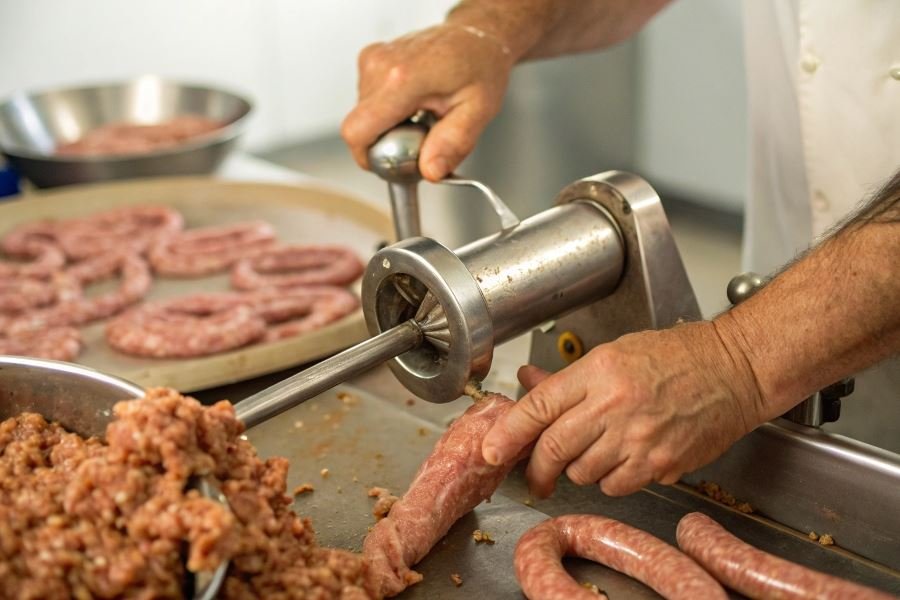
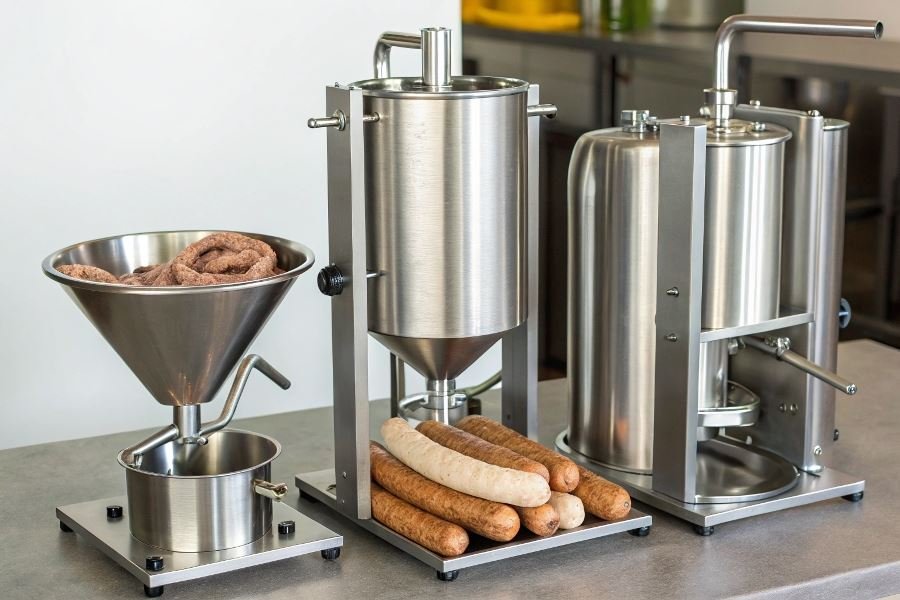
Vacuum sausage stuffers represent the evolution of traditional meat processing equipment, designed specifically to eliminate the air that causes oxidation, bacterial growth, and inconsistent texture in sausage production. Unlike conventional stuffers that simply push meat into casings, vacuum models first remove air from the meat mixture before filling, resulting in a denser, more uniform product with significantly extended shelf life.
How vacuum stuffers transform the process: These specialized machines use a powerful vacuum pump that extracts air from both the meat chamber and the mixture itself before applying pressure to fill casings. This seemingly simple modification yields remarkable results—sausages with vibrant color retention, enhanced flavor preservation, and dramatically reduced spoilage rates.
The competitive edge of vacuum technology
The benefits extend far beyond just appearance:
- Extended shelf life by up to 40% compared to conventional methods
- Superior texture with consistent density throughout each sausage
- Enhanced flavor preservation as oxygen can’t degrade sensitive compounds
- Reduced bacterial growth potential due to oxygen removal
- Improved binding of meat proteins for better slice integrity
Market landscape and investment considerations
The market offers options ranging from entry-level manual vacuum stuffers starting around $800 to commercial-grade automated systems exceeding 15, 000.Mid − rangemodels(2,000-$5,000) typically deliver the best value proposition for small-scale producers and serious enthusiasts, offering professional results without industrial-scale investment.
The return on investment becomes clear when calculating reduced waste, improved product quality, and the premium pricing that superior sausages can command in today’s quality-conscious marketplace.
Essential Features That Define Quality Vacuum Stuffers
When selecting equipment for sausage production, understanding the critical features of vacuum sausage stuffers becomes the difference between mediocre results and professional-grade output. The right machine transforms your production process, eliminating air pockets while ensuring consistent texture and extended shelf life. Let’s examine the selection criteria that separate ordinary stuffers from exceptional ones.
Capacity That Matches Your Production Needs
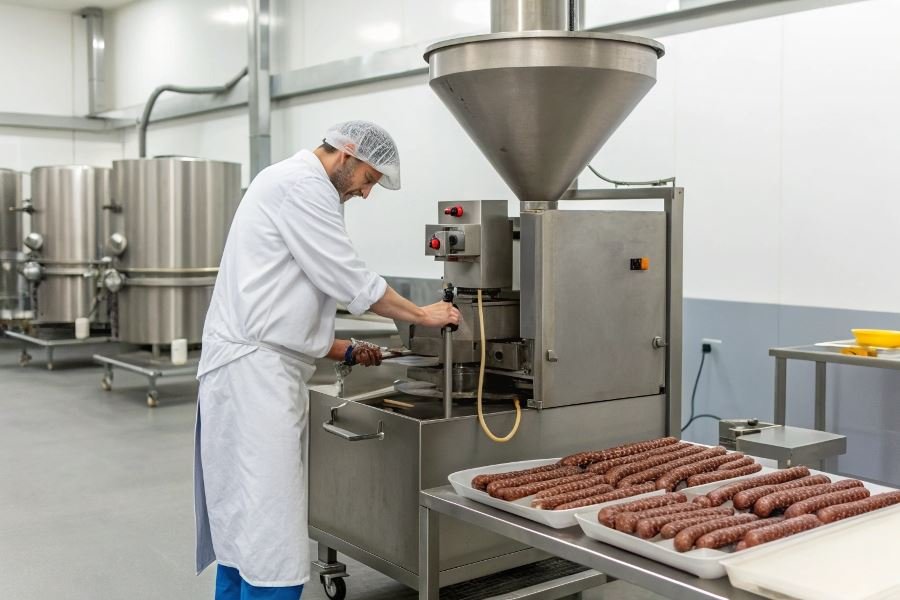
The capacity of your vacuum sausage stuffer directly impacts operational efficiency. Commercial producers typically require machines capable of handling 30-50 pounds per batch, while artisanal operations might function optimally with 15-25 pound capacities.
Production volume considerations extend beyond mere capacity numbers:
- Batch processing time: Higher-end models like the Hakka Brothers commercial series can process a 30-pound batch in under 15 minutes
- Continuous operation rating: Quality stuffers should specify maximum daily production volumes
- Hopper design: Vertical hoppers maximize gravity assistance, while horizontal designs offer easier loading
The advantages and features of selection for vacuum sausage stuffers become most apparent when matching capacity to your specific production rhythm. A stuffer that’s too small creates bottlenecks; one that’s too large wastes energy and floor space.
Construction Materials That Stand The Test Of Time
The durability of your vacuum stuffer directly correlates with its construction materials. Food-grade stainless steel dominates the market for good reason.
Premium models feature 304-grade stainless steel for all food-contact surfaces, offering superior corrosion resistance even with acidic ingredients.
| Material Type | Advantages | Maintenance Requirements |
|---|---|---|
| 304 Stainless | Corrosion-resistant, non-reactive | Minimal, standard cleaning |
| 316 Stainless | Superior salt/acid resistance | Minimal, standard cleaning |
| Cast Iron | Durability, lower cost | Regular seasoning, rust prevention |
| Aluminum | Lightweight, affordable | Cannot use caustic cleaners |
Look beyond the hopper material to examine gears, pistons, and seals. Brass gears offer longevity but at higher cost, while hardened steel provides excellent value. Silicone seals outperform rubber in both temperature resistance and longevity.
Speed Control For Precision Filling
The difference between amateur and professional sausage production often comes down to precision control mechanisms. Variable speed settings allow for:
Fine-tuning production for different sausage types:
- Slow speeds (3-5 RPM) for delicate casings and specialty products
- Medium speeds (8-12 RPM) for standard production
- High speeds (15+ RPM) for high-volume commercial operations
The most sophisticated models from manufacturers like LEM Products offer digital speed control with 0.5 RPM increments for unmatched precision.
Modern vacuum stuffers incorporate pressure sensors that automatically adjust to maintain consistent filling density regardless of casing resistance. This technology prevents both overfilling and underfilling—common problems with basic machines.
Look for models with memory settings that allow you to save specific parameters for different products. This feature dramatically reduces setup time and ensures consistency across production runs, especially valuable for operations with multiple operators or product lines.
The control interface deserves careful consideration—intuitive digital displays reduce training time and operator error compared to analog dials, particularly in busy production environments where precision matters most.
Making the Right Vacuum Sausage Stuffer Investment
When you’ve spent hours perfecting your sausage recipe, the last thing you want is equipment that can’t deliver on your vision. Selecting the perfect vacuum stuffer isn’t just about buying a machine—it’s about investing in your production future. Let’s dive into how to make that selection count.
Aligning Specifications With Production Goals
The most expensive stuffer isn’t necessarily the right one for your operation. What matters is alignment between your production needs and the machine’s capabilities.
Volume considerations should drive your decision-making process. A small artisanal operation producing 50-100 pounds weekly requires different specifications than a mid-sized processor handling 500+ pounds daily.
For smaller operations, a 15-liter capacity stuffer from brands like LEM Products might be ideal, while larger operations might need a 50-liter Mainca or Talsa model with higher throughput capabilities.
The perfect match happens when your peak production days run smoothly without pushing your equipment to its limits.
Consider these critical specifications:
| Specification | Small Production | Medium Production | Large Production |
|---|---|---|---|
| Capacity | 7-15 liters | 20-30 liters | 40+ liters |
| Motor Power | 0.5-0.75 HP | 1-1.5 HP | 2+ HP |
| Vacuum Pressure | 0.8-0.9 bar | 0.9-0.95 bar | 0.95+ bar |
| Filling Speed | 25-50 lbs/hr | 100-200 lbs/hr | 300+ lbs/hr |
Maintenance Requirements and Longevity Factors
The stuffer that costs less upfront might demand more in maintenance costs over time. Stainless steel construction (304 grade minimum, 316 for premium models) offers superior corrosion resistance and longevity.
Serviceable components make a tremendous difference in total ownership cost. Models with easily accessible vacuum pumps and removable parts for cleaning will save countless hours and frustration.
Look for:
- Toolless disassembly features
- Readily available replacement parts
- Sealed bearings and food-grade lubrication systems
- Simplified cleaning procedures
A well-maintained vacuum stuffer can easily provide 10-15 years of reliable service, making maintenance accessibility a critical selection factor.
The vacuum system itself requires particular attention. Oil-sealed rotary vane pumps typically need oil changes every 500-1000 operating hours, while dry pumps offer lower maintenance but may come with higher initial costs.
Return on Investment Calculations
The true value of a vacuum stuffer emerges when analyzing ROI beyond the purchase price. A $5,000 investment in a quality stuffer that lasts 12 years represents just over $400 annually—often less than repair costs for cheaper alternatives.
Production efficiency gains should factor prominently in your calculations. Premium vacuum stuffers from manufacturers like Handtmann or Vemag might command higher prices but deliver:
- 15-20% faster production speeds
- 5-10% reduction in product waste
- Significantly improved product consistency
- Lower labor costs through automation
For specialty sausage producers, the elimination of air pockets alone can reduce product returns and enhance reputation—benefits difficult to quantify but crucial to business success.
The wisest approach is selecting a stuffer with 20-30% more capacity than your current needs, allowing for business growth without immediate reinvestment.
When evaluating different models, calculate the per-pound production cost over the expected lifespan rather than focusing solely on acquisition price. This approach often reveals that premium equipment delivers superior long-term value despite higher initial investment.
Discover the ultimate guide to vacuum sausage stuffers for artisanal production. Learn key selection criteria, material considerations, and how to match equipment specifications to your production needs for optimal quality and efficiency.
Discover the ultimate guide to vacuum sausage stuffers for artisanal production. Learn key selection criteria, material considerations, and how to match equipment specifications to your production needs for optimal quality and efficiency.