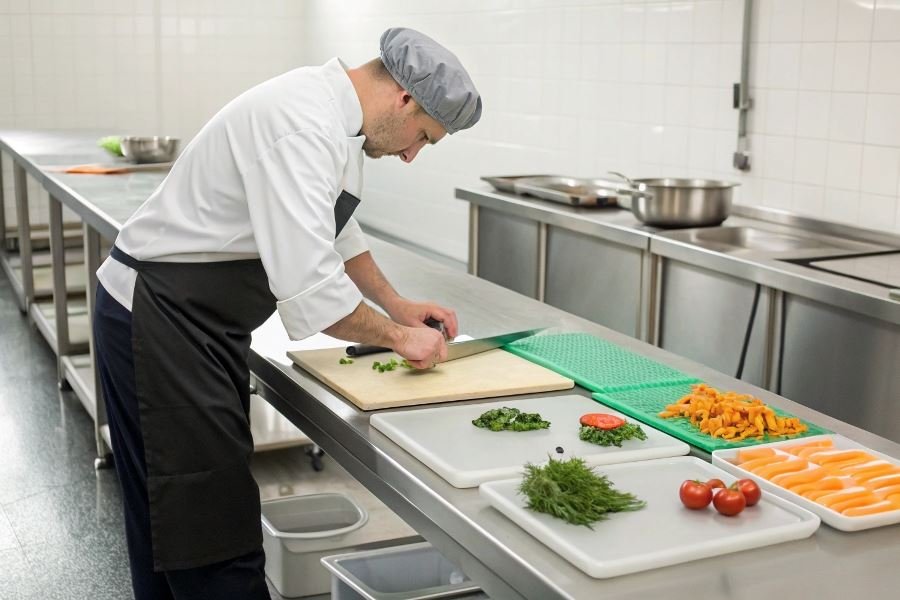
Ever watched a master chef’s knife glide through ingredients with surgical precision? That same level of performance happens at scale in commercial kitchens—but only with the right equipment foundation.
Behind every efficiently-run food production facility stands an unsung hero: the cutting table. These specialized workstations form the literal foundation of food preparation, directly impacting everything from worker productivity to food safety compliance. Choosing the right cutting table isn’t just about having a surface to work on—it’s about creating an environment where precision, safety, and efficiency converge.
The safety-efficiency connection
Food safety isn’t negotiable. A properly designed cutting table prevents cross-contamination through features like antimicrobial surfaces, designated zones for different food types, and proper drainage systems. The FDA reports that improper food handling contributes to thousands of foodborne illness cases annually—many preventable with proper equipment.
Beyond safety, the right table dramatically boosts production efficiency. Studies show workers at ergonomically designed stations experience 30% less fatigue and achieve 25% higher output rates.
Cutting table landscape
Today’s market offers several distinct categories:
- Stainless steel tables: The industry standard, offering durability and sanitation
- Polyethylene cutting surfaces: Gentle on knife edges, easily sanitized
- Specialized butcher blocks: For specific meat processing applications
- Integrated systems: Tables with built-in sinks, storage, and waste management
Critical selection factors
When evaluating options, prioritize:
- Material composition that meets food safety regulations
- Size and configuration appropriate for your production volume
- Ergonomic design that reduces worker strain
- Cleaning accessibility for thorough sanitation
- Durability under your specific production conditions
The right cutting table isn’t merely a purchase—it’s an investment in your operation’s foundation.
Essential Factors for Selecting the Perfect Cutting Table
When setting up a food production facility, the cutting table serves as the central workstation where precision, safety, and efficiency converge. Selecting the right cutting table isn’t merely about finding a flat surface—it’s about investing in a cornerstone piece of equipment that directly impacts your product quality, worker satisfaction, and operational efficiency.
Food-Safe Materials: The Non-Negotiable Foundation
The material composition of your cutting table isn’t just a preference—it’s regulated by strict food safety standards. When evaluating how to choose a cutting table for food production, material selection should be your first consideration as it directly impacts both safety compliance and longevity.
Stainless Steel: The Gold Standard
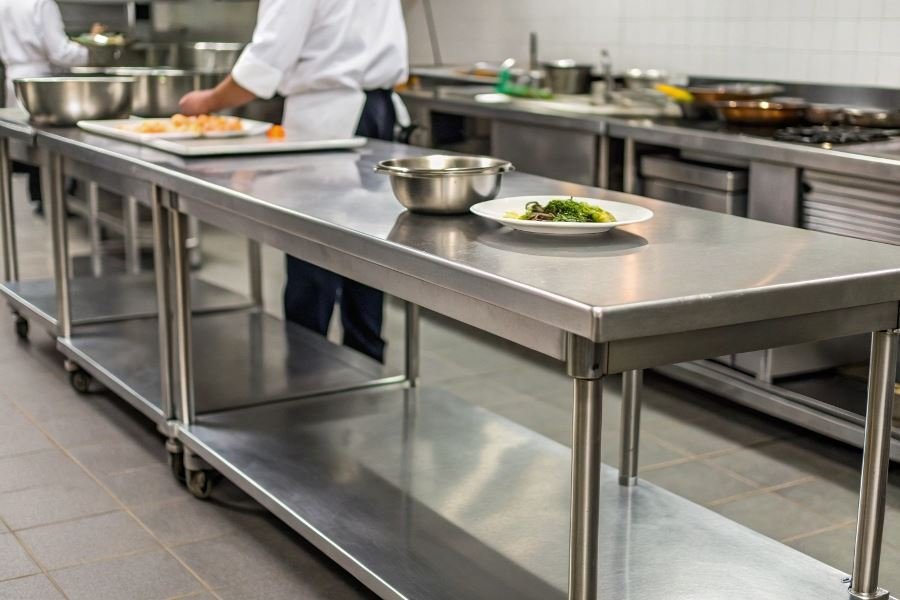
304 or 316 grade stainless steel remains the premier choice for cutting surfaces in food production environments. Why? Its non-porous surface prevents bacterial harboring, while its resistance to corrosion, chemicals, and heat makes it virtually indestructible in food processing conditions. Tables from manufacturers like John Boos feature seamless welding that eliminates crevices where bacteria might hide.
High-volume operations should consider 16-gauge thickness or greater for maximum durability under constant use.
Food-Grade Plastics: The Versatile Alternative
High-density polyethylene (HDPE) and polyvinyl cutting boards offer advantages for certain applications:
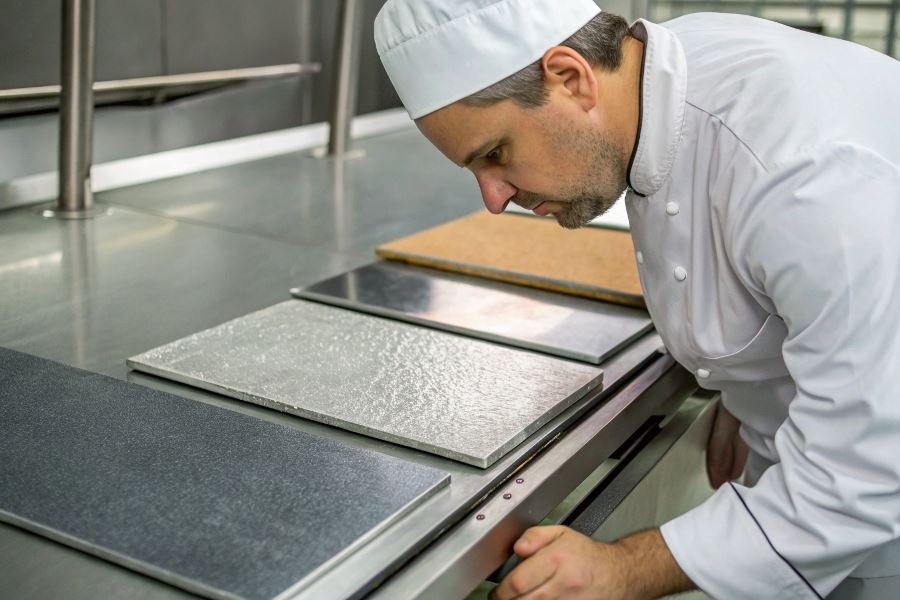
| Material | Best For | Maintenance | Lifespan |
|---|---|---|---|
| HDPE | Meat/poultry processing | Dishwasher-safe | 2-5 years |
| Stainless Steel | All-purpose/heavy use | Sanitizing solutions | 10+ years |
| Composite | Specialty applications | Moderate cleaning | 3-7 years |
FDA-approved surfaces must be certified for direct food contact and should be documented in your supplier’s specifications.
Size and Configuration: Matching Space to Workflow
The dimensions of your cutting table should align perfectly with both your available space and production volume requirements.
Production Volume Considerations
- Small batch operations (under 100 units daily): 48″ x 30″ tables typically suffice
- Medium production (100-500 units): 60″ to 72″ length provides adequate workspace
- High-volume facilities: Consider multiple 96″+ tables or custom configurations
Smart Configuration Options
Beyond basic dimensions, modern cutting tables from suppliers like Eagle Group offer modular designs that can transform your workflow:
- L-shaped and U-shaped configurations maximize corner spaces
- Island-style tables with access from all sides increase worker capacity
- Tiered surfaces separate preparation zones from cutting areas
- Integrated sinks and disposal systems streamline cleaning processes
The clearance around your table is equally important—allow minimum 36″ pathways for worker movement and equipment access.
Ergonomic Design: Where Productivity Meets Worker Health
The ergonomic features of your cutting table directly impact both productivity metrics and worker satisfaction.
Height Adjustability: The Game-Changer
Fixed-height tables (typically 34″-36″) serve general purposes, but adjustable-height models from manufacturers like Advance Tabco deliver superior ergonomics:
- Hydraulic or electric height adjustment (28″-42″ range)
- Preset height memory settings for shift changes
- Tilting surfaces for specialized cutting tasks
Fatigue-Reducing Features Worth the Investment
- Anti-fatigue matting integration
- Rounded edges to eliminate pressure points
- Foot rails that allow workers to shift weight
- Knife slots and tool organization systems that minimize reaching
The most effective cutting tables incorporate drainage channels, removable catch trays, and sloped surfaces that direct liquids away from the cutting area—features that simultaneously enhance food safety and reduce worker strain.
When selecting your cutting table, remember that this equipment forms the literal foundation of your production line—where quality standards are established and maintained through every slice, dice, and preparation step.
Making the Final Cut: Choosing Your Ideal Food Production Cutting Table
When investing in equipment that will serve as the backbone of your food production operation, cutting tables deserve careful consideration. The right choice balances immediate budget constraints against long-term value while meeting your specific operational needs.
Balancing Budget Against Long-Term Value
Cutting table investments follow a familiar pattern: higher upfront costs typically deliver greater longevity and performance benefits. A premium Hobart stainless steel cutting table priced at $3,500-5,000 might seem steep initially, but its 15+ year lifespan transforms the calculation.
The true cost equation extends beyond purchase price:
- Productivity improvements (faster processing)
- Reduced maintenance downtime
- Lower replacement frequency
- Enhanced food safety compliance
A budget polyethylene table at $800 might need replacement every 3-4 years, making it potentially more expensive over time. For operations processing high volumes, premium tables can deliver ROI within 18-24 months through efficiency gains alone.
The cheapest cutting table is rarely the most economical when measured across its operational lifetime.
Maintenance Requirements Across Materials
Different cutting table materials demand varying maintenance protocols:
| Material | Daily Cleaning | Deep Cleaning | Special Considerations |
|---|---|---|---|
| Stainless Steel | Mild detergent, rinse thoroughly | Weekly sanitizing solution | Avoid chlorine-based cleaners |
| HDPE/Polyethylene | Soap and water, food-safe sanitizer | Bi-weekly deep scrub | Replace when deep cuts develop |
| Butcher Block | Scrape, wash with vinegar solution | Monthly mineral oil treatment | Requires regular sanding |
Stainless steel tables from manufacturers like Vollrath offer the simplest maintenance regimen. Their non-porous surfaces prevent bacterial harborage and resist staining, though they require proper drying to prevent water spots.
HDPE cutting surfaces need regular inspection for deep cuts that could harbor bacteria. While they’re dishwasher-safe when removable, fixed polyethylene surfaces require manual sanitizing with food-grade quaternary ammonium compounds.
Butcher block tables demand the most rigorous maintenance, including daily cleaning, regular oiling, and periodic sanding to remove embedded material.
Top Recommendations By Production Environment
High-Volume Commercial Kitchens
The John Boos FBLG7230 stainless steel table with galvanized legs offers unmatched durability for intensive use. Its 14-gauge stainless top withstands heavy chopping while the undershelf provides crucial storage. The 6-inch backsplash prevents wall contamination during high-volume processing.
Specialty Meat Processing
For butchery operations, the Sani-Tuff rubber cutting board table combines the benefits of traditional butcher block with modern sanitation requirements. Its self-healing surface minimizes knife dulling while remaining firm enough for precision cutting. The material can be sanded to renew the surface completely.
Multi-Purpose Food Preparation
The Eagle Group T3060SE with poly top offers versatility for operations handling diverse food types. Its removable cutting surface allows for quick changes between protein and produce preparation, while the stainless frame provides stability and longevity.
When making your final decision, prioritize the specific demands of your production environment over general recommendations. The perfect cutting table isn’t universal—it’s the one that seamlessly integrates with your unique operational workflow while delivering lasting value.
Discover how to select the perfect cutting table for your food production facility. Learn about essential materials, size considerations, ergonomic features, and maintenance requirements that maximize efficiency, safety, and ROI in commercial food processing.
Discover how to select the perfect cutting table for your food production facility. Learn about essential materials, size considerations, ergonomic features, and maintenance requirements that maximize efficiency, safety, and ROI in commercial food processing.