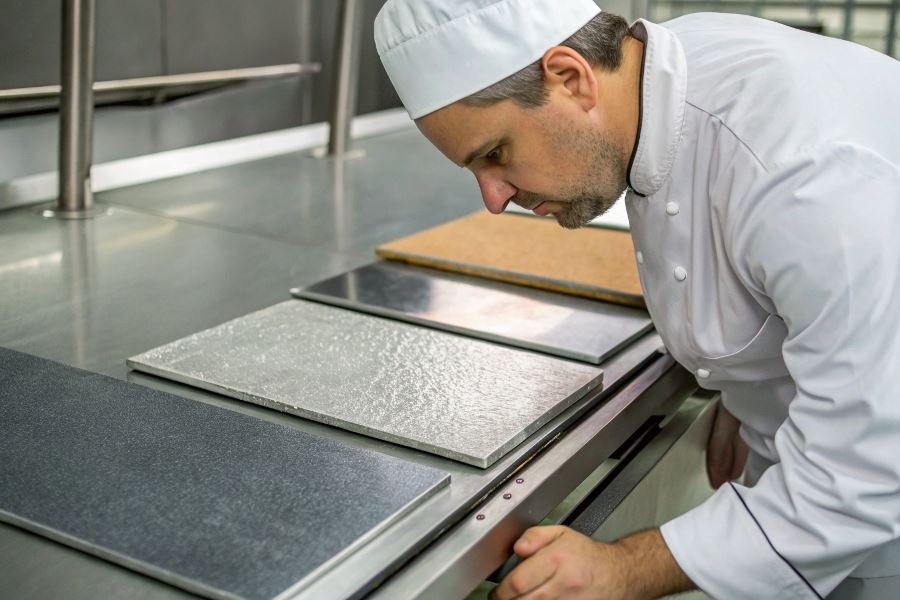
Ever watched a master chef select their cutting board with the same care they choose their knives? In manufacturing, that same level of discernment can mean the difference between excellence and mediocrity.
The surface on which cutting happens isn’t just a passive platform—it’s an active participant in the production process. Whether you’re laser cutting aerospace components or die-cutting leather goods, the material beneath your work profoundly influences precision, efficiency, and ultimately, your bottom line.
The material-performance connection
The relationship between cutting table materials and performance isn’t just theoretical—it’s measurable. Studies show that matching the right table material to your specific application can extend tool life by up to 30% while reducing material waste by similar margins.
“The cutting table is the unsung hero of precision manufacturing. Get it wrong, and everything that follows is compromised.” — Manufacturing Technology Quarterly
Production environments demand different solutions
Consider the stark differences between environments:
- High-volume textile operations require materials that resist fiber buildup and static
- Metal fabrication shops need surfaces that can withstand heat and heavy loads
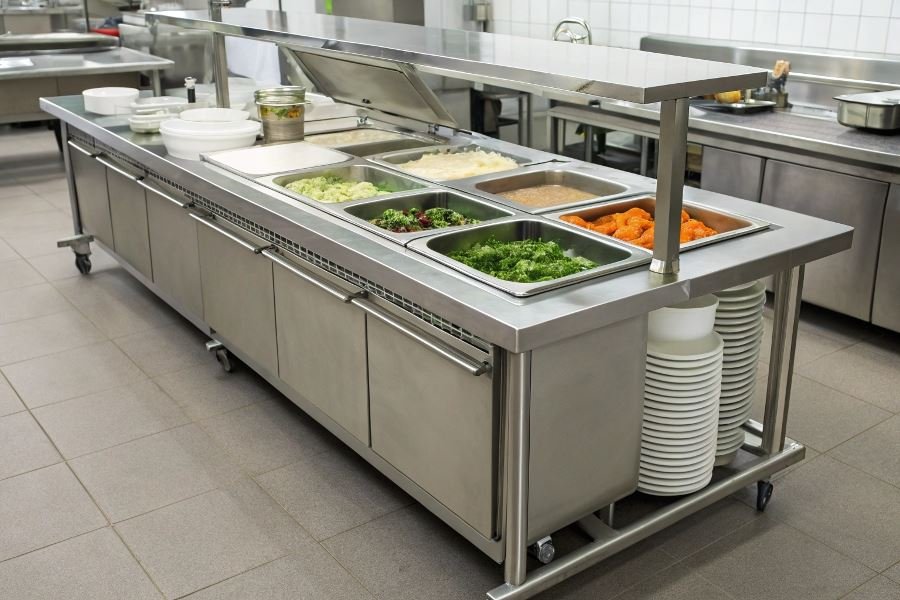
- Food processing facilities demand non-porous, sanitizable materials that meet FDA requirements
Decision factors beyond the obvious
When selecting cutting table materials, look beyond the initial price tag:
| Factor | Why It Matters |
|---|---|
| Thermal stability | Prevents warping during temperature fluctuations |
| Vibration absorption | Maintains precision during high-speed operations |
| Chemical resistance | Ensures longevity when exposed to coolants or solvents |
| Maintenance requirements | Affects long-term operational costs |
The right material choice creates a foundation for excellence that ripples through your entire production process—from tool longevity to finished product quality.
Essential Materials for Cutting Tables: The Ultimate Comparison
When selecting materials for cutting tables, manufacturers must balance durability, precision, and application-specific requirements. The right surface material can dramatically improve production efficiency, while the wrong choice might lead to costly errors and equipment damage. Materials for cutting tables: what is better for different types of production depends entirely on the specific demands of your manufacturing process, cutting methods, and production volume.
Metal-Based Solutions for Industrial Powerhouses
Steel platforms dominate heavy industrial applications, offering unmatched stability and load-bearing capacity. Carbon steel tables, typically 1/4″ to 1/2″ thick, provide exceptional durability for plasma and laser cutting operations where heat resistance is critical.
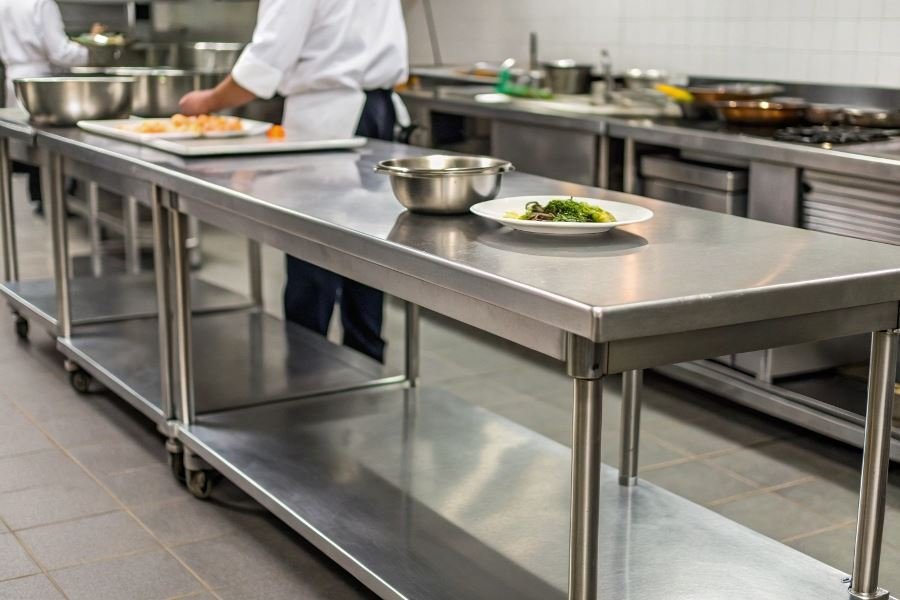
Stainless steel surfaces have revolutionized food processing and pharmaceutical manufacturing since their widespread adoption in the 1960s. Their non-porous, corrosion-resistant properties make them ideal for environments where sanitation is paramount.
Aluminum cutting surfaces deliver an impressive strength-to-weight ratio, making them increasingly popular for:
- Mobile cutting stations
- Modular production setups
- Applications requiring frequent reconfiguration
| Material | Weight (relative) | Corrosion Resistance | Cost Factor | Best Applications |
|---|---|---|---|---|
| Carbon Steel | High | Low-Medium | $$ | Heavy industrial, plasma cutting |
| Stainless Steel | High | Excellent | Food processing, chemical exposure | |
| Aluminum | Medium | Good | $$$ | Portable stations, medium-duty work |
Wood and Composites: Versatility Champions
Medium-density fiberboard (MDF) offers an economical solution for light to medium production environments. Its uniform composition prevents warping and provides consistent support for cutting operations.
Hardwood surfaces like maple and oak deliver exceptional durability combined with shock absorption properties that protect cutting tools. These materials excel in:
- Furniture manufacturing
- Woodworking shops
- Craft production facilities
Composite materials merge the benefits of multiple substrates. Modern plywood-polymer hybrids provide remarkable dimensional stability while maintaining reasonable costs for medium production environments.
Precision-Focused Specialized Materials
Phenolic resin composites represent the gold standard for precision cutting surfaces. These thermosetting plastics offer exceptional flatness tolerances (often within 0.005″) and dimensional stability under varying temperature conditions.
High-density polyethylene (HDPE) cutting surfaces have gained significant traction in fabrication shops. Their unique properties include:
- Chemical resistance
- Low friction coefficient
- Excellent machinability
- Minimal tool wear
Self-healing cutting mats have transformed prototype development and small-scale production. These polyvinyl chloride (PVC) composites feature multiple layers that “heal” after cutting, extending surface life dramatically while protecting blade edges.
| Material | Precision Rating | Self-Healing | Replacement Frequency | Ideal Applications |
|---|---|---|---|---|
| Phenolic | Excellent | No | 3-5 years | Precision machining, electronics |
| HDPE | Very Good | No | 2-4 years | Chemical processing, general fabrication |
| Self-Healing Mats | Good | Yes | 6-18 months | Prototyping, craft production |
The material selection process must account for your specific cutting methods, production volume, and precision requirements. While initial cost often drives decisions, the long-term performance benefits of premium materials frequently deliver superior return on investment through extended service life and improved production quality.
Making the Perfect Match: Cutting Table Materials for Your Production Needs
The decision matrix for material selection
Selecting the right cutting table material isn’t just a purchase—it’s a strategic investment in your production capabilities. The optimal choice emerges when you align material properties with your specific workflow demands. Start by evaluating three critical factors: cutting method, workpiece characteristics, and production volume.
For laser cutting operations, aluminum honeycomb tables excel due to their minimal reflection and heat resistance. Meanwhile, Epilog Laser systems often pair perfectly with vector grid tables that minimize back reflection while providing adequate support.
Waterjet cutting demands materials with exceptional corrosion resistance. Stainless steel slat designs from manufacturers like Flow International offer the durability needed to withstand constant water exposure while providing necessary workpiece support.
For CNC routing, particularly with wood and composites, phenolic surfaces deliver the ideal balance of durability and machinability. The vacuum systems integrated into ShopSabre tables complement these materials by enhancing workpiece stability during high-speed operations.
Material selection becomes significantly more straightforward when you prioritize your most frequent applications rather than attempting to accommodate every possible scenario.
Value engineering your cutting surface investment
The true cost of a cutting table extends far beyond the initial price tag. A comprehensive value assessment must consider:
| Cost Factor | Short-Term Impact | Long-Term Consideration |
|---|---|---|
| Initial investment | Immediate budget impact | Typically 15-25% of total system cost |
| Maintenance requirements | Minimal early expenses | Can exceed 40% of initial cost over 5 years |
| Replacement frequency | None | Varies dramatically by material choice |
| Production efficiency | Immediate productivity gains | Compounds annually with proper selection |
| Scrap reduction | Immediate material savings | Significant cumulative savings |
Aluminum composite tables may command a 30-40% premium over basic steel options, but their extended lifespan often delivers superior return on investment for high-volume operations. Conversely, MDF surfaces offer economical solutions for light-duty applications despite requiring more frequent replacement.
The wisest investments balance immediate affordability with long-term operational benefits, recognizing that the cheapest option rarely delivers the greatest value.
Tomorrow’s cutting surfaces taking shape today
The cutting table landscape continues to evolve with several emerging innovations poised to reshape production capabilities:
-
Composite hybrid materials combining the thermal stability of ceramics with the impact resistance of advanced polymers are showing promising results in extreme cutting environments.
-
Modular reconfigurable systems from developers like Multicam allow production facilities to quickly adapt table configurations to changing job requirements without complete system overhauls.
-
Smart surfaces with embedded sensors are beginning to provide real-time feedback on cutting performance, material positioning, and system health—creating opportunities for predictive maintenance and quality control.
-
Environmentally optimized materials manufactured with reduced carbon footprints address growing sustainability concerns while maintaining performance specifications.
The most forward-thinking manufacturers are already exploring tables with integrated waste collection systems that dramatically reduce cleanup time between operations while improving workplace safety and air quality.
As production demands continue evolving, the ideal cutting table material will increasingly be one that adapts to changing requirements rather than forcing workflows to accommodate fixed limitations.
Discover the optimal cutting table materials for your specific production needs. Compare metal, wood, and specialized surfaces to enhance precision, durability, and efficiency in your manufacturing process.
Discover the optimal cutting table materials for your specific production needs. Compare metal, wood, and specialized surfaces to enhance precision, durability, and efficiency in your manufacturing process.