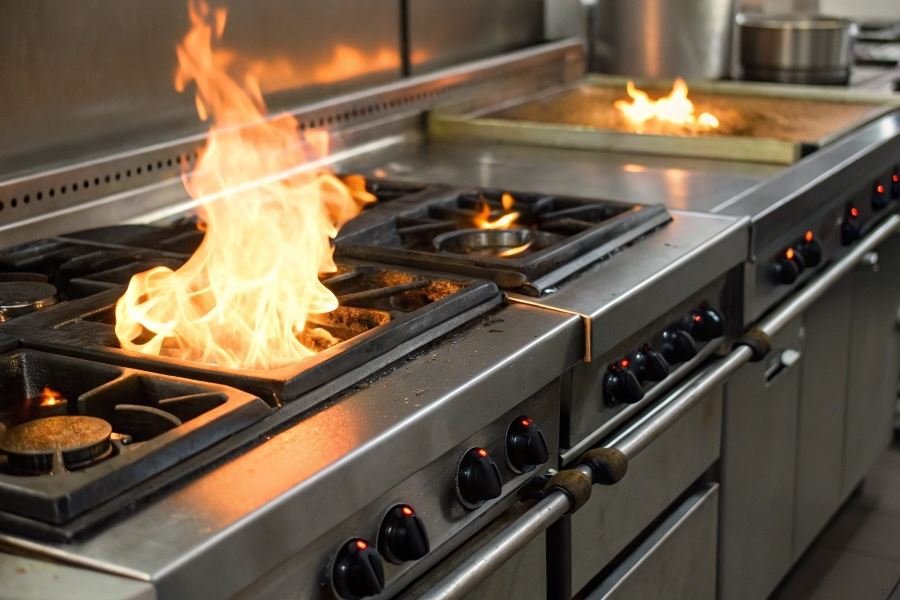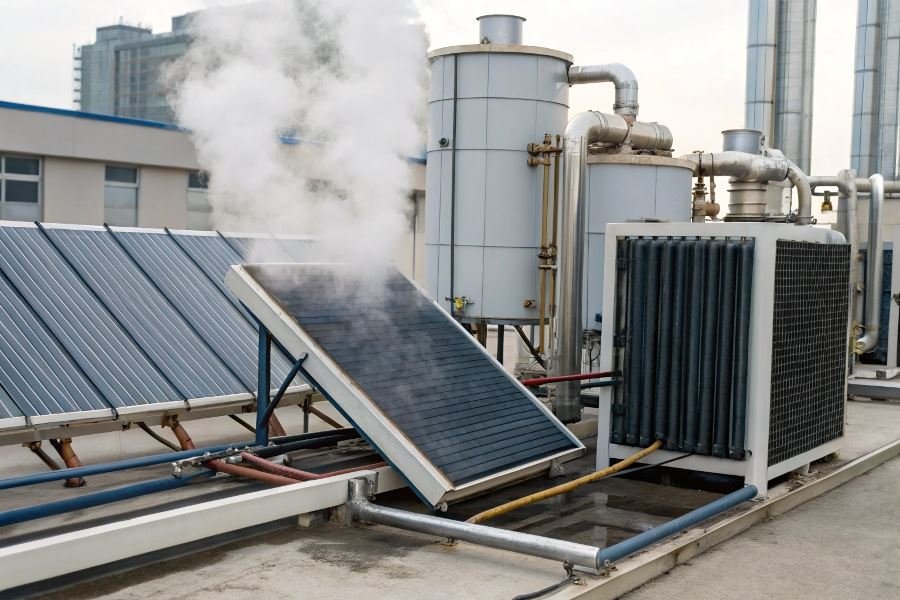
Ever walked into a server room and felt that blast of heat? Behind those walls of equipment lies one of manufacturing’s biggest headaches: how to manage thermal processes when every square inch counts. As production facilities shrink and demands grow, the thermal management puzzle has become increasingly complex.
Thermal processing lines—essential for everything from electronics manufacturing to food production—traditionally demanded generous floor space. But that luxury is disappearing fast. With urban manufacturing hubs commanding premium prices ($27-35 per square foot in many U.S. industrial parks) and production moving closer to consumption points, the race for compact thermal solutions has intensified.
The challenges are multifaceted. Engineers must balance thermal efficiency with footprint reduction while maintaining precise temperature control. Traditional systems struggle when squeezed into tight spaces—heat dissipation becomes problematic, maintenance access turns nightmarish, and energy efficiency plummets.
What’s driving this spatial revolution? Three factors:
- Urban manufacturing revival – Companies returning production to city centers
- Modular production systems – Plug-and-play manufacturing requiring flexible thermal solutions
- Energy cost pressures – Smaller systems typically consuming less power
Recent technological breakthroughs have transformed what’s possible. Micro-channel heat exchangers now deliver the same thermal transfer capacity at 40% the size of conventional units. Advanced insulation materials maintain thermal boundaries in millimeters rather than inches. Perhaps most impressive are the new vertical thermal stacking systems that utilize overhead space—traditionally wasted in manufacturing environments.
These innovations aren’t just space-savers; they’re redefining what’s possible in constrained production environments.
Maximizing Thermal Efficiency in Tight Spaces
When production floor real estate comes at a premium, engineers face the challenge of maintaining thermal performance without sacrificing valuable space. The latest innovations in compact thermal line technology have revolutionized how manufacturers approach heat management in constrained environments.
Compact solutions for thermal lines in limited space conditions have become essential for industries ranging from food processing to pharmaceuticals, where every square foot matters. These systems deliver the same thermal transfer capabilities as their larger counterparts but with footprints reduced by up to 40%. The engineering behind these space-saving marvels combines advanced materials science with computational fluid dynamics to optimize every component.
Miniaturized Heat Exchangers That Pack a Punch
Today’s miniaturized heat exchangers represent a quantum leap in thermal efficiency. Alfa Laval’s micro-plate designs, for instance, deliver thermal transfer rates comparable to units three times their size. These compact powerhouses utilize:
- Intensified turbulence patterns
- High-density plate configurations
- Precision-engineered flow channels
The results speak volumes: a standard 12″ × 18″ miniaturized unit can handle thermal loads previously requiring equipment twice that size. Food processors implementing these systems report space savings of 35-50% while maintaining required temperature profiles.
The secret lies in the microgeometry of the plates themselves, where specialized corrugation patterns maximize surface area while minimizing overall dimensions.
Modular Components for Ultimate Installation Flexibility
Modular thermal line components have transformed how systems integrate into challenging spaces. Unlike traditional monolithic designs, these building-block approaches allow for:
| Modular Advantage | Traditional Limitation | Space Benefit |
|---|---|---|
| Custom configurations | Fixed layouts | 25-30% footprint reduction |
| Vertical stacking options | Horizontal orientation only | Utilizes overhead space |
| Distributed placement | Centralized requirements | Works around existing equipment |
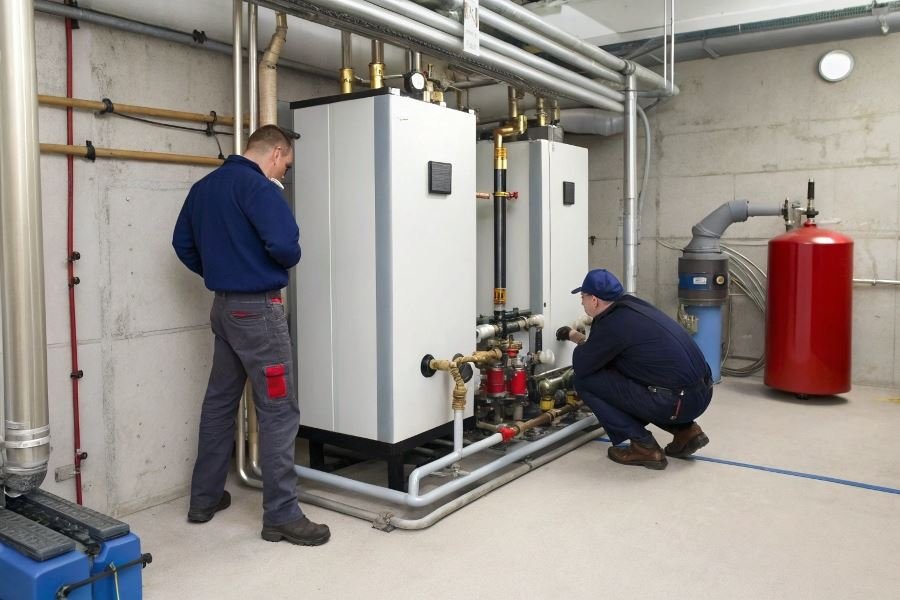
Bosch Packaging has pioneered snap-together thermal modules that can be arranged in L-shapes, U-configurations, or even split between different areas of a facility. This flexibility means thermal lines can now navigate around structural columns, fit into awkward corners, or utilize vertical space that would otherwise go unused.
Space-Optimized Insulation Technologies
The insulation surrounding thermal lines has undergone its own miniaturization revolution. Traditional materials required substantial thickness to achieve adequate thermal resistance, but advanced solutions have changed the equation dramatically.
Aerogel-based insulation from manufacturers like Aspen Aerogels delivers R-values up to five times higher than conventional materials at a fraction of the thickness. A mere 10mm layer provides thermal resistance equivalent to 50mm of mineral wool.
Other breakthrough technologies include:
- Vacuum-insulated panels with nanoporous cores
- Phase-change material (PCM) integrated barriers
- Reflective multi-layer systems with microscale air gaps
These innovations allow thermal lines to run closer to sensitive equipment, adjacent to walkways, or in spaces previously deemed too confined for proper insulation. The thermal efficiency remains exceptional while the spatial footprint shrinks dramatically.
By combining these three approaches—miniaturized exchangers, modular components, and advanced insulation—manufacturers can implement complete thermal solutions in spaces once considered impossible to utilize effectively.
Compact Thermal Solutions That Deliver Big Results
Real-world success stories across industries
When Midwest Precision Manufacturing faced a critical space crunch in their Chicago facility, they didn’t compromise on thermal processing capabilities—they revolutionized them. By implementing a vertically-stacked Heller Industries thermal solution, they reduced their footprint by 43% while maintaining throughput. This isn’t an isolated success story.
The medical device sector has embraced compact thermal solutions with particular enthusiasm. Boston-based Medtech Innovations installed a modular BTU International thermal processing system that occupies just 60% of their previous setup’s space while handling 15% more production volume. Their VP of Operations noted, “The ROI wasn’t just in square footage—it was in workflow efficiency.”
Electronics manufacturers have perhaps the most compelling case studies. When Foxconn implemented space-optimized thermal lines in their Texas facility, they reported a 22% increase in production capacity despite reducing the physical footprint by nearly a third.
“The most valuable real estate in manufacturing isn’t just the land your facility sits on—it’s the space inside your four walls.”
The dollars and sense of compact thermal solutions
The financial equation of compact thermal solutions extends far beyond the initial investment. Consider these key factors:
Initial investment vs. long-term savings:
| Cost Factor | Traditional System | Compact Solution | Difference |
|---|---|---|---|
| Equipment cost | $175,000 | $215,000 | +$40,000 |
| Installation | $45,000 | $38,000 | -$7,000 |
| Annual energy | $32,000 | $21,500 | -$10,500 |
| Floor space value | $72,000/yr | $42,000/yr | -$30,000/yr |
| 5-year TCO | $477,000 | $402,500 | -$74,500 |
The premium for compact equipment typically ranges from 15-30% above traditional systems, but the total cost of ownership (TCO) analysis reveals the true value. A manufacturing facility in Denver documented a 36-month payback period on their compact Despatch Industries thermal line, primarily through reduced real estate costs and energy savings.
Energy efficiency isn’t just an environmental bonus—it’s a major financial driver. Compact systems from leading manufacturers like Rehm Thermal Systems often incorporate advanced insulation and heat recovery systems that reduce energy consumption by 25-40% compared to their larger counterparts.
Tomorrow’s thermal technology is getting smaller and smarter
The future of compact thermal solutions is being shaped by three converging trends:
AI-optimized thermal profiles are enabling manufacturers to achieve precise results in smaller chambers. These systems continuously learn and adjust, reducing both processing time and energy consumption by up to 18%.
Modular, reconfigurable designs represent perhaps the most significant advancement. The latest systems from SECO/WARWICK can be expanded or reconfigured without major facility modifications, providing unprecedented flexibility.
Nanotechnology-enhanced heating elements are dramatically reducing warm-up times and improving temperature uniformity. These innovations allow for smaller chambers without sacrificing performance or consistency.
Industry analysts project the market for space-efficient thermal systems to grow at 12.7% annually through 2030, driven by manufacturing’s continued push toward facility optimization and flexible production capabilities.
The most forward-thinking manufacturers aren’t just buying compact equipment—they’re partnering with thermal solution providers to co-develop systems tailored to their specific space constraints and production requirements. This collaborative approach is yielding thermal solutions that integrate seamlessly with existing production lines while minimizing spatial requirements.
Discover innovative compact thermal line solutions that maximize efficiency in limited spaces. Learn about miniaturized heat exchangers, modular components, and space-optimized insulation technologies for your thermal management challenges.
Discover innovative compact thermal line solutions that maximize efficiency in limited spaces. Learn about miniaturized heat exchangers, modular components, and space-optimized insulation technologies for your thermal management challenges.