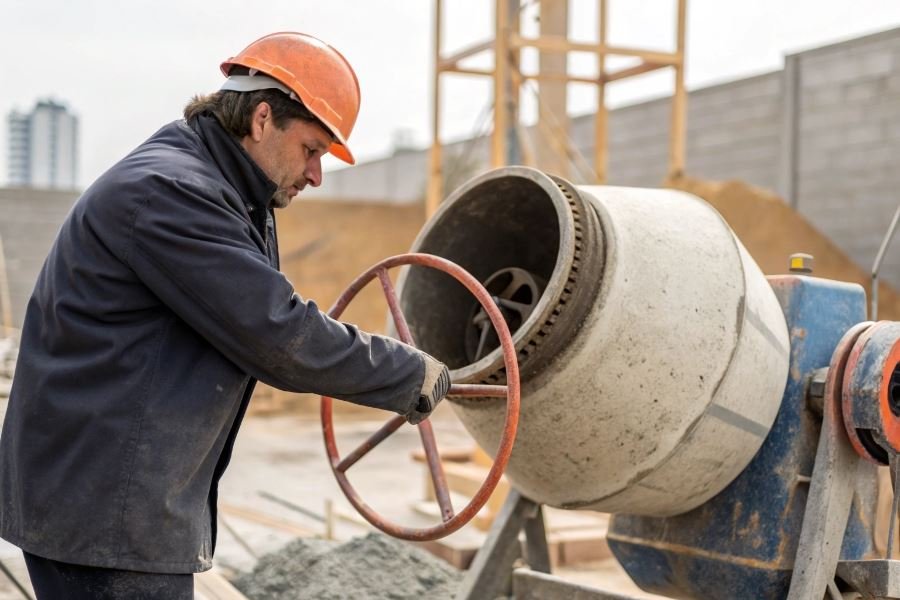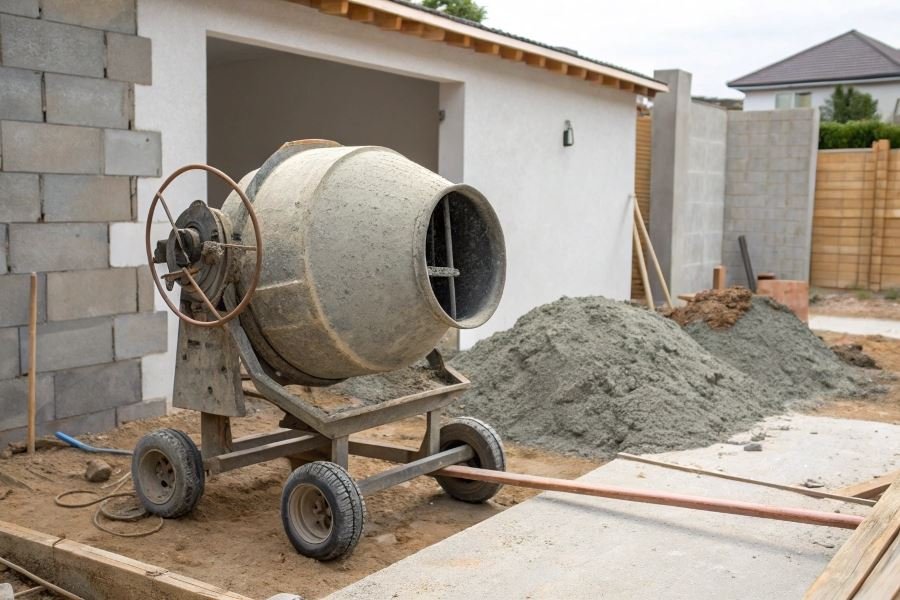
Ever watched a DIY project crumble—literally—because the concrete mix wasn’t right? The difference between professional-quality results and amateur disappointment often comes down to one crucial tool: your concrete mixer.
When tackling private construction projects, the mixer you choose directly impacts structural integrity, finish quality, and your sanity. Homeowners who invest time in selecting the right concrete mixer save countless hours of labor while achieving professional-grade results that stand the test of time.
The concrete mixer landscape has evolved dramatically, offering homeowners options that were once available only to professional contractors. Today’s market features everything from compact portable mixers perfect for small repairs to substantial drum models capable of handling foundation work.
Types of mixers that transform home projects
- Drum mixers: The workhorses of concrete mixing, rotating to blend materials thoroughly
- Paddle mixers: Ideal for smaller batches and mortar work, using vertical motion
- Continuous mixers: For larger projects requiring steady concrete supply
“The quality of your concrete work is only as good as the consistency of your mix.”
Decision factors that matter most
When evaluating mixers, focus on these critical elements:
- Project scope – Match capacity to your largest anticipated job
- Power source – Electric models offer convenience; gas provides mobility
- Durability – Look for reinforced drums and quality bearings
- Mixing action – Different designs produce varying consistency results
- Portability – Consider weight, wheel design, and towing options
The mixer that perfectly handles a patio extension might struggle with a foundation pour. Understanding your specific needs prevents costly mistakes and ensures your investment continues delivering value across multiple projects.
Essential Criteria for Selecting the Perfect Concrete Mixer
When embarking on a private construction project, the right concrete mixer can mean the difference between smooth progress and constant frustration. Selecting appropriate equipment requires careful consideration of several key factors that directly impact your workflow, budget, and final results.
Matching Mixer Capacity to Your Project
The first step in choosing a concrete mixer for private construction involves accurately assessing your project’s scope. Mixer capacity, measured in cubic feet or cubic yards, determines how much concrete you can prepare in a single batch.
Small residential projects typically require mixers with 3-5 cubic feet capacity. These compact units handle tasks like garden paths, small slabs, or fence post footings efficiently. For medium-sized projects such as driveways or larger patios, consider 6-9 cubic foot mixers that balance productivity with manageable size.
Larger foundations or substantial structural work may demand 10+ cubic foot capacity mixers to maintain workflow continuity.
| Project Type | Recommended Capacity | Batch Output |
|---|---|---|
| Small repairs, posts | 3-5 cu. ft. | ~150-250 lbs |
| Patios, walkways | 6-9 cu. ft. | ~300-450 lbs |
| Foundations, large slabs | 10+ cu. ft. | ~500+ lbs |
Remember that oversizing wastes money and space, while undersizing creates inefficiency through multiple batches and longer completion times.
Power Source Options: Making the Right Choice
The power source you select significantly impacts your mixer’s performance, portability, and operating costs.
Electric mixers offer clean, quiet operation ideal for residential areas. They require no fuel storage and minimal maintenance, but you’ll need reliable access to 110V or 220V power. Most residential models draw 1-2 HP, sufficient for smaller batches.
Gas-powered mixers provide excellent mobility and higher power output (typically 3-8 HP). These workhorses handle larger batches and tougher mixes but produce emissions and noise. Honda and Briggs & Stratton engines are industry standards for reliability.
Diesel options excel in heavy-duty applications with superior torque and fuel efficiency for extended operation. While more expensive initially, their durability and lower operating costs benefit larger projects.
Durability and Construction Quality Indicators
The construction quality of your mixer directly affects its lifespan and performance reliability. When evaluating durability, focus on these critical components:
-
Drum construction – Look for seamless, thick-gauge steel drums with reinforced rims. Cast iron or heavy-duty polyethylene options offer excellent durability.
-
Frame integrity – Welded steel frames with powder coating or galvanized finishes resist corrosion and withstand jobsite abuse.
-
Bearing quality – Sealed, self-aligning bearings require less maintenance and extend operational life.
-
Gear mechanisms – Cast iron gears outperform plastic alternatives for longevity, though they add weight and cost.
Premium mixers from manufacturers like DEWALT and Multiquip typically feature thicker materials, better bearings, and more precise manufacturing tolerances.
Examine the mixer’s tipping mechanism—smooth operation prevents strain and spillage. For drum mixers, check that paddle designs promote thorough mixing without dead spots.
Investing in quality pays dividends through reduced downtime, consistent performance, and extended equipment life. A well-built mixer from a reputable manufacturer might cost 20-30% more upfront but can deliver years of additional service, making it the economical choice for serious builders.
Making the Final Decision: Your Perfect Concrete Mixer Awaits
Choosing the right concrete mixer for your private construction project doesn’t need to feel overwhelming. After evaluating all the technical specifications and options, it’s time to make that final decision. Let’s cut through the noise and focus on what truly matters when selecting your ideal mixing companion.
Smart Budget Planning Without Sacrificing Quality
The price tag isn’t everything—but it certainly matters. Entry-level electric mixers typically start around $300, while premium gas-powered models can exceed $2,000. The sweet spot for most private construction needs falls between 500−800, where you’ll find reliable machines with sufficient capacity and durability.
Value indicators to watch for:
- Steel drum construction rather than plastic
- Reinforced gearing systems
- Cast iron components at critical wear points
- Warranty periods of 2+ years
Remember that the cheapest mixer often becomes the most expensive when you factor in premature replacement costs and project delays.
The Hidden Costs of Ownership
The sticker price is just the beginning of your relationship with a concrete mixer. Long-term ownership costs can significantly impact your total investment.
| Maintenance Factor | Electric Mixers | Gas-Powered Mixers |
|---|---|---|
| Annual Service Cost | $50-100 | $150-250 |
| Typical Lifespan | 7-10 years | 10-15 years |
| Replacement Parts | Less expensive | More expensive |
| Energy Costs | $0.15-0.30/batch | $0.50-0.75/batch |
Preventative maintenance makes all the difference. Simple practices like cleaning the drum thoroughly after each use, lubricating moving parts regularly, and storing your mixer in a covered area can extend its life by years.
Maintenance wisdom: The 15 minutes you spend cleaning your mixer after each use will save you thousands in the long run.
Electric mixers generally require less maintenance than their gas-powered counterparts, with no oil changes or carburetor adjustments needed. However, they typically offer less power and shorter service lives under heavy use conditions.
Top Performers for Private Construction
After analyzing hundreds of models and user experiences, these three concrete mixers stand out for different private construction scenarios:
Best Overall Value: YARDMAX YM0046
This 4.0 cubic foot electric mixer hits the perfect balance between capacity, durability, and price at around $600. Its steel drum, thermal protection system, and 1/2 HP motor make it ideal for most residential projects from patios to small foundations.
Premium Performance: Honda GX160 Gas Mixer by Kushlan
When you need serious power and portability, this 6 cubic foot gas-powered workhorse delivers. At approximately $1,800, it’s an investment, but the legendary Honda engine reliability and heavy-duty construction make it suitable for remote sites and larger projects.
Budget-Friendly Option: Goplus 2.2 Cubic Foot Electric Mixer
At under $350, this compact mixer handles smaller jobs admirably. While its capacity limits larger projects, its portability and low maintenance requirements make it perfect for occasional use and smaller repair work.
The perfect concrete mixer aligns with your specific project needs, budget constraints, and long-term construction plans. By balancing initial investment against quality requirements and factoring in maintenance considerations, you’ll find a machine that delivers reliable performance for years to come.
Discover how to select the perfect concrete mixer for your home building projects. Our comprehensive guide covers capacity requirements, power options, durability factors, and budget considerations to help you make a smart investment for quality results.
Discover how to select the perfect concrete mixer for your home building projects. Our comprehensive guide covers capacity requirements, power options, durability factors, and budget considerations to help you make a smart investment for quality results.