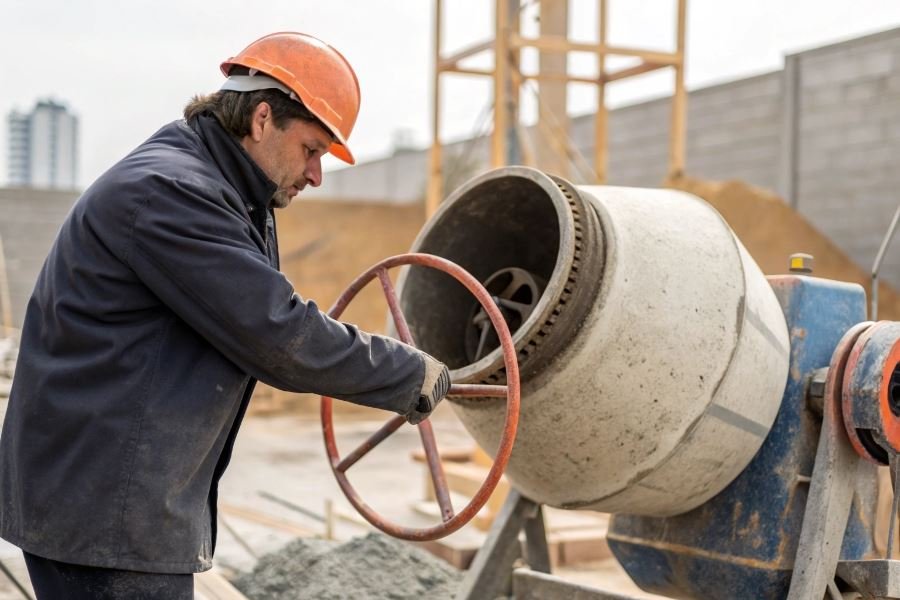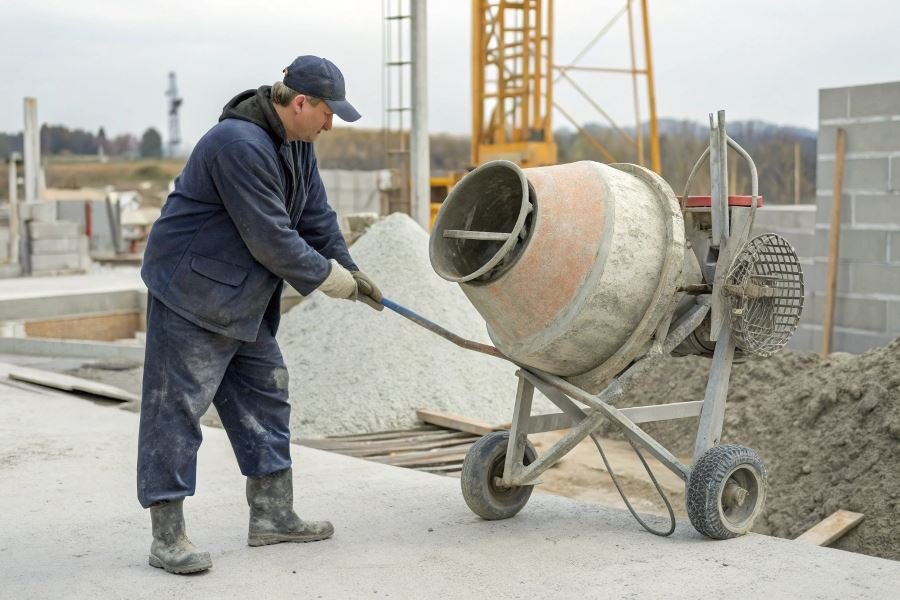
Ever wondered why some contractors get 10+ years from their concrete mixers while others barely make it to 3? The difference isn’t luck—it’s knowledge.
When you invest in a concrete mixer, you’re not just buying equipment; you’re acquiring a workhorse that can either drain your profits through constant repairs or boost your bottom line through reliable performance. The average concrete mixer repair costs between 500−2,000 depending on the component—expenses that quickly compound with improper operation.
The hidden costs of improper mixer operation
Most premature mixer failures stem from three preventable issues: improper loading techniques, inadequate cleaning protocols, and neglected maintenance schedules. These aren’t just minor oversights—they’re profit killers. When bearings seize or drums crack due to excessive loads, you’re not just paying for parts; you’re losing valuable production time.
The maintenance advantage
Implementing proper maintenance practices doesn’t just extend your mixer’s life—it transforms your operation. Contractors who follow manufacturer-recommended maintenance protocols report:
- 40% fewer unexpected breakdowns
- 30% lower annual repair costs
- Significantly improved concrete quality and consistency
The difference between a mixer that lasts a decade and one that fails prematurely often comes down to simple daily practices: proper loading sequences, thorough post-pour cleaning, and systematic inspection routines. These aren’t time-consuming luxuries—they’re essential business practices that protect your investment.
Mastering Concrete Mixer Operations for Maximum Lifespan
Concrete mixers represent a significant investment for any construction operation, and knowing how to properly operate a concrete mixer to extend its service life can save thousands in replacement and repair costs. The difference between a mixer that lasts 5 years versus 15 years often comes down to these essential daily practices that many operators overlook.
Loading techniques that prevent mechanical strain
The loading sequence matters more than you might think. Always add water first (about 10% of your total water requirement), followed by aggregates, cement, and finally the remaining water. This method creates a protective cushion that reduces impact stress on the drum’s interior lining.
Never exceed the rated capacity of your mixer. While it might be tempting to squeeze in “just a little more,” overloading creates excessive torque on the drive system and accelerates wear on bearings and gears. For drum mixers, the optimal load is typically 60-65% of the drum volume to allow proper tumbling action.
The 3-2-1 loading method (three parts aggregate, two parts sand, one part cement) provides the most balanced weight distribution during the critical initial mixing phase.
Rotation speed and timing for optimal performance
Concrete mixers aren’t designed for maximum speed—they’re engineered for optimal speed. Most drum mixers perform best at 12-15 rotations per minute. Higher speeds don’t mix faster; they create centrifugal force that prevents proper mixing while straining the motor.
| Mixer Type | Optimal RPM | Warning Signs of Improper Speed |
|---|---|---|
| Drum Mixer | 12-15 RPM | Material sticking to sides, excessive noise |
| Pan Mixer | 20-30 RPM | Splashing, uneven consistency |
| Twin-Shaft | 25-35 RPM | Vibration, incomplete mixing |
Timing matters just as much as speed. The perfect mix requires patience. For most standard mixes, allow 3-5 minutes after all ingredients are loaded. Undermixing creates inconsistent concrete, while overmixing wastes fuel, strains components, and can actually reduce concrete quality by breaking down aggregates.
Pro tip: Listen to your mixer. Experienced operators can hear when the mix reaches optimal consistency—the sound changes from a heavy “slapping” to a smoother, more consistent rhythm.
Cleaning procedures that prevent premature failure
The most common cause of premature mixer failure isn’t operation—it’s neglect after operation. Hardened concrete becomes an abrasive that accelerates wear on every component it touches.
Immediate cleaning is non-negotiable. Within 15 minutes after emptying your batch, run a cleaning cycle with water and coarse aggregates (like 3/4″ gravel) at about 20% of your normal load capacity. This creates a scrubbing action that removes concrete buildup without damaging the drum.
For thorough cleaning:
- Rotate the drum at normal speed with clean water for 2-3 minutes
- Discharge all water completely
- Inspect drum interior with a flashlight
- Remove any remaining concrete with a high-pressure washer
- Apply a release agent to the drum interior (especially for diesel-powered mixers)
Never use acidic cleaners without manufacturer approval—they can damage seals and bearings while creating microscopic etching that actually makes future concrete adhesion worse.
Pay special attention to discharge chutes and blades, where buildup begins first. A wire brush and scraper should be standard equipment with every mixer. For Multiquip or IMER mixers, their proprietary drum sprays can extend liner life significantly when applied after thorough cleaning.
These operational practices might seem basic, but they’re the difference between replacing your mixer prematurely and enjoying years of reliable service from this essential piece of equipment.
Advanced Maintenance Strategies for Concrete Mixers
Concrete mixers represent a significant investment for any construction operation. While basic cleaning is essential, truly extending your mixer’s service life requires a strategic maintenance approach that goes beyond the fundamentals. Let’s explore the advanced practices that separate professionals from amateurs in concrete equipment management.
The power of preventive lubrication
The heart of any concrete mixer maintenance program is a consistent lubrication schedule. Bearings, gears, and drive components require specific lubricants applied at manufacturer-recommended intervals. Most professional-grade mixers need comprehensive lubrication every 50 operating hours, with critical points requiring attention every 10 hours.
Pro tip: Create a digital maintenance log that tracks operating hours and automatically generates lubrication alerts. This simple step can double bearing life in high-stress components.
Proper lubrication isn’t just about frequency—it’s about precision. Each component requires specific lubricant types:
| Component | Recommended Lubricant | Application Frequency |
|---|---|---|
| Main bearings | Lithium-based grease (NLGI #2) | Every 10 operating hours |
| Drive chain | Open gear lubricant | Weekly or 20 hours |
| Gearbox | SAE 90 gear oil | Check monthly, change quarterly |
| Drum rollers | High-temperature grease | Every 50 operating hours |
Identifying and replacing wear parts strategically
The most expensive repairs always stem from catastrophic failures that could have been prevented. Smart operators monitor wear indicators and replace components before they fail completely.
The mixer drum’s paddle assembly experiences the most abrasion and deserves particular attention. When paddles show more than 25% wear, replacement becomes more economical than continuing operation. This approach prevents the cascade of problems that occurs when worn paddles damage the drum interior.
Monitoring these critical wear points pays dividends:
- Drum paddles and blades – Replace when wear exceeds 1/4 inch from original thickness
- Drive belts – Look for cracks, glazing, or stretching beyond tensioner capacity
- Drum seals – Address immediately when leakage appears to prevent bearing contamination
- Roller bearings – Replace at first sign of roughness or noise, not after seizure
Establishing a parts inventory for these common wear items eliminates costly downtime. Most contractors find that maintaining $500-800 in critical spare parts saves thousands in emergency repair costs and lost productivity.
Seasonal protection strategies
Concrete mixers face different threats depending on the season, and adapting your maintenance approach accordingly dramatically extends service life.
During active construction seasons, daily cleaning remains paramount, but increased inspection frequency becomes equally important. Heat, dust, and intensive use accelerate wear patterns that might go unnoticed during normal operations.
For winter storage or extended downtime:
- Perform complete cleaning with pressurized water, ensuring no concrete residue remains
- Apply corrosion inhibitor to all metal surfaces after thorough drying
- Disconnect batteries or install a maintenance charger
- Store under protective covering with adequate ventilation
- Place on blocks to prevent tire damage during extended storage
The most overlooked aspect of seasonal protection is proper restart procedures. Before returning to service after storage, conduct a comprehensive inspection and lubrication routine, then operate the mixer unloaded for 15-20 minutes to redistribute lubricants.
By implementing these advanced maintenance strategies, your concrete mixer can deliver reliable performance well beyond its expected service life, transforming a depreciating asset into a long-term productivity tool.
Discover essential techniques for properly operating your concrete mixer to maximize its lifespan. Learn correct loading, optimal rotation speeds, and maintenance practices that prevent premature wear and costly repairs.
Discover essential techniques for properly operating your concrete mixer to maximize its lifespan. Learn correct loading, optimal rotation speeds, and maintenance practices that prevent premature wear and costly repairs.