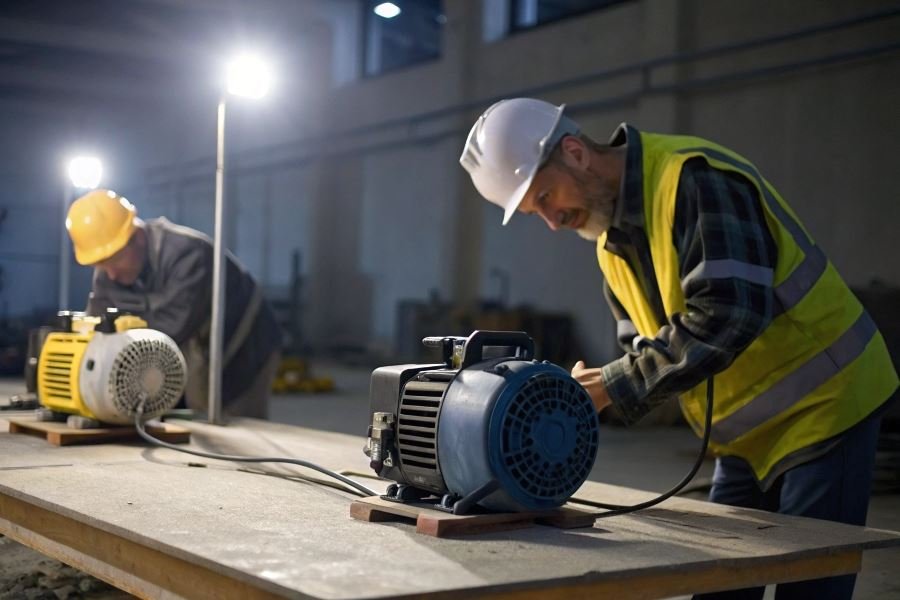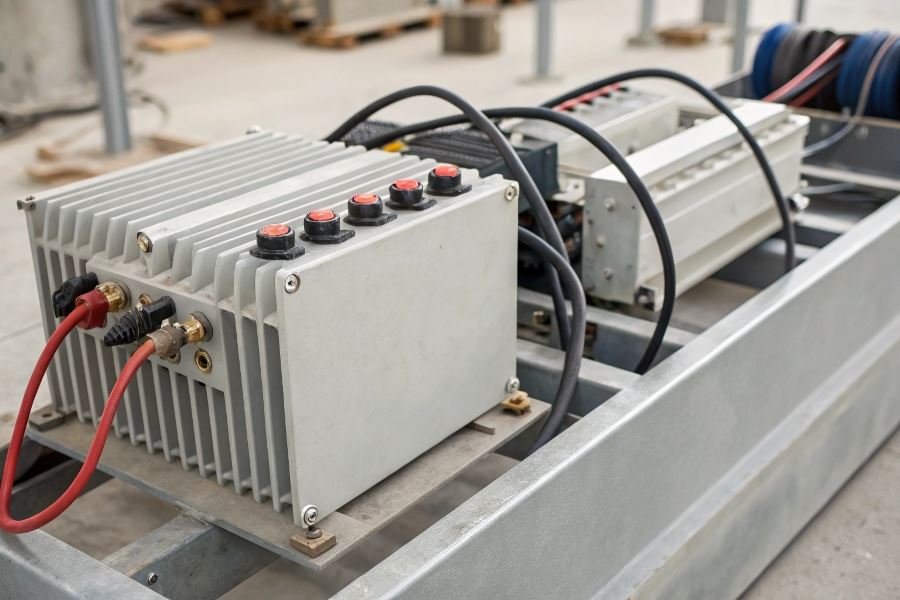
Ever watched a $5,000 piece of industrial equipment fail catastrophically in seconds? That’s exactly what happens when vibrator converters lack proper overload protection. The financial impact is immediate—but the production downtime that follows can be devastating.
Protection against overloads in converters for vibrators isn’t just technical jargon—it’s the invisible guardian that stands between smooth operations and costly disasters. These specialized power conversion systems transform standard electrical supply into the precise frequencies and voltages needed for industrial vibrators, but they’re vulnerable to a variety of electrical stresses.
Overloads come in multiple forms, each with its own destructive signature. Thermal overloads gradually cook sensitive components until failure. Current spikes can instantly destroy semiconductors. Voltage fluctuations stress insulation systems. Without proper protection mechanisms, these events cascade into complete system failure.
The consequences extend far beyond the converter itself. When a vibrator system fails:
- Production lines grind to a halt
- Product quality suffers from inconsistent vibration
- Maintenance teams face emergency repairs instead of preventive work
- Replacement parts may require weeks for delivery
Modern converter technology has evolved dramatically since the first solid-state designs appeared in the 1970s. Today’s systems incorporate sophisticated protection schemes including:
“The most expensive protection system is the one you didn’t install before catastrophic failure.” — Engineering maxim that proves itself true repeatedly in industrial settings
Understanding these protection mechanisms isn’t just for engineers—it’s essential knowledge for anyone responsible for industrial vibration equipment reliability and longevity.
Safeguarding Your Investment with Robust Protection Systems
When industrial vibrators fail due to electrical overloads, the consequences extend far beyond the immediate equipment damage. Production lines halt, deadlines slip, and repair costs mount. The converter—that critical component translating standard power into the precise electrical parameters your vibrator requires—needs robust protection mechanisms to prevent catastrophic failures.
Effective protection against overloads in converters for vibrators requires a multi-layered approach focusing on current management, temperature control, and voltage regulation. These systems don’t just protect your equipment; they extend operational life and maintain consistent performance even under challenging conditions.
Current Limiting: Your First Line of Defense
Current limiting circuits represent the frontline soldiers in your protection arsenal. These systems continuously monitor the electrical current flowing through the converter and respond instantly when thresholds are exceeded.
Fast-acting fuses remain a reliable mechanical safeguard, but modern converters incorporate sophisticated electronic current limiting that reacts in milliseconds—approximately 500 times faster than traditional fuses. This rapid response prevents damage before it can occur.
The most advanced systems employ:
- Adjustable trip points calibrated to specific vibrator specifications
- Auto-reset functionality for temporary overloads
- Fault memory that logs events for preventative maintenance
Schneider Electric converters feature proprietary overcurrent protection that can distinguish between momentary surges and genuine fault conditions, reducing nuisance trips by up to 78% compared to conventional systems.
Thermal Protection: Keeping Your Cool Under Pressure
Heat is the silent killer of electronic components. When converters work harder, they generate more heat—creating a dangerous feedback loop that can lead to catastrophic failure.
Modern thermal protection systems employ multiple strategies:
| Protection Method | Response Time | Effectiveness |
|---|---|---|
| Thermistors | 1-3 seconds | Good |
| Thermal imaging | <1 second | Excellent |
| Liquid cooling | Continuous | Superior |
The latest ABB industrial converters incorporate predictive thermal modeling that anticipates temperature spikes before they occur. These systems can automatically adjust operating parameters to prevent overheating while maintaining vibrator performance.
Temperature monitoring shouldn’t be passive—it should actively participate in system management.
Voltage Regulation: Maintaining Electrical Harmony
Voltage fluctuations represent a significant threat to converter longevity. Surges can instantly damage sensitive components, while brownouts can cause motors to draw excessive current as they struggle to maintain output.
Effective voltage protection includes:
- Input filtering to clean incoming power
- Surge suppression using metal oxide varistors (MOVs)
- Dynamic voltage regulation that compensates for line variations
Eaton power quality systems can maintain stable output voltage even when input fluctuates by ±20%, ensuring your vibrators receive precisely the power they need regardless of grid conditions.
The most sophisticated converters integrate these protection mechanisms into a comprehensive system that communicates status and potential issues before they become problems. This predictive approach transforms protection from reactive damage control into proactive system management—extending equipment life while reducing unplanned downtime by up to 43% according to recent industry studies.
When selecting converters for industrial vibrators, prioritize protection systems that match your specific application requirements. The modest premium for superior protection typically returns tenfold savings in reduced maintenance and extended equipment life.
Implementing Robust Overload Protection for Vibrator Converters
When your vibration equipment fails at a critical moment, the culprit is often inadequate protection systems in the power converter. Selecting, installing, and maintaining the right overload protection isn’t just technical busywork—it’s the insurance policy that keeps your operation running when electrical systems try to quit.
Choosing protection that matches your application
The protection system you select must align perfectly with your specific vibrator application. This isn’t one-size-fits-all territory.
For heavy-duty industrial vibrators processing abrasive materials, thermal overload relays with Class 20 or 30 trip curves provide the necessary delay to handle startup surges without nuisance tripping. These systems typically tolerate 600% of rated current for short periods—essential when your equipment faces significant startup torque requirements.
For precision applications like electronics manufacturing, faster-acting Class 10 protection with electronic monitoring capabilities offers superior sensitivity. These systems can detect subtle overload conditions before they cause damage.
Key selection factors to consider:
- Operating environment temperature range (standard protections degrade above 104°F/40°C)
- Vibration amplitude and frequency spectrum
- Duty cycle (continuous vs. intermittent operation)
- Starting current requirements (6-8× normal current for 5-10 seconds is common)
A pharmaceutical manufacturer I consulted with switched from basic thermal protection to a Siemens SIRIUS electronic overload system with harmonic filtering. Their vibrator-related downtime dropped by 78% in the first quarter after installation.
Installation practices that maximize protection performance
Even the best protection system fails when installed incorrectly. Proper implementation requires attention to both electrical and mechanical considerations.
The positioning of sensors is particularly critical. Mount thermal sensors directly on motor windings or as close as possible to heat-generating components. For vibrating equipment, use flexible connections that won’t fatigue and break under constant movement.
Installation best practices table:
| Component | Optimal Placement | Common Mistake to Avoid |
|---|---|---|
| Current sensors | Within 12 inches of load | Installing after long cable runs |
| Thermal protection | Direct contact with windings | Mounting on external housing only |
| Control wiring | Separate conduit from power | Bundling with power cables |
| Ground connections | Multiple points, low impedance | Single-point grounding |
Ensure all protection devices have dedicated control power sources that remain stable even during main power fluctuations. An uninterruptible power supply for control circuits is not excessive—it’s prudent.
Maintenance protocols that prevent protection failures
Protection systems themselves need protection through regular testing and maintenance. Establish a documented testing schedule based on equipment criticality and operating conditions.
For thermal protection systems, quarterly testing should include:
- Verification of trip settings against current application requirements
- Physical inspection of all connections for heat discoloration or looseness
- Simulation testing of trip functions using calibrated test equipment
- Documentation of response times compared to baseline measurements
Electronic protection systems require additional steps:
- Firmware/software updates from manufacturers
- Calibration verification using reference standards
- Data log analysis to identify developing trends before failures occur
The most overlooked maintenance item? Dust accumulation on heat sinks and cooling paths. A 1/8-inch dust layer can reduce cooling efficiency by up to 40%, causing premature tripping or, worse, protection system failure.
By implementing these selection, installation, and maintenance practices, your vibrator converter protection systems will deliver the reliability your operation demands. The modest investment in proper protection implementation pays dividends through extended equipment life and eliminated downtime.
Discover essential safeguards for vibrator converter overload protection. Learn about current limiting systems, thermal protection features, and voltage regulation components to prevent equipment damage and ensure optimal performance in industrial applications.
Discover essential safeguards for vibrator converter overload protection. Learn about current limiting systems, thermal protection features, and voltage regulation components to prevent equipment damage and ensure optimal performance in industrial applications.