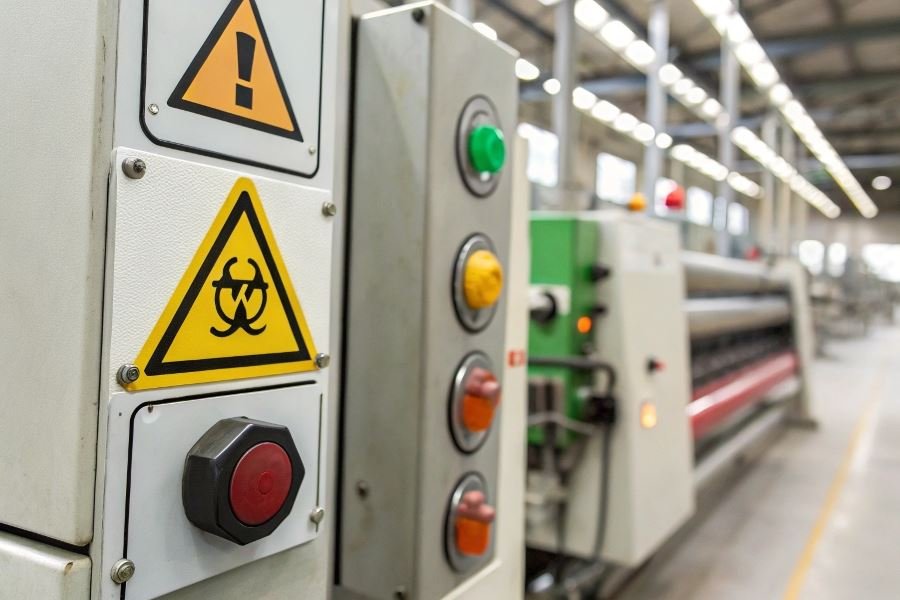
Ever wondered why that industrial mixer came plastered with yellow stickers that seem impossible to remove? Those aren’t just decorative elements—they’re your first line of defense against workplace accidents and potential lawsuits.
Properly placed warning labels on commercial equipment aren’t just good practice—they’re essential safeguards that protect both workers and businesses. The Occupational Safety and Health Administration (OSHA) reports that inadequate warnings contribute to approximately 15% of workplace injuries involving machinery. These small adhesive messengers serve as constant reminders of potential hazards, from electrical shock risks to pinch points that could claim fingers.
The legal landscape demands attention. Federal regulations, including those from OSHA and the American National Standards Institute (ANSI), establish clear guidelines for warning sticker placement, visibility, and content. Non-compliance doesn’t just risk worker safety—it exposes businesses to significant liability. Following a landmark 1984 case where a manufacturer paid $5.1 million for inadequate warnings, courts consistently hold companies accountable for proper hazard communication.
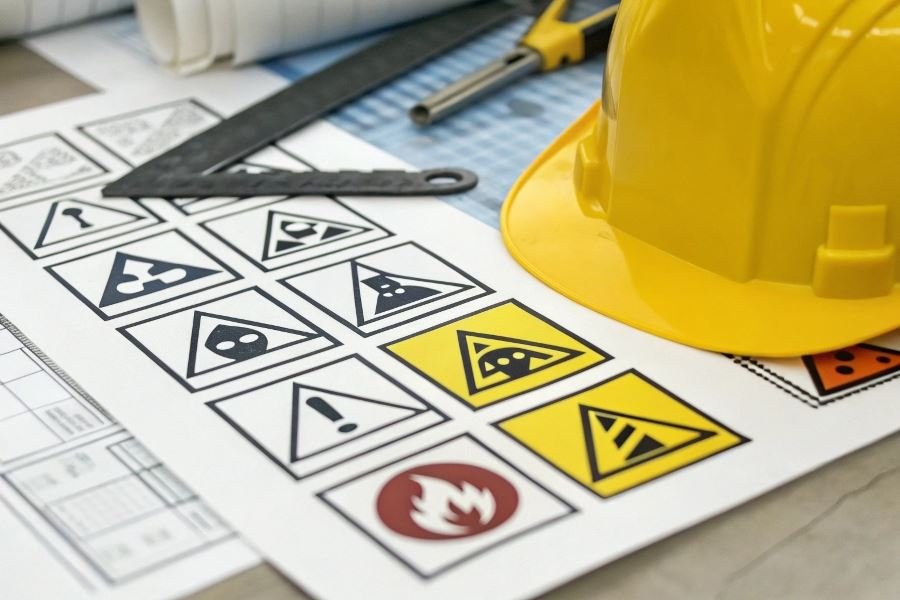
Warning stickers come in a strategic hierarchy:
- Danger stickers (typically red) indicate immediate hazards that could result in death
- Warning labels (usually orange) signal potentially hazardous situations
- Caution markers (generally yellow) highlight situations requiring awareness
- Notice stickers (commonly blue) provide important operational information
Each type serves a distinct purpose in the safety ecosystem, combining specific colors, symbols, and text to communicate effectively across language barriers. When properly implemented, this visual language of safety becomes an invaluable asset in preventing accidents before they happen.
Strategic Warning Sticker Placement That Saves Lives
Warning stickers on trade equipment aren’t just regulatory checkboxes—they’re your first line of defense against workplace accidents and liability issues. The strategic placement of these visual alerts can mean the difference between a safe operation and a preventable incident. Let’s dive into the science and art of proper warning sticker application that keeps your team safe and your equipment compliant.
Finding the Sweet Spot for Visibility
The effectiveness of warning stickers begins with location. When determining optimal placement for safety labels, consider the equipment’s operational zones and user interaction points. For rotating machinery like lathes or mills, place warnings at eye level within the operator’s natural line of sight—typically 48-66 inches from the floor. For overhead hazards on equipment like cranes or lifts, position warnings both at the control panel and near the hazard itself.
The proper placement of warning stickers on trade equipment requires understanding both human psychology and equipment functionality. Studies from the American National Standards Institute (ANSI) show that warnings placed in the top-left quadrant of a visual field receive approximately 27% more attention than those in other locations. For equipment with multiple hazard points, create a visual hierarchy with the most critical warnings positioned first in the operator’s workflow sequence.
Visibility testing tip: Stand at the operator’s position and scan the equipment naturally. If a warning isn’t immediately noticeable within 3 seconds, reconsider its placement.
Surface Preparation: The Unsung Hero of Adhesion
Even perfectly positioned warnings fail if they peel away. Surface preparation is the foundation of lasting sticker adhesion and requires methodical attention:
-
Clean thoroughly: Remove all oils, greases, and contaminants using isopropyl alcohol (minimum 91% concentration) or specialized industrial cleaners like 3M Adhesive Remover.
-
Temperature matters: Apply stickers when surface temperatures are between 50-100°F (10-38°C) for optimal adhesive activation.
-
Texture considerations: For textured surfaces, consider using conformable vinyl stickers that mold to irregular surfaces.
Adhesion failure is the primary reason warning stickers become ineffective over time.
| Surface Type | Recommended Cleaner | Drying Time | Special Considerations |
|---|---|---|---|
| Metal | Isopropyl Alcohol | 2-3 minutes | Remove rust/oxidation first |
| Plastic | Mild Detergent Solution | 5+ minutes | Avoid ammonia-based cleaners |
| Painted | Isopropyl Alcohol | 3-5 minutes | Test in inconspicuous area first |
| Glass | Glass Cleaner | 1-2 minutes | Ensure streak-free finish |
Positioning That Prevents Accidents
The spatial relationship between warnings and hazards is critical. Warning stickers should be positioned according to these principles:
Proximity principle: Place warnings within 12 inches of the specific hazard point whenever possible. For electrical panels on industrial equipment, position warnings directly on the panel door rather than adjacent surfaces.
Operator sightlines: Map the operator’s typical workflow and position warnings where they’ll be seen before engagement with hazardous components. For CNC equipment, this means placing warnings both at the programming station and near moving parts.
Redundancy strategy: For critical hazards, implement a two-tier warning system—a general warning at the operator station and specific warnings at each hazard point. Brady Safety Signs offers excellent multi-warning systems for complex equipment.
Industry insight: Equipment with multiple operators should have duplicate warnings visible from each work position. This redundancy increases compliance by 43% according to OSHA incident reports.
Remember that warning stickers complement—never replace—proper training and equipment guarding. The most effective safety systems layer physical barriers, visual warnings, and comprehensive training to create multiple layers of protection.
By following these guidelines, you’ll create a warning system that doesn’t just satisfy regulations but actively prevents accidents and protects your most valuable assets—your people.
Maintaining Warning Sticker Integrity for Equipment Safety
Warning stickers on trade equipment aren’t just colorful decorations—they’re critical safety components that prevent accidents, reduce liability, and ensure regulatory compliance. Yet these vital safety elements face constant threats from cleaning chemicals, environmental factors, and everyday wear. A comprehensive maintenance program keeps these crucial warnings visible and effective.
Strategic inspection schedules
The foundation of effective warning sticker maintenance is a consistent inspection routine. Equipment safety experts recommend:
- Daily visual checks during operator equipment walkarounds
- Weekly documented inspections focusing on high-touch areas
- Monthly comprehensive audits of all safety labels
- Quarterly UV exposure assessments for outdoor equipment
Research from the Equipment Safety Institute shows that stickers in high-traffic industrial environments begin showing degradation within 4-6 months without proper maintenance protocols. Implementing a tiered inspection schedule catches issues before they compromise safety.
“The most expensive warning label is the one that was there yesterday but isn’t today when someone needs it.”
For mission-critical equipment, consider implementing digital inspection tracking through platforms like SafetyCulture or InspectAll to ensure nothing falls through the cracks.
Replacement protocols that protect
When warning stickers show signs of damage, swift action prevents safety gaps. Effective replacement protocols include:
1. Condition-based triggers for replacement:
- Illegibility from any normal viewing distance
- Peeling edges exceeding 10% of sticker surface
- Color fading that reduces contrast by more than 30%
- Physical damage that obscures any safety information
2. Surface preparation techniques:
- Remove all residue from previous stickers using isopropyl alcohol
- Ensure surfaces are completely dry before application
- For textured surfaces, consider specialized high-bond adhesives
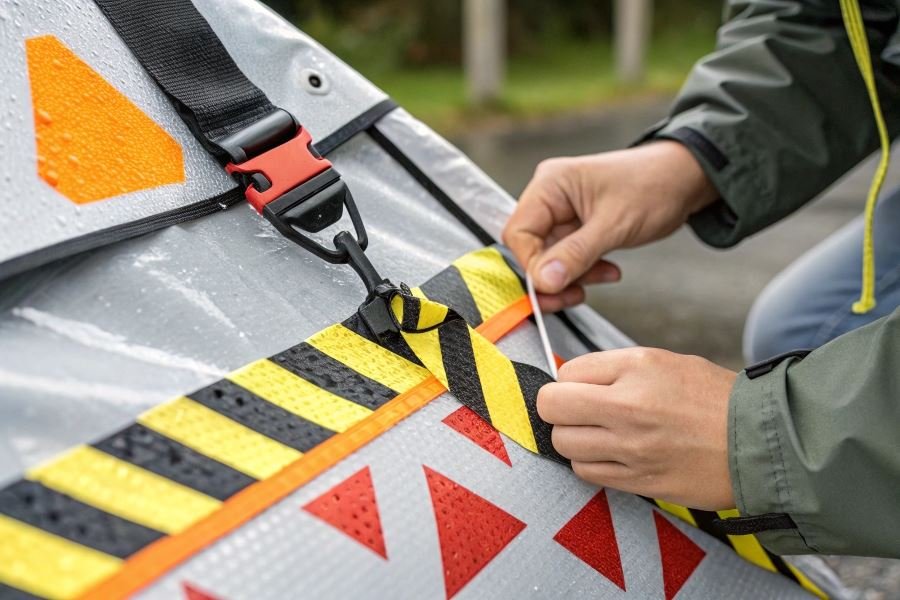
3. Application methods:
- Apply at room temperature (65-75°F) whenever possible
- Use squeegee tools to prevent air bubbles
- Allow 24-hour curing time before equipment operation
Maintain a reserve inventory of replacement stickers—industry best practice suggests keeping at least 15% more stickers than your total equipment count requires.
Documentation procedures for bulletproof compliance
Documentation transforms good safety practices into defensible compliance programs. Effective documentation includes:
| Documentation Element | Key Components | Update Frequency |
|---|---|---|
| Sticker Placement Map | Equipment diagrams with label locations | When equipment modified |
| Inspection Logs | Date, inspector, findings, actions taken | After each inspection |
| Replacement Records | Date, location, reason for replacement | With each replacement |
| Compliance Certificates | Regulatory standards met by current labels | Annually |
Store documentation both digitally and physically, with cloud backups through services like Dropbox Business ensuring accessibility during audits or incidents.
For multi-location operations, centralize documentation while maintaining site-specific records. This creates a defensible paper trail that demonstrates ongoing commitment to safety standards—crucial during regulatory inspections or in the unfortunate event of litigation.
By implementing these systematic approaches to warning sticker maintenance, you transform a basic compliance requirement into a comprehensive safety asset that protects both workers and your business interests.
Learn essential guidelines for proper warning sticker placement on trade equipment to ensure safety compliance, optimal visibility, and legal adherence. Includes surface preparation techniques and maintenance best practices for business owners.
Learn essential guidelines for proper warning sticker placement on trade equipment to ensure safety compliance, optimal visibility, and legal adherence. Includes surface preparation techniques and maintenance best practices for business owners.