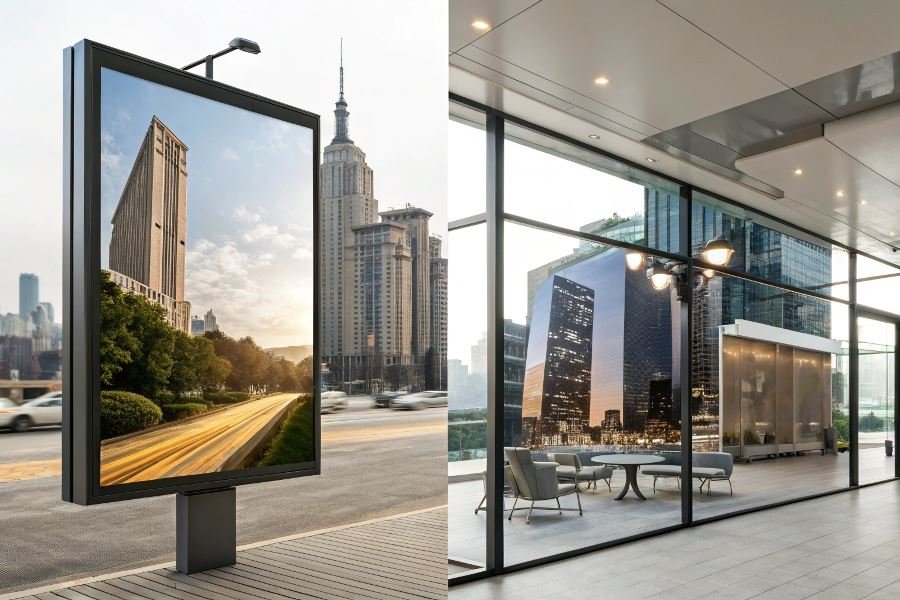
What if the most powerful communication tool wasn’t your smartphone, but something we’ve been using for over a century? Informational posters—once static fixtures on walls and billboards—have undergone a remarkable metamorphosis, emerging as dynamic visual storytellers in our increasingly complex information ecosystem.
The journey of poster design has been nothing short of revolutionary. From the bold propaganda posters of World War II to today’s interactive digital displays, the evolution reflects our changing relationship with information. The traditional boundaries between print and digital have dissolved, creating hybrid approaches that leverage both tangible presence and digital flexibility.
Effective visual communication has become non-negotiable in our attention-scarce world. Studies show viewers retain 65% of information when paired with relevant imagery, compared to just 10% with text alone. This cognitive reality has pushed designers to develop sophisticated visual hierarchies that guide viewers through complex data without overwhelming them.
“The best informational posters don’t just inform—they transform understanding through visual clarity.”
Three key factors are driving innovation in this space:
- Data visualization sophistication: Complex information now transforms into intuitive visual narratives
- Accessibility consciousness: Inclusive design principles ensure information reaches diverse audiences
- Environmental responsiveness: Smart posters that adapt to viewer behavior and environmental conditions
The fusion of traditional graphic design principles with emerging technologies has created a renaissance in informational poster design. What began as simple printed notices has evolved into a sophisticated communication medium that bridges art, science, and technology—all while maintaining its fundamental purpose: making complex information immediately understandable.
The Evolution of Information Display
The landscape of informational poster design has undergone a remarkable transformation in recent years. What once served as mere static displays has evolved into sophisticated communication tools that engage, inform, and even interact with viewers in unprecedented ways.
Modern trends in the design of informational posters reflect broader shifts in our visual culture, technological capabilities, and environmental consciousness. Today’s most effective designs balance aesthetic appeal with functional clarity, creating displays that not only capture attention but also convey complex information with remarkable efficiency.
Minimalism meets data visualization
The minimalist approach to poster design has matured beyond simple aesthetic preference into a powerful communication strategy. Contemporary designers are embracing the “less is more” philosophy with renewed purpose, stripping away decorative elements to let data take center stage.
Data-focused minimalism isn’t about emptiness—it’s about purposeful restraint. The most effective informational posters now feature:
- Clean, uncluttered layouts with strategic use of negative space
- Limited color palettes (often 2-3 colors maximum)
- Typography as a design element rather than mere text
- Visualization techniques that transform complex data into intuitive graphics
Adobe Creative Cloud’s latest visualization tools have enabled designers to create stunning data representations that communicate at a glance what might take paragraphs to explain.
“The best informational posters don’t just present data—they reveal the patterns and relationships hidden within it.”
This approach has proven particularly effective in healthcare communications, financial reporting, and public transportation systems, where clarity and immediate comprehension are paramount.
Breaking the physical barrier
Perhaps the most revolutionary development in poster design is the integration of interactive and augmented reality elements. Static displays are giving way to dynamic experiences that respond to viewer engagement.
Interactive posters now commonly feature:
| Technology | Application | User Benefit |
|---|---|---|
| QR codes | Expanded content access | Deeper information exploration |
| NFC tags | Instant digital connections | Seamless physical-to-digital transition |
| AR markers | 3D visualization | Enhanced comprehension of complex concepts |
| Motion sensors | Responsive content changes | Personalized information delivery |
Museums have become early adopters, with institutions like the Smithsonian implementing AR-enhanced informational displays that allow visitors to see artifacts in their original context or witness historical events through their smartphones.
The sustainable information revolution
The third significant shift addresses the environmental impact of informational displays. Eco-conscious approaches have moved from niche consideration to industry standard.
Sustainable poster design now encompasses:
Materials innovation – Biodegradable substrates, plant-based inks, and recycled components have replaced traditional petroleum-based products without sacrificing visual quality.
Production efficiency – Digital printing technologies from companies like HP have reduced waste by enabling on-demand production and eliminating minimum order requirements.
End-of-life considerations – Designers now plan for a poster’s entire lifecycle, incorporating elements like seed-embedded papers that can be planted after use.
This sustainability focus resonates particularly with educational institutions and forward-thinking corporations seeking to align their communications with their environmental values.
The convergence of these three trends—minimalist data visualization, interactive technologies, and sustainable practices—has fundamentally transformed how information is presented in public and private spaces, creating more effective, engaging, and responsible visual communication tools.
Implementing Modern Trends in Poster Design
Practical applications across industries
Informational posters have evolved far beyond simple bulletin board notices. Today, healthcare organizations use augmented reality-enabled posters that allow patients to scan and access multilingual medical instructions. Financial institutions deploy interactive digital posters with embedded QR codes linking to investment calculators and market updates. Even manufacturing facilities utilize smart posters with NFC technology to deliver equipment maintenance procedures directly to technicians’ devices.
The retail sector has embraced dynamic pricing displays that update in real-time, while educational institutions implement layered information design—where complex data becomes accessible through thoughtful visual hierarchy. Museums have pioneered location-aware posters that change content based on viewer proximity, creating personalized experiences for visitors.
“The most effective informational posters today don’t just inform—they interact, adapt, and engage in ways that transform passive viewers into active participants.”
Transportation hubs represent another frontier, with digital wayfinding posters that adjust routes based on real-time congestion data. These applications demonstrate how modern poster design transcends aesthetics to deliver functional, contextual value.
Tools and resources for trend-aligned posters
Creating cutting-edge informational posters no longer requires a design degree. Adobe Express offers templates specifically optimized for information hierarchy, while Canva provides access to thousands of data visualization components. For those seeking more sophisticated options, Figma enables collaborative poster design with real-time feedback capabilities.
Resource libraries have similarly expanded. Unsplash and Pexels offer high-resolution imagery, while Flaticon provides iconography that maintains visual consistency. For typography, Google Fonts offers extensive options that work across digital and print applications.
The most significant advancement comes in specialized tools:
| Tool Category | Notable Examples | Primary Benefit |
|---|---|---|
| Data Visualization | Tableau, Datawrapper | Transform complex datasets into intuitive visuals |
| Augmented Reality | Artivive, Blippar | Add digital layers to physical posters |
| Accessibility | Stark, Color Oracle | Ensure designs work for all viewers |
| Animation | Lottie, Principle | Add motion to digital poster elements |
Future directions in poster design
The horizon for informational poster design reveals several transformative trends. Environmental sensors embedded in posters will allow content to respond to ambient conditions—adjusting brightness in changing light or modifying information based on weather patterns. Personalization algorithms will customize displayed information based on viewer demographics detected through anonymous computer vision.
Material innovation stands poised to revolutionize physical posters. E-ink technology continues to advance, creating ultra-low-power displays that maintain information for months without electricity. Biodegradable substrates with embedded seeds are gaining traction for temporary installations, allowing posters to be planted after use.
The integration of voice interaction represents another frontier. Voice-responsive posters that answer spoken questions are already in development, with applications ranging from museum exhibits to public health campaigns. This technology promises to make information more accessible while creating memorable multi-sensory experiences.
Perhaps most exciting is the emergence of community-generated poster systems. These platforms allow local stakeholders to contribute real-time information to neighborhood displays, creating dynamic information hubs that reflect community needs and knowledge.
These innovations point toward posters that don’t just communicate information but establish ongoing dialogues with viewers—transforming one-way communication into rich, contextual exchanges that adapt to both environment and audience.
Discover 7 cutting-edge trends transforming informational poster design, from minimalist data visualization to interactive AR elements and sustainable production methods. Learn how effective visual communication is evolving in the digital age.
Discover 7 cutting-edge trends transforming informational poster design, from minimalist data visualization to interactive AR elements and sustainable production methods. Learn how effective visual communication is evolving in the digital age.