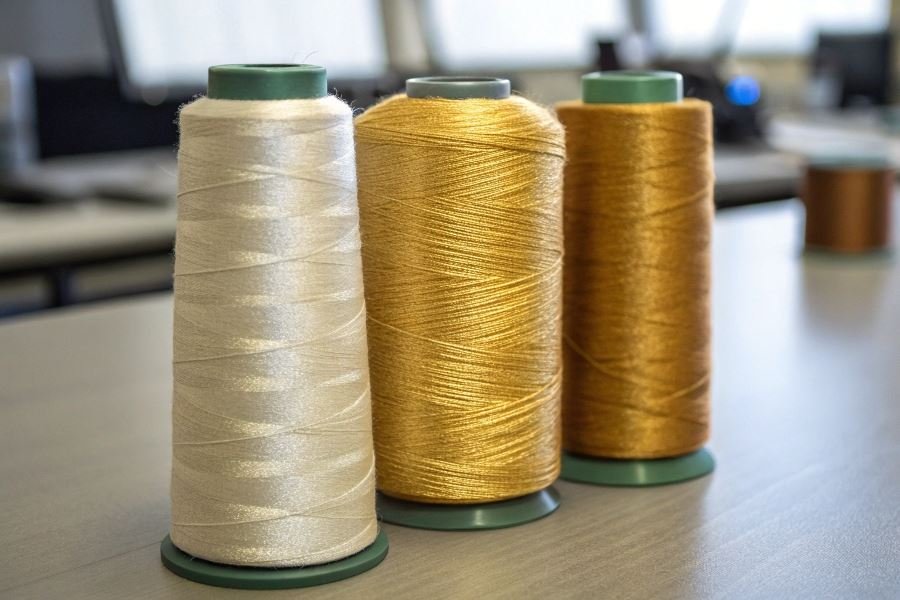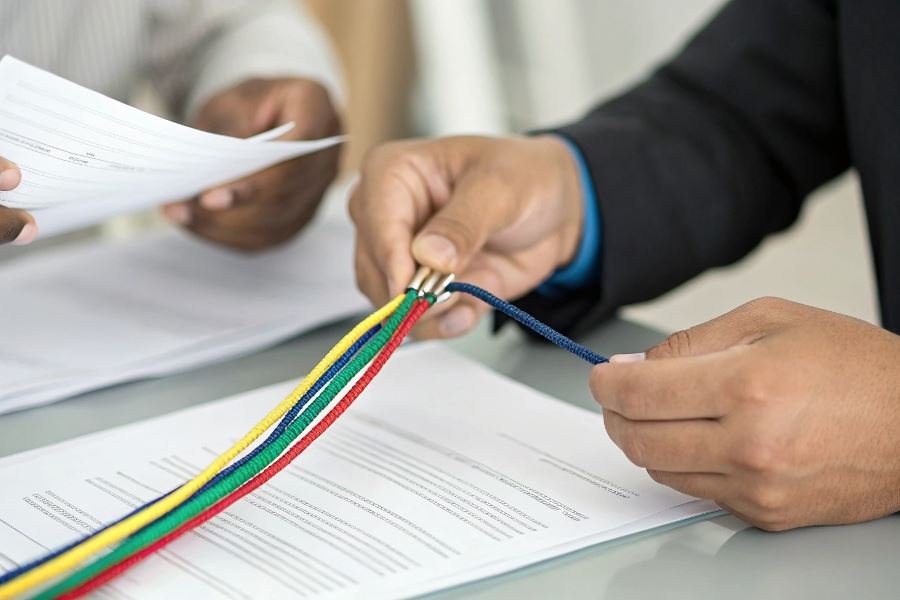
Ever wondered what keeps your financial legacy intact for decades? It’s not just the paper or the ink—it’s the humble thread binding those critical documents together. The right sewing thread can mean the difference between preserved records and deteriorated financial history.
When financial institutions archive loan agreements, property deeds, or investment portfolios, they’re not just storing paper—they’re preserving legal evidence that might need to withstand scrutiny 30 years later. The thread used in these bindings isn’t merely decorative; it’s a critical security component that prevents tampering and ensures document integrity.
Bank document binding follows strict protocols established by regulatory bodies. Since the Banking Act of 1933 (Glass-Steagall), financial record-keeping standards have evolved dramatically, with thread specifications becoming increasingly important. Today’s requirements typically demand threads that resist environmental damage, tampering attempts, and the inevitable passage of time.
Thread characteristics that matter
When selecting the appropriate thread for bank documents, three factors reign supreme:
- Tensile strength – The thread must maintain structural integrity under stress
- Acid resistance – pH-neutral threads prevent document deterioration
- Tamper evidence – Specialized threads that show visible signs if cut and reattached
Material considerations
| Thread Material | Longevity | Security Features | Cost Factor |
|---|---|---|---|
| Archival Cotton | 75+ years | Minimal | $$ |
| Polyester Blend | 50+ years | Moderate | $ |
| Security Fiber | 100+ years | Maximum | $$$ |
The most secure documents often utilize threads with embedded microprinting or UV-reactive elements—invisible guardians that silently protect your most valuable financial records from manipulation.
The Critical Thread: Engineering Security in Banking
When securing financial documents, the thread binding them together isn’t just a detail—it’s a critical security component. The right sewing thread creates a tamper-evident seal that protects the integrity of sensitive banking materials. Selecting appropriate thread for bank documents requires understanding specific technical properties that balance security with practical functionality.
Financial institutions worldwide have established strict protocols for how to choose sewing thread for bank documents, focusing on properties that ensure document security while maintaining long-term archival quality. These seemingly minor components play an outsized role in document authentication and fraud prevention systems.
Thread Strength: The Security Foundation
Thread strength represents the cornerstone of document security. Banking threads must withstand deliberate tampering attempts while maintaining structural integrity through decades of storage and handling.
Breaking strength measured in newtons (N) or pounds typically ranges from 15-30N for standard banking applications. High-security documents often require threads exceeding 25N breaking strength to ensure tamper resistance.
The tensile strength-to-diameter ratio provides the most accurate assessment of a thread’s security profile.
Banking-grade threads undergo specialized testing protocols:
| Test Type | Standard Requirement | High-Security Requirement |
|---|---|---|
| Breaking Strength | 15N | 25N |
| Abrasion Resistance | 500+ cycles | 1000+ cycles |
| UV Resistance | 80% strength retention | 90% strength retention |
| Chemical Resistance | Resistant to common solvents | Resistant to advanced solvents |
Material Selection: Security Through Composition
Thread material selection dramatically impacts both security and document longevity:
Cotton threads offer excellent archival properties with pH neutrality that prevents document degradation. Their natural fibers create visible disruption when tampered with but lack the tensile strength of synthetic alternatives.
Polyester threads deliver superior strength-to-diameter ratios and exceptional chemical resistance. Modern banking systems increasingly favor polyester for its resistance to environmental degradation and tampering attempts. Coats produces specialized polyester threads specifically engineered for security documents.
Linen threads represent the traditional gold standard for archival document binding. Their high breaking strength combined with excellent aging characteristics makes them ideal for permanent records, though their higher cost limits widespread adoption.
Hybrid threads combining polyester cores with cotton wrapping offer an optimal balance between security and document preservation.
Thread Specifications: The Technical Details
Thread thickness specifications follow standardized measurement systems:
- Tex rating (weight in grams per 1000 meters) typically ranges from Tex 18-40 for banking applications
- Ticket number (inverse relationship to thickness) with banking documents typically using 30-50 ticket thread
- Denier measurement for synthetic threads, with 150-300 denier common in security applications
Banking documents require precise thread diameter control, typically maintaining ±0.02mm tolerance to ensure compatibility with automated binding systems and security verification equipment.
Thread color selection isn’t merely aesthetic—it serves critical security functions. High-contrast threads against document backgrounds improve tamper detection, while specialized UV-reactive or color-shifting threads provide additional authentication layers.
The seemingly simple act of selecting thread for financial documents reveals itself as a sophisticated security engineering challenge—one where material science meets document security in the ongoing battle against financial fraud.
Best Practices for Thread Selection in Banking Documentation
Meeting Industry Standards for Document Integrity
Banking documentation requires meticulous attention to detail—right down to the thread that binds it. Financial institutions must adhere to strict regulatory frameworks established by organizations like the American National Standards Institute (ANSI) and the International Organization for Standardization (ISO). These standards aren’t arbitrary; they ensure document authenticity and longevity in an industry where record preservation can have legal implications decades later.
The banking sector typically requires threads that meet ISO 9706 standards for permanence, which mandates materials that resist deterioration over time. For high-security documents, many institutions follow Federal Reserve specifications that call for tamper-evident binding techniques using specialized threads with unique properties.
Thread composition matters tremendously. Polyester threads (particularly those with a minimum tensile strength of 3.5 pounds) have become the gold standard due to their resistance to moisture, chemicals, and UV degradation. Cotton threads, while historically common, are now primarily used for specific archival applications where acid-free properties are paramount.
The thread that binds your banking documents isn’t just a detail—it’s a security feature that financial regulators take seriously.
Storage and Handling: Preserving Thread Integrity
Even the highest quality thread can fail if improperly stored or handled. Temperature and humidity control represent the cornerstone of proper thread maintenance. The ideal storage environment maintains 65-75°F with relative humidity between 40-60%—conditions that prevent both brittleness and mold growth.
Thread spools should never be stored in direct sunlight or fluorescent lighting, as UV exposure degrades synthetic fibers over time. Many professional document services use specialized thread cabinets with humidity control features to maintain optimal conditions.
Handling protocols are equally critical. Threads should be touched with clean, dry hands or cotton gloves to prevent oil transfer. When threading binding equipment, avoid creating sharp bends or kinks that compromise structural integrity.
Professional Quality Indicators and Expert Recommendations
Document specialists evaluate thread quality through several key metrics:
| Quality Indicator | Professional Standard | Why It Matters |
|---|---|---|
| Tensile Strength | Minimum 3.5 lbs | Prevents document separation during handling |
| Colorfastness | Grade 4+ on AATCC scale | Ensures no bleeding onto documents |
| Knot Strength | 90%+ of linear strength | Critical for secure binding points |
| Elongation | <15% under tension | Maintains document alignment over time |
When selecting thread for banking applications, document preservation experts recommend:
-
Choose bonded threads for mechanical binding systems. The bonding process creates a smooth surface that reduces friction and prevents fraying during the binding process.
-
Verify certification documentation from manufacturers like Coats or A&E that specifically addresses archival quality and compliance with financial industry standards.
-
Test thread performance before implementation by subjecting samples to accelerated aging processes. Professional document services often use humidity chambers and UV exposure tests to simulate decades of storage.
-
Consider specialized security threads with embedded verification features for particularly sensitive documentation. These may include fluorescent markers visible only under specific light conditions or microprinted identifiers.
The thread selection process might seem excessive to outsiders, but document preservation professionals understand that this seemingly minor component can determine whether critical financial records maintain their integrity and legal standing for the required retention period—often 7-10 years for standard banking documents and potentially decades for mortgage documentation.
Discover the essential properties of secure thread for bank document binding. Learn about optimal materials, strength requirements, and industry standards to ensure document preservation and compliance.
Discover the essential properties of secure thread for bank document binding. Learn about optimal materials, strength requirements, and industry standards to ensure document preservation and compliance.