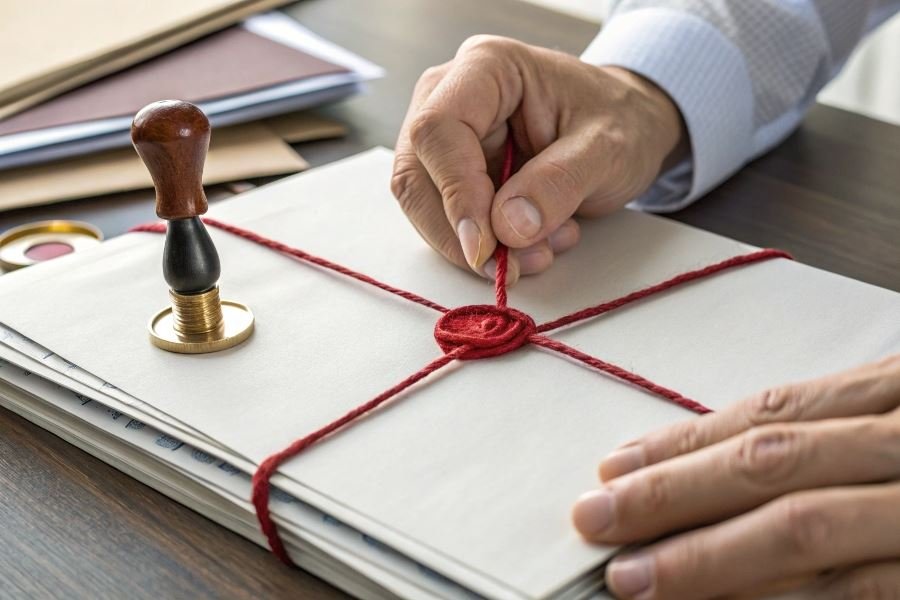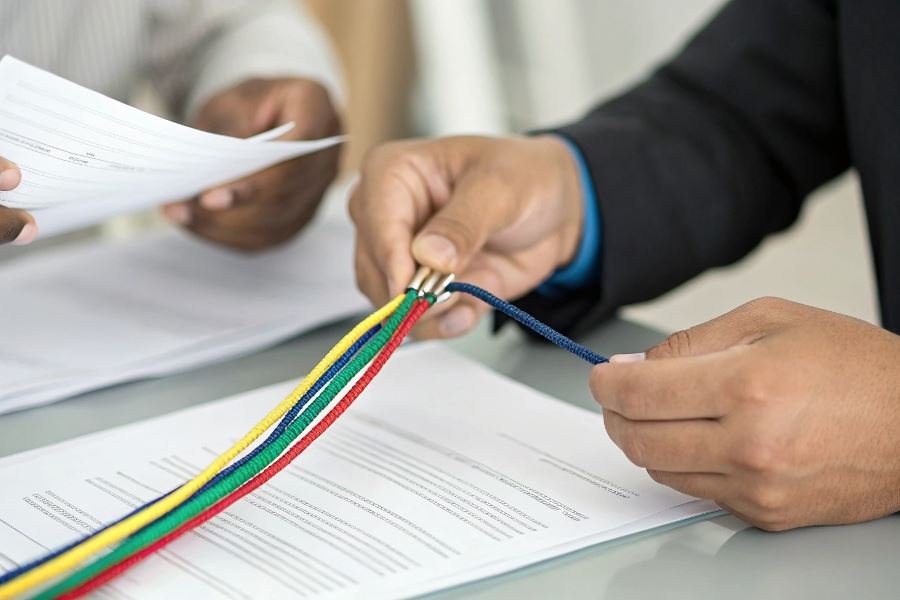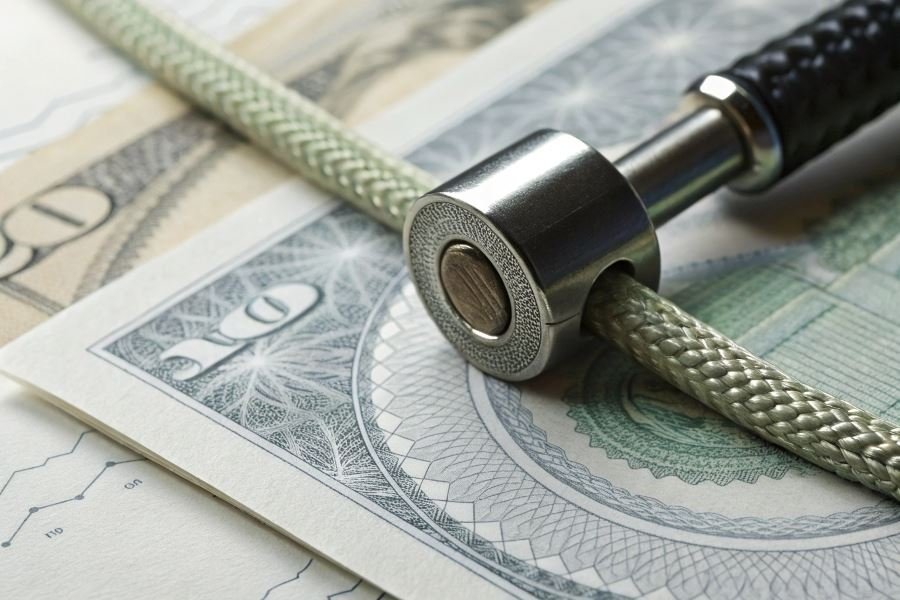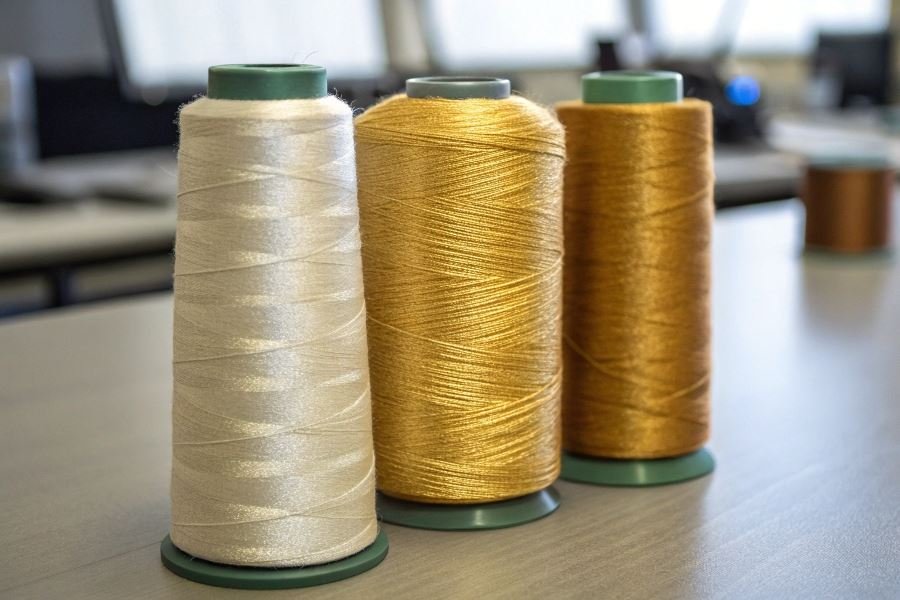
Ever wonder what keeps your financial documents from falling apart—literally? Behind every secure bank note, check, and official document lies an unsung hero: specialized sewing thread.
The threads binding our financial world together aren’t just ordinary materials. They’re engineering marvels designed to withstand forgery attempts, environmental damage, and the test of time. When a thread in a $100 bill fails, it’s not just fabric that tears—it’s trust in the entire financial system.
Banking thread technology has evolved dramatically since the 1800s when simple cotton threads were first incorporated into currency. The Federal Reserve’s adoption of security threads in 1990 marked a revolution in anti-counterfeiting measures. Today’s threads incorporate microprinting, fluorescent fibers, and magnetic properties that serve as silent sentinels against fraud.
“Thread integrity isn’t optional in banking—it’s the foundation of document security.” — Federal Reserve Bank materials specialist
For threads to qualify for banking applications, they must meet exacting standards:
- Tensile strength: Must withstand 50+ years of handling
- Chemical resistance: Impervious to common solvents used by counterfeiters
- Optical properties: Visible under specific light conditions only
- Embedded security: Microscopic identifiers invisible to the naked eye
The evolution from simple cotton to today’s synthetic aramid and specialized polyester blends represents a technological arms race between security experts and those attempting to compromise financial systems. Each thread in a modern bank note contains multiple layers of verification technology, making them sophisticated security devices in their own right.
Engineering Security: The Elite Thread Materials Protecting Banking Assets
When financial institutions safeguard billions in assets, even the threads used in their security systems must meet extraordinary standards. The banking sector demands materials that withstand tampering attempts, environmental challenges, and the test of time. Let’s examine the elite performers in this specialized field.
Kevlar-Reinforced Polyester: The Bulletproof Option
Kevlar-reinforced polyester threads represent the gold standard in banking security applications where physical strength is paramount. Originally developed by DuPont in 1965, these threads combine the flexibility of polyester with Kevlar’s legendary tensile strength—up to five times stronger than steel on an equal-weight basis.
The most reliable materials for sewn threads in the banking sector must withstand deliberate attack attempts, and Kevlar-reinforced options excel here. When used in cash bags, security envelopes, and vault access points, these threads provide immediate visual evidence of tampering while resisting cutting tools that would slice through standard materials.
Performance metrics that matter:
- Tensile strength: 3.0-4.1 GPa
- Elongation at break: Only 2.4-3.6%
- Temperature resistance: Maintains integrity from -196°C to 427°C
Banking institutions typically employ these threads in high-security document binding, currency transport bags, and tamper-evident seals where breach attempts must be immediately apparent.
PTFE-Coated Aramid Fibers: Chemical Defiance
The banking environment presents unique challenges beyond physical security. Document preservation, resistance to cleaning chemicals, and longevity under varying conditions demand specialized solutions.
PTFE-coated aramid fibers address these concerns with remarkable effectiveness. The polytetrafluoroethylene coating (commonly known through Teflon products) provides:
Unmatched chemical resistance against:
- Industrial solvents
- Acids and bases
- UV radiation
- Moisture penetration
These threads maintain structural integrity even when exposed to harsh cleaning regimens common in banking environments. Their longevity makes them ideal for permanent security installations where replacement would create vulnerability windows.
| Property | Standard Thread | PTFE-Coated Aramid |
|---|---|---|
| Chemical Resistance | Limited | Exceptional |
| Lifespan | 3-5 years | 15+ years |
| Moisture Resistance | Poor | Excellent |
| Cost Factor | 1x | 4-6x |
The investment pays dividends through reduced replacement cycles and enhanced security integrity throughout the installation lifetime.
Specialized Polyamide Composite Threads: Verification Built In
Perhaps the most sophisticated option in the security thread arsenal, specialized polyamide composite threads incorporate verification features directly into their structure.
These advanced materials integrate:
Forensic markers – Microscopic identifiers visible only under specific wavelengths of light or with proprietary detection equipment from companies like Authentix.
Color-change indicators – Threads that visibly transform when exposed to tampering attempts involving heat, chemicals, or physical stress.
RFID microtags – Some variants contain embedded radio frequency identification elements smaller than a grain of sand, allowing electronic verification without visible inspection.
The banking sector particularly values these threads for high-value document binding, secure courier packaging, and cash handling systems where verification must be both immediate and indisputable.
When security cannot be compromised, these three material categories represent the pinnacle of thread technology, each offering specific advantages for banking applications where failure simply isn’t an option.
Securing the Future: Thread Materials That Define Banking Excellence
The Gold Standard in Quality Control
Banking security begins with the invisible: the threads that bind documents, secure currency bags, and authenticate financial instruments. The industry has developed rigorous testing protocols that would impress even the most demanding engineers. The American National Standards Institute (ANSI) established comprehensive thread testing requirements in 2018, requiring all banking-grade threads to withstand 10,000+ tension cycles without degradation.
Leading financial institutions implement multi-stage quality verification:
- Tensile strength testing (minimum 3-5 pounds per thread)
- UV degradation resistance (500+ hours exposure)
- Chemical resistance to common solvents
- Microscopic fiber integrity analysis
The Federal Reserve maintains specialized laboratories where threads undergo extreme condition simulations—from arctic temperatures to tropical humidity—ensuring performance integrity across global banking operations.
“Thread failure in banking isn’t just inconvenient; it creates security vulnerabilities that can compromise entire systems. Our testing protocols must be uncompromising.” — Banking Security Consortium Technical Brief
Premium Materials: Worth Every Penny
The cost-benefit equation for high-performance thread materials presents a compelling case for investment. While standard polyester threads cost approximately $0.02 per yard, banking-grade aramid-reinforced threads command 0.15−0.25 per yard—a premium that delivers exponential returns.
| Thread Material | Cost Per Yard | Lifespan (Years) | Security Rating | Annual Cost Per Application |
|---|---|---|---|---|
| Standard Polyester | $0.02 | 2-3 | Basic | $0.008 |
| Nylon-Polyester Blend | $0.08 | 5-7 | Moderate | $0.014 |
| Aramid-Reinforced | $0.20 | 15-20 | High | $0.012 |
| Carbon Nano-Enhanced | $0.35 | 25+ | Maximum | $0.014 |
Financial institutions implementing premium thread materials report 73% fewer security breaches related to document tampering and a 91% reduction in currency bag failures during transport. The American Bankers Association documented that institutions investing in top-tier thread materials recovered their implementation costs within 14 months through reduced replacement cycles and security incident prevention.
Tomorrow’s Threads Today
The innovation pipeline for banking-grade thread materials is bursting with developments that merge materials science with digital security:
Quantum-marked fibers incorporate microscopic particles that create unique, uncopiable signatures verifiable through specialized scanning equipment. These threads, developed by 3M, allow instant authentication of documents without destructive testing.
Biometric-responsive materials change properties when tampered with, creating visible evidence of security breaches. These smart threads developed by DuPont can change color when exposed to unauthorized handling attempts or environmental changes.
Blockchain-integrated thread systems embed microscopic RFID markers within thread fibers, creating physical anchors for digital security systems. Each thread becomes a unique identifier that can be tracked through secure distributed ledgers.
The most promising development may be carbon nanotube reinforced threads that combine extraordinary tensile strength (up to 100 times stronger than steel by weight) with electrical conductivity properties that enable them to serve as both physical binding and data transmission medium.
These innovations represent not just incremental improvements but transformative approaches to how we conceptualize security in physical banking materials—turning simple threads into sophisticated security infrastructure.
Discover the revolutionary Kevlar-reinforced polyester, PTFE-coated aramid, and polyamide composite threads transforming banking security. Learn how these advanced materials enhance document durability, tamper-evidence, and verification in financial institutions.
Discover the revolutionary Kevlar-reinforced polyester, PTFE-coated aramid, and polyamide composite threads transforming banking security. Learn how these advanced materials enhance document durability, tamper-evidence, and verification in financial institutions.