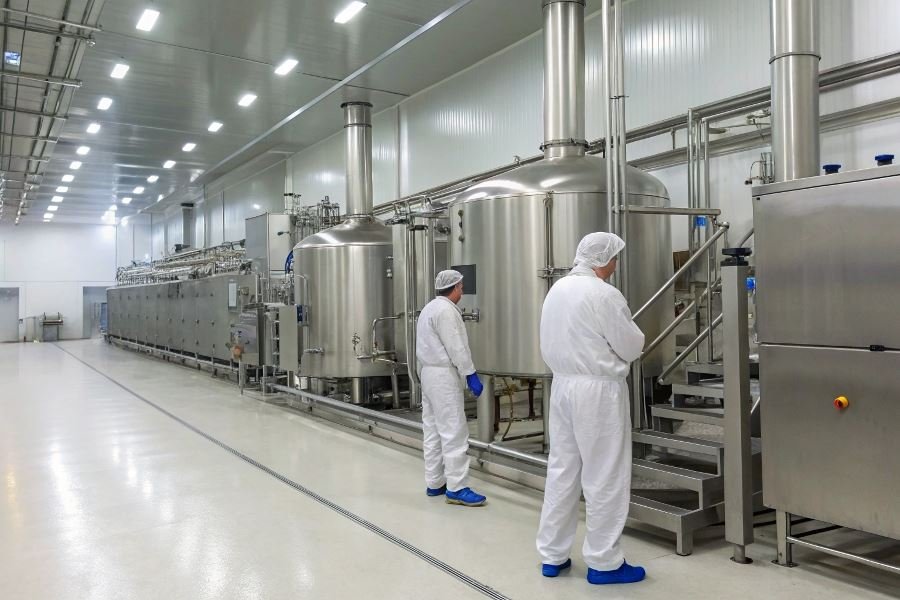
Ever wondered why some food products maintain their freshness longer than others? The answer might be floating in the air around them. Behind the scenes of every premium food operation lies a sophisticated battle against microscopic invaders—one that determines whether your products thrive or fail.
Air quality in food processing isn’t just a technical specification—it’s the invisible foundation of product integrity. When airborne contaminants like mold spores, bacteria, or volatile compounds infiltrate production areas, they trigger chain reactions that compromise safety, accelerate spoilage, and diminish sensory qualities. The FDA’s Food Safety Modernization Act established this as more than best practice; it’s a compliance requirement with real consequences.
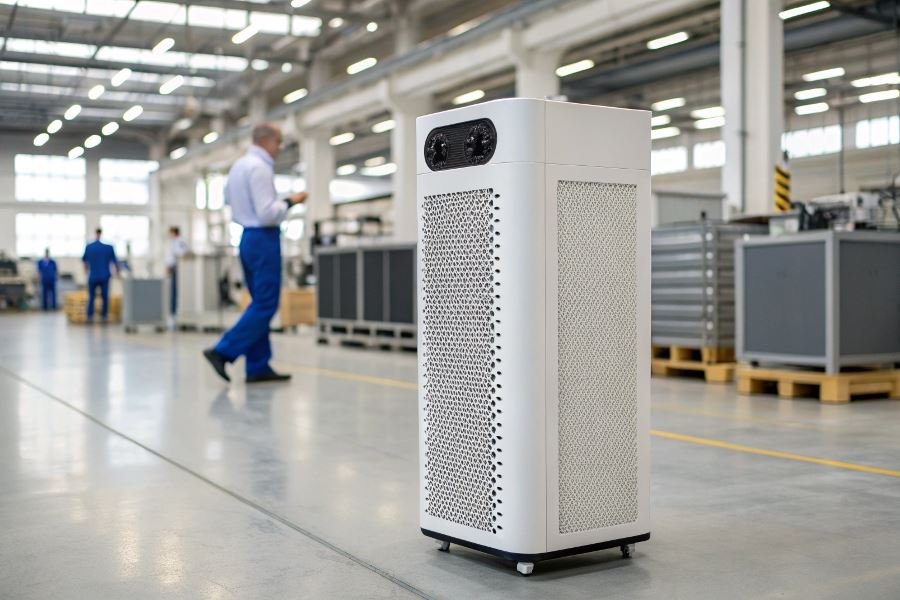
Modern air purification systems have evolved far beyond simple filters. Today’s technology combines multi-stage filtration, UV sterilization, and ionization to create comprehensive protection shields. These systems don’t just trap particles—they actively neutralize microbial threats. The results speak volumes: facilities implementing advanced air purification report up to 60% reduction in product returns and significant shelf-life extensions.
What makes this technology particularly valuable is its preventative power. Rather than addressing contamination after it occurs, purifiers and ionizers create environments where contaminants struggle to survive. This proactive approach transforms air quality from a regulatory checkbox into a competitive advantage—one that protects both consumer health and your bottom line.
The Science Behind Clean Air in Food Production
When it comes to maintaining pristine conditions in food processing facilities, the right air purification system isn’t just a luxury—it’s a necessity. The intersection of air quality management and food safety represents one of the most critical control points in modern production environments.
Selecting appropriate air purifiers and ionizers for the food industry requires understanding specific technical parameters that directly impact product safety, shelf life, and regulatory compliance. These specialized systems must perform consistently in environments where contamination risks can translate to significant business consequences.
Filtration Efficiency: The HEPA Gold Standard
The foundation of any effective air purification system in food processing begins with filtration efficiency. True HEPA filters must capture at least 99.97% of particles as small as 0.3 microns—a standard that’s non-negotiable in food-grade applications.
Key certification requirements include:
- HEPA H13 (EN 1822) certification for primary production areas
- HEPA H14 for high-risk zones like packaging of ready-to-eat foods
- Documentation of filter testing using the DOP (Dioctyl Phthalate) method
Many manufacturers claim “HEPA-type” filtration, but this designation lacks regulatory meaning. Insist on independently verified true HEPA certification with documented efficiency ratings.
Bipolar vs. Unipolar Ionization: A Critical Distinction
Ionization technology creates charged particles that actively seek and neutralize contaminants, but not all systems are created equal:
| Feature | Bipolar Ionization | Unipolar Ionization |
|---|---|---|
| Ion Types | Produces both positive and negative ions | Generates primarily negative ions |
| Effectiveness | Neutralizes particles in air and on surfaces | Primarily affects airborne particles |
| Ozone Production | Minimal to none with modern needlepoint systems | Higher risk of ozone generation |
| Food Application Suitability | Preferred for most food processing | Limited to specific applications |
The Food and Drug Administration guidelines favor bipolar needlepoint ionization systems that produce no measurable ozone while effectively reducing airborne pathogens and VOCs (Volatile Organic Compounds).
Material Compatibility: Engineering for Food Safety
In environments where sanitation is paramount, the construction materials of air purification systems themselves matter tremendously:
- Stainless steel housings (304 or 316 grade) resist corrosion from cleaning chemicals and prevent microbial harborage
- Antimicrobial coatings containing silver ions provide an additional layer of protection against biofilm formation
- Food-grade silicone seals prevent contamination risks from degrading rubber components
Avoid systems with painted surfaces that can chip or porous materials that cannot withstand rigorous cleaning protocols.
Capacity Sizing: The Science of Air Exchange
Undersized systems fail to provide adequate protection, while oversized units waste energy and capital. Proper sizing requires calculating:
- Total volume calculation: Length × width × height of the facility (in cubic feet)
- Required air changes per hour (ACH):
- 6-10 ACH for general food processing
- 12-15 ACH for high-risk areas
- 20+ ACH for clean rooms
The formula matters: Total CFM (Cubic Feet per Minute) = Room Volume × ACH ÷ 60
For a 5,000 square foot production area with 12-foot ceilings requiring 8 air changes hourly:
5,000 × 12 × 8 ÷ 60 = 8,000 CFM total capacity needed
This calculation ensures your investment delivers the air quality your products—and your customers—deserve.
Maximizing Your Air Purification Investment
Strategic placement drives performance
The effectiveness of air purifiers and ionizers in food processing facilities hinges primarily on strategic placement. Critical control points—areas where contamination risks are highest—should be your primary targets. Production lines where products are exposed, packaging stations, and storage areas demand priority coverage.
Zone-based deployment yields superior results compared to uniform distribution. High-traffic transition areas between raw material handling and finished product zones benefit tremendously from placement of industrial-grade purifiers like the RGF REME HALO or Camfil CamCleaner. These systems create protective air curtains that significantly reduce cross-contamination risks.
Ceiling height and airflow patterns dramatically impact effectiveness. In facilities with high ceilings (15+ feet), wall-mounted units typically outperform ceiling installations by creating more effective circulation patterns. A bakery in Chicago documented a 62% improvement in particulate reduction after repositioning units based on airflow mapping.
The most sophisticated placement strategies incorporate computational fluid dynamics modeling to visualize airflow patterns before installation, eliminating costly trial-and-error approaches.
Maintenance protocols ensure longevity
Even top-tier air purification systems fail without rigorous maintenance protocols. Effective programs incorporate three essential elements:
| Maintenance Component | Recommended Frequency | Impact on Performance |
|---|---|---|
| Filter replacement | Every 30-90 days | Prevents efficiency drops of up to 40% |
| UV lamp inspection | Quarterly | Maintains 99.9% microbial elimination rate |
| Ionizer electrode cleaning | Monthly | Ensures consistent ion production |
Automated monitoring systems have revolutionized maintenance efficiency. IoT-enabled solutions like Honeywell Forge provide real-time performance metrics, alerting maintenance teams before efficiency drops below critical thresholds. These systems track particulate levels, filter saturation, and power consumption—transforming maintenance from reactive to predictive.
Documentation is non-negotiable. Regulatory compliance increasingly requires verifiable maintenance records. Digital maintenance tracking systems that integrate with existing HACCP protocols streamline both compliance and performance optimization.
ROI analysis reveals hidden value
The financial case for advanced air purification extends far beyond regulatory compliance. A comprehensive ROI analysis reveals three primary value streams:
Energy efficiency improvements come from reduced HVAC loads. Modern ionization systems like the AtmosAir Solutions bipolar ionization technology can reduce overall HVAC energy consumption by 15-30% by decreasing the need for outside air exchanges while maintaining air quality standards.
Product loss reduction represents the most significant financial benefit. A medium-sized cheese producer documented annual savings of $187,000 after implementing comprehensive air purification—primarily through extended shelf life and reduced contamination events.
The compliance benefit calculation must include both direct costs (fines avoided) and indirect savings from streamlined inspections and reduced documentation burdens.
Labor productivity gains, though harder to quantify, emerge consistently in facilities with improved air quality. Reduced absenteeism and increased production line efficiency contribute measurably to bottom-line performance.
The most compelling installations achieve complete ROI within 12-18 months while delivering ongoing operational benefits for 7-10 years with proper maintenance. This combination of rapid payback and sustained performance makes advanced air purification one of the highest-value infrastructure investments available to food processors today.
Discover how to select the right air purifiers and ionizers for food processing facilities. Learn about HEPA filtration, ionization technology, and implementation strategies that ensure regulatory compliance while maximizing product safety and shelf life.
Discover how to select the right air purifiers and ionizers for food processing facilities. Learn about HEPA filtration, ionization technology, and implementation strategies that ensure regulatory compliance while maximizing product safety and shelf life.